
Hospital bed corner bumpers are easy to overlook when buyers compare frames, casters, side rails, and positioning functions. Yet in crowded wards, repeated contact with walls, doors, elevators, and nearby equipment can cause wear, noise, and avoidable maintenance. Understanding bumper design helps buyers choose beds better suited to frequent movement.
Hospital bed corner bumpers help absorb minor impacts, protect bed frames and nearby surfaces, reduce collision noise, and limit cosmetic damage during routine transport and repositioning. In busy wards, buyers should evaluate bumper material, placement, size, attachment strength, cleanability, and replacement availability. Well-designed corner protection supports smoother handling, easier maintenance, and better long-term durability without complicating normal hospital use.
The sections below explain what hospital buyers and distributors should check before placing an order.
What Are Hospital Bed Corner Bumpers?
Hospital bed corner bumpers are protective components installed around exposed corners or outer edges of the bed. They are commonly positioned near the head end, foot end, or other points most likely to contact walls, door frames, furniture, or another bed.
Unlike the main frame, which provides structural support, the bumper is designed to take or soften minor contact during movement.
They Create a Protective Contact Point
When a bed moves through a narrow room or corridor, the outermost component reaches nearby surfaces first. If that point is exposed metal, a rigid board edge, or coated steel, repeated impacts may cause scratches, dents, chipped finishes, or visible wear.
A bumper creates a protective zone between the bed and its surroundings. It does not mean the bed can be handled carelessly, but it helps reduce the effect of the small collisions that are difficult to avoid in active clinical environments.
Why Do Corner Bumpers Matter More in Busy Wards?
Busy wards create more opportunities for contact because beds are moved frequently while available space is limited. Staff may reposition beds in patient rooms, transfer patients between departments, use elevators, or move beds through cleaning and storage areas.
At the same time, corridors and rooms may contain overbed tables, bedside cabinets, IV stands, monitors, wheelchairs, carts, chairs, and neighboring beds.
Frequent Movement Creates Cumulative Wear
One light impact may cause almost no visible damage. However, a hospital bed can remain in service for years, and repeated low-speed collisions can accumulate.
A bed corner that touches a door once may not matter. A corner that repeatedly contacts doors, walls, storage racks, and elevator panels can eventually show clear wear.
This is why buyers should view corner protection as part of the bed’s long-term mobility design.
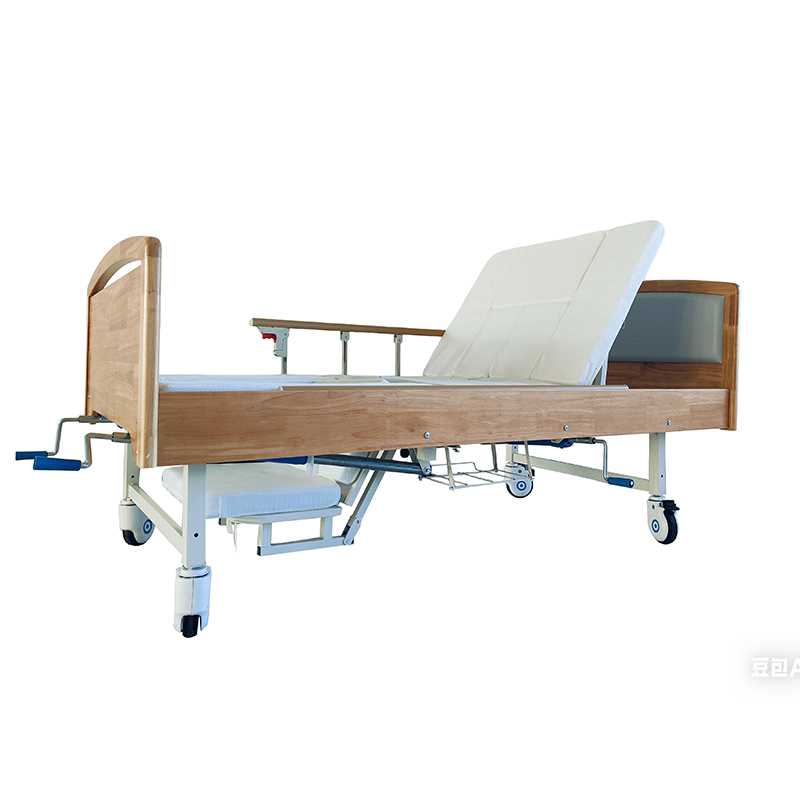
How Do Corner Bumpers Protect the Hospital Bed?
One of the most direct benefits is protection for the frame and external bed components.
Hospital beds may include coated steel frames, head and foot boards, side rails, mechanical assemblies, electrical components, casters, and accessories. Damage to an exposed area may begin as a cosmetic problem but can later increase maintenance work.
They Help Protect Frames and Surface Finishes
When an unprotected frame edge repeatedly strikes hard surfaces, the coating may become scratched or chipped. A bumper reduces direct contact between vulnerable bed areas and surrounding obstacles.
It may also help protect head and foot boards when these components sit close to the outer edge of the bed.
For buyers comparing models, this is worth inspecting. Two hospital beds may offer similar major functions, but the one with better corner protection may be more suitable for wards where beds are moved several times a day.
Can Bumpers Protect Walls, Doors, and Medical Furniture?
Corner bumpers are not only for protecting the bed. They can also reduce contact damage to the hospital environment.
A moving bed may touch painted walls, door frames, elevator panels, bedside cabinets, other medical furniture, or another bed. Repeated contact can leave marks even if the bed itself remains functional.
Facility Protection Can Reduce Routine Maintenance
In narrow corridors and elevators, turning space is limited. A resilient bumper helps separate the hard bed structure from surrounding surfaces during normal low-speed contact.
It cannot prevent all dents or damage, especially during a stronger collision, but it can reduce everyday scuffing and cosmetic wear.
For procurement teams, this means corner bumper design can affect more than the hospital bed specification. It can also influence facility maintenance, particularly in buildings where beds regularly pass through the same doors and corridors.
Do Hospital Bed Corner Bumpers Help Reduce Noise?
Noise is another factor buyers may overlook.
When steel or rigid plastic strikes a wall, cabinet, or another bed, the sound can be sharp. In a hospital, this adds to alarms, conversations, carts, closing doors, and other routine noise sources.
Softer Contact Can Improve Daily Handling
A resilient bumper can soften some contact and reduce the harsh sound that occurs when two hard surfaces collide directly.
The result depends on bumper material, thickness, shape, and impact speed, so bumpers should not be treated as a complete noise-control solution. However, they can contribute to smoother movement, especially during nighttime transport or frequent bedside repositioning.
When evaluating a sample, buyers can move the bed and observe how its corners behave around walls and furniture instead of relying only on catalog photos.
What Materials Should Buyers Look for in Bed Bumpers?
There is no single material that is automatically best for every hospital bed. Manufacturers may use molded polymers, rubber-like materials, engineering plastics, or other impact-resistant compounds.
The important question is whether the finished bumper is durable enough for repeated use and resilient enough to provide practical protection.
Durability and Resilience Should Be Balanced
A bumper that is too rigid may offer little cushioning. One that is too soft may deform, tear, or lose shape after repeated contact.
Buyers should check whether the material resists cracking, retains its shape, remains securely attached, has a smooth surface, and can tolerate routine cleaning.
Replacement availability matters as well. A bumper is intentionally placed where impacts occur, so it may wear before the rest of the bed. For larger orders, purchasers should ask whether spare bumpers can be supplied separately.
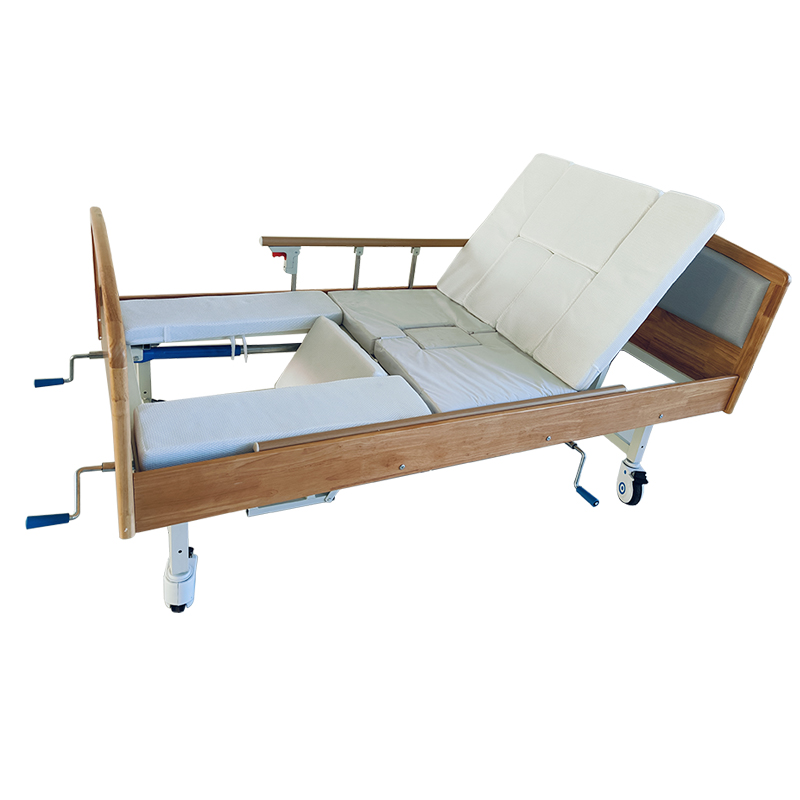
Why Do Bumper Placement, Size, and Shape Matter?
A hospital bed can have visible bumpers and still provide limited protection if they are poorly positioned.
The bumper should become one of the first points of contact during ordinary movement. If the headboard, footboard, frame tube, or another component extends farther outward, the bumper may not protect the area that actually reaches the wall first.
The Outermost Geometry Matters
Buyers should inspect the bed from the head end, foot end, and side angles. Ask what touches the wall first when the bed moves forward and what makes contact first during a turn.
Size matters too. The bumper needs enough surface area to cover vulnerable corners, but it should not unnecessarily increase overall bed width or length.
Rounded shapes are often practical because they reduce sharp contact points and can work well when the bed approaches a surface at an angle.
For hospitals with narrow doors, compact rooms, or small elevators, bumper dimensions should be considered together with the total bed footprint.
For project purchases, compare the actual bed footprint with the hospital layout before approving a final configuration.
Are Hospital Bed Corner Bumpers Easy to Clean?
Cleanability should be considered for every external hospital bed component.
Bumpers sit at the outer edges of the bed and may contact hands, walls, equipment, or environmental surfaces. Their shape and mounting method should therefore support routine cleaning.
Simple Surfaces Are Easier to Maintain
Smooth, accessible surfaces are generally easier to wipe than designs with deep grooves, open cavities, or complicated joints.
Buyers should also inspect the connection between the bumper and the frame. If debris can collect in narrow spaces that are difficult to reach, maintenance may become less convenient.
Because hospitals use different cleaning agents and procedures, purchasers should request the supplier’s cleaning guidance instead of assuming that every bumper material is compatible with every chemical.
Should Hospital Bed Corner Bumpers Be Replaceable?
Hospital beds may stay in service for many years, while corner bumpers are exposed to repeated contact throughout that period.
For this reason, replaceability is an important procurement issue.
Replaceable Parts Can Simplify Maintenance
If a bumper becomes cracked, worn, loose, or heavily damaged, replacing one small component is usually more practical than replacing an entire headboard, footboard, or frame assembly.
Before ordering, buyers should ask whether bumpers can be purchased separately, how they are attached, whether special tools are required, and whether maintenance staff can replace them easily.
Hospitals and distributors placing large orders may also consider purchasing a small quantity of spare bumpers with the original shipment. This can make future maintenance more predictable and reduce downtime.
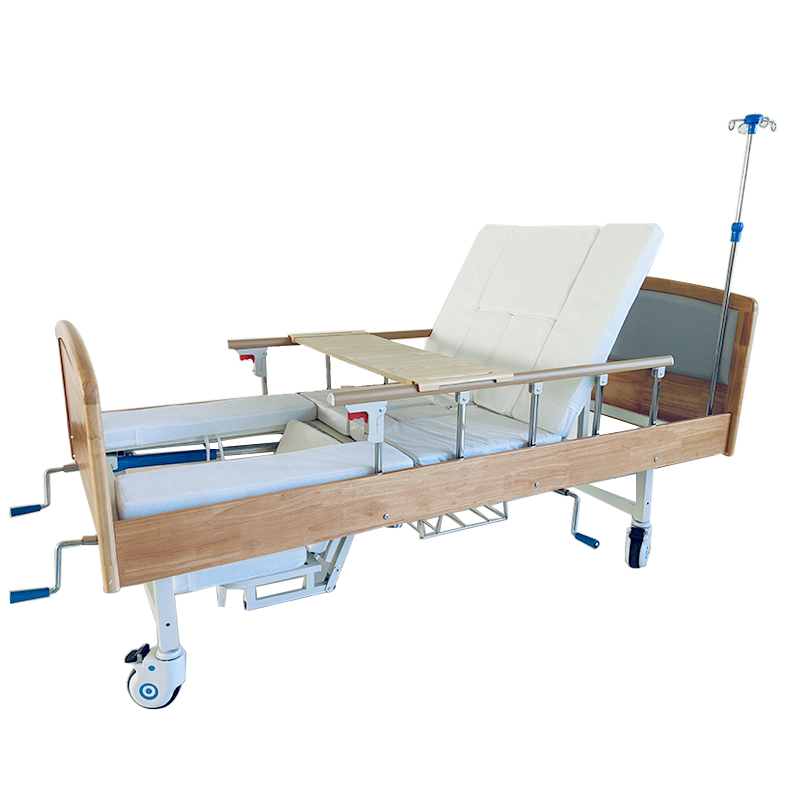
How Do Corner Bumpers Affect Total Cost of Ownership?
The purchase price is only one part of hospital bed cost. Over time, hospitals may also pay for repairs, spare parts, touch-up work, labor, and facility maintenance.
A small protective component can influence some of these expenses.
Small Design Details Can Affect Long-Term Value
Corner bumpers should not be judged in isolation. Instead, buyers should evaluate them together with frame construction, caster quality, braking systems, side rails, head and foot boards, surface finish, accessories, and spare-part availability.
A hospital bed that resists everyday bumps and is easier to maintain may offer better long-term value than a model with similar headline specifications but weaker protection around exposed corners.
For distributors, practical protection can also reduce complaints about cosmetic damage after installation and give sales teams another meaningful durability feature to discuss with buyers.
What Should Buyers Check Before Ordering?
A specification sheet may say that corner bumpers are included, but it rarely shows whether the design is effective.
Whenever possible, purchasers should inspect a sample, see the bed at a trade show, request detailed photos, or ask the supplier for a movement video.
Use a Practical Inspection Checklist
Before placing a large order, buyers should confirm whether the bumpers protect the most exposed corners, extend beyond vulnerable board or frame edges, remain securely attached, and have no unnecessary sharp points.
They should also check whether the surface is easy to clean, replacement parts are available, and the bumper does not interfere with side rails, accessories, push handles, or normal bed movement.
Finally, evaluate the bumper together with the casters, steering behavior, central locking system where applicable, bed width, and turning radius. Corner protection works best when it is part of a well-designed mobility system.
How Can Jcare Support Hospital Bed Procurement?
Jcare supplies hospital beds, home care beds, rehabilitation products, other medical furniture, and medical bed accessories for wholesale and project purchasing.
Conclusion
Hospital bed corner bumpers may be small, but they matter more in busy wards where beds are moved, turned, stored, cleaned, and repositioned every day.
Well-designed bumpers can help protect frames, walls, doors, furniture, and nearby equipment. They may also reduce collision noise, limit cosmetic wear, and simplify maintenance when replacement parts are available.
For buyers, the key is not simply asking whether a hospital bed includes bumpers. Material quality, placement, size, shape, cleanability, attachment strength, and spare-part availability should all be reviewed as part of the complete mobility and durability system.
Which hospital bed design detail matters most in your purchasing decisions? Share your experience in the comments, or send this article to colleagues who are comparing hospital bed suppliers.