
Hospital bed buyers often ask how to confirm whether a finished order truly matches the approved sample and specification. If inspection is too superficial, problems with frames, rails, brakes, motors, dimensions, or packaging may only appear after delivery. A structured inspection helps buyers detect defects before shipment and reduce claims.
During hospital bed quality inspection, buyers should verify specifications, frame and welding quality, coating, dimensions, mattress platform, side rails, casters, brakes, motors, controls, functions, stability, accessories, labels, documentation, and packaging. Production units should be compared with the approved sample and purchase requirements, while important mechanical and electrical functions should be tested before shipment is accepted.
A reliable inspection combines visual checks, measurements, functional testing, document verification, and packaging review. The following checklist gives B2B buyers a practical starting point.
What Should Buyers Prepare Before Hospital Bed Inspection?
Inspection should begin with clear reference documents. Prepare the purchase order, specification sheet, drawings, approved sample, accessory list, packaging requirements, labeling requirements, and inspection criteria.
Customized orders should identify details such as color, rail type, caster size, mattress, motors, load rating, plug type, logo, and accessories. Buyers should also define critical, major, and minor defects before inspection begins.
Compare Production Beds With the Approved Specification
Confirm the model, number of functions, dimensions, materials, mattress platform, rails, headboard, footboard, caster system, motors, accessories, color, and packaging.
A different caster, handset, mattress, or accessory can make an otherwise good-looking bed nonconforming. Inspectors should therefore compare normal mass-production units with the approved specification.
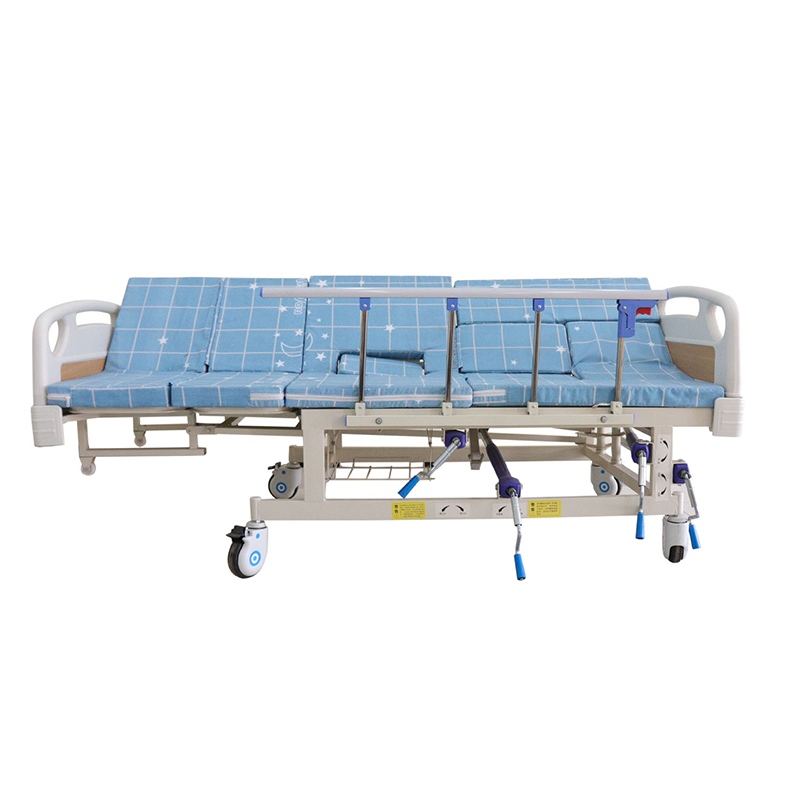
How Should Buyers Check the Bed Frame and Welding?
The frame is the structural foundation of the hospital bed. Check whether it is straight, stable, correctly assembled, and free from visible deformation.
Inspect welded joints, corners, support brackets, rail mounting areas, actuator brackets, caster connections, and mattress platform supports. Welds should not show obvious cracks, incomplete joining, sharp projections, severe spatter, or burn-through.
Nuts, bolts, pins, screws, and retaining clips should be present and secure.
Inspect Coating and Surface Finish
Powder-coated or painted metal should have consistent coverage. Look for scratches, exposed steel, peeling, rust, bubbles, rough areas, contamination, or severe color differences.
Pay attention to welded zones, corners, and accessible edges. They should be smooth and free from sharp burrs, while coating should protect exposed metal during repeated cleaning.
Which Hospital Bed Dimensions Should Be Measured?
Measure selected production units rather than relying only on catalog data. Typical checkpoints include overall length, width, mattress platform size, minimum and maximum height, rail dimensions, caster diameter, and mattress thickness.
For adjustable beds, agreed backrest, knee-rest, or tilt angles may also need verification. Compare all results with written tolerances.
Check the Mattress Platform and Moving Sections
The mattress platform should be aligned, securely fixed, and free from significant distortion. Check panels, hinges, joints, removable sections, and pivot points for looseness or sharp edges.
Operate the backrest, knee section, height adjustment, and other moving areas. They should move smoothly without twisting, scraping, or colliding with surrounding components.
The mattress should fit the intended bed system correctly. FDA guidance treats the bed frame, mattress, rails, and accessories as interacting components when evaluating entrapment risk, so mattress compatibility should be checked rather than assumed.
What Should Buyers Inspect on Hospital Bed Side Rails?
Raise and lower every side rail several times. It should move smoothly, lock securely, and release only through the intended mechanism.
Check hinges, locking pins, handles, dampers, brackets, covers, and mounting hardware. Locked rails should not show excessive movement, unexpected release, or interference with the mattress or moving platform.
Check Gaps and Entrapment-Related Areas
Inspect spaces around the rails, mattress, frame, headboard, and footboard. These gaps can change when the bed is articulated.
FDA guidance identifies potential hospital-bed entrapment zones and recommends dimensional assessment for key openings as part of a broader risk-reduction strategy.
For regulated markets, request applicable test documentation for the exact configuration, since changes to mattresses or rails may affect the evaluated bed system.

How Should Casters and Brakes Be Tested?
Push the bed forward, backward, sideways, and through turns on a suitable level surface. Casters should roll and swivel smoothly without severe vibration, sticking, wobble, or abnormal noise.
Inspect the tread, axle, mounting point, protective cover, and connection to the frame. Confirm that caster diameter, material, and locking type match the order.
For individual-brake casters, test each brake. For central-locking beds, operate the pedal and confirm that the intended wheels lock and release correctly. If a directional caster or steering function is included, verify that as well.
Headboards and footboards should remain secure during use and detach correctly when quick removal is part of the design. Check for cracks, deformation, poor fit, loose fittings, and damaged bumpers.
What Should Buyers Test on Electric Hospital Beds?
Operate every electric function through its intended range, including backrest, knee, height, Trendelenburg, reverse Trendelenburg, chair, or CPR functions when specified.
Movement should be controlled and smooth. Watch for jerking, uneven lifting, excessive noise, delayed response, cable tension, or collisions. Cycle important functions more than once to reveal intermittent faults.
Check Motors, Controls, Cables, and Backup Power
If motor or actuator brands are specified in the contract, compare installed components with the approved information. Check the control box, handset, connectors, plugs, and cable routing.
Cables should not be pinched, cut, loosely connected, or placed where moving parts can damage them. Test every handset button. If the bed includes a nurse control, lockout system, battery backup, or emergency function, verify it according to the agreed inspection plan.
Buyers should also confirm the standards and regulatory requirements applicable in the destination market. IEC 80601-2-52:2026, published on May 5, 2026, covers basic safety and essential performance for adult medical beds within its scope, including electrical and non-electrical beds.
How Should Buyers Inspect Manual Hospital Beds?
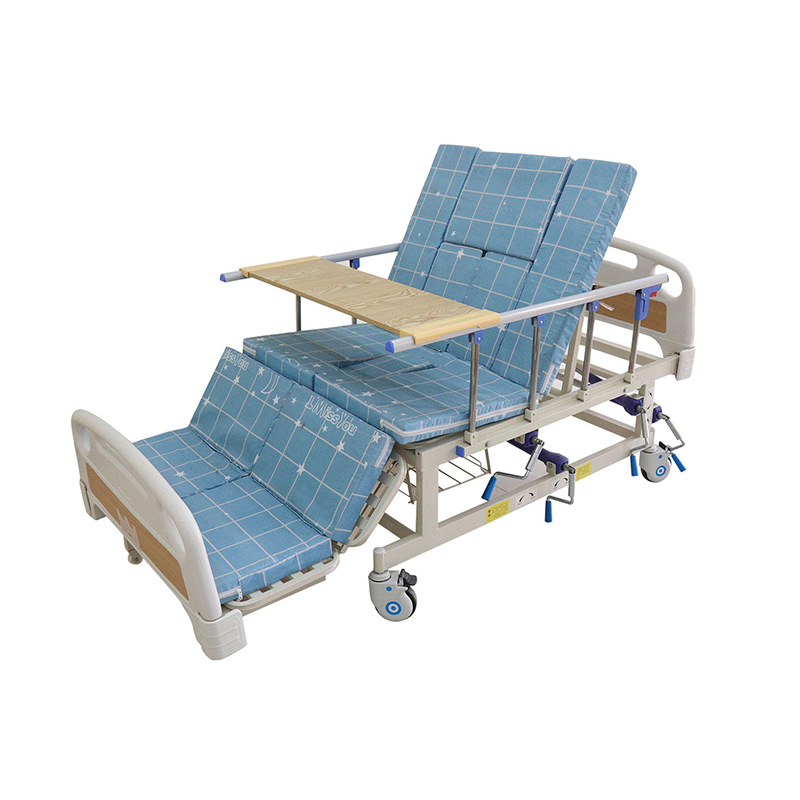
Operate every manual crank through its full range. Backrest, knee-rest, and height functions should move consistently without severe resistance, slipping, unusual noise, or irregular motion.
Check crank handles, gearboxes, rods, linkages, pins, and storage positions. Foldable cranks should remain secure when stored.
Check Stability and Load-Related Performance
The bed should stand evenly and remain stable during normal functional checks. Look for excessive rocking, frame flex, loose joints, or abnormal movement.
Claims about safe working load and structural performance should be supported by appropriate verification or test documentation. Routine pre-shipment inspection should not be treated as a replacement for formal safety testing, and destructive load testing should not be improvised without an approved procedure.
ISO 14971:2019 remains current after being reviewed and confirmed in 2025. It provides an international framework for medical-device risk management, including hazard identification, risk evaluation, risk controls, and production and post-production monitoring.
What Accessories, Labels, and Documents Should Be Checked?
Compare all accessories with the purchase order and packing list. Depending on the order, these may include an IV pole, drainage hooks, mattress, lifting pole, oxygen cylinder holder, monitor shelf, bedside cabinet, over-bed table, spare handset, or spare casters.
Check quantity, material, dimensions, finish, compatibility, and mounting method. Where practical, install selected accessories on an inspected bed to confirm that they fit correctly.
Verify Product Identification and Manuals
Check model labels, batch or serial identification, electrical information, manufacturer details, warnings, load markings, symbols, and required private-label branding.
Instruction manuals should match the delivered model, including its handset, rails, accessories, and maintenance instructions. Export buyers should also confirm destination-market labeling and documentation requirements.
How Should Hospital Bed Packaging Be Inspected?
A well-made hospital bed can still arrive damaged if packaging is weak. Inspect protective film, foam, corner guards, cartons, reinforcement, moisture protection, hardware bags, cable protection, and accessory placement.
Secure loose parts and protect painted surfaces, motors, handsets, rails, boards, and casters from rubbing, impact, and compression.
Confirm Quantities and Container Loading Readiness
Compare packed quantities with the purchase order and packing list. Confirm model numbers, accessory cartons, spare parts, shipping marks, and mixed-model quantities.
For container shipments, review how beds or cartons are stacked and secured. Weight distribution, moisture exposure, movement during transport, and unloading methods can affect arrival condition.
Photographs of finished beds, packaging, carton marks, and container loading are useful records for receiving or transport claims.
People Also Ask
How Many Hospital Beds Should Buyers Inspect?
Inspection quantity depends on order size, product complexity, customization, supplier history, and the buyer’s quality plan. Some buyers use statistically based sampling, while selected safety or functional items may receive 100% checks.
New suppliers, new models, customized orders, and shipments with previous quality problems may justify more intensive inspection. The sampling method and acceptance criteria should be agreed before inspection, not after defects are discovered.
What Are the Most Important Hospital Bed Defects?
Safety-related and functional failures require the greatest attention. Examples include unstable frames, cracked structural welds, rails that do not lock, ineffective brakes, damaged electrical components, uncontrolled movement, incorrect critical parts, or missing required components.
Major defects may include failed functions, incorrect specifications, serious cosmetic damage, missing accessories, or packaging problems. Minor defects are generally limited issues that do not materially affect intended operation.
The exact defect classification should be written into the buyer’s inspection criteria so decisions remain consistent.

Conclusion
Hospital bed quality inspection should cover more than appearance. Buyers need to verify specifications, frame construction, welding, coating, dimensions, mattress platform, side rails, gaps, casters, brakes, motors, controls, manual or electric functions, stability, accessories, labels, documents, and packaging.
The best process starts before mass production with clear specifications and measurable acceptance criteria. Inspectors can then compare production units with the approved sample, test key functions, document defects, and confirm corrective action before shipment.
For importers, distributors, hospitals, clinics, and medical furniture buyers, a structured inspection reduces misunderstandings and provides a stronger basis for accepting or rejecting an order.
Have you encountered hospital bed quality problems during sourcing or inspection? Share your experience in the comments, and send this guide to colleagues responsible for medical furniture procurement.