
Choosing hospital bed side rails may seem simple, but buyers often need to compare rail height, material, folding design, mattress compatibility, patient access, and daily nursing use. A poor choice can reduce safety, create maintenance problems, or interfere with care. The right solution starts with matching the rail to the bed, patient group, and care environment.
The right hospital bed side rails should provide effective fall protection while allowing safe patient transfers and convenient caregiver access. Buyers should compare rail type, effective height above the mattress, length, material, locking mechanism, gap design, bed-frame compatibility, cleaning requirements, and durability. For wholesale orders, spare-part availability and consistent mounting dimensions are also important because they affect long-term maintenance and replacement costs.
Side rails are not interchangeable accessories. Understanding their design and application helps buyers avoid specification mistakes before placing a large order.
Why Are Hospital Bed Side Rails Important?
Hospital bed side rails help define the sleeping area and may reduce accidental rolling or falling. Their dimensions, movement, lock, mattress clearance, and mounting position can also influence safety and nursing efficiency.
Match the Rail to the Care Environment
A general ward, rehabilitation center, home care setting, and long-term care facility may need different rails. General wards often need a balance between protection and fast caregiver access. Rehabilitation beds may require easier patient entry and exit, while home care beds may prioritize simple operation.
Before choosing a rail, buyers should define where the bed will be used, who will operate it, and how often patients will be transferred.
What Types of Hospital Bed Side Rails Are Available?
Several structures are commonly used on hospital and home care beds. The best option depends on the bed design, function range, patient profile, and budget.
Full-Length, Split, and Folding Rails
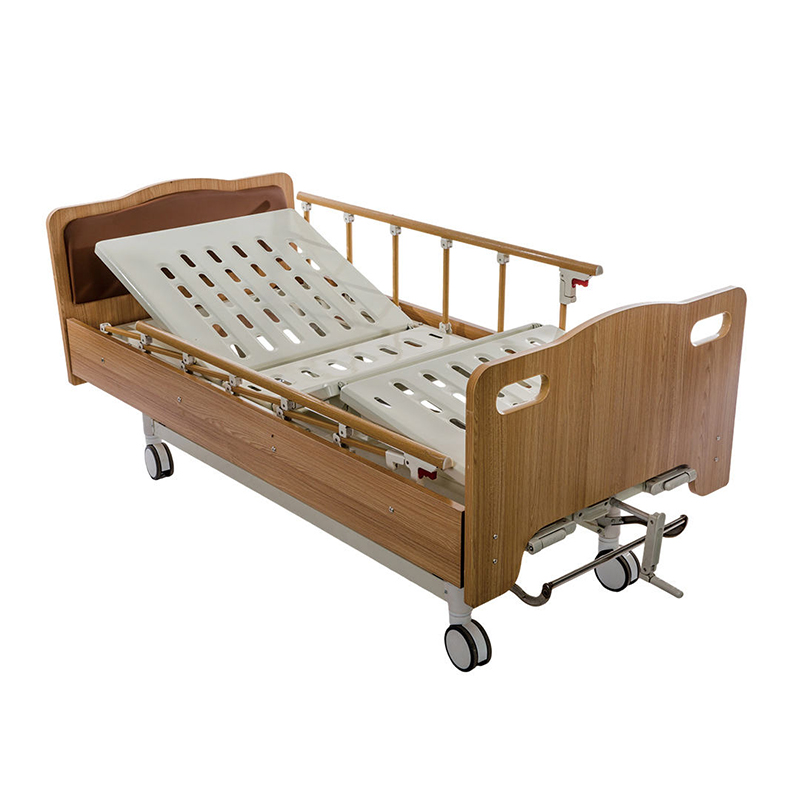
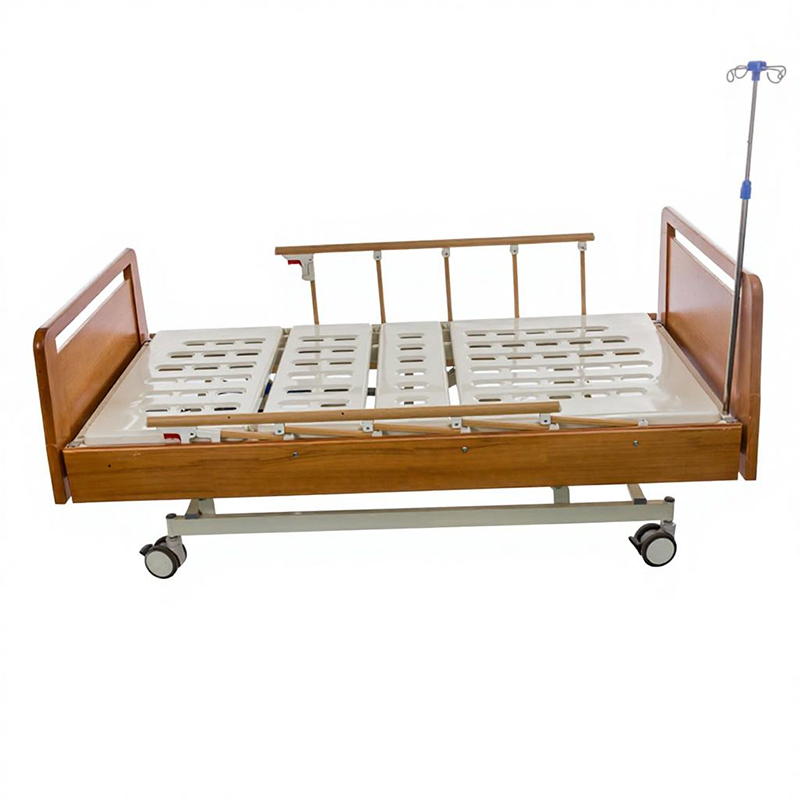
Full-length rails cover most of the bed side and are common on some manual and home care beds. Buyers should check whether they lower smoothly and whether the lowered rail affects transfers.
Split rails use separate head-end and foot-end sections. Four-piece ABS rails are common on modern electric beds because caregivers can lower one section while leaving another raised.
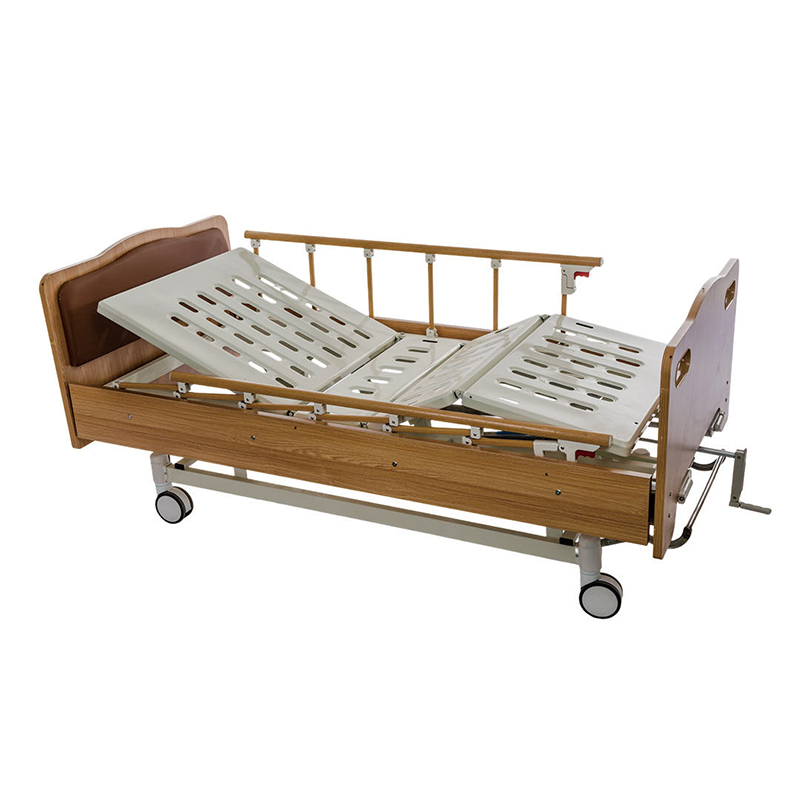
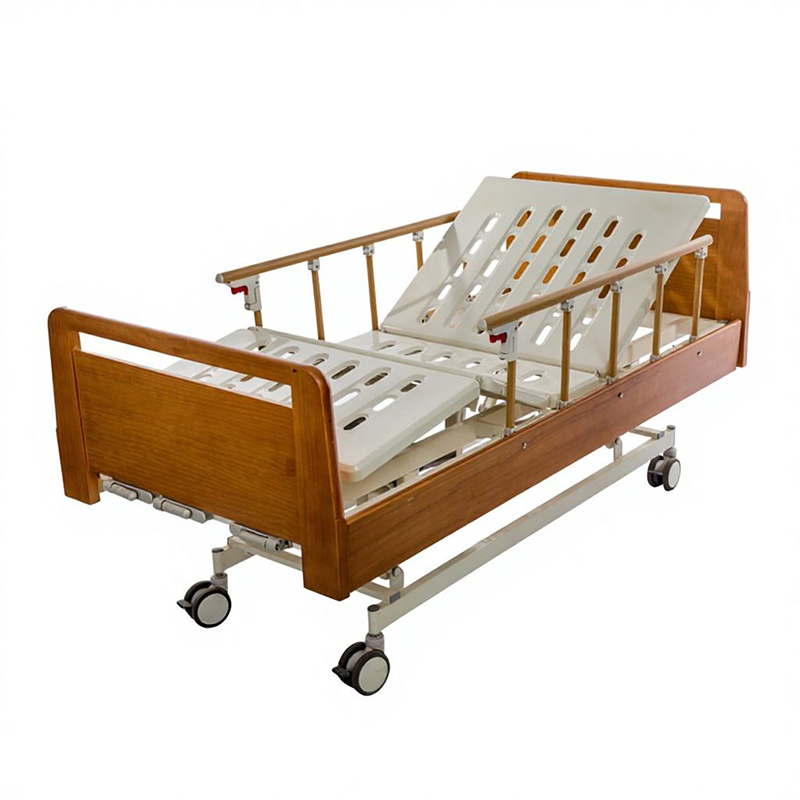
Folding aluminum alloy rails are widely used on manual and economical electric beds. Buyers should compare profile thickness, hinge quality, mounting brackets, and lock strength rather than appearance alone.
How High Should Hospital Bed Side Rails Be?
Rail height should always be evaluated together with mattress thickness. A rail that looks high on an empty bed may provide much less usable height after a thick mattress is installed.
Consider Mattress Thickness Before Confirming Height
Buyers should ask for the effective rail height above the finished mattress surface, not only the rail height measured from the bed frame.
Foam, pressure-relief, and home care mattresses may have different thicknesses. A thicker mattress reduces the remaining protective height. Therefore, the bed, mattress, and rail should be confirmed as one system.
When sending an inquiry, provide the intended mattress dimensions so the supplier can verify compatibility, especially when mattresses are sourced separately.
What Side Rail Length Is Best?
Longer rails provide more coverage, but maximum length is not always the best solution. The bed must still allow patient transfers, caregiver positioning, and access for nursing procedures.
Balance Protection and Patient Access
For patients who need extensive support, broader coverage may be preferred. In rehabilitation or lower-risk settings, easier access can be more important.
Split rails can offer a useful compromise because a caregiver may lower the foot-end section for transfer while keeping the upper rail raised. Rail length is therefore part of the overall workflow, not just a dimensional choice.
Which Side Rail Material Should Buyers Choose?
ABS plastic, aluminum alloy, and steel are common materials. Each provides different advantages in appearance, cleaning, weight, durability, and cost.
ABS, Aluminum Alloy, and Steel Rails
ABS side rails are widely used on electric hospital beds. Their molded shape can provide a modern appearance and may incorporate handles, indicators, or controls. Buyers should check plastic thickness, reinforcement, hinge quality, and replacement availability.
Aluminum alloy rails are popular on manual and cost-sensitive beds. They are lightweight and corrosion resistant. Important quality points include the profile, pivot joints, folding mechanism, brackets, and lock.
Steel rails can provide strong structural support for certain designs, but coating quality and corrosion protection should be checked carefully.
The best material depends on the target bed model, budget, workload, and maintenance environment.
How Important Is the Locking Mechanism?
The lock is one of the most important functional parts of a side rail. When raised, the rail should remain securely in position. At the same time, caregivers should be able to lower it without excessive force.
Test the Rail Repeatedly Before Bulk Ordering
During sample evaluation, raise and lower the rail many times. The movement should remain controlled, and the lock should engage consistently.
Check for excessive movement, sharp edges, weak springs, unusual noise, and loose mounting points. Buyers can also ask how the locking mechanism is tested during production.
For large hospital or distributor orders, a simple and durable lock is often more valuable than a complicated mechanism that is difficult to maintain.
How Should Buyers Evaluate Gaps and Compatibility?
The rail must be assessed together with the mattress, bed frame, headboard, footboard, and moving bed sections. Poorly matched components can create unwanted gaps around the patient.
Review the Complete Bed and Mattress Combination
Ask the supplier to confirm the rail with the exact bed frame and mattress that will be delivered. If mattresses are purchased elsewhere, provide their dimensions before finalizing the order.
On adjustable beds, buyers should also examine how clearances change when the backrest or knee section moves. The rail should not interfere with the mattress platform during adjustment.
For projects subject to hospital, tender, or local regulatory requirements, confirm the applicable safety rules in the destination market before purchasing.
Should Side Rails Move With the Backrest?
Some electric hospital beds use upper rails that move together with the backrest. This can maintain a more consistent relationship between the rail and patient when the backrest is raised. Other beds use rails fixed to the main frame.
Check the Full Adjustment Range
For three-function or five-function electric beds, the rail must work correctly during backrest adjustment, leg adjustment, height movement, and other available functions.
It should not collide with the frame, mattress platform, headboard, or accessories. Caregivers should also be able to operate it at different bed heights.
Before mass production, buyers can request a sample, technical drawing, or demonstration video showing the rail throughout the full adjustment range.
How Easy Are Side Rails to Clean and Maintain?
Hospitals and clinics need components that can be cleaned efficiently. Complex shapes, exposed springs, narrow gaps, and difficult joints may increase cleaning time.
Check Cleaning Access and Spare Parts
Buyers should consider normal cleaning procedures and the disinfectants used on bed surfaces. They should also ask whether damaged locks, brackets, covers, or complete rail assemblies can be replaced individually.
For distributors, standardized mounting dimensions across several bed models can simplify replacement-part inventory.
What Should Wholesale Buyers Confirm Before Ordering?
Small specification differences can become serious when an order includes dozens or hundreds of beds. Wholesale buyers should therefore confirm side rail details in writing before production.
Prepare a Clear Side Rail Specification
A purchasing specification should include rail type, material, quantity per bed, dimensions, color, mounting method, lock design, mattress thickness, and compatible bed model.
If the rail includes an angle indicator, patient control panel, or special handle, list these functions as well. Photos and technical drawings can reduce misunderstandings when several bed models are included in one order.
How Can Buyers Compare Side Rail Quality Between Suppliers?
Price alone is not enough because rails with similar dimensions may use different materials, wall thicknesses, hinges, locks, and mounting structures.
During sample inspection, check whether left and right rails align evenly, whether locks engage consistently, and whether the rails remain stable after repeated use. Examine welds, molded parts, fasteners, surface finish, and mounting points.
For importers and distributors, replacement rails from future shipments should fit earlier bed models whenever the design has not changed.
Люди также спрашивают
Are ABS Side Rails Better Than Aluminum Side Rails?
Not necessarily. ABS rails are often chosen for modern electric beds because they provide smooth surfaces and can include integrated features. Aluminum rails are lightweight, practical, and commonly used on manual or economical beds.
The better choice depends on the bed design, target price, care environment, and maintenance requirements.
Can Hospital Bed Side Rails Be Replaced?
Many hospital bed rails can be replaced. Replacement is easier when the manufacturer uses standardized mounting points and keeps compatible spare parts available.
Wholesale buyers should ask about replacement rails and locks before placing a large order, especially when the beds are expected to remain in service for several years.
Do All Hospital Beds Need Full-Length Rails?
No. Depending on the application, hospital beds may use full-length rails, split rails, or shorter folding rails. The appropriate structure depends on patient needs, transfer requirements, clinical workflow, bed design, and facility safety policies.
How to Choose Rails for Different Hospital Bed Categories
A basic two-crank manual hospital bed may use folding aluminum alloy rails to provide practical protection at a controlled cost. Three-function or five-function electric beds often use four-piece ABS rails because they support convenient nursing access and a more integrated appearance.
Home care beds may require rails that combine safety with simple operation. Rehabilitation beds may benefit from configurations that make assisted transfers easier. Beds intended for higher-dependency patients may require broader coverage and more robust structures.
For distributors managing several models, compatible rail components across a product family can simplify spare-parts inventory and future service.
How Jcare Supports Hospital Bed Buyers
Jcare supplies hospital beds, home care beds, rehabilitation products, medical furniture, and medical bed accessories for B2B and wholesale customers.
Side rail options can be matched with different bed frames, functions, mattress configurations, and target markets. Buyers can discuss ABS rails, folding aluminum alloy rails, and other compatible solutions according to project requirements.
Confirming these specifications before production helps importers and distributors reduce later changes, prepare spare parts more effectively, and keep replacement orders consistent. Jcare also focuses on factory pricing, stock availability, and practical delivery support for international buyers.
Заключение
Choosing the right side rails for hospital beds requires more than selecting a material or rail length. Buyers should evaluate the rail together with the mattress, bed frame, adjustment functions, patient needs, and nursing workflow.
Key factors include rail type, effective height above the mattress, coverage, material, locking reliability, gap design, cleaning convenience, maintenance requirements, and spare-part availability. For wholesale orders, written specifications and sample testing can prevent expensive compatibility problems later.
Hospitals, distributors, clinics, and medical bed purchasers should compare side rails as part of the complete bed system. This makes it easier to balance safety, usability, durability, and purchasing cost.
What type of side rail do you currently use for your hospital bed projects? Share your experience or questions, and pass this guide to other medical equipment buyers who may find it useful.