
Rural healthcare facilities often struggle to balance hospital bed safety, durability, affordability, and maintenance. A poor choice can cause breakdowns, delayed care, higher repair costs, and extra pressure on limited staff. By reviewing patient needs, local infrastructure, service conditions, and long-term costs, buyers can select beds that remain reliable in demanding environments.
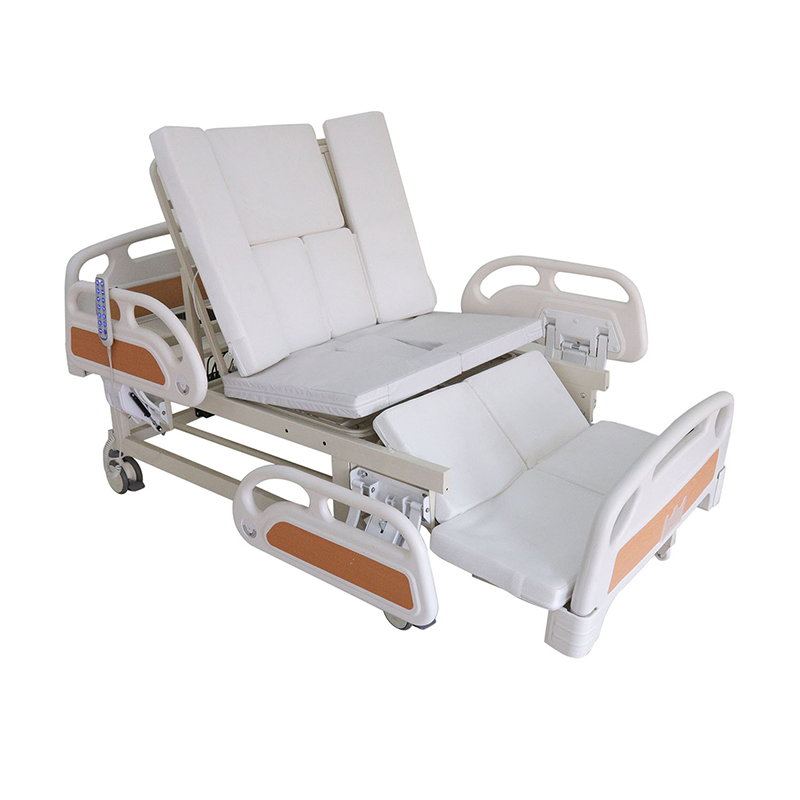
The best hospital beds for rural healthcare facilities are durable, simple to operate, easy to clean, compatible with local power conditions, and supported by available spare parts. Buyers should prioritize stable frames, safe side rails, reliable casters, suitable weight capacity, practical adjustment functions, and low maintenance requirements instead of selecting the most complex model.
The right bed improves safety and nursing efficiency. This guide explains how rural hospitals and clinics can make a practical, cost-effective purchase.
People Also Ask: What Should Rural Healthcare Facilities Consider When Buying Hospital Beds?
Rural hospitals and community clinics often work with tighter budgets, fewer technicians, slower access to replacement parts, and less predictable infrastructure. Therefore, the most expensive bed is not always the best choice. A dependable model that staff can operate, clean, move, and repair easily may provide greater long-term value.
Start With Actual Care Requirements
First, identify where and how each bed will be used. A general ward, emergency room, maternity department, rehabilitation unit, and long-term care area do not need the same functions.
For standard inpatient wards, a two-crank or three-crank manual hospital bed may provide sufficient backrest and leg adjustment. Manual models are affordable, easy to understand, and independent of electricity, making them suitable for many rural facilities.
Electric beds may be more appropriate for intensive care, rehabilitation, or patients who need frequent repositioning. However, buyers must confirm that stable power, replacement motors, handsets, and technical support are available.
Before requesting prices, define the department, patient type, expected daily use, required functions, room layout, and quantity. This prevents overbuying and helps suppliers prepare comparable quotations.
Choose Manual or Electric Beds Carefully
Manual beds have fewer electrical components and continue working during power interruptions. Their crank systems are familiar to caregivers and generally easy to inspect and maintain.
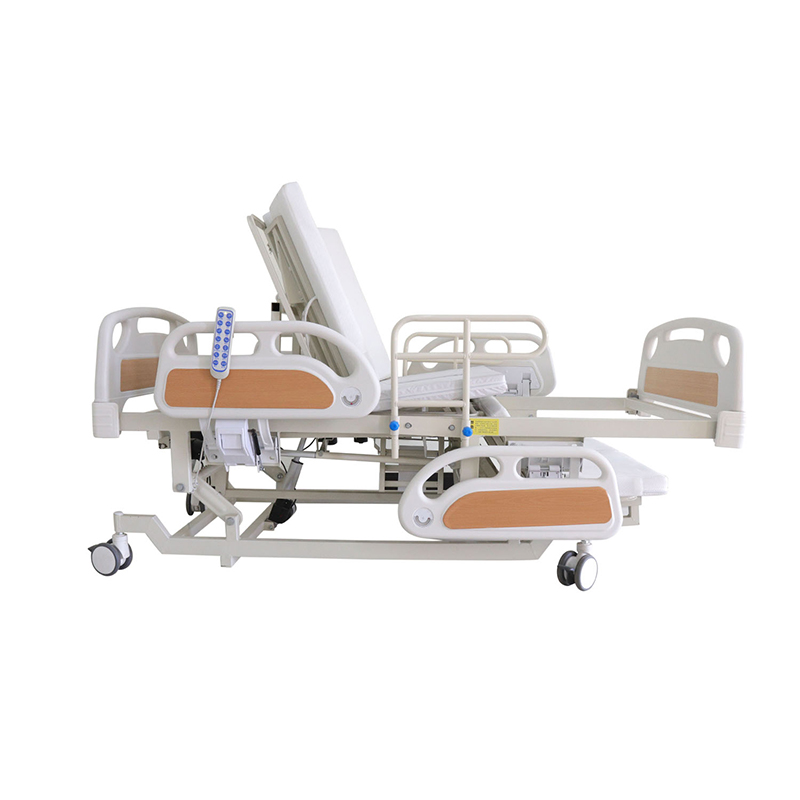
Electric beds allow faster positioning, reduce strain on nurses, and may let suitable patients adjust their own position.
Nevertheless, electric models require closer review. Confirm voltage, frequency, plug type, motor protection, emergency lowering, battery backup, cable routing, and handset durability. In areas with unstable electricity, voltage protection or backup power may be necessary.
A mixed strategy is often practical: use manual beds in general wards and reserve electric models for departments where frequent adjustment clearly improves care.
Prioritize Frame Strength and Stability
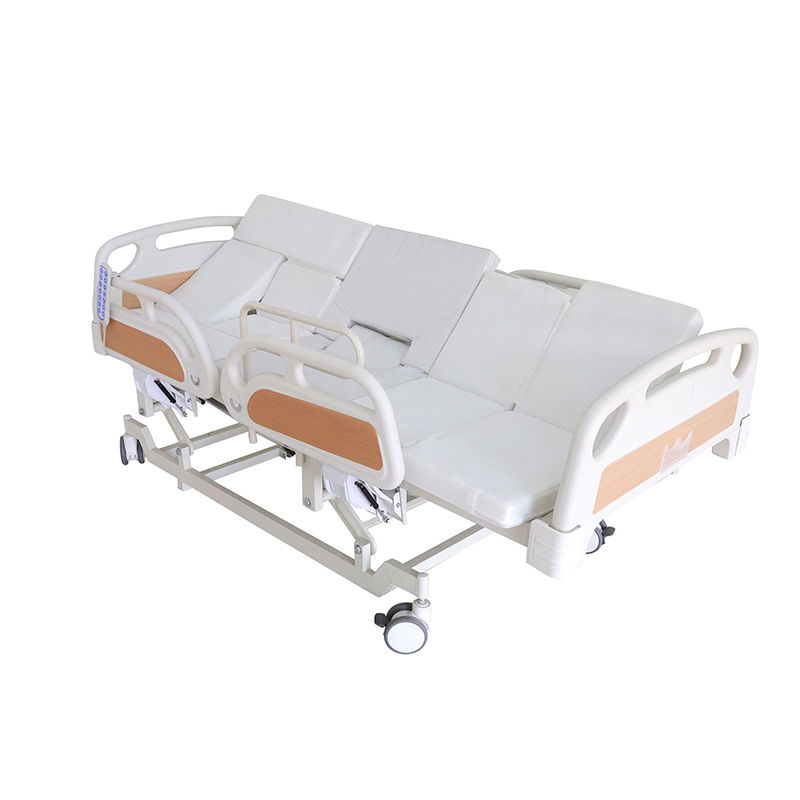
The frame is the foundation of the bed. Weak construction may bend, loosen, vibrate, or become unstable after repeated use. Because rural facilities may not be able to replace damaged equipment quickly, structural quality is critical.
Evaluate steel thickness, welding, surface treatment, platform design, and overall stability. Powder-coated steel is widely used because it resists corrosion and is easier to clean than untreated metal. Welds should be consistent, with no sharp edges, large gaps, or obvious weak points.
The bed should remain stable when sections are raised and should not rock excessively during routine care. Verify how the safe working load was tested and whether it includes the patient, mattress, and accessories.
Select Only Useful Adjustment Functions
Common hospital bed functions include backrest adjustment, leg elevation, height adjustment, Trendelenburg, reverse Trendelenburg, and cardiac chair positioning. Each added function increases cost and may add maintenance requirements.
Backrest adjustment supports feeding, breathing, communication, and comfort. Leg elevation assists positioning, while height adjustment can make transfers safer and reduce strain on caregivers. Trendelenburg functions may be important in certain departments but unnecessary in many general wards.
Consult doctors, nurses, and maintenance staff before finalizing specifications. A simple bed with three regularly used functions is often a better investment than a complex model with features staff rarely need.
Fewer unnecessary components also make training easier, reduce repair risk, and simplify spare-parts management.
Check Side Rails, Casters, and Brakes
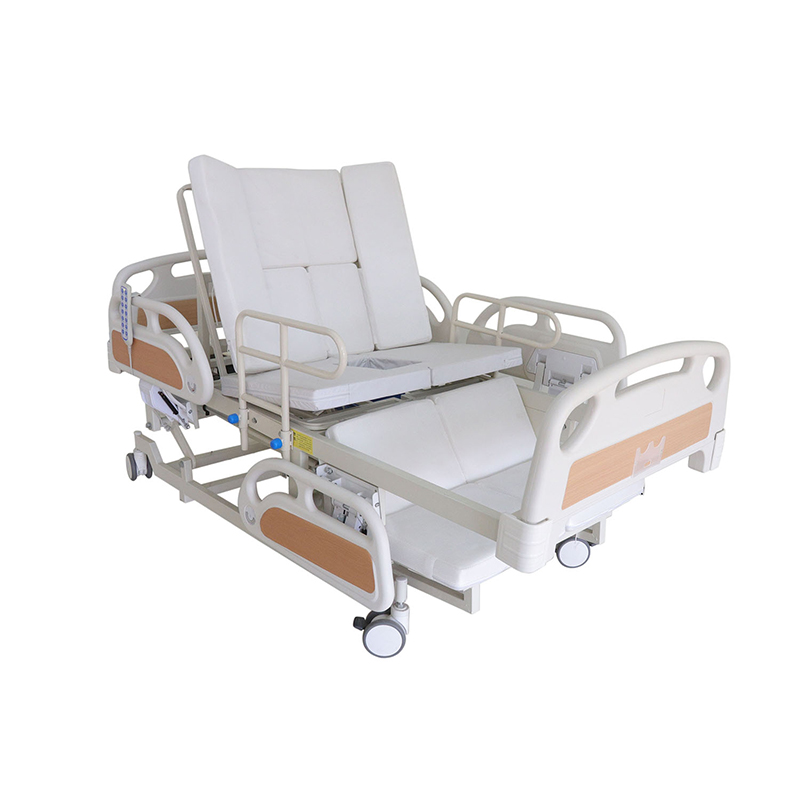
Side rails should move smoothly, lock securely, and avoid obvious trapping points. Their effective height must be checked with the selected mattress because an overly thick mattress can reduce protection.
ABS side rails are easy to clean and may include angle indicators. Aluminum alloy rails can provide a simple folding structure and good durability. The right option depends on care requirements, cleaning practices, budget, and replacement availability.
Casters must roll smoothly on the facility’s actual floors. Rural hospitals may have uneven surfaces, thresholds, older corridors, or outdoor transfer areas. Larger casters can improve movement on imperfect flooring.
Brakes should be easy to operate and hold the bed securely. Central locking systems save time when beds move frequently, while individual brakes may be simpler and less expensive. Test bed stability during transfers and routine care.
Make Cleaning and Infection Control Easier
Hospital beds must be cleaned efficiently between patients. Deep gaps, exposed fasteners, and inaccessible corners increase cleaning time and may retain contamination.
Choose smooth surfaces, removable headboards and footboards, accessible mattress platforms, and corrosion-resistant coatings. Plastic parts should tolerate routine disinfectants without cracking, fading, or becoming brittle.
The platform, rails, crank handles, IV pole sockets, and accessory hooks should be accessible without extensive disassembly.
The mattress must fit the platform properly and provide suitable patient support. Its cover should be waterproof, washable, and compatible with the facility’s usual cleaning products.
Plan Maintenance and Spare Parts Early
In remote areas, a small failed component can leave a bed unusable for weeks. Spare-parts planning should therefore begin before the order is placed.
Ask the supplier for a recommended spare-parts package based on the quantity purchased. Typical items include casters, brakes, crank handles, rail components, motors, handsets, cables, headboards, fasteners, and gas springs.
Frequently replaced parts should be removable with common tools. Clear assembly diagrams, maintenance instructions, wiring information, and troubleshooting guidance can shorten downtime. Part numbers should remain consistent for future orders.
Standardization creates additional savings. When several models share the same casters, rails, boards, or motors, technicians learn fewer systems and one spare-parts inventory can support more beds.
Jcare can discuss model standardization, compatible accessories, and spare-parts packages with B2B buyers before bulk purchasing.
Review Power Conditions for Electric Beds
Electric beds must match local voltage, frequency, plug type, grounding, and power stability. Ordering without confirming these details may lead to adapters, rewiring, or component replacement.
In unstable power environments, consider surge protection, voltage regulation, battery backup, or manual emergency adjustment. Cables should be protected from casters, cleaning equipment, and accidental pulling.
Ask what happens during an outage: whether the backrest can be lowered manually, which functions use battery power, and how often the battery must be tested or replaced.
Manual beds remove most electrical concerns. Electric models can still be reliable when their power systems are matched to local conditions and staff are trained correctly.
Consider Transport, Storage, and Installation
Rural projects may involve long road journeys, repeated warehouse handling, or delivery to sites without forklifts. Packaging and assembly therefore affect the true purchase value.
Beds should be protected against scratches, impact, moisture, and loose parts. Confirm whether each model is shipped assembled, partly assembled, or knocked down. Compact packaging can reduce freight costs but may require more local labor.
Measure doorways, corridors, elevators, stairs, and storage areas before ordering. Check overall bed dimensions, package size, net weight, and gross weight. For facilities with limited unloading equipment, smaller packages may be easier to manage.
Instructions should include clear images and numbered parts. After arrival, inspect packaging, count components, test functions, and record any damage before installation.
Compare Total Cost, Not Only Unit Price
The lowest quotation does not always create the lowest cost. A bed that needs frequent repairs, uses uncommon parts, or arrives poorly packed can become expensive after delivery.
Total ownership cost includes price, freight, duties, assembly, training, preventive maintenance, spare parts, electricity, cleaning time, downtime, and expected service life. Warranty terms and after-sales response also influence value.
Use one specification sheet when comparing suppliers. Confirm frame material, functions, safe working load, casters, rails, mattress, accessories, packaging, warranty, lead time, and spare-parts support.
A slightly higher-priced bed may provide better value when it offers stronger construction, standardized components, simpler maintenance, and dependable support. Evaluate cost per year of useful service rather than price per unit alone.
Test a Sample Before Bulk Purchasing
A sample order allows buyers to verify movement quality, noise, stability, finish, cleaning access, and usability beyond what photos can show.
Ask nurses, technicians, cleaners, and purchasing staff to test the sample. Operate every function repeatedly, move the bed through doorways, check brakes on different floors, inspect welding and coating, and confirm mattress fit.
For electric beds, test the handset, motors, cables, battery, and response during a power interruption. For manual models, check crank effort, handle storage, movement smoothness, and mechanical play.
Record results in an evaluation form. Any improvements should be confirmed in writing before mass production. This step greatly reduces the risk of receiving beds that do not suit daily operations.
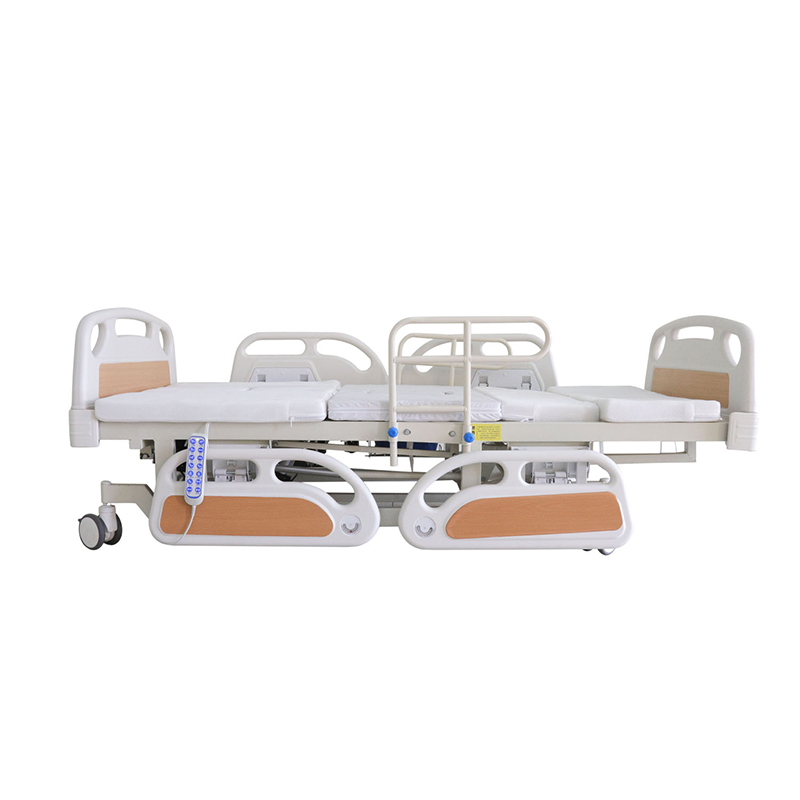
How Can Buyers Select a Reliable Hospital Bed Supplier?
A suitable supplier should offer more than a price list. Rural healthcare buyers may need configuration advice, export packaging, documentation, mixed loading, spare parts, and dependable lead times.
Ask about material inspection, welding checks, functional testing, load testing, electrical inspection, packaging control, and final shipment records. Request current photos or videos of the actual model rather than relying only on promotional images.
Good communication is equally important. Technical questions should receive clear answers, specifications should be confirmed in writing, and limitations should be identified before production.
Заключение
Choosing hospital beds for rural healthcare facilities requires a practical balance of patient safety, staff efficiency, durability, maintenance, and budget. Buyers should assess clinical needs, manual versus electric operation, frame strength, adjustment functions, rails, casters, cleaning access, power compatibility, spare parts, transport, and total ownership cost.
The best bed is not always the one with the most functions. It is the model that staff can operate confidently, maintain locally, clean efficiently, and keep in dependable service for years.
What challenges does your facility face when purchasing hospital beds? Share your experience in the comments, and send this guide to colleagues involved in rural healthcare procurement.