
Moving a patient from a hospital bed to a wheelchair, stretcher, chair, or standing position may look routine, but unsuitable bed height, limited access, or unstable movement can make the process harder. These problems may increase caregiver effort and disrupt workflow. A well-designed hospital bed helps by improving positioning, access, stability, and compatibility with transfer equipment.
Hospital beds help with patient transfers by allowing caregivers to adjust bed height, reposition the patient, lower side rails, stabilize the bed with brakes, and align the mattress platform with wheelchairs or stretchers. These functions can make transfer preparation more efficient and reduce unnecessary bending, reaching, and lifting. However, the bed itself does not replace trained staff, patient assessment, or transfer aids when additional assistance is required.
Different bed features support different transfer situations. Understanding them helps buyers select models that match real clinical workflows.
What Does Patient Transfer Mean in Hospital Care?
Patient transfer means moving a patient from one surface or position to another. Common examples include bed-to-wheelchair, bed-to-stretcher, bed-to-chair, and lying-to-sitting or sitting-to-standing movements.
Preparation often involves more than the final movement. Caregivers may need to raise the patient, change bed height, lower a side rail, position a wheelchair or stretcher, lock the bed, and ensure enough working space.
Some patients can participate actively, while others require caregivers, slide sheets, transfer boards, standing aids, or mechanical lifts. The bed should therefore be viewed as part of a wider patient-handling system.
How Does Adjustable Bed Height Help with Patient Transfers?
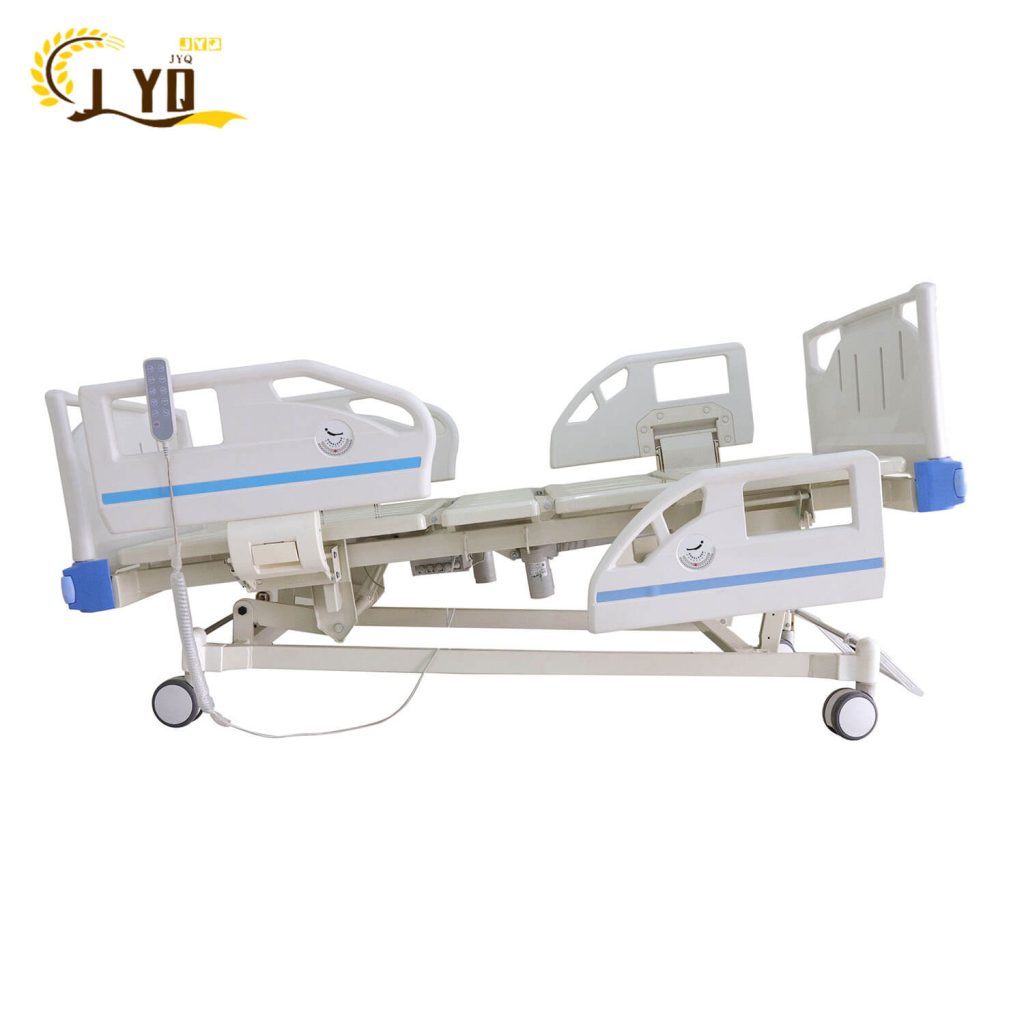
Height adjustment is one of the most useful hospital bed functions for transfers. By moving the mattress platform up or down, caregivers can prepare the patient at a more practical level.
This can support wheelchair transfers, stretcher transfers, assisted standing, and routine repositioning.
Height Adjustment Improves Surface Alignment
A large height difference between two surfaces can make transfer more difficult. If a stretcher is much higher or lower than the bed, staff may need to move the patient across an uneven level. An unsuitable height can also complicate wheelchair transfers.
An adjustable hospital bed gives caregivers more flexibility before movement begins. The surfaces do not always need to be exactly level because the correct position depends on the patient and transfer method. However, a wider adjustment range provides more options.
For buyers, minimum and maximum platform height should therefore be treated as working specifications, not simply comfort features.
Bed Height Also Affects Caregiver Posture
Transfer preparation may require staff to lean over the patient, move the legs, position equipment, or support the upper body.
If the bed is too low, caregivers may bend excessively. If it is too high, they may struggle to work comfortably. Adjustable height allows the working level to be changed according to the task, which is especially useful in wards where transfers happen frequently.
How Do Side Rails Affect Patient Transfers?
Side rails are often associated with patient support, but their design also affects access during transfers.
In many bed-to-chair or bed-to-wheelchair transfers, caregivers need direct access to the patient’s side. A bulky or difficult-to-lower rail may interfere with wheelchair placement, transfer aids, or staff movement.
Foldable Side Rails Create Better Access
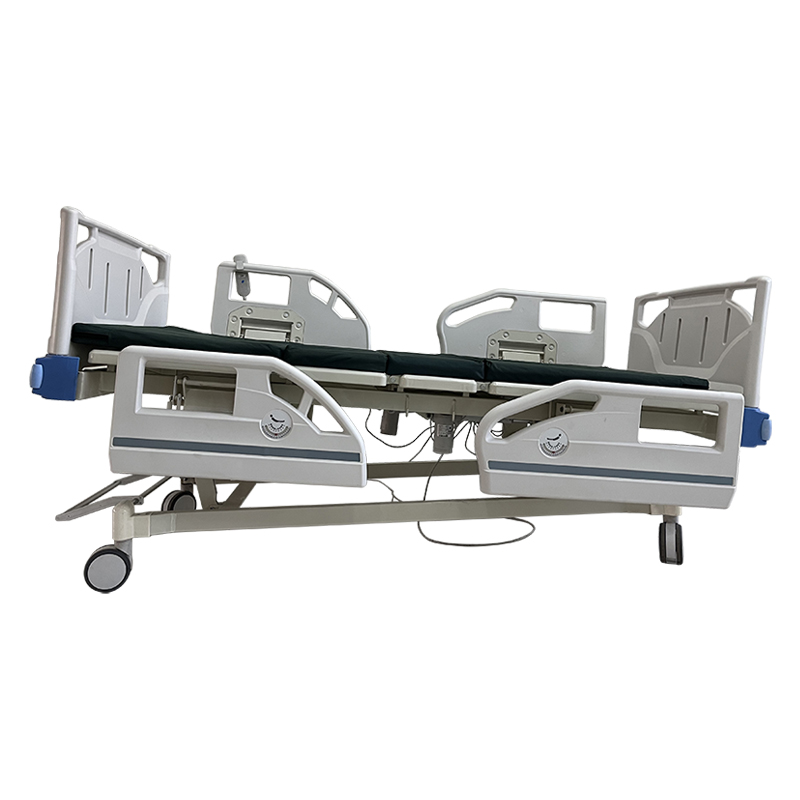
Many hospital beds use foldable, collapsible, drop-down, or detachable side rails. When the rail moves fully away from the transfer area, staff have more room to position a wheelchair, transfer board, or standing aid.
Buyers should check whether the rail locks securely, releases smoothly, folds clear of the working area, and remains easy to clean and maintain.
Why Are Casters and Brakes Important During Transfers?
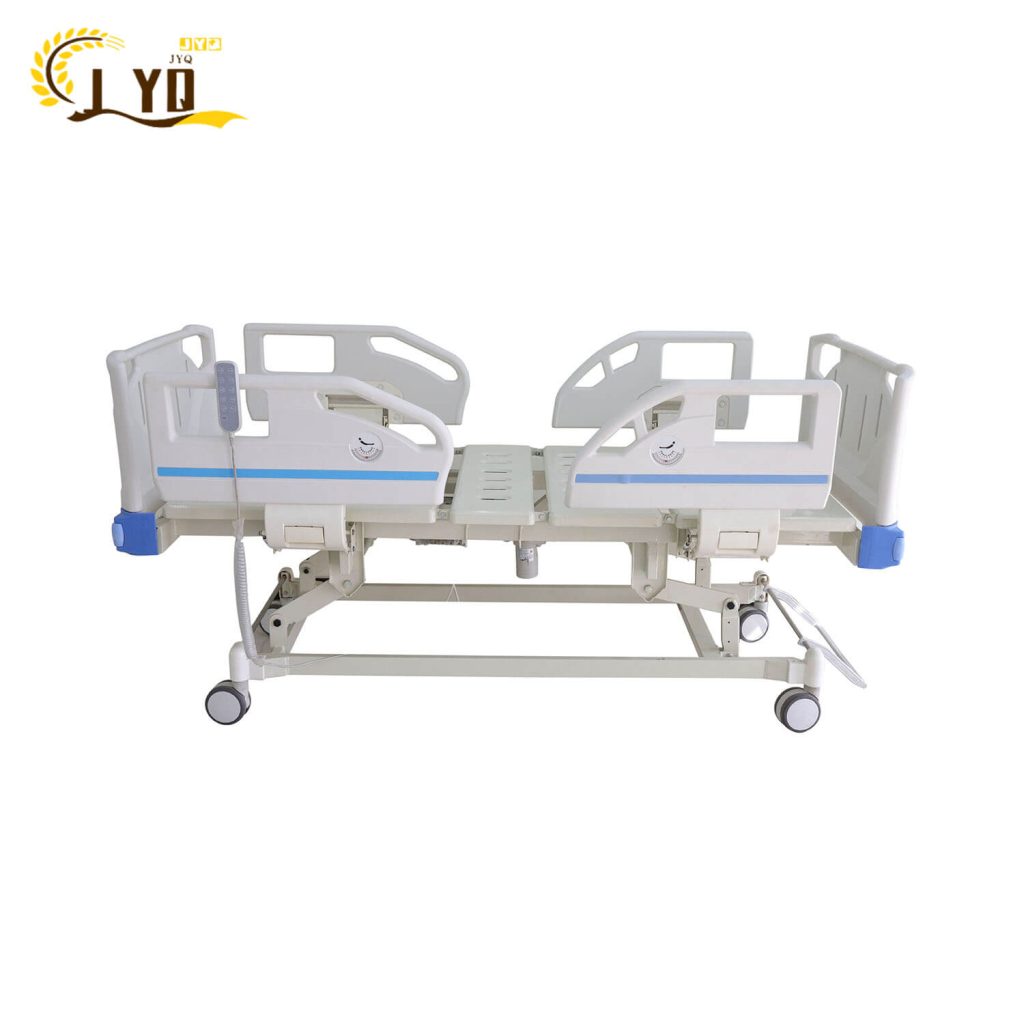
A hospital bed must move easily when staff reposition it, but it must also remain stable when the patient is transferring. That makes casters and brakes important to both mobility and safety.
Brakes Help Keep the Bed Stable
Before many transfers, the bed needs to remain stationary. Unexpected movement while a patient is sitting at the edge or preparing to stand can make the process harder.
Some beds use individual caster brakes, while others use linked or central-locking systems. Central locking can be convenient in busy wards because several wheels can be secured through one control.
Buyers should compare brake accessibility, ease of operation, durability, and maintenance requirements.
Smooth Casters Help Position the Bed
Staff may need to reposition the bed to create working space, align it with a stretcher, or make room for a mobile lift. Caster diameter, wheel material, directional control, and total bed weight can affect maneuverability, so mobility and stability should be evaluated together.
How Does Backrest Adjustment Help Prepare a Patient?
Many patients do not move directly from a flat position to standing. The process may involve raising the upper body, moving the legs toward the edge, sitting upright, and then moving toward a chair or standing position.
Backrest adjustment can support this preparation.
Gradual Positioning Can Simplify the Process
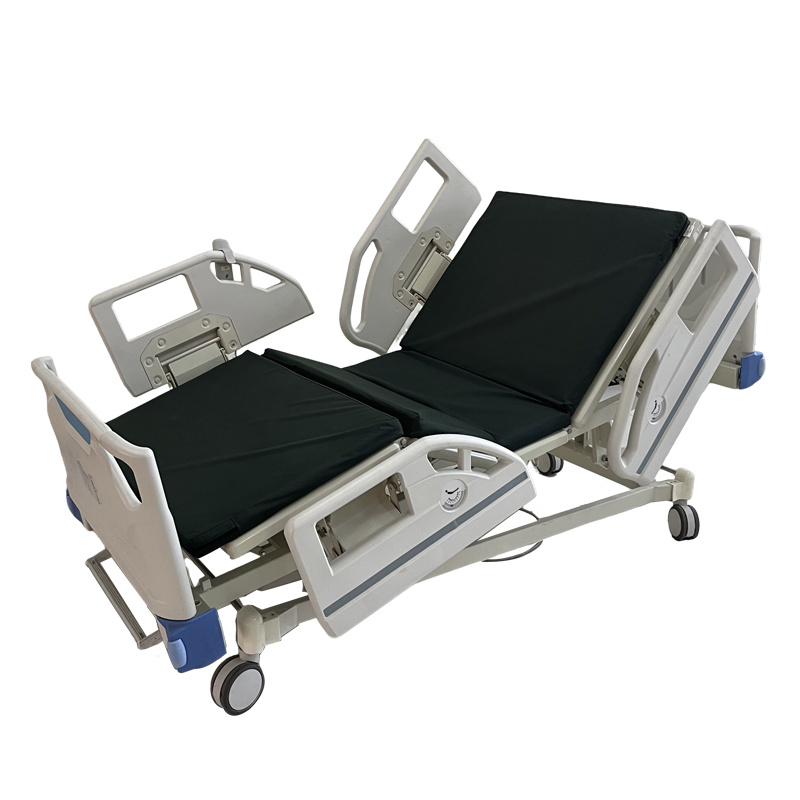
An adjustable backrest allows the patient’s upper body to move from lying toward sitting without requiring the entire change to be performed manually.
Electric beds usually use a handset or control panel, while manual beds may use a crank. Both can support transfer preparation, although powered adjustment is generally more convenient when changes are frequent.
Leg or knee adjustment can also support positioning before some transfers. Buyers should therefore focus on whether the available functions match real care needs rather than simply selecting the bed with the highest function count.
How Do Hospital Beds Support Bed-to-Wheelchair Transfers?
Bed-to-wheelchair transfer is common in hospitals, clinics, rehabilitation centers, and long-term care facilities.
Several bed features work together. The bed can be moved to a suitable height, the backrest may be raised, the transfer-side rail can be lowered, and the wheelchair can be positioned close to the mattress.
The bed should remain stable while the surrounding area stays clear of unnecessary obstacles.
Wheelchair Positioning Depends on Bed Access
A wheelchair needs enough room to approach the bed without being blocked by the frame, side rail, accessories, or nearby furniture.
This is why buyers should compare the complete external width of the bed, not only the mattress-platform size. IV poles, urine bag hooks, bedside tables, and other accessories should also be positioned so they do not interfere with routine transfers.
How Do Hospital Beds Support Bed-to-Stretcher Transfers?
Bed-to-stretcher transfers are common when patients move between wards, examination rooms, imaging departments, or operating areas.
These transfers often involve lateral movement from one flat surface to another. Height adjustment can help staff bring the bed to a more suitable level relative to the stretcher. Side rails should move away from the transfer path, while brakes help keep the surfaces stable during preparation.
Transfer Aids May Still Be Required
Depending on the patient, a lateral transfer may involve slide sheets, transfer boards, air-assisted systems, mechanical devices, or additional caregivers.
A hospital bed should work with these devices rather than create obstacles. Sufficient side access, suitable height adjustment, and space around the frame all improve equipment compatibility.
The bed supports the process but does not replace the appropriate transfer method.
Why Is Under-Bed Clearance Important?
Under-bed clearance matters when mobile patient lifts or other transfer equipment must approach the bed. Lift bases may need to move partially underneath it, while motors, crossbars, or control boxes can limit access.
For this reason, buyers should compare under-bed height, caster positions, frame width, and base structure with equipment already used in the facility, especially before placing a bulk order.
Are Electric Hospital Beds Better for Frequent Transfers?
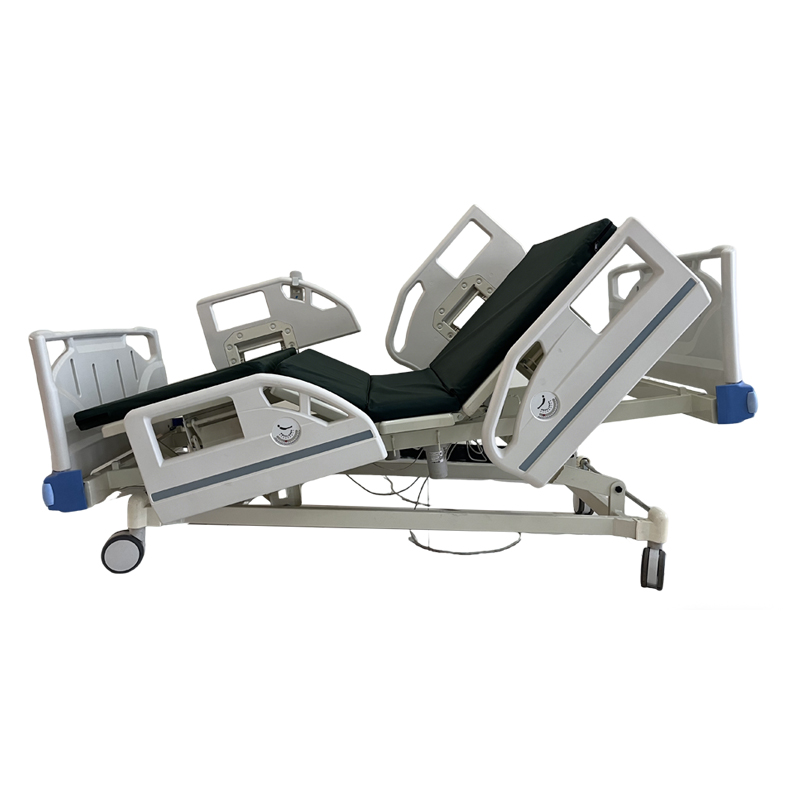
Electric beds can be convenient where staff change height and patient position frequently. Powered controls make backrest, leg, and platform adjustments quicker than repeated manual cranking.
Manual Beds Can Still Meet Many Transfer Needs
Manual beds can still work well where adjustments are less frequent or where budget and maintenance favor simpler equipment. A suitable choice depends on transfer frequency, patient dependency, staffing, power availability, maintenance capability, and required functions.
Which Hospital Bed Features Matter Most for Transfers?
When transfers are an important purchasing consideration, buyers should evaluate several related features together.
Key specifications include:
- Минимальная и максимальная высота станины
- Регулировка спинки и подножки
- Side rails that move clear of the transfer area
- Reliable caster brakes or central locking
- Smooth maneuverability
- Total external bed width
- Under-bed clearance
- Допустимая рабочая нагрузка
- Easy-to-reach controls
- Compatible mattresses and accessories
Safe Working Load Should Match the Patient Population
The bed must be suitable for the expected patient load. Buyers should review the manufacturer’s specified safe working load and avoid selecting a bed only by appearance or frame size.
The mattress, side rails, accessories, and other components should also match the intended bed configuration.
What Should Buyers Check Before Purchasing Hospital Beds?
Before requesting quotations, hospital buyers should convert transfer needs into practical questions:
- What are the minimum and maximum mattress-platform heights?
- Do the side rails fold fully away from the transfer area?
- Does the bed use individual brakes or central locking?
- What is the specified safe working load?
- Is there enough clearance for mobile lifting equipment?
- What is the complete external width of the bed?
- Which positioning functions are electric or manual?
- Can accessories be placed without blocking transfers?
- Are compatible mattresses and replacement parts available?
- Can the configuration be customized for the intended ward?
These questions improve supplier comparisons because similar-looking beds may perform differently in daily use.
How Should Different Departments Prioritize Transfer Features?
Transfer patterns vary by department. Rehabilitation wards may prioritize wheelchair access, adjustable height, and easy side entry, while general wards may need a balance of maneuverability, braking, and positioning.
High-dependency areas may benefit from frequent electric adjustment, whereas clinics or home care environments may prefer simpler, compact beds. Procurement should therefore begin with the intended care environment rather than a fixed function list.
How Can Jcare Support Hospital Bed Procurement?
Jcare supplies hospital beds, home care beds, rehabilitation products, other medical furniture, and medical bed accessories for B2B and wholesale purchasing.
Buyers can compare models according to ward type, side-rail design, caster system, height adjustment, positioning functions, dimensions, accessories, and order quantity.
Jcare operates a 3,000-square-meter processing facility in China and supplies international B2B markets. Factory-direct pricing, stock availability, short delivery times, and configurable options support different procurement projects.
Providing the patient group, transfer equipment, required functions, dimensions, and order quantity helps identify a practical configuration.
Заключение
Hospital beds help with patient transfers by providing adjustable height, patient positioning, clear side access, stable braking, smooth mobility, and compatibility with wheelchairs, stretchers, and transfer equipment. Together, these features can make transfer preparation more organized and reduce unnecessary movement during routine care.
However, the bed is only one part of the transfer process. Patient mobility, staff training, transfer method, available assistance, room layout, and supporting equipment must also be considered.
For hospitals, clinics, distributors, and medical equipment buyers, the best approach is to evaluate real transfer workflows before deciding on bed specifications.
Which hospital bed features matter most in your facility or market? Share your experience in the comments, and share this article with colleagues comparing hospital bed configurations.