
Choosing the right hospital bed length may seem simple, but taller patients can experience limited legroom, footboard contact, or an awkward resting position. If bed length is overlooked, comfort, positioning, mattress fit, and caregiver access may all be affected. A properly designed bed extension adds usable length while keeping the bed practical for clinical care.
Bed extensions help taller patients by increasing the usable length of the mattress platform, giving the legs and feet more room and reducing contact with the footboard. They can improve comfort, support more natural positioning, and allow one hospital or home-care bed to accommodate patients of different heights. Safe use depends on mattress compatibility, secure locking, suitable side-rail spacing, and enough clearance around the extended bed.
The principle is straightforward, but several details affect performance and safety. Understanding them helps hospitals and distributors compare extension systems more accurately.
What Is a Bed Extension on a Hospital Bed?
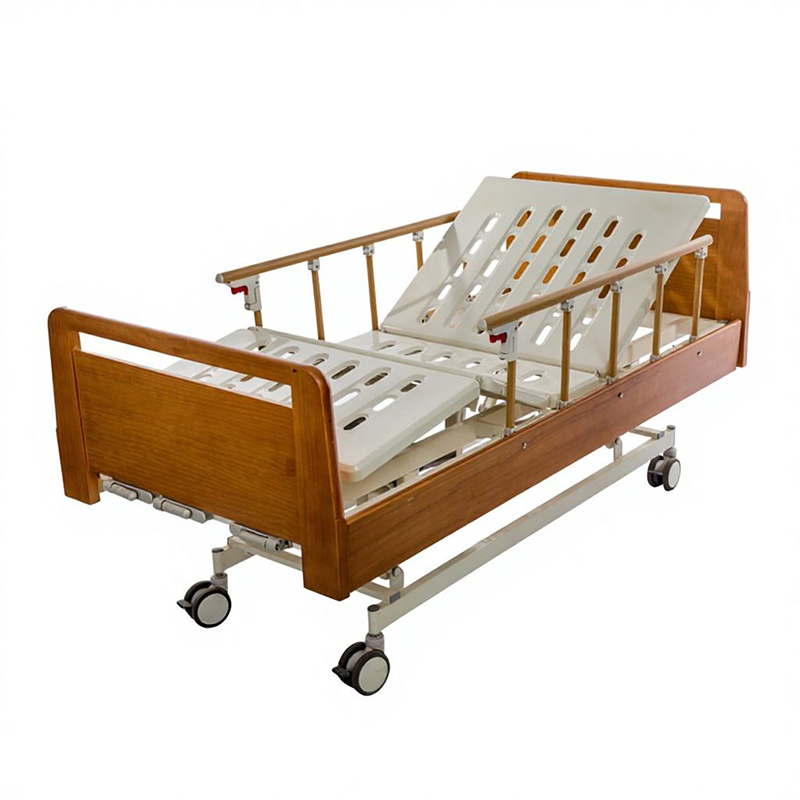
A bed extension is a built-in or optional mechanism that increases the length of the patient support surface, usually at the foot end. Depending on the design, the extension may slide outward, unlock to another position, or use a dedicated insert to create additional mattress-platform length.
Some beds provide one fixed extension position, while others offer several settings. Because the available range varies by model, buyers should compare actual standard and extended dimensions instead of assuming all extensions are the same.
Why Are Bed Extensions Useful in Mixed-Patient Facilities?
Hospitals, clinics, rehabilitation centers, and nursing facilities serve patients of different heights. Buying separate long beds can increase inventory and storage needs. An integrated extension provides flexibility because the same bed can remain at standard length for most patients and be lengthened only when necessary.
How Do Bed Extensions Improve Comfort for Taller Patients?
The main benefit is additional legroom. If a patient is too tall for the mattress platform, the feet may approach the footboard or sit too close to the end of the mattress. The patient may then shift upward or bend the knees simply to avoid contact.
An extension adds support at the foot end, allowing the legs and feet to rest more naturally. This can be particularly useful during hospital care, rehabilitation, or home recovery.
More Natural Leg and Foot Positioning
Even modest added length can improve fit. The heels remain better supported, the toes are less likely to press against the footboard, and the patient has more freedom to move. However, an extension does not replace pressure management, repositioning, or a therapeutic mattress; its role is to improve usable sleeping length.
Why Is Bed Length Important for Patient Positioning?
Hospital beds are designed for multiple positions. Patients may lie flat, raise the backrest, elevate the knees, or use other adjustments depending on the model.
If the bed is already close to the minimum comfortable length for a tall patient, these movements can make the foot area feel even more restricted. As the backrest rises, the body may move slightly toward the foot end, depending on the bed design, mattress surface, and patient movement.
Position Changes Can Reduce Available Foot Space
A longer platform provides extra margin during position changes. It can reduce the need for a tall patient to repeatedly move upward just to create space for the feet.
For this reason, procurement teams should not evaluate bed length only when the platform is flat. During sample inspection, they should also check the patient area with the backrest and leg sections adjusted.
How Much Extra Length Can a Bed Extension Provide?
There is no universal extension size. Depending on the hospital bed design, the added length may be around 100 mm, 150 mm, 200 mm, 300 mm, or another range. Some beds use preset locking points, while others offer only one extended position.
Procurement teams should therefore request both the mattress-platform length and the overall bed length in standard and extended configurations.
Compare Platform Length and Overall Length Separately
Platform length tells buyers how much usable support space is available to the patient. Overall bed length tells the facility how much floor space the product occupies.
The two measurements are not always the same because headboards, footboards, frames, or bumpers may extend beyond the platform. Clear dimensions make international quotation comparisons more reliable.
Why Does Mattress Compatibility Matter With Bed Extensions?
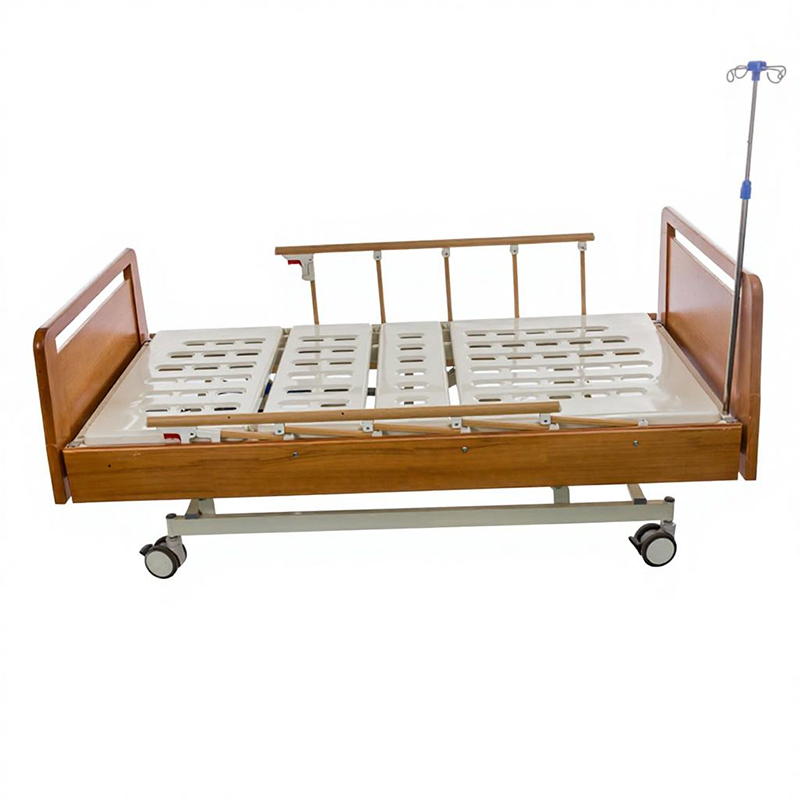
The mattress must match the extended configuration. Increasing frame length without extending the support surface can leave an unsupported section or unwanted gap at the foot end.
Depending on the design, the bed may use a longer one-piece mattress, a standard mattress plus an extension cushion, or a dedicated insert that fills the extended section.
The Mattress and Platform Should Work as One System
Buyers should confirm required mattress length, width, thickness, edge shape, and retention method before ordering. If an extra cushion is needed, they should also ask whether it is included or sold separately.
A bed may technically extend, but the longer configuration cannot be used correctly without the matching mattress part. Mattress-extension requirements should therefore appear clearly in quotations, technical sheets, manuals, and accessory lists.
Can Bed Extensions Affect Side-Rail Safety?
Yes. Extending a bed can change the distance between the mattress, side rails, headboard, and footboard. If these gaps change too much, the extended configuration may no longer provide the same protection as the standard setup.
This deserves particular attention on beds with split or partial-length side rails. The rail may stay in its original position while the platform becomes longer, increasing open space near the foot end.
Side-Rail Compatibility Should Be Checked in the Extended Position
Suppliers should state whether standard rails remain compatible at maximum bed length. Some models may require longer rails, a different rail position, or another approved accessory combination.
B2B purchasers should evaluate the whole bed system rather than treating the extension, rails, mattress, and footboard as unrelated parts. Clear compatibility information also supports customer training and after-sales service.
Does a Bed Extension Change Room Clearance?
Yes. Extra patient length also means a larger bed footprint. This may be easy to manage in a spacious ward, but it can affect circulation in smaller clinic rooms, nursing facilities, and home-care bedrooms.
The longer bed may reduce clearance near walls, bedside cabinets, equipment, wheelchairs, patient lifts, or medical-gas and electrical connections.
Facilities Should Check Both Patient Fit and Room Fit
Hospitals should confirm that caregivers can still reach the foot end, operate brakes, transfer the patient, move equipment, and clean around the bed.
Home-care buyers should make the same assessment because residential rooms often have less free space. A retractable extension also keeps the bed shorter for easier movement when extra length is not required.
How Should Bed Extensions Be Locked and Operated?
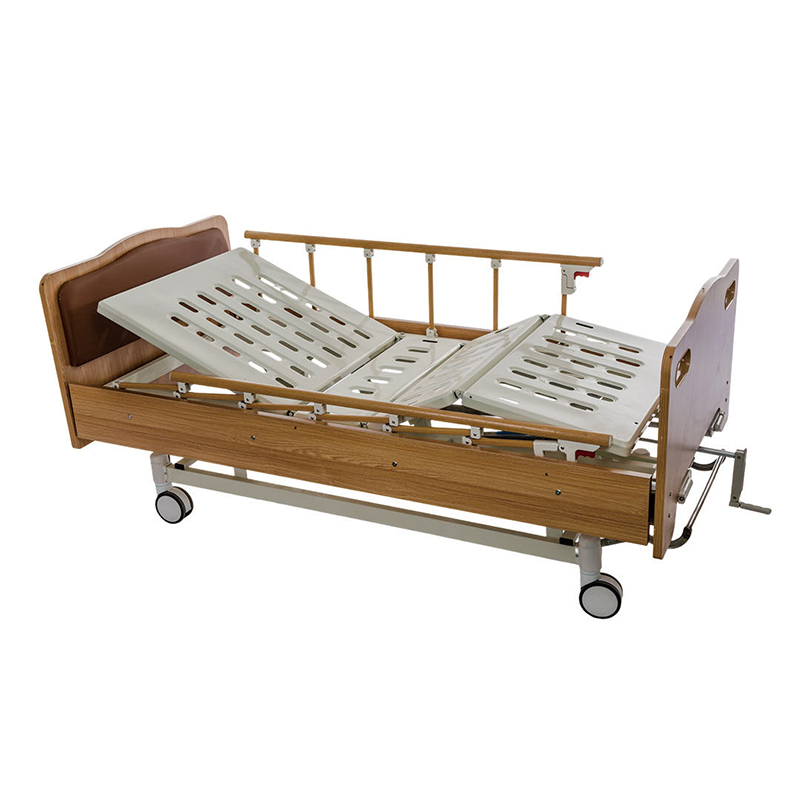
Extension mechanisms may use locking pins, knobs, catches, handles, sliding tubes, or mechanical stops. Whatever the design, the extended section should remain firmly secured during normal use.
The operating procedure should also be simple enough for trained staff or caregivers to understand without unnecessary force or complicated tools.
Clear Locking Helps Reduce Operating Errors
During product evaluation, buyers should extend and retract the bed several times and confirm that the correct position and full lock are easy to identify. They should also follow the manufacturer’s instructions about whether the patient can remain in bed during adjustment. The extension should not be used as a seat, step, or shelf unless specifically permitted.
Are Bed Extensions Useful for Home-Care Beds?
Yes, especially for taller users who spend long periods in bed. An extension can provide additional legroom without requiring a completely different bed model.
For home-care distributors, this can reduce the need to stock several bed-length variations.
Home-Care Buyers Need Simple Operation
Family members or non-professional caregivers may operate a home-care bed, so the extension should be easy to understand and difficult to mis-lock.
Room size, mattress compatibility, and accessory installation are also important. Buyers should confirm that the extended bed still leaves enough space for transfers, wheelchairs, bedside furniture, patient lifts, and caregiver movement.
Clear instructions and exact model compatibility can prevent problems after delivery.
Do Bed Extensions Affect Maintenance?
Any moving or removable component should be included in routine inspection. Extension systems may contain sliding tubes, pins, bolts, knobs, stops, brackets, or mattress-retaining parts that experience repeated use.
Over time, dirt, cleaning residue, loose hardware, accidental impact, or normal wear may affect movement or locking.
Extension Components Should Be Included in Preventive Maintenance
Maintenance teams should check that the extension moves smoothly, remains aligned, and locks correctly. They should also inspect mattress inserts, retaining parts, visible damage, loose fasteners, and position markings. Spare-parts availability matters because replaceable locking parts or inserts can reduce downtime and extend service life.
What Should B2B Buyers Check Before Purchasing?
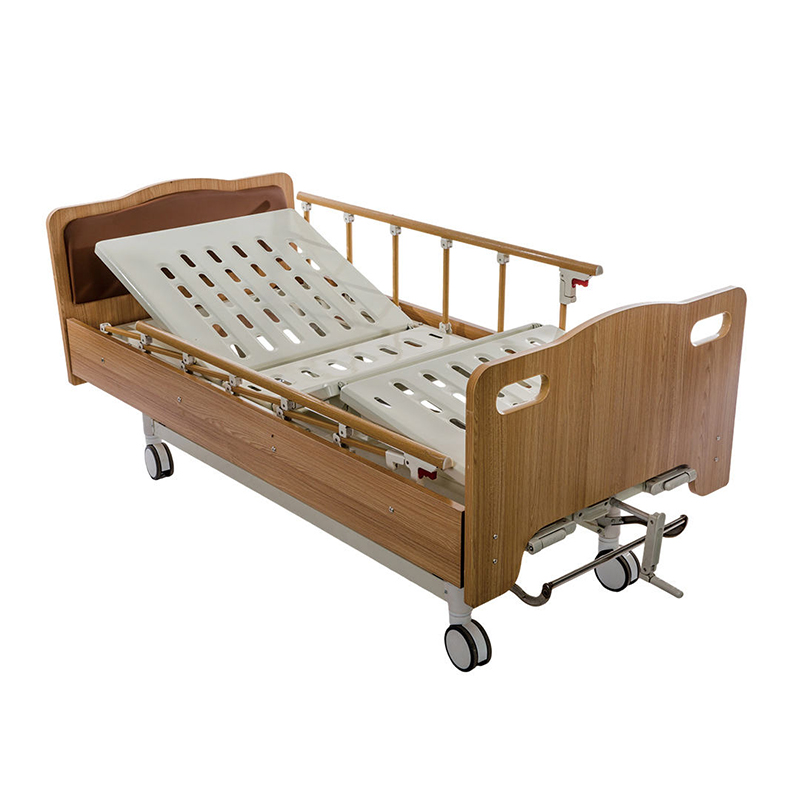
A simple specification such as “with bed extension” is not enough for hospital procurement. Buyers should confirm standard platform length, maximum extended length, number of positions, adjustment method, locking method, mattress requirements, and side-rail compatibility.
They should also ask whether the safe working load changes in the extended position and whether any bed functions are restricted.
Important Questions to Ask the Supplier
Useful questions include whether tools are required, whether the patient must leave the bed before adjustment, whether the mattress insert is included, and whether replacement parts are available.
Buyers can request drawings, photos, or an operation video showing both configurations. For wholesale purchasing, documenting the extension system clearly in the quotation and technical specification can reduce misunderstandings before production or shipment.
When Is a Bed Extension Not the Right Solution?
A bed extension is useful when the main problem is insufficient length, but it does not solve every patient-support requirement.
If a patient needs more width, a wider or bariatric bed may be more suitable. If the patient requires special traction equipment, a therapeutic mattress, or another clinical accessory, compatibility must be reviewed separately.
An extension may also be unsuitable when the room cannot safely accommodate the longer footprint.
Choose the Bed According to the Complete Requirement
Purchasers should consider patient height, weight, mobility, positioning needs, mattress requirements, room dimensions, and caregiver access together.
A longer bed is useful only when the complete system remains practical. The correct purchasing decision is therefore based on total bed configuration rather than one feature alone.
Заключение
Bed extensions help taller patients by increasing usable mattress-platform length, creating more room for the legs and feet, reducing footboard contact, and supporting a more natural resting position. They also allow hospitals, clinics, nursing facilities, and home-care providers to use one compatible bed for a wider range of patient heights.
However, extension distance is only one part of the decision. Buyers should also check mattress fit, side-rail compatibility, locking security, room clearance, operating procedures, maintenance, and spare-parts availability.
For hospitals, private clinics, home-care purchasers, and medical equipment distributors, clear technical specifications make it easier to compare products and avoid compatibility problems after delivery.
Jcare supplies hospital beds, home-care beds, rehabilitation products, medical furniture, and medical bed accessories for wholesale buyers. For questions about bed-extension configurations or purchasing requirements, contact Jcare at jcarebed@gmail.com.
Have you used hospital beds with built-in extensions in your facility or market? Share your experience or questions, and feel free to pass this article to colleagues comparing medical bed specifications.