
Hospitals and healthcare facilities often struggle with selecting hospital beds because procurement teams tend to focus mainly on upfront purchase prices while overlooking long-term operational costs such as maintenance, downtime, spare parts, and replacement cycles. This short-term mindset can lead to higher total expenses and reduced efficiency over time, especially in high-utilization environments where equipment reliability directly affects patient care quality and staff workload. A Total Cost of Ownership (TCO) approach provides a structured method to evaluate the full lifecycle cost and make more sustainable investment decisions.
Total Cost of Ownership (TCO) in hospital bed procurement is a lifecycle-based evaluation method that includes purchase cost, maintenance, downtime, energy consumption, labor, and replacement expenses. It helps hospitals avoid hidden long-term costs and make more financially efficient, operationally reliable investment decisions.
Transitioning from purchase price thinking to lifecycle cost thinking is essential for modern healthcare procurement strategies.
Understanding Total Cost of Ownership in Hospital Bed Investment
Total Cost of Ownership (TCO) is a financial and operational evaluation framework that measures the complete cost of a hospital bed from acquisition to disposal. Unlike simple pricing comparisons, TCO considers all direct and indirect costs over the equipment’s lifecycle.
For hospital beds, TCO typically includes:
- Initial procurement cost
- Installation and commissioning cost
- Preventive and corrective maintenance
- Spare parts replacement and logistics
- Energy consumption (especially electric beds)
- Staff training and operational learning curve
- Downtime and lost utilization value
- End-of-life replacement or disposal
In high-volume healthcare environments, even a small difference in failure rates or maintenance frequency can create significant cost divergence over time.
Understanding TCO allows procurement managers to move beyond unit price comparisons and evaluate true long-term value.
Key Cost Components in Hospital Bed Ownership
Acquisition Cost vs Real Value
The acquisition cost is the most visible part of procurement, but it is often misleading when used as the sole decision factor. Lower-priced hospital beds may appear cost-effective initially but can result in higher cumulative expenses due to frequent repairs or shorter lifespan.
High-quality manufacturing standards, such as those provided by Jcare, are designed to optimize long-term durability and reduce lifecycle costs through robust structural engineering and standardized components.
The real value of a hospital bed should be measured not by price alone, but by cost per year of service.
Maintenance and Repair Costs
Maintenance is one of the largest contributors to long-term ownership cost. Hospital beds are continuously used, adjusted, cleaned, and transported, making them highly exposed to wear and tear.
Common maintenance cost drivers include:
- Motor failure or actuator degradation
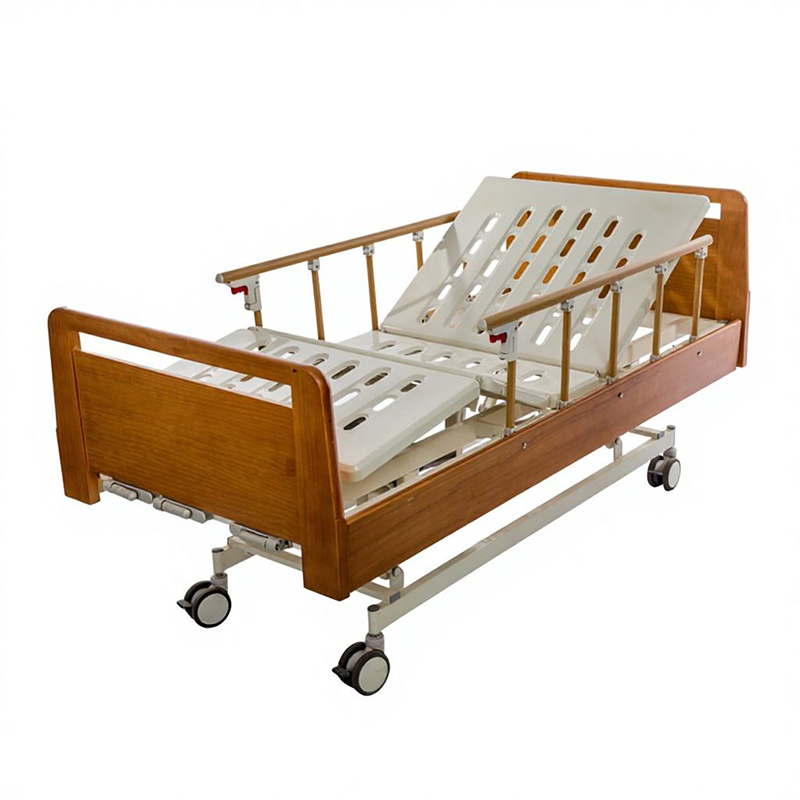
- Side rail locking system wear
- Wheel and braking system damage
- Frame fatigue or welding stress
- Electrical control system malfunction
Preventive maintenance programs can reduce unexpected breakdowns, but design quality plays an even greater role in long-term cost reduction.
Downtime and Operational Losses
Downtime represents one of the most underestimated components of TCO. When a hospital bed is unavailable:
- Patient admission capacity decreases
- Nursing staff workload increases
- Emergency patient transfers are delayed
- Revenue-generating capacity is reduced
Even a few hours of downtime per bed per month can accumulate into substantial operational losses for large hospitals.
High-reliability hospital beds significantly reduce downtime risk, improving both financial performance and patient care continuity.
Energy Consumption in Electric Hospital Beds
Modern electric hospital beds consume electricity through actuator systems, control panels, and auxiliary functions. Although individual consumption is relatively low, large-scale hospital deployment makes energy efficiency a meaningful cost factor.
Energy-related cost drivers include:
- Motor efficiency during height and angle adjustments
- Standby power consumption
- Frequency of adjustment cycles per patient
- Smart control system optimization
Energy-efficient systems not only reduce operating costs but also support sustainability goals in healthcare facilities.
Labor and Training Costs
Hospital beds require trained personnel for safe and efficient use. Training costs include:
- Nurse training for control systems
- Maintenance staff technical instruction
- Safety protocol education
- Emergency operation handling
If hospital beds are overly complex or lack standardized interfaces, training time and labor costs increase significantly. Simplified, intuitive designs reduce both initial training cost and long-term operational errors.
Risk, Compliance, and Safety Costs
Risk-related costs are often invisible but extremely important in healthcare procurement. Poor-quality beds can lead to:
- Patient injury incidents
- Regulatory non-compliance penalties
- Insurance premium increases
- Legal liability exposure
- Reputation damage for healthcare providers
Features such as anti-entrapment side rails, overload protection, and stable braking systems reduce these risks and improve compliance with international healthcare standards.
Lifecycle Cost Modeling and Depreciation Analysis
Hospital beds should be evaluated over their entire lifecycle, typically ranging from 5 to 15 years depending on usage intensity and quality level.
A simple lifecycle cost model can be expressed as:
TCO = Purchase Cost + Maintenance Cost + Downtime Cost + Energy Cost + Training Cost + Replacement Cost − Residual Value
Depreciation is not only a financial accounting concept but also a practical indicator of asset efficiency. A lower-cost bed with frequent breakdowns may actually have a higher annualized cost than a premium model with longer service life.
Hospitals that adopt lifecycle modeling often discover that mid-to-high quality equipment provides better financial performance over time.
Predictive Maintenance and Data-Driven Cost Optimization in Hospital Bed Management
In modern hospital bed lifecycle management, predictive maintenance technologies are increasingly influencing total cost of ownership outcomes. Instead of relying solely on reactive repair models, healthcare providers are shifting toward data-driven maintenance scheduling that reduces unexpected failures and improves asset utilization efficiency.
Advanced hospital beds can integrate sensors that monitor motor cycles, load stress, and movement frequency. These data points help maintenance teams identify early warning signs of component fatigue, allowing intervention before breakdown occurs. This reduces emergency repair costs and extends equipment lifespan.
When integrated into hospital asset management systems, bed performance data can be analyzed alongside occupancy rates and departmental usage patterns. Procurement departments can then optimize replacement cycles and redistribute equipment more efficiently across wards based on real-time demand.
As a result, hospitals adopting predictive maintenance models experience lower downtime, reduced spare parts consumption, and improved budgeting accuracy. Over time, these improvements significantly reduce total cost of ownership while enhancing patient care reliability.
Procurement Strategies to Reduce Total Cost of Ownership
Effective procurement strategies play a critical role in minimizing TCO. Healthcare institutions can optimize costs through several approaches:
Standardizing hospital bed models across departments reduces spare parts complexity and simplifies maintenance training. Centralized procurement improves negotiation leverage and ensures consistent quality standards.
Preventive maintenance scheduling helps avoid unexpected breakdowns and extends equipment lifespan. Hospitals that implement structured maintenance programs typically achieve lower long-term repair costs.
Evaluating suppliers based on lifecycle performance rather than price alone ensures better long-term outcomes. Procurement teams should request data on failure rates, warranty terms, and expected lifespan.
Bulk purchasing from reliable manufacturers can also reduce unit cost while improving supply chain stability.
The Role of Manufacturers and OEM Supply in TCO Optimization
Manufacturers play a critical role in controlling long-term ownership costs. Factory-level suppliers can reduce TCO through:
- Consistent component standardization
- Faster spare parts availability
- Longer warranty coverage
- Modular repair-friendly designs
- Direct technical support access
- Reduced intermediary distribution costs
Working directly with OEM manufacturers such as Jcare provides hospitals with better control over lifecycle costs and ensures stable long-term supply continuity.
OEM partnerships also allow customization based on hospital requirements, improving operational efficiency and reducing unnecessary features that increase cost.
Application Scenarios: Different Hospital Bed Use Cases
Different healthcare environments have different cost structures and usage intensity, which directly impact TCO.
In ICU environments, hospital beds are used intensively with frequent adjustments, requiring high durability, advanced motor systems, and strong safety features. Downtime costs are extremely high in these settings.
In general wards, cost efficiency and maintenance simplicity are more important, as beds are used at moderate intensity but in large quantities.
In home care environments, ease of use and low maintenance requirements are critical, as professional maintenance support may be limited.
Rehabilitation centers require adjustable functionality and long-term patient comfort, making ergonomic design and durability key cost factors.
Understanding usage scenarios helps optimize procurement decisions and reduce unnecessary expenditure.
Common Mistakes in Hospital Bed Investment Decisions
Many procurement teams make similar mistakes that lead to higher long-term costs:
Focusing only on initial purchase price instead of lifecycle cost is the most common error. This often results in selecting lower-quality equipment that increases maintenance expenses.
Ignoring spare parts availability can create long downtime periods and higher repair costs.
Underestimating training requirements leads to operational inefficiencies and user errors.
Failing to consider energy consumption is increasingly problematic as hospitals scale their infrastructure.
Over-customization of hospital beds can also increase complexity and maintenance difficulty.
Avoiding these mistakes is essential for achieving optimal TCO outcomes.
Заключение
Total Cost of Ownership analysis provides a comprehensive framework for evaluating hospital bed investments beyond simple price comparisons. By considering maintenance, downtime, energy consumption, labor costs, safety risks, and lifecycle performance, healthcare institutions can make significantly more informed procurement decisions.
Hospitals that adopt TCO-based strategies achieve lower long-term operational costs, improved equipment reliability, and better patient care outcomes. Choosing durable, standardized, and manufacturer-supported hospital beds is not just a purchasing decision but a long-term operational strategy that directly impacts financial sustainability.
Engaging with reliable manufacturers and adopting lifecycle thinking ensures that procurement decisions align with both clinical needs and economic efficiency.