
Electric hospital beds provide important positioning functions, but buyers often ask what happens when a motor, controller, cable, or mechanical part fails. If repairs require complex disassembly or rare components, downtime and maintenance costs rise. A repair-friendly design helps hospitals and distributors simplify servicing, shorten downtime, and improve long-term equipment value.
An electric hospital bed is easier to repair when its electrical and mechanical parts are modular, accessible, clearly connected, and individually replaceable. Removable actuators, organized wiring, accessible control boxes, plug connectors, replaceable wear parts, clear labels, spare-parts availability, and maintenance documentation help technicians identify faults faster and replace only the damaged component, reducing labor, unnecessary replacement, downtime, and long-term maintenance costs.
Repairability depends on the whole bed, not one component. These details are important when comparing electric hospital beds for institutional or wholesale purchasing.
Why Does Repairability Matter for Electric Hospital Beds?
Electric hospital beds may be adjusted many times daily. Motors extend and retract, cables move with the platform, casters roll through wards, and hand controllers are used repeatedly. Even a well-made bed can eventually require maintenance.
For hospitals, difficult repairs can leave beds unavailable and raise maintenance costs. For distributors, they can also increase after-sales workload.
Buyers should therefore evaluate not only how a bed performs when new, but also how easily common components can be inspected, removed, replaced, and reordered later.
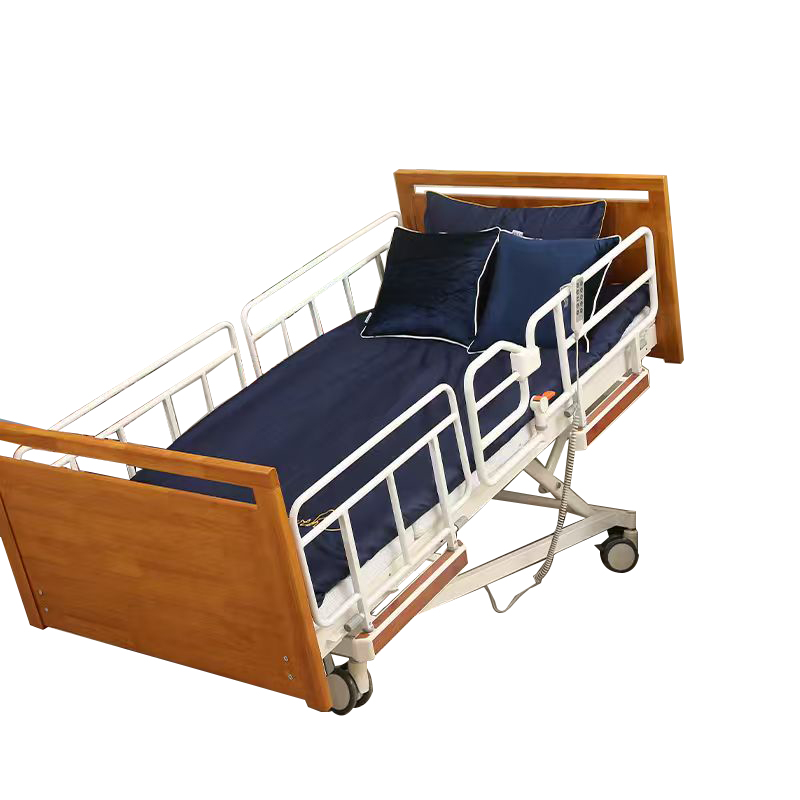
How Does Modular Design Make a Hospital Bed Easier to Repair?
Electrical Components Should Be Replaceable Separately
A modular electrical system is one of the clearest signs of a service-friendly hospital bed.
Depending on the model, the system may include several actuators, a control box, handset, power supply, battery, and wiring harnesses. If these parts are independent, technicians can replace the failed component without changing the entire system.
For example, if the backrest actuator fails, the technician should replace that actuator while leaving the control box and other motors in place.
This lowers repair cost and simplifies troubleshooting because technicians can test components one by one.
Mechanical Parts Should Also Be Serviceable
The same principle applies to side rails, casters, hinges, brackets, pins, and platform sections.
A damaged caster should normally be replaceable without dismantling the entire lower frame. Likewise, a worn side-rail part should not require replacement of a large unrelated assembly.
Why Does Actuator Accessibility Matter?
Linear actuators create most electric hospital bed movements. Separate actuators may control the backrest, leg section, bed height, or Trendelenburg positioning.
Because actuators are working components, they may eventually require inspection or replacement.
Accessible Mounting Reduces Repair Time
A service-friendly actuator should be positioned where technicians can reach its mounting points, cable connection, and retaining hardware without removing several unrelated components.
Actuators are commonly fixed using pins, bolts, clips, or brackets. These connections can remain secure while still allowing removal with standard tools.
Working clearance also matters. A technician needs enough room to disconnect the plug, remove a retaining pin, and move the actuator away from its bracket. If multiple frame sections must be removed just to reach one motor, a simple repair becomes unnecessarily difficult.
How Does Wiring Design Affect Repairability?
Not every electrical failure is caused by a motor or control box. A damaged cable, loose connector, or pinched wire can also stop a bed function.
Organized Cable Routing Makes Inspection Easier
Hospital bed cables move as the bed changes position. Poor routing can cause abrasion, excessive bending, pinching, or tension at connectors.
Good cable management may include clips, protective sleeves, strain relief, clear routing paths, and sufficient cable length for movement. When wiring is organized, technicians can follow the cable from the actuator to the control system and quickly check for visible damage or loose connections.
Plug Connectors Reduce Rewiring
Secure plug-and-socket connections make component replacement easier. Technicians can disconnect a motor, handset, or control box without cutting wires or performing complicated electrical work.
Clearly marked connectors also reduce the risk of connecting cables to the wrong ports. For hospitals and overseas distributors using local maintenance teams, this makes routine service much more practical.
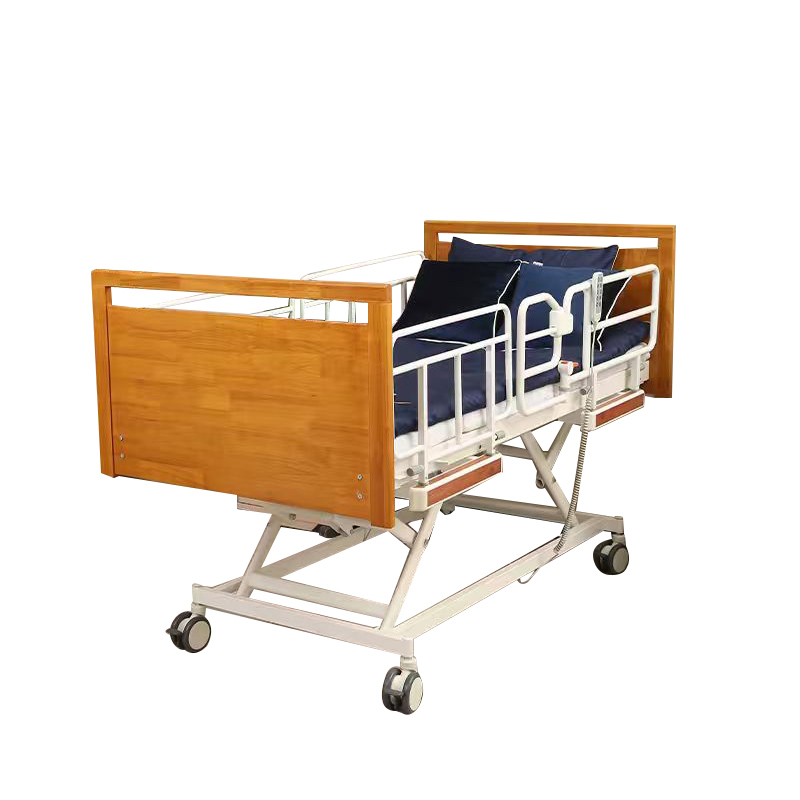
Why Should the Control Box Be Easy to Reach?
The control box is the central electrical connection point in many electric hospital beds. It receives commands from the handset or control panel and directs power to the appropriate actuator.
When one function stops working, technicians often need to inspect its ports and connections.
A repair-friendly design places the control box where connectors can be reached without dismantling major frame sections. At the same time, it should remain protected from impact, fluids, and inappropriate handling.
Good design balances protection with service access.
How Does Easy Fault Diagnosis Reduce Repair Costs?
Clear Component Separation Helps Find the Real Problem
Suppose the backrest no longer moves. The actuator may be faulty, but the cause could also be the handset, cable, connector, control box, or a mechanical obstruction.
When components are modular and clearly connected, technicians can inspect them systematically. They can confirm power, check the handset, inspect connectors, test the actuator, and examine the relevant control-box connection.
This reduces trial-and-error repairs and helps avoid replacing parts that are still working.
Mechanical Problems Must Be Easy to Recognize
Not every movement problem is electrical. A bent linkage, loose fastener, damaged hinge, or jammed bracket may prevent normal movement even when the actuator works correctly.
A serviceable bed allows technicians to observe both the motor and the mechanical structure. Distinguishing an electrical fault from a mechanical one can save time and prevent unnecessary parts replacement.
Why Are Spare Parts and Compatibility Important?
A bed can be easy to disassemble but still difficult to repair if replacement parts are unavailable or incompatible.
Common service parts include actuators, hand controllers, control boxes, power cables, batteries, casters, side-rail parts, connectors, pins, and hardware.
For overseas buyers, spare-parts planning matters because international shipping can extend repair lead times. Keeping a small quantity of critical parts locally may reduce downtime.
Compatibility must also be confirmed. Two actuators can look similar but differ in stroke length, installation size, force rating, voltage, connector type, or control compatibility. Handsets and control boxes may also vary.
Clear model numbers, part codes, connector labels, and spare-parts lists reduce ordering mistakes and make long-term service more reliable.
How Can Mechanical Construction Simplify Repairs?
Common Fasteners Make Service More Practical
Hospital beds contain fasteners around hinges, caster mounts, actuator joints, side rails, and platform supports.
Using practical, commonly available fasteners where appropriate can reduce the number of special tools needed for routine maintenance. Different locations still require suitable strength and locking methods, but sensible standardization makes servicing easier.
Wear Parts Should Be Replaceable
Some parts naturally experience more wear than others.
Casters are a clear example because beds are frequently moved through rooms, corridors, and elevators. If a caster or brake mechanism becomes damaged, replacing the individual assembly is more efficient than rebuilding the complete bed base.
The same principle applies to side-rail mechanisms, pins, bushings, hinges, and bumpers. Replaceable wear parts can extend bed life.
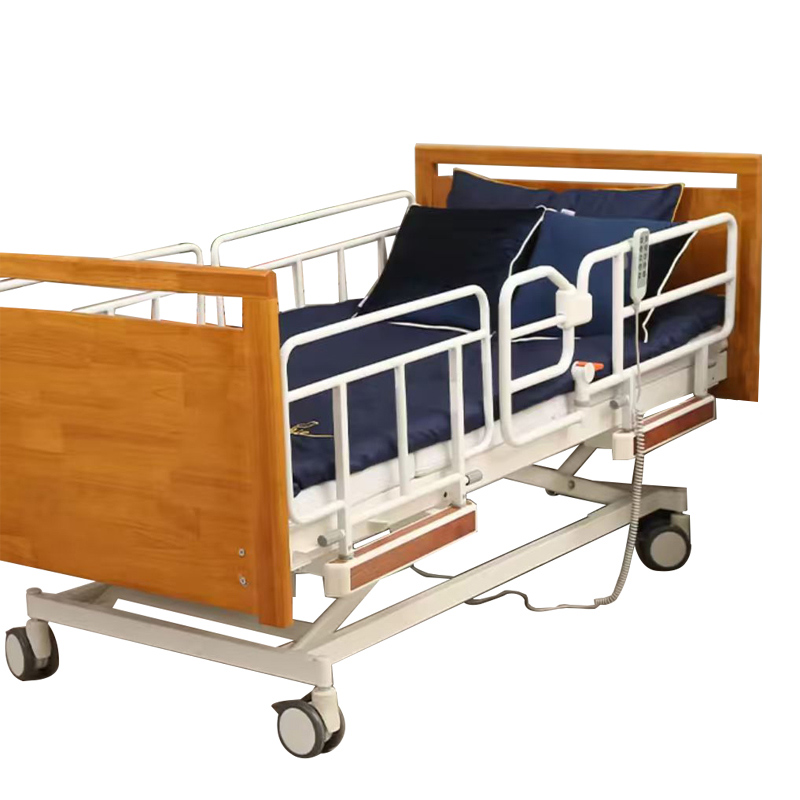
Does a Simpler Electric Bed Always Mean Easier Repair?
Not necessarily. A basic bed may have fewer motors, but it can still be difficult to service if wiring is hidden, actuators are hard to remove, connectors are unclear, or spare parts are unavailable.
A multifunction bed can still be repair-friendly when components are modular, accessible, and documented. Buyers should therefore ask whether actuators can be replaced independently, wiring can be inspected, connectors are labeled, wear parts are replaceable, and spare parts remain available.
How Does Maintenance Documentation Help?
Parts Diagrams Improve Component Identification
Clear documentation can shorten repair time.
An exploded parts diagram allows technicians and buyers to identify a component by position or part number. It can also show how assemblies fit together.
Troubleshooting Guides Reduce Trial and Error
A basic troubleshooting guide can help maintenance teams inspect faults in a logical order.
If one actuator does not respond, technicians can check the power supply, handset, connector, cable, control-box port, and actuator before deciding which part to replace.
This helps local technicians solve common issues without unnecessary replacement.
What Should Buyers Ask Before Ordering Electric Hospital Beds?
Repairability should ideally be discussed before a large order is placed.
Hospitals and distributors can ask suppliers how major components are removed, replaced, and identified. Service videos, wiring diagrams, exploded drawings, and spare-parts lists can help.
重要な質問には以下が含まれる:
- How is each actuator installed?
- Can one motor be changed independently?
- Are electrical connectors plug-and-play?
- Where is the control box located?
- Which parts are normally kept as spares?
- What tools are required for common repairs?
- Can replacement parts be ordered by model number?
For larger projects, ordering selected spare parts with the main shipment may also reduce future downtime.
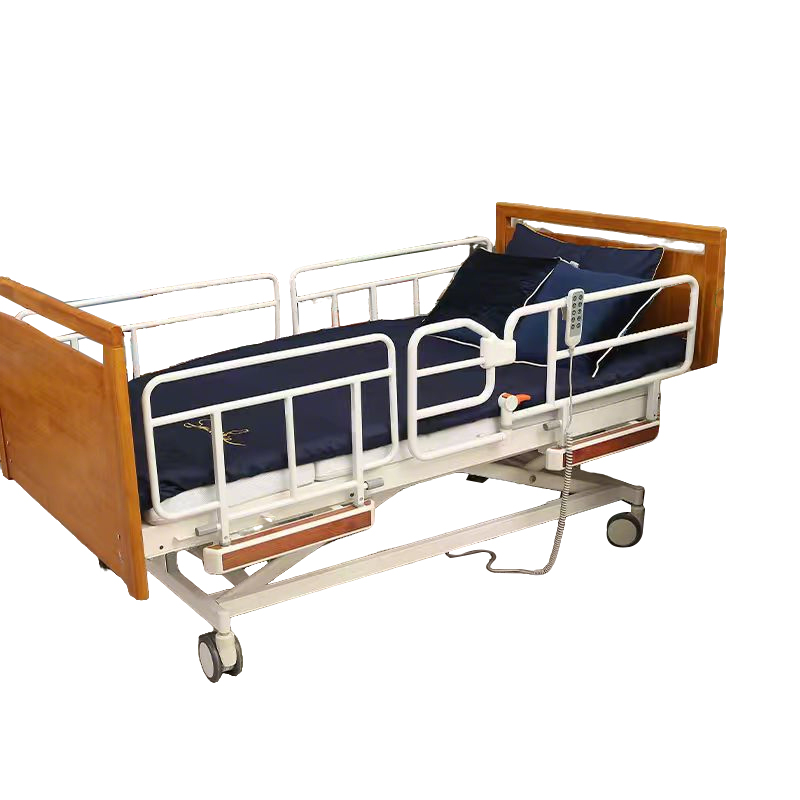
How Can Repair-Friendly Design Reduce Total Ownership Cost?
The purchase price is only one part of hospital bed cost. Buyers may also pay for technician labor, spare parts, freight, downtime, and temporary replacement equipment.
If a faulty actuator, handset, caster, or control box can be replaced independently, the buyer avoids replacing larger working assemblies. Faster repair also returns the bed to service sooner.
For large hospital fleets, these savings can accumulate over time. Distributors may also reduce warranty and after-sales support costs.
結論
An electric hospital bed is easier to repair when its motors, control system, wiring, and mechanical components are designed for access and individual replacement. Modular actuators, organized connectors, replaceable wear parts, clear documentation, and reliable spare-parts supply can reduce downtime and simplify long-term maintenance.
For hospitals, clinics, distributors, and medical bed purchasers, repairability should be considered alongside functions, price, load capacity, and overall product quality.
Jcare supplies hospital beds and related medical furniture for wholesale and project purchasing. Which repair feature matters most in your market: motor replacement, spare-parts availability, wiring access, or technical support? Share your experience in the comments or pass this guide to colleagues involved in medical equipment purchasing.