
Hospitals, rehabilitation centers, and home care providers frequently struggle with selecting medical beds that are both safe for patients and durable enough for long-term daily use, and this uncertainty often leads to procurement risks, maintenance issues, and even patient safety concerns in critical care environments. As global demand for hospital beds continues to rise, especially across emerging healthcare markets and aging populations, understanding how manufacturers control quality and engineering standards has become increasingly important for buyers and distributors. The solution lies in analyzing how professional medical bed manufacturers design, test, and certify their products through structured material selection, mechanical engineering, electrical safety systems, and strict quality control processes, which this article will explain in detail.
Medical bed manufacturers ensure safety and durability by using high-strength materials, precision structural engineering, reinforced welding, certified electrical systems, multi-stage load testing, anti-corrosion surface treatment, and strict quality control processes that simulate long-term hospital usage conditions to guarantee reliability and patient safety.
To fully understand this process, we need to examine each stage of manufacturing in detail.
People also ask: Why is medical bed safety so important in healthcare environments?
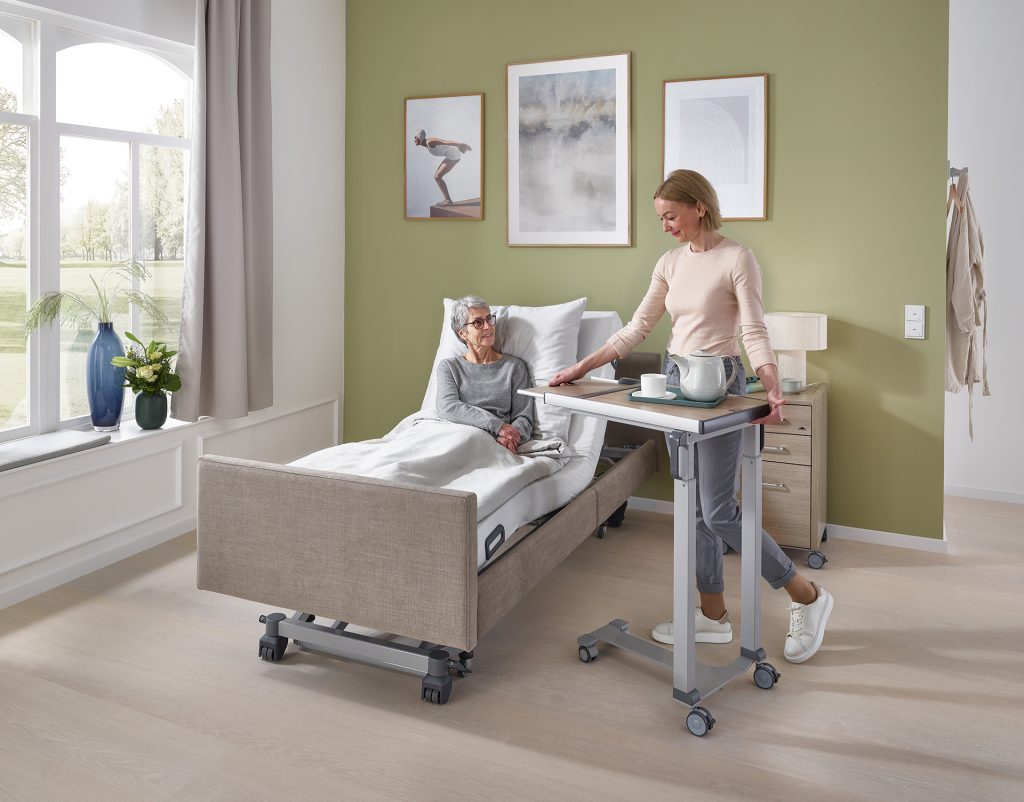
Medical bed safety is essential because patients using hospital or home care beds are often elderly, immobile, post-surgical, or critically ill, meaning they depend entirely on the equipment for movement, positioning, and protection. A failure in structural integrity, electrical control, or safety mechanisms can lead to falls, entrapment injuries, pressure complications, or even life-threatening incidents in hospitals and care facilities.
Manufacturers like Jcare design their production systems specifically to eliminate these risks through engineering precision and standardized testing procedures.
テレノ
The Foundation of Safety: Raw Material Selection and Quality Control
The durability of a medical bed begins long before production—it starts with raw materials. Even the most advanced engineering cannot compensate for poor-quality steel or unstable components.
Key raw materials used in professional manufacturing
High-end medical bed manufacturers typically rely on:
- Cold-rolled high-strength steel tubing
- Reinforced structural steel plates
- Medical-grade ABS engineering plastics
- Aluminum alloy components for weight reduction
- Corrosion-resistant stainless steel fasteners
Each material is selected based on mechanical performance, environmental resistance, and long-term fatigue tolerance.
Why steel quality determines durability
Steel is the backbone of every hospital bed frame. It must withstand:
- Continuous patient weight load
- Repeated lifting cycles
- Lateral stress from side rails
- Movement pressure from caregivers
Low-grade steel may deform over time, leading to frame instability and safety risks.
Incoming quality inspection (IQC)
Before production begins, manufacturers conduct strict testing:
- Tensile strength measurement
- Surface rust resistance tests
- Dimensional accuracy checks
- Chemical composition verification
This ensures every batch meets production requirements before entering the factory line.
Structural Engineering: Designing for Long-Term Stability
Medical beds are not static furniture—they are dynamic mechanical systems that must support movement, load variation, and frequent adjustments.
Load distribution engineering
A safe medical bed must distribute weight evenly across:
- Head section
- Backrest frame
- Leg support system
- Central base structure
Improper load distribution leads to stress concentration, which increases failure risk.
Anti-deformation structural design
Manufacturers apply engineering strategies such as:
- Reinforced triangular support structures
- Cross-beam reinforcement systems
- Multi-point stress dispersion design
- Anti-torsion frame architecture
These structures help prevent bending or twisting under repeated use.
Computer-aided design (CAD) simulation
Modern manufacturers simulate:
- Patient weight variations
- Long-term fatigue cycles
- Emergency repositioning scenarios
- Dynamic movement stress
This ensures that potential design flaws are eliminated before production begins.
Welding Technology: The Core of Mechanical Strength
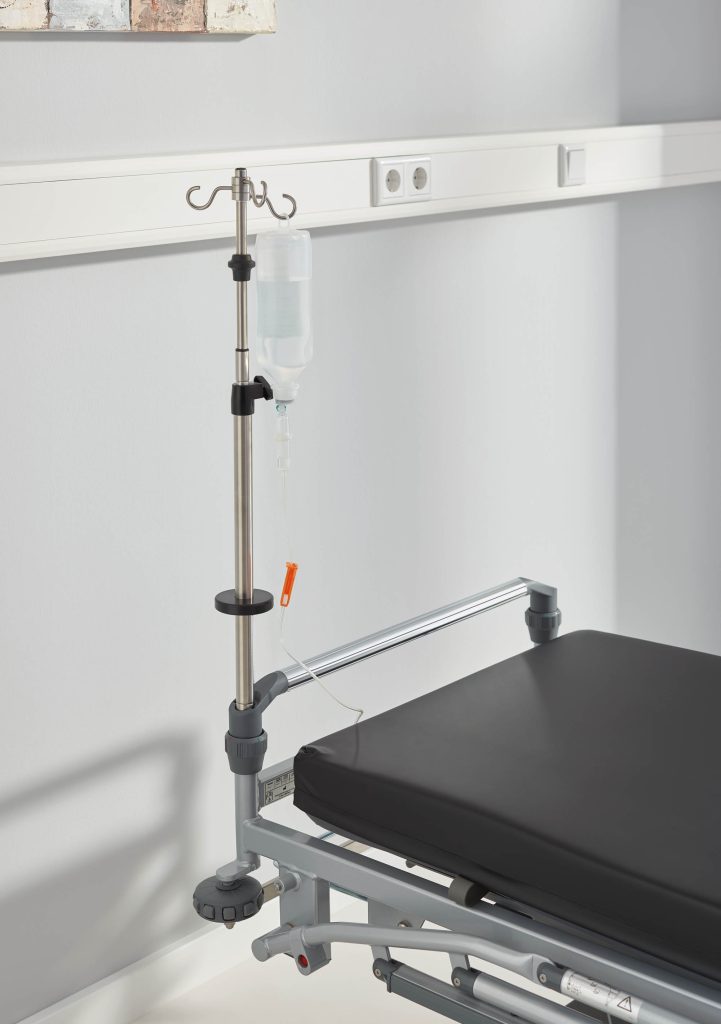
Welding quality directly determines whether a medical bed can survive long-term hospital usage.
Why welding matters in hospital beds
Every adjustable movement—lifting, tilting, reclining—creates mechanical stress at welded joints. Weak welding leads to:
- Frame cracking
- Structural instability
- Sudden failure under load
Industrial welding standards
High-quality manufacturers use:
- Robot-assisted precision welding systems
- Full-penetration welding techniques
- Multi-angle reinforcement welding
- Heat-controlled welding processes
Post-welding inspection
After welding, frames undergo:
- Visual crack detection
- Load resistance testing
- Joint stability verification
- Grinding and edge smoothing
Manufacturers like Jcare implement multi-stage inspection systems to ensure consistency across mass production.
Electrical System Engineering in Electric Medical Beds
Electric hospital beds require advanced control systems to ensure safe movement and patient protection.
Core electrical components
- Low-voltage DC motor systems
- Control box with microprocessor
- Handheld or side-mounted control panels
- Emergency stop switches
- バッテリーバックアップシステム
Electrical safety mechanisms
To ensure patient safety, manufacturers integrate:
- Overload protection systems
- Short-circuit prevention circuits
- Automatic shutdown functions
- Anti-interference shielding
Motor durability testing
Motors undergo:
- Continuous cycle testing (10,000–50,000 cycles)
- Load resistance simulations
- Temperature rise monitoring
- Noise reduction evaluation
This ensures stable operation even in ICU environments where beds operate continuously.
Load Testing and Durability Simulation
Before entering the market, medical beds must pass rigorous durability tests.
Static load testing
This test evaluates maximum weight capacity without movement failure.
Dynamic load testing
Simulates real-world usage where patients shift positions during bed operation.
Fatigue testing
Beds undergo repeated cycles of:
- 背もたれの持ち上げ
- Leg adjustment
- Height elevation (if applicable)
This simulates years of hospital use in a compressed timeframe.
Side rail impact testing
Ensures side rails can withstand accidental force or patient movement pressure.

Patient Safety Engineering: Preventing Injury Risks
Safety features are essential for preventing accidents in healthcare environments.
Anti-fall protection systems
- Adjustable side rails
- Secure locking mechanisms
- Height-optimized bed design
Anti-entrapment design
Manufacturers carefully control:
- Gap sizes between bed components
- Movement space of adjustable sections
- Joint spacing between rails and frame
Emergency response features
- CPR quick-release system
- Rapid flat-position function
- Manual override mechanisms
These features are essential in critical care situations.
Surface Treatment and Anti-Corrosion Technology
Hospital environments involve constant cleaning and disinfecting, which can damage untreated materials.
Common coating methods
- 静電粉体塗装
- Zinc phosphate anti-rust treatment
- Multi-layer protective coating
- Chemical-resistant surface sealing
Environmental resistance
Medical beds must resist:
- Humidity
- 消毒剤
- Salt exposure in coastal regions
- Long-term oxidation
Manufacturers exporting to Southeast Asia, the Middle East, and Europe must ensure higher corrosion resistance standards.
International Standards and Certification Compliance
To enter global markets, medical beds must comply with strict certifications.
Key standards
- ISO 13485 medical device quality system
- CE certification for Europe
- FDA compliance requirements (specific models)
- Regional hospital procurement regulations
Why certification matters
Certification ensures:
- Legal market entry
- Hospital procurement eligibility
- Consistent product safety standards
- Reduced liability risks
Multi-Layer Quality Control System
Quality control ensures consistency in mass production.
IQC (Incoming Quality Control)
Raw material verification before production.
IPQC (In-Process Quality Control)
Monitoring during manufacturing:
- Welding inspection
- Assembly precision checks
- Electrical system testing
FQC (Final Quality Control)
Final inspection before packaging:
- Full functionality testing
- Appearance inspection
- Load testing verification
Manufacturers like Jcare use structured QC systems to maintain stable quality across global export orders.
Packaging Engineering and Global Logistics Safety
Medical beds must survive long-distance transportation.
Packaging methods
- Reinforced export cartons
- Foam shock protection
- Metal frame stabilization supports
- Moisture-proof wrapping
Logistics challenges
- Sea freight vibration
- Air cargo pressure changes
- Warehouse stacking stress
- Temperature fluctuations
Proper packaging ensures products arrive in hospital-ready condition.
Continuous Improvement and Product Innovation
Manufacturers continuously improve medical bed design based on:
- Hospital feedback
- Maintenance reports
- Market demand changes
- Technology advancements
Innovation directions
- Lighter structural materials
- Quieter motor systems
- Smart control interfaces
- Modular repair systems
- Improved patient ergonomics
Why Manufacturer Capability Directly Impacts Buyer Success
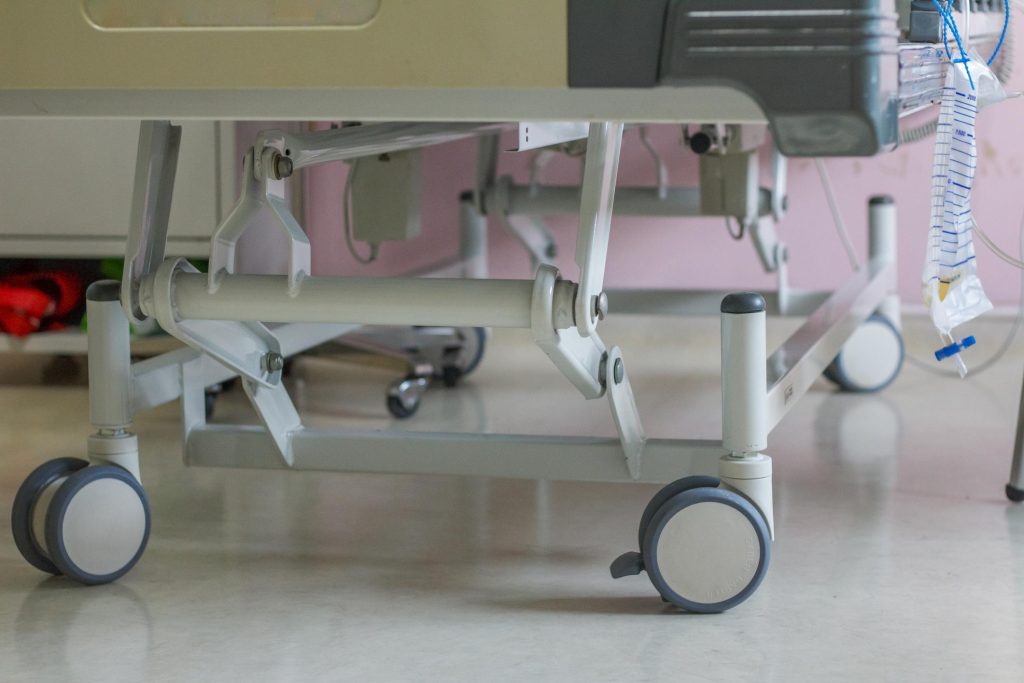
For hospitals, distributors, and procurement teams, choosing the right manufacturer affects:
- Patient safety outcomes
- メンテナンス頻度
- Long-term procurement cost
- Spare part availability
- Supply chain stability
A capable manufacturer like Jcare provides not only factory pricing but also stable production capacity, export experience, and consistent quality control systems for global healthcare markets.
結論
Medical bed safety and durability depend on a fully integrated manufacturing system that includes raw material selection, precision engineering, welding strength, electrical safety design, corrosion resistance, load testing, and strict quality control. Each stage contributes to ensuring that the final product can withstand long-term hospital use while protecting patient safety.
For healthcare buyers and distributors, understanding these manufacturing processes is essential for making informed procurement decisions and reducing long-term operational risks. Manufacturers that invest in engineering excellence and quality systems are better positioned to serve the growing global demand for reliable hospital and home care equipment.
If you found this article helpful, feel free to share it with colleagues in healthcare procurement or leave a comment to discuss sourcing challenges, product requirements, or industry trends.