
International buyers often ask whether hospital beds need wooden crates or whether reinforced cartons are enough. Poor packaging can cause scratched frames, bent rails, moisture damage, missing accessories, and expensive claims. A packaging plan based on bed design, shipping method, destination rules, and unloading conditions protects the equipment and the buyer’s investment.
Hospital bed packaging for international shipping should combine surface protection, impact-resistant cushioning, moisture control, reinforced cartons or export-ready crates, clear labels, and secure container loading. Detachable parts must be packed separately and traceably, while motors and controls need added protection. Raw-wood pallets, crates, and dunnage should meet applicable ISPM 15 requirements, and battery-powered models must be reviewed according to the transport mode.
Correct packaging also supports customs clearance, unloading, installation, and after-sales service.
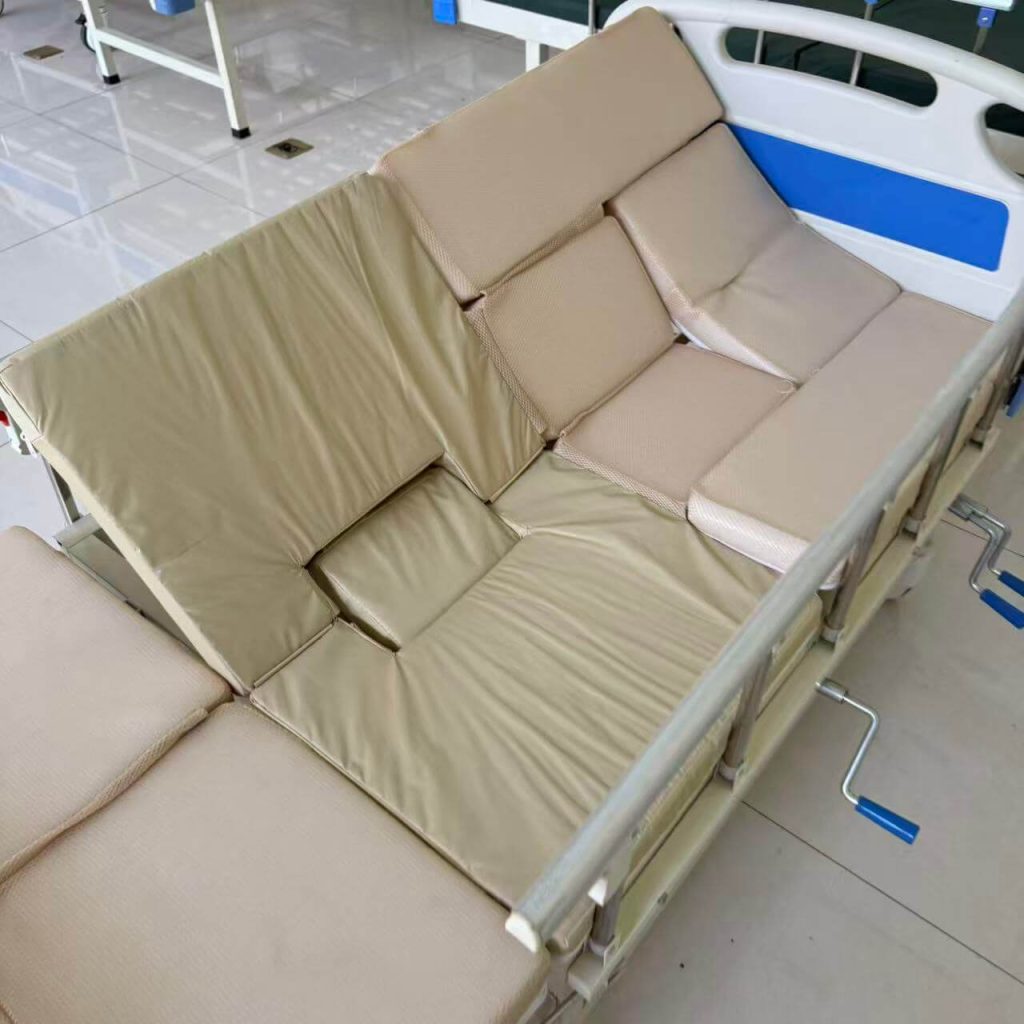
Why Hospital Bed Export Packaging Requires Special Planning
A hospital bed may include a heavy steel frame, moving deck sections, motors, control boxes, side rails, headboards, casters, IV poles, hand controls, and a mattress. These parts differ in weight, shape, fragility, and moisture sensitivity, so one layer of film and an ordinary carton rarely provides enough protection.
During export, packages face forklifts, warehouses, ports, trucks, vibration, compression, humidity changes, and accidental impact. Packaging must protect the bed throughout the transport chain.
Receiving conditions also matter. A distributor with a forklift may accept large palletized units, while a small clinic may need packages that workers can unload manually. The best system balances protection, freight cost, size, and safe handling.
What Packaging Materials Are Suitable for Hospital Beds?
Inner Protection for Surfaces and Corners
Painted steel parts should be covered with soft nonwoven fabric, foam sheet, bubble material, or protective sleeves before stronger outer materials are added. Rough timber, exposed staples, metal buckles, and abrasive straps must not touch finished surfaces.
Moving sections should be fixed to prevent metal-to-metal contact. Corners, actuator brackets, control boxes, side-rail joints, and exposed tube ends need shaped foam or reinforced pads. Plastic headboards should be separated from heavy metal components so concentrated pressure does not cause cracking.
Cartons, Pallets, and Export Crates
Heavy-duty corrugated cartons suit headboards, rails, accessories, and some compact models. Their strength should reflect gross weight, stacking pressure, humidity, and handling method.
Complete beds may use reinforced cartons, steel supports, plywood bases, pallets, or crates. Full crates resist impact but increase weight, volume, disposal work, and freight cost. A reinforced skid or partial crate may better suit bulk container orders.
Where raw-wood pallets, crates, blocks, or dunnage are used, applicable ISPM 15 treatment and marking requirements must be considered. ISPM 15 covers raw-wood packaging and dunnage, while processed products such as plywood are generally outside its scope. Destination-country rules should still be checked before shipment.
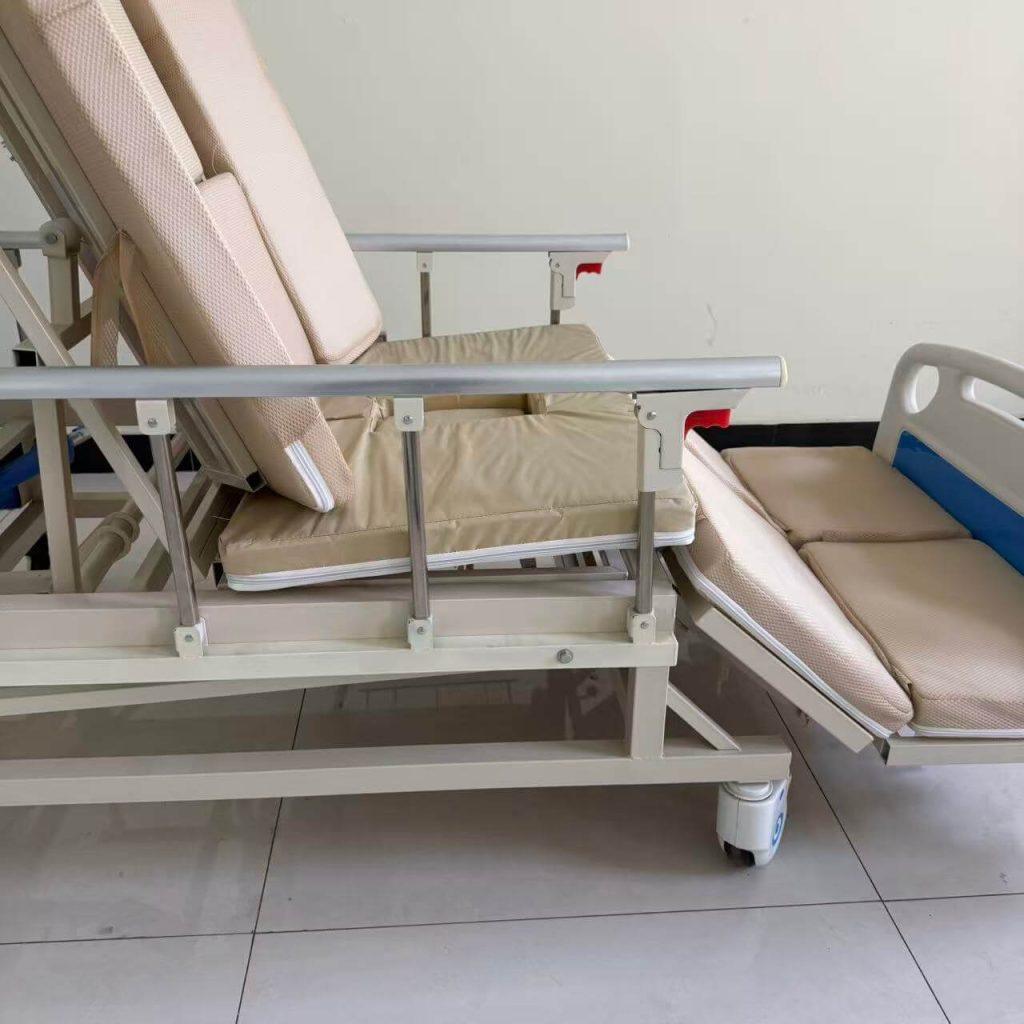
How Should Hospital Bed Components Be Packed?
Main Frame and Moving Platform
The frame should be placed in its lowest practical transport position, with adjustable deck sections folded or locked. Mechanical cranks, actuator arms, and projecting brackets must not bear the package weight. Transport brackets, bolts, or cable ties can prevent movement, but they should be clearly identified for removal during installation.
Support points must sit beneath strong structural areas rather than motors, covers, linkages, or thin panels. If beds are stacked, vertical force should pass through reinforced supports. The supplier should state the maximum stacking quantity instead of leaving warehouse staff to estimate it.
Headboards, Rails, Casters, and Small Parts
Detachable headboards should be wrapped separately and protected against bending. Folding rails need cushioning around hinges, release handles, and indicators. Casters may remain installed only when the package prevents damaging loads; otherwise, they should be removed and packed in labeled cartons.
Bolts, washers, hooks, fittings, remote holders, and tools should be sealed in strong bags or boxes. Each pack should show the bed model, order reference, quantity, and installation location. For mixed orders, carton numbers or model codes help teams match accessory sets without opening every package.
Motors, Controls, and Cables
Electrical beds require protection from shock, moisture, cable strain, and dust. Motors and control boxes must not be used as lifting or support points. Handsets should be wrapped separately, and plugs or connectors should be capped or bagged.
Cables should be coiled with a safe bend radius and fixed away from sharp edges. Any battery isolation step, transport lock, or connection sequence should be shown in the installation manual so the receiving team can assemble the bed without guesswork.

How Can Moisture, Rust, and Mold Be Prevented?
Ocean shipments can face humid air, temperature changes, and condensation inside containers. Moisture may produce rust marks, stained cartons, mold on wood-based materials, damaged labels, or corrosion around fasteners.
The bed must be clean and dry before packing. Exposed metal, machined parts, and uncoated fasteners may need temporary rust-prevention oil, protective wax, corrosion-inhibiting materials, or sealed barrier packaging. The selected treatment should be compatible with medical-furniture use and easy to remove.
Plastic film keeps out dust and moisture, but sealing a damp product can trap water. Desiccants should reflect package volume, route, season, barrier performance, and transit time. Cartons, timber, and mattresses must also be dry; mattresses need moisture-resistant bags and protection from sharp brackets.
What Labels and Documents Should Be Included?
Every package should remain identifiable when an order is divided across several cartons or crates. Shipping marks normally include the consignee or project reference, purchase-order number, bed model, carton number, gross and net weight, dimensions, country of origin, and appropriate handling symbols.
Labels should be durable, legible, and placed on more than one side. Useful instructions may include “Keep Dry,” “This Side Up,” “Do Not Clamp,” lifting points, center of gravity, and maximum stacking quantity. These markings must match the actual packaging design.
Invoices, packing lists, transport documents, and product certificates should use consistent model names and quantities. The packing list should show how many packages belong to each bed and where accessories are located.
When raw-wood packaging is subject to ISPM 15, the approved mark should be visible and correctly applied by an authorized provider. The IPPC states that this internationally recognized mark identifies compliant treated wood packaging and can replace a separate phytosanitary certificate for the packaging in many participating systems.
How Should Hospital Beds Be Loaded in a Container?
Strong individual packaging can still fail when cargo is poorly arranged. Before loading, the container should be checked for holes, water intrusion, odors, damaged flooring, protruding nails, contamination, and defective door seals. Weight must be distributed carefully to maintain stability and avoid excessive floor pressure.
Packages should be blocked, braced, lashed, or otherwise secured so they cannot slide, tip, collide, or press against the doors. Voids may require air bags, timber bracing, straps, or engineered restraints. Securing materials must not crush cartons, rails, or plastic covers.
The IMO/ILO/UNECE CTU Code provides guidance for packing and securing cargo across sea and land transport. It emphasizes that safe packing affects loading teams, carriers, receivers, and the people who later open the unit.
A loading plan should account for package dimensions, gross weight, mixed models, spare parts, unloading sequence, and forklift access. Photographs should show package condition, restraints, container and seal numbers, and the final arrangement before the doors close.
Do Requirements Change by Shipping Method?
Full Container, LCL, and Air Freight
Full-container-load shipping gives the supplier greater control over arrangement and securing, making it practical for bulk orders. Less-than-container-load cargo may be handled more often and placed near unrelated freight. LCL packages therefore usually need stronger outer protection, robust palletization, and better resistance to side impact.
Air freight may be used for samples, replacement motors, controls, or urgent small orders. Compact packaging matters because charges depend on weight and volume, but fragile parts still require cushioning. Any bed or accessory containing batteries must be declared accurately to the freight forwarder.
Lithium batteries transported by air are subject to requirements that depend on battery type, rating, quantity, and whether they are contained in equipment, packed with equipment, or shipped separately. Current IATA guidance covers packaging, marking, labeling, documentation, and testing obligations, so the configuration should be reviewed before booking.
How Can Buyers Verify Packaging Before Shipment?
Buyers should request packaging specifications before approving mass production. These may include material descriptions, carton structure, foam thickness, crate type, pallet size, gross weight, dimensions, stacking limit, moisture-control method, and photographs or drawings.
A sample shipment or packaging test is useful for a new model, route, or supplier. Testing may cover vibration, drops, compression, impact, or forklift handling and should reflect the actual package weight and transport environment.
Before loading, an inspection should confirm quantity, model identification, finish condition, accessory completeness, electrical protection, packaging integrity, shipping marks, wood compliance where applicable, and container condition. Randomly opening finished packages can verify internal supports and hardware packs.
The purchase agreement should define responsibility for packaging approval, loading, unloading, and damage reporting. Photographs, inspection records, and claim procedures help identify where damage began.
People Also Ask About Hospital Bed Packaging
Can Hospital Beds Be Shipped Without Wooden Crates?
Yes. Reinforced cartons, steel support frames, plywood bases, or palletized systems may be sufficient for some models and full-container shipments. The correct choice depends on bed weight, exposed parts, handling frequency, route, and buyer requirements. Packaging should be validated rather than selected only by price.
Should Hospital Beds Be Fully Assembled Before Shipping?
Not always. Partial disassembly reduces volume and protects projecting parts, but excessive disassembly increases installation time and missing-part risks. A practical design removes vulnerable or bulky components while keeping the main structure factory-adjusted. Clear instructions and traceable hardware are essential.
What Is the Most Common Packaging Mistake?
A common mistake is protecting the outer surface while failing to immobilize heavy internal parts. A loose headboard, caster, crank, or bracket can damage nearby components even when the carton looks undamaged. Internal fixing and correct load transfer are as important as the outer crate.
結論
Hospital bed packaging requirements for international shipping should be designed around the complete journey from factory to installation. Reliable packaging protects frames, plastic parts, electrical systems, accessories, and mattresses against impact, vibration, compression, moisture, and corrosion. It also supports customs processing, safe handling, efficient unloading, and accurate assembly.
Buyers should confirm packaging materials, ISPM 15 treatment where applicable, shipping marks, battery requirements, container securing, and pre-shipment inspection before placing a bulk order. Jcare can plan hospital bed packaging according to the model, order quantity, transport method, destination, and local unloading conditions.
Share this guide with your purchasing or logistics team, and leave a comment about the packaging problems you have experienced when importing hospital beds.