
Choosing hospital beds for neurology wards can be challenging because patients may have weakness, poor balance, reduced mobility, confusion, seizures, or difficulty repositioning themselves. If a bed does not match these care needs, transfers, supervision, and daily nursing work can become harder. A structured review of safety, positioning, mobility, controls, cleaning, and reliability helps buyers make a more suitable choice.
Hospital beds for neurology wards should provide adjustable height, stable electric positioning, secure braking, appropriate side rails, compatible mattresses, simple caregiver controls, and easy cleaning. Buyers should also consider fall-risk management, transfer needs, emergency functions, battery backup, safe working load, and maintenance support. The best bed is not simply the model with the most functions; it is the one that matches the ward’s patients, workflow, and procurement standards.
Neurology wards care for patients with very different physical and cognitive abilities. The following factors can help buyers convert those clinical needs into clear purchasing specifications.
Why Do Neurology Wards Need Carefully Selected Hospital Beds?
Neurology departments may care for patients recovering from stroke, neurological surgery, seizures, neuromuscular disorders, and other conditions that affect movement, awareness, coordination, or muscle control. Some patients can move independently, while others need frequent assistance.
Neurological Patients Have Different Mobility and Safety Needs
A single ward may include patients who walk with assistance, patients who need wheelchair transfers, and patients who remain in bed for long periods. Buyers should therefore judge the complete bed system, including adjustment, stability, controls, transfers, rails, and mattress compatibility.
Neurological conditions can also affect memory, judgment, awareness, and balance. The bed should therefore support a broader safety strategy rather than be treated as a standalone fall-prevention device.
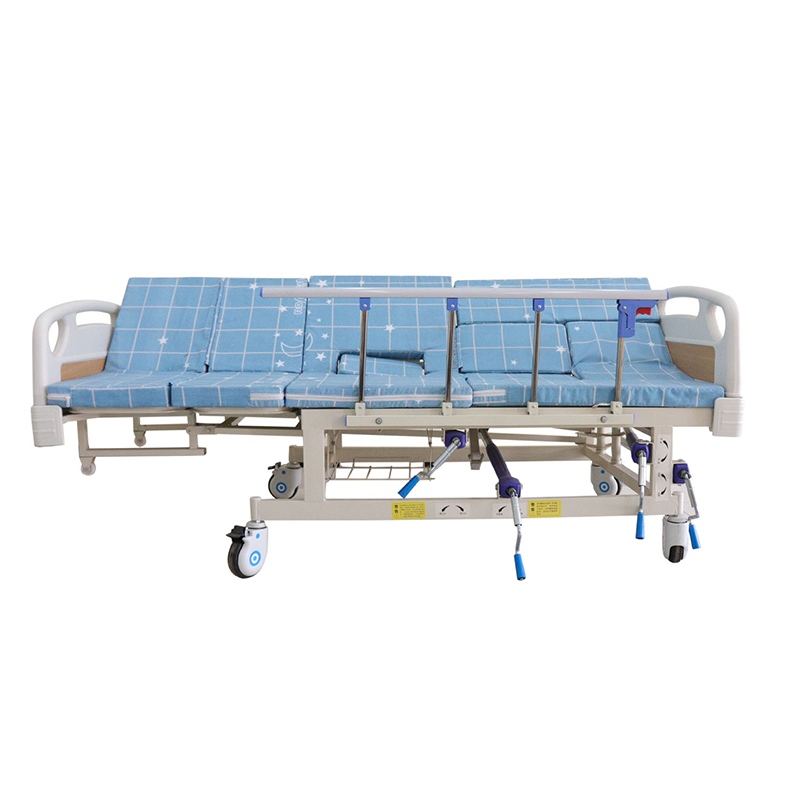
How Important Is Adjustable Bed Height?
Height adjustment is one of the most useful functions in a neurology ward. A height-adjustable bed can be lowered when appropriate for the patient and raised when caregivers need a better working position.
It can also help staff align the mattress platform with wheelchairs, stretchers, and other transfer equipment.
Low Height and Working Height Serve Different Purposes
Patients with weakness, balance problems, or confusion may be vulnerable when entering or leaving the bed. A lower platform can support fall-risk management, but buyers should request exact minimum and maximum heights rather than rely on a “low bed” label.
Maximum working height also matters because nurses may need to reposition patients, change bedding, provide hygiene care, or inspect skin. For large orders, hospitals can test sample beds with nursing and rehabilitation staff before approving the final height range.
Which Positioning Functions Are Most Useful?
Electric positioning can reduce manual handling during everyday nursing care. Common functions include backrest adjustment, leg-section adjustment, and overall height adjustment. Some models also offer additional platform positions.
Backrest and Leg Adjustment Improve Flexibility
A powered backrest and adjustable leg section provide more positioning options for patients who cannot reposition easily. Buyers should confirm actual adjustment angles, actuator quantity, control method, movement speed, safe working load, and mattress articulation.
Preset or one-touch positions can be useful when they match ward workflow, but more buttons do not automatically mean a better bed. Hospitals should select functions staff will genuinely use.
For example, a neurology department with many patients requiring frequent assisted positioning may place greater value on electric adjustments than a ward caring mainly for independently mobile patients.
Therefore, procurement teams should begin with actual nursing requirements and then determine how many electric functions are necessary.
What Side-Rail Design Is Suitable for Neurology Wards?
Side rails deserve careful attention because neurological patients can differ greatly in mobility, awareness, and movement patterns.
Rails may support some patients during repositioning and help define the mattress edge, but they should not automatically be treated as universal fall-prevention barriers.
Side Rails Should Balance Access and Entrapment Risk
Caregivers need access during nursing, transfers, examinations, and emergencies. Foldable or segmented rails can provide flexibility, but buyers should test locking strength, smooth operation, stability, and cleanability.
The FDA advises evaluating the bed as a complete system because spaces among the mattress, rails, and frame can create entrapment hazards. Mattress dimensions and compressibility therefore matter alongside rail design, especially when replacement or pressure-management mattresses are used.
In addition, buyers should inspect the rail system while the bed is articulated. FDA information notes that some rail configurations may create different entrapment conditions when the head or knee sections are adjusted.
For this reason, rail selection should consider the entire bed-and-mattress combination rather than judging the rail separately.
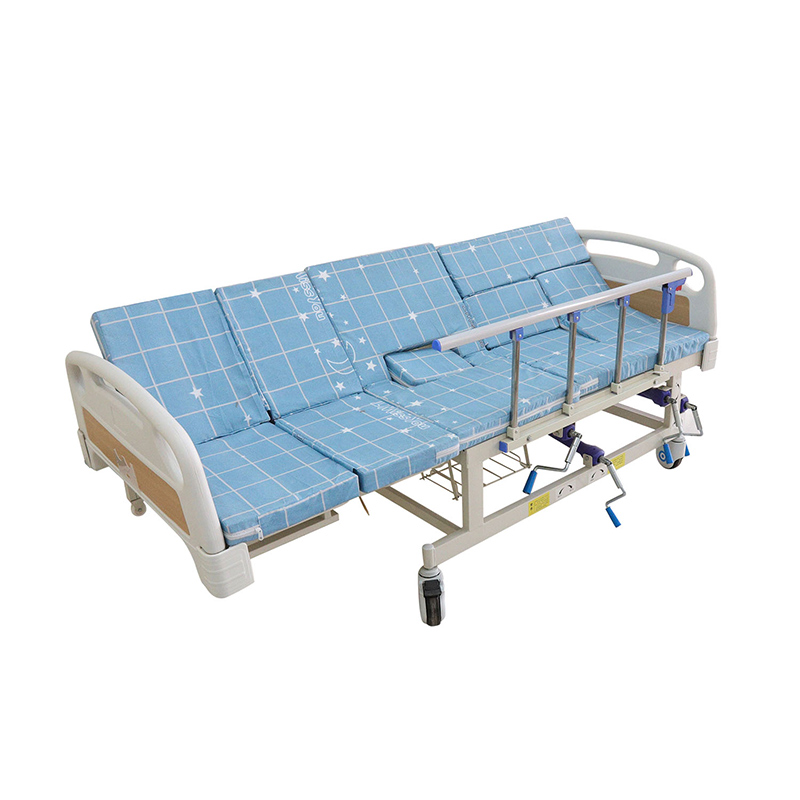
How Should Buyers Evaluate Casters and Brakes?
Neurology ward beds may need to move for room cleaning, patient transfer, examinations, emergency access, or changes in room layout. Smooth movement is useful, but stability after parking is equally important.
Central Braking Can Simplify Daily Operation
Beds may use individual caster brakes or a central braking system. Central braking can simplify operation by securing several casters from one control point.
Buyers should compare caster diameter, rolling resistance, brake accessibility, directional locks, floor compatibility, turning performance, and parking stability.
A bed that is difficult to maneuver can increase effort when nurses or transport staff move patients through corridors. Conversely, casters that roll smoothly but do not lock securely can create problems during transfers or bedside procedures.
Therefore, buyers should test both mobility and braking rather than focusing only on caster size.
What Mattress System Should Buyers Consider?
The mattress should be evaluated together with the bed frame. It affects positioning, patient support, rail gaps, cleaning, and the operation of the articulated platform.
Mattress Compatibility Is More Than a Size Question
Before ordering, confirm the manufacturer’s recommended mattress length, width, and thickness. Excessive gaps or unsuitable compressibility can affect the relationship between the mattress, frame, and rails.
FDA guidance emphasizes that mattress dimensions and characteristics should be considered when evaluating possible bed-system entrapment areas.
Hospitals may use foam, pressure-redistribution, or specialty mattresses for patients with limited mobility. The surface should match clinical needs and remain compatible with the bed frame. If frame and mattress come from different suppliers, compatibility should be verified before bulk purchasing.
This is especially important when a hospital intends to replace mattresses during the bed’s service life. Procurement teams should document approved mattress specifications so that later replacements do not unintentionally change the bed system.
What Controls and Electrical Features Should Buyers Check?
Electric hospital beds depend on actuators, control boxes, cables, handsets, power supplies, and sometimes batteries. Reliability and clear operation are therefore important purchasing criteria.
Caregiver Controls and Battery Backup Can Improve Workflow
Some neurological patients may use selected controls safely, while others need restricted access. A caregiver panel or lockout feature can help staff manage available functions. Buttons should be clear, glove-friendly, and simple to lock.
If adjustment is needed during temporary power loss or transport, buyers should verify battery-supported functions, charging, and replacement.
Where CPR-related or emergency backrest lowering is required, request a demonstration because operating methods differ by model.
Buyers should also ask suppliers how motors, actuators, control boxes, and handsets can be replaced. For large hospital projects, standardized electrical components across multiple beds may make future maintenance and spare-parts management easier.
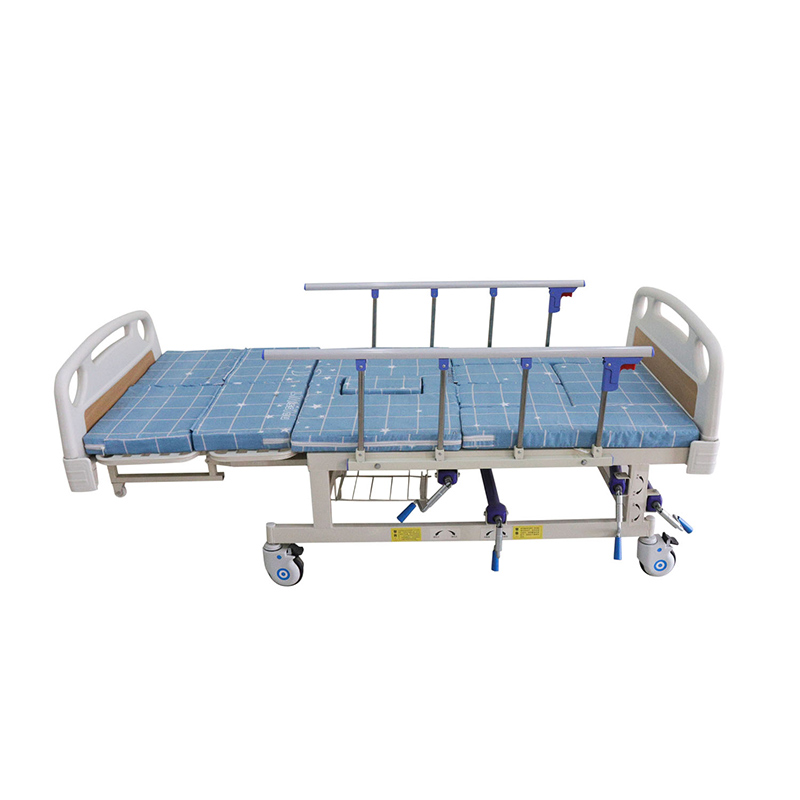
How Important Are Cleaning and Infection-Control Features?
Hospital beds undergo frequent cleaning and may be exposed to spills, body fluids, and disinfectants. Complex shapes and inaccessible joints can increase cleaning time.
Simple Surfaces Make Routine Cleaning Easier
Buyers should inspect rail mechanisms, control panels, caster housings, mattress retainers, headboards, footboards, joints, and frame corners.
Detachable head and foot boards may improve access during some cleaning and emergency procedures, provided their locking mechanisms are secure.
Hospitals should also ask which cleaning and disinfecting agents are compatible with plastics, coatings, labels, controls, and mattresses.
Surface coating deserves particular attention because repeated exposure to cleaning chemicals, impacts, and daily handling can gradually damage poorly finished metal surfaces.
For bulk purchases, cleaning requirements should therefore be included in the procurement specification instead of being considered only after installation.
What Technical Standards and Documentation Should Buyers Review?
Requirements vary by destination market, regulatory authority, and hospital tender. Buyers should therefore verify which standards and documents apply to the specific project rather than relying only on a catalog description.
IEC 80601-2-52:2026 covers basic safety and essential performance requirements for adult medical beds within its scope, including electrical and non-electrical medical beds. It was published on May 5, 2026, replacing IEC 60601-2-52:2009.
Documentation Should Be Checked Before Order Confirmation
Depending on the project, buyers may need specifications, test reports, user manuals, electrical information, risk-management documents, maintenance instructions, warranty terms, and regulatory records.
However, requirements are not identical in every country. Procurement teams should confirm applicable regulations and tender requirements for the destination market before placing the order.
Spare-parts availability also matters because motors, control boxes, handsets, batteries, rails, and casters may need replacement. A low initial price can become less attractive when maintenance support is unclear.
For long-term projects, buyers can also ask suppliers how long critical replacement components are expected to remain available.
How Can Buyers Compare Hospital Bed Suppliers?
Once clinical and technical requirements are defined, supplier comparison becomes more accurate.
Instead of requesting a quotation for a generic “electric hospital bed,” procurement teams should send the same specification sheet to each supplier.
Compare the Complete Bed Configuration
Two beds may look similar in photographs but include different accessories and components. Every quotation should identify:
- Bed dimensions and mattress-platform size
- Minimum and maximum bed height
- Backrest and leg adjustment
- Number of motors or actuators
- Side-rail configuration
- Headboard and footboard materials
- Caster size and braking system
- Safe working load
- Mattress specification
- IV pole and accessory hooks
- Battery requirements
- Emergency functions
- Packaging method
- Spare parts
- Warranty
- Order quantity
This prevents a low quotation from appearing more competitive simply because important accessories or functions are excluded.
For larger projects, buyers should also ask whether customization affects lead time, packaging, spare-part availability, or after-sales support.
Using a standardized comparison sheet makes it much easier to determine the real difference between suppliers.
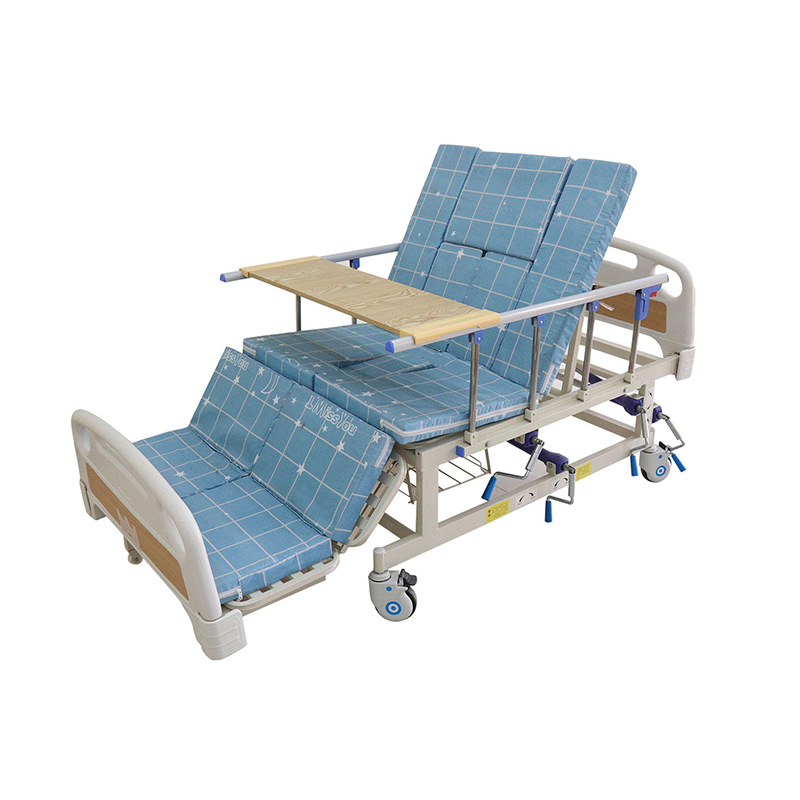
What Should Buyers Inspect Before Bulk Purchasing?
Catalogs cannot show every aspect of daily operation. A sample evaluation or pre-shipment inspection can reveal practical differences between models.
Test the Bed From a Caregiver’s Perspective
Raise and lower the platform several times. Adjust the backrest and leg section. Fold and lock the rails. Move the bed through a doorway. Apply the brakes and check whether the frame remains stable.
Inspect welding, surface coating, plastics, fasteners, casters, controls, mattress fit, accessories, and labeling.
For electric models, listen for abnormal actuator noise and confirm that controls respond consistently.
Procurement teams should also confirm that the supplied accessories match the purchase order. Items such as mattresses, IV poles, urine bag hooks, batteries, and other accessories can easily create specification differences between quotations.
Before shipment, a quality-control checklist can cover dimensions, functions, accessories, quantities, packaging, labels, and visual workmanship.
How Can Jcare Support Neurology Ward Bed Procurement?
Jcare supplies hospital beds, home care beds, rehabilitation products, other medical furniture, and medical-bed accessories for international wholesale projects.
For hospitals, private clinics, distributors, and medical-bed purchasers, the purchasing process should begin with a detailed specification. Buyers can define functions, dimensions, accessories, mattress requirements, expected quantity, packaging, and destination-market requirements before requesting a quotation.
Jcare can discuss hospital-bed configurations for bulk procurement, including specifications, accessories, customization, stock, and delivery planning.
Clear specifications at the beginning of the purchasing process can help both buyers and suppliers reduce misunderstandings and prepare more accurate quotations.
Conclusion
Choosing hospital beds for neurology wards requires a balanced review of patient mobility, height adjustment, positioning, side rails, mattress compatibility, casters, brakes, controls, electrical reliability, cleaning, documentation, and maintenance support.
The best choice is not automatically the bed with the largest number of functions. It is the bed that matches the ward’s patient population, nursing workflow, transfer practices, regulatory requirements, and long-term maintenance plan.
Before placing a bulk order, buyers should create a detailed specification, test important functions, confirm compatible accessories, and compare suppliers on the same configuration.
Which feature matters most in your neurology ward project: low-height adjustment, electric positioning, side-rail design, or caregiver controls? Share your experience in the comments, and pass this guide to other hospital buyers or medical-equipment distributors planning a neurology ward purchase.