
Hospitals choosing beds for infectious disease wards often ask which materials, functions, and structural details matter most. A poor choice can make cleaning harder, slow staff workflows, and increase maintenance pressure. By evaluating cleanability, mobility, safety, durability, and accessories together, buyers can choose beds that better support infection-control routines and daily care.
Hospital beds for infectious disease wards should be easy to clean and disinfect, durable, mobile, safe, and simple to maintain. Buyers should prioritize smooth surfaces, accessible frame areas, reliable casters and brakes, practical side rails, compatible mattresses, and removable accessories. The best bed is not necessarily the most complex model, but the one that supports frequent cleaning, efficient patient handling, dependable operation, and long-term maintenance.
Understanding how each feature affects cleaning, workflow, and durability helps buyers compare hospital beds more effectively.
Why Are Hospital Beds Different in Infectious Disease Wards?
Beds in infectious disease wards must meet normal clinical needs while supporting frequent cleaning, room turnover, and controlled patient movement. Procurement teams should therefore treat the bed as part of the ward’s infection-control workflow.
Unnecessary gaps, difficult joints, or unreliable wheels can increase staff workload. Buyers should ask whether the bed can be cleaned, moved, inspected, and maintained efficiently.
Start with the real ward environment
The correct configuration depends on patient acuity, room size, cleaning frequency, transfer requirements, staffing, and maintenance capability. A high-acuity unit may need more electric positioning functions, while a lower-acuity isolation ward may benefit from a simpler manual design.
Defining these conditions first prevents buyers from paying for rarely used functions while overlooking features needed every day.

How Important Is Bed Design for Cleaning and Disinfection?
Cleanability should be one of the first evaluation points. Frequently touched areas include side rails, headboards, footboards, handles, controls, bed decks, and accessory mounts. Smooth, accessible surfaces are generally easier to manage than deep grooves, decorative seams, exposed cavities, or complicated joints.
Buyers should look closely at how the bed is assembled and whether key surfaces can be reached without excessive disassembly. Detachable head and foot boards may also make access easier during cleaning.
Reduce difficult-to-clean areas
A simple structure can shorten routine cleaning without sacrificing necessary functions. Procurement teams should inspect rail hinges, caster mounts, frame corners, bed-deck openings, and accessory connections for areas where dirt may collect.
The goal is not to eliminate every joint. Instead, choose a design in which necessary joints remain accessible and can be inspected and wiped efficiently.
Which Materials Are Suitable for Frequent Cleaning?
Hospital bed frames commonly combine coated steel, stainless steel, plastics, and aluminum. Each can be suitable when construction quality matches the intended use.
Powder-coated steel offers strength and cost efficiency, but scratches, exposed metal, or poor weld protection may become weak points. Stainless steel can suit accessories such as IV poles, while smooth molded plastics can work well for headboards, footboards, and covers.
Inspect finishing, not only material names
Two beds made from similar materials may perform differently if finishing quality varies. Buyers should examine weld smoothness, coating uniformity, edges, joints, and the fit between components.
For B2B purchasing, close-up photos, videos, or sample inspection are useful. Ask the supplier to show rail joints, caster mounts, bed-deck surfaces, welds, coated edges, and removable-board connections rather than relying only on catalog images.
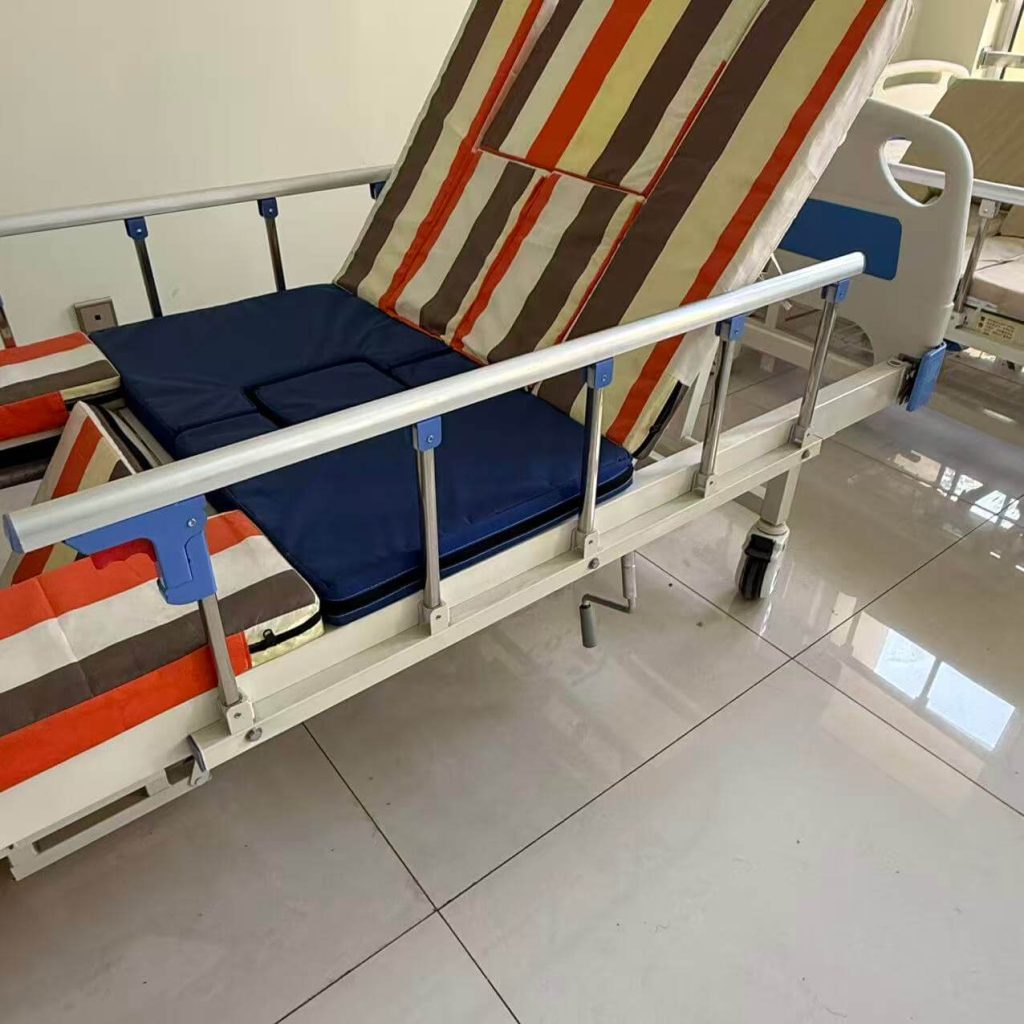
Should Buyers Choose Manual or Electric Hospital Beds?
Manual and electric beds can both be suitable. The decision should reflect patient condition, adjustment frequency, staffing, budget, and maintenance capability.
Manual beds suit moderate positioning needs and simpler maintenance. Electric beds are useful when patients require frequent position changes and staff need easier adjustment.
Match functions to clinical demand
Backrest adjustment supports sitting, feeding, observation, and comfort. Leg adjustment may improve positioning, while height adjustment can help staff work at a more suitable level and support transfers. Trendelenburg or reverse Trendelenburg functions may be required in some clinical settings.
Buyers should select only functions that have a clear purpose. For electric models, they should also review motors, hand controls, cable routing, backup power options, and replacement-part availability.
Why Do Casters and Braking Systems Matter?
In infectious disease wards, beds may need to move between isolation rooms, diagnostic areas, and other controlled spaces. Smooth movement helps reduce unnecessary handling and physical strain on staff.
Caster diameter, wheel material, directional stability, and brake design all affect mobility. The best configuration depends on corridor width, thresholds, floor surfaces, elevators, and transfer frequency.
Consider central locking for frequent movement
Individual caster brakes can be sufficient when beds rarely move. Central locking may be more efficient when transport is frequent because staff can control several wheels through one mechanism.
Buyers should check pedal accessibility, braking stability, steering behavior, and ease of operation. Directional locking can also help a bed track more predictably during long corridor transport.
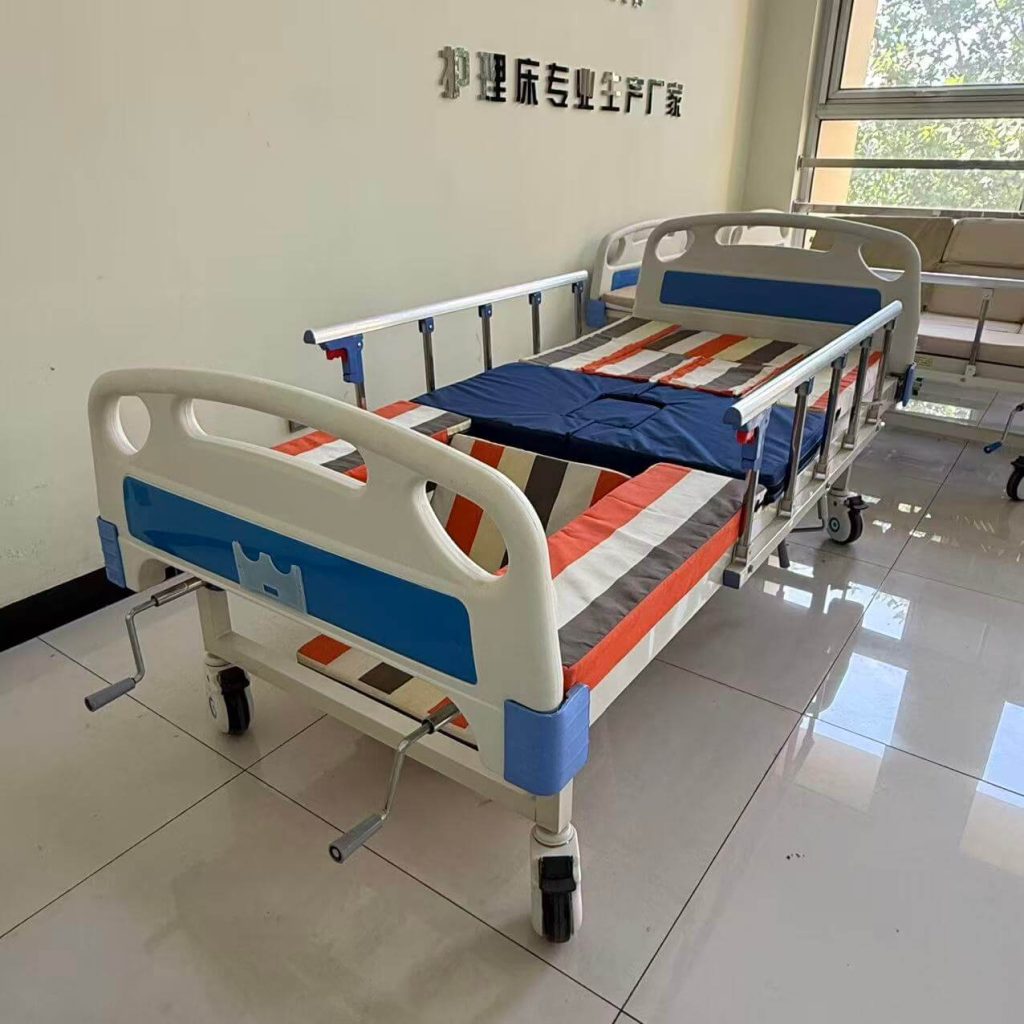
What Side Rail Design Works Best?
Side rails affect patient safety, caregiver access, cleaning, and maintenance. Buyers may compare full-length, split, folding aluminum, and molded systems.
The selected rail should be stable, easy to operate, accessible for cleaning, and fitted with a dependable locking mechanism.
Avoid unnecessary rail complexity
More hinges, handles, and recessed mechanisms create more surfaces that require attention. Complex systems are not automatically unsuitable, but buyers should confirm that they can be cleaned and serviced easily.
Bed dimensions, rail gaps, and mattress thickness should also be evaluated together. A mattress that does not match the bed can change the relationship between the sleeping surface and the rails, so these components should not be sourced independently without checking compatibility.
What Mattress Features Should Buyers Evaluate?
The mattress is a major patient-contact surface. It should fit the bed deck correctly, provide appropriate support, and have a cover suitable for hospital cleaning procedures.
Buyers should inspect seams, zipper areas, corners, and overall construction. A smooth wipeable cover can simplify routine care.
Confirm size and support requirements
Mattress length, width, and thickness should match the selected bed. Incorrect sizing can create unwanted gaps, reduce comfort, and interfere with side-rail performance.
For patients who need pressure-management surfaces, clinical requirements should guide mattress selection. The bed frame must also be compatible with the selected support surface.

Which Accessories Are Useful in Infectious Disease Wards?
Common accessories include IV poles, urine bag hooks, drainage supports, and oxygen-cylinder holders. They should support care without adding unnecessary cleaning or maintenance work.
IV poles are frequently required, while urine bag hooks on both sides can improve flexibility for staff.
Select accessories with a clear purpose
More accessories do not automatically make a bed better. Every extra bracket, clamp, shelf, or holder adds cost and another surface to inspect.
Buyers should separate standard requirements from optional items before ordering. They should also confirm whether accessories can be removed, replaced, or shared across different bed models. Standardized mounting points can simplify spare-parts management for hospitals and distributors.
How Should Buyers Evaluate Durability and Maintenance?
Frequent cleaning and movement place demands on coatings, joints, rails, casters, brakes, and moving parts. Durability should therefore be evaluated as a complete system, including frame stability, weld quality, rail performance, caster strength, and adjustment mechanisms.
Ask which parts are most likely to wear
Casters, brake mechanisms, rail parts, hand controls, motors, crank handles, and detachable boards may eventually require service. International buyers should know which components can be replaced without replacing the whole bed.
Before a bulk order, request operating instructions, spare-parts information, and basic maintenance guidance. This makes it easier to estimate long-term service needs and plan parts inventory.
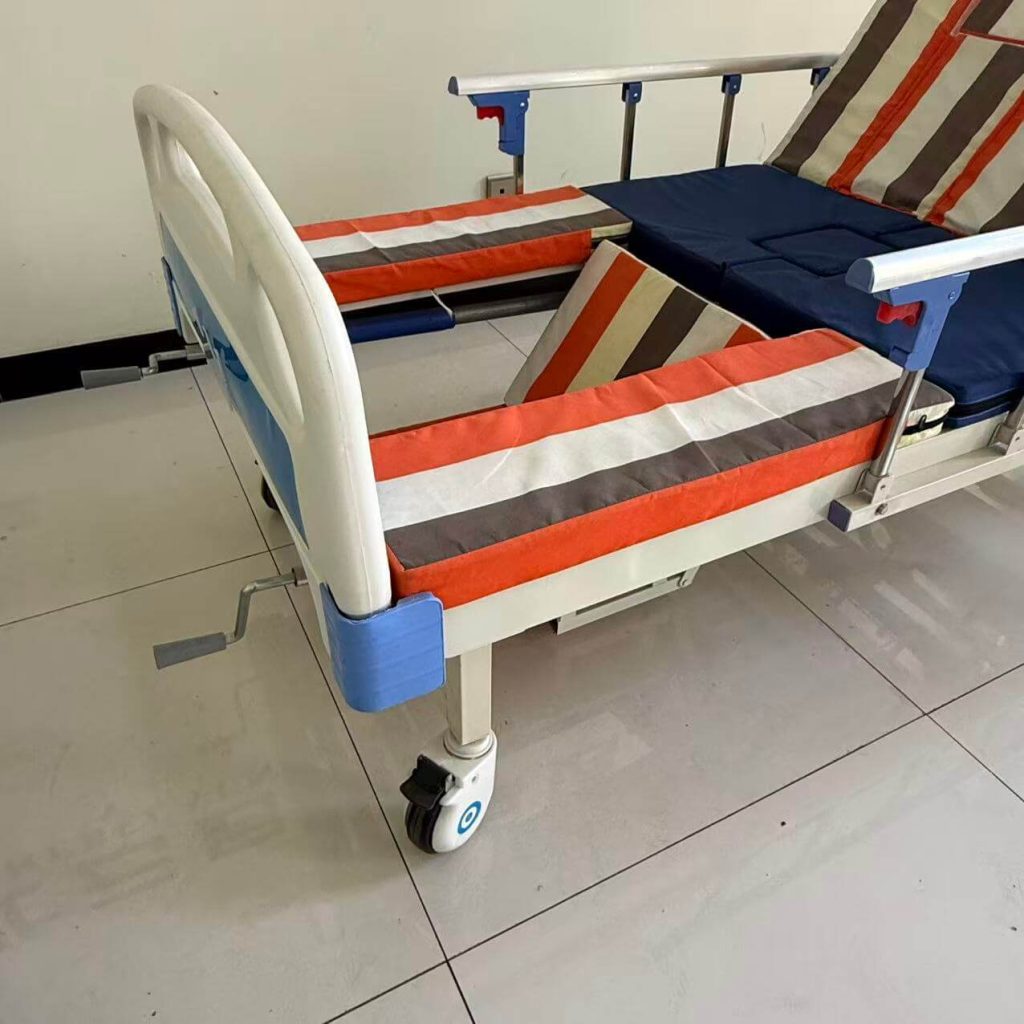
What Should Buyers Check Before a Bulk Order?
Catalog specifications should not be the only basis for a large purchase. Buyers should verify dimensions, load capacity, functions, rails, casters, brakes, mattress specifications, accessories, packaging, and electrical requirements.
A sample, detailed product video, or pre-shipment inspection can help verify actual construction.
The most useful purchasing checks include confirming standard versus optional components, reviewing close-up images of structural details, checking packing dimensions and loading quantity, reviewing manuals, confirming spare-parts support, and verifying that the chosen configuration meets local hospital and regulatory requirements.
Evaluate the supplier as carefully as the bed
Supplier capability affects product consistency, customization, delivery, communication, and after-sales support. Buyers should ask how technical changes are confirmed, how replacement parts are supplied, and how specifications are controlled between samples and bulk production.
Jcare supplies hospital beds, home care beds, rehabilitation products, medical furniture, and medical bed accessories for wholesale purchasers. For infectious disease ward projects, buyers can compare manual and electric configurations, side rails, casters, mattresses, IV poles, and other accessories according to their project requirements.
Price should remain only one part of the decision. Technical suitability, local regulations, hospital protocols, and sample verification are equally important.
How Can Hospitals Balance Cost and Infection-Control Needs?
The lowest initial price may lead to higher maintenance or cleaning costs later, while a highly complex electric bed may be unnecessary for basic positioning needs.
A better comparison considers purchase price, cleaning workload, service life, spare-parts availability, maintenance complexity, transport frequency, and staff use.
Standardization can lower long-term costs
Hospitals purchasing many beds may benefit from standardizing components such as casters, mattresses, rails, accessories, or spare parts. This can simplify staff training and maintenance while reducing the number of replacement parts that need to be stocked.
Distributors may gain the same advantage. A common platform with different optional functions can be easier to manage than several unrelated bed systems.
People Also Ask: What Is the Most Important Feature of a Hospital Bed for an Infectious Disease Ward?
There is no single feature that determines suitability. The bed must work as a complete system. Easy-to-clean surfaces are important, but so are reliable brakes, stable rails, compatible mattresses, durable coatings, and serviceable components.
For most projects, the best bed matches clinical requirements while remaining simple to clean, inspect, move, and maintain. Buyers should therefore compare practical daily performance rather than choosing a model only because it has more functions.
Conclusion
Choosing hospital beds for infectious disease wards requires more than comparing price or functions. Buyers should consider cleanability, mobility, braking, side rails, mattresses, accessories, durability, and maintenance together.
Manual and electric beds can both be suitable when their functions match the ward’s patient needs and workflow. Before a bulk purchase, hospitals, distributors, and medical equipment buyers should verify detailed specifications, inspect samples where possible, and confirm spare-parts support.
If you are comparing hospital bed configurations for infectious disease wards, share the specifications or functions you are considering in the comments. You can also share this article with colleagues involved in hospital procurement, project planning, or medical equipment sourcing.