
Emergency departments often struggle to choose beds that support rapid treatment, frequent transfers, infection control, and different patient conditions. A poor selection can slow staff, raise maintenance costs, and create safety risks. The solution is to evaluate mobility, adjustability, durability, cleaning design, load capacity, and supplier support before purchasing.
The best hospital beds for emergency departments are easy to move, quick to adjust, simple to clean, and strong enough for continuous use. Buyers should compare braking systems, castor quality, safe working load, side rails, height range, mattress compatibility, emergency functions, and spare-parts support. The final choice should match the department’s workflow, patient types, available space, staffing needs, and maintenance capacity.
The right bed improves response speed, patient safety, and daily efficiency. The following sections explain what buyers should examine before placing a wholesale order.
What Makes an Emergency Department Bed Different?
Emergency departments work under more pressure than ordinary inpatient wards. Patients arrive with different levels of urgency, and staff may need to examine, stabilize, reposition, and transfer them quickly. An emergency bed must therefore support clinical access, safe movement, reliable braking, frequent cleaning, and repeated adjustment.
Emergency beds may serve several patients in one day, increasing wear on castors, rails, brakes, motors, cranks, and mattress platforms. Buyers should therefore evaluate them under realistic working conditions rather than judging appearance or unit price alone.
Which Bed Functions Are Most Important?
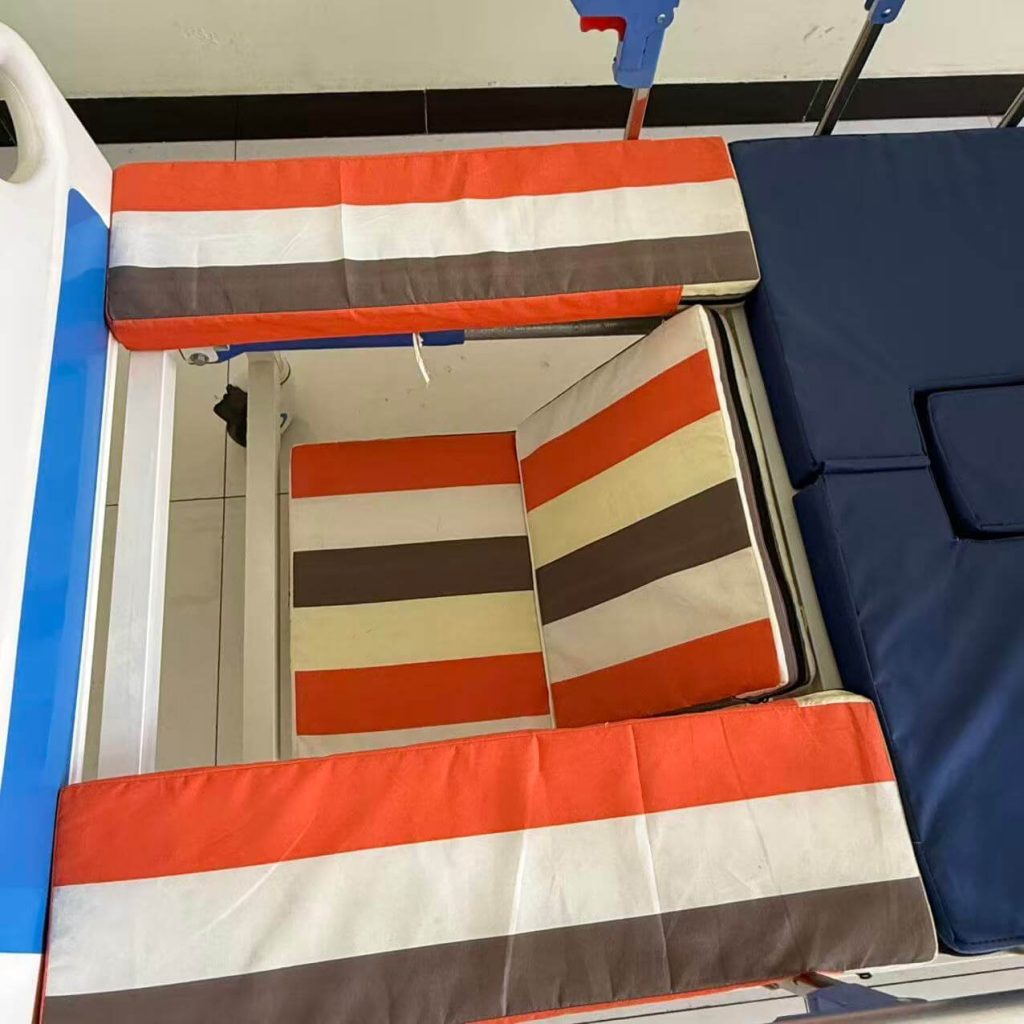
The required functions depend on the area in which the bed will be used. Triage zones, observation rooms, resuscitation bays, and emergency procedure areas may need different configurations.
Height Adjustment
Height adjustment helps staff place the patient at a comfortable working level during examinations, wound care, monitoring, and treatment. A lower position can support safer entry and exit, while a higher position can reduce staff bending.
Buyers should compare both minimum and maximum heights. Hydraulic and electric systems are generally faster than manual cranks, although manual models may still suit lower-acuity areas or facilities with limited budgets.
Backrest, Leg, and Tilt Functions
Backrest elevation can improve comfort, breathing, and examination access. Leg adjustment supports selected positioning needs. Trendelenburg and reverse Trendelenburg may also be useful in high-acuity areas.
Not every bed requires every function. Buyers should confirm actual clinical needs before adding advanced features, because unnecessary mechanisms increase purchase and maintenance costs.
Emergency CPR Release
A CPR release allows the backrest to return rapidly to a flat position during resuscitation. Buyers should test how quickly it operates, whether the handle is easy to find, and whether the system lowers safely under load.
Should Buyers Choose Manual, Hydraulic, or Electric Beds?
Manual beds are economical, simple to maintain, and independent of electricity. They may suit basic observation areas, temporary treatment spaces, or smaller clinics. However, adjustment takes more time and physical effort.
Hydraulic beds offer fast height control through foot pedals. They are useful where staff need to adjust the bed while keeping their hands available for patient care. Buyers should check lifting smoothness, pedal position, controlled lowering, and leak resistance.
Electric beds provide convenient adjustment of height, backrest, leg section, and tilt. They are suitable for high-acuity areas where frequent positioning is required. Buyers should compare actuator quality, cable protection, voltage, emergency lowering, battery backup, and replacement-part availability.
The best system is the one that matches the hospital’s workload, technical resources, and service capacity.
How Important Are Mobility and Braking?
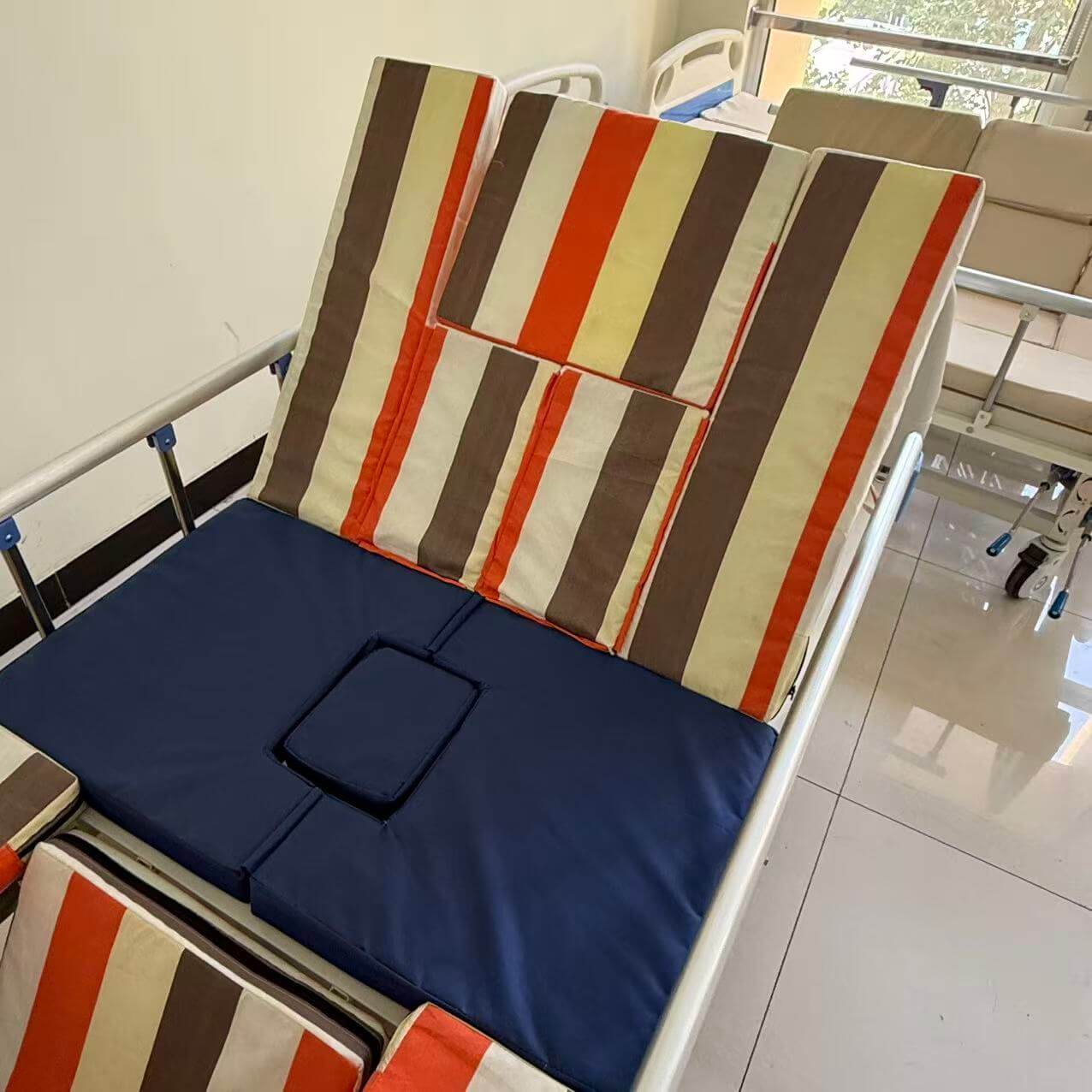
Emergency beds are often moved through treatment rooms, corridors, imaging departments, elevators, and inpatient areas. Poor wheel performance can slow transport and increase staff strain.
Castors and Directional Steering
Larger castors usually move more easily over floor joints and elevator thresholds. However, wheel material, bearing quality, frame balance, and directional control also affect performance.
Directional steering helps the bed travel straight during longer transfers. Without it, a loaded bed may drift sideways and require more effort to control.
Buyers should test the bed with a realistic load. The test should include narrow turns, elevator entry, doorway passage, floor transitions, and one-person transport.
Central Braking
A central brake allows several wheels to be locked with one pedal. This saves time and provides more consistent stability than separate wheel brakes.
The pedal should be easy to reach, and staff should be able to identify whether the bed is locked, free, or in directional mode. Braking performance should be tested at the bed’s rated load.
What Safety Features Should Be Checked?
Safety depends on the complete bed design rather than one individual feature. Buyers should examine side rails, load capacity, frame stability, mattress fit, brakes, and adjustment mechanisms together.
Side Rails
Side rails should reduce fall risk without blocking access to the patient. Split, fold-down, and full-length rails may all be appropriate depending on the application.
The rails should lock firmly, release smoothly, and avoid exposed pinch points. Gaps between the rail, mattress, headboard, and platform should also be reviewed to reduce entrapment risks.
Safe Working Load
Safe working load includes the patient, mattress, accessories, and medical equipment placed on the bed. It should not be confused with patient weight alone.
Hospitals treating larger patients may need bariatric models with wider platforms, reinforced frames, and higher-rated castors. Suppliers should explain how the load capacity was tested and whether movement, braking, and adjustment remain reliable at full load.
Stability and Frame Strength
The frame should remain stable during CPR, repositioning, and transfers. Buyers should review materials, welding quality, structural reinforcement, and surface finishing.
A sample bed should not feel unstable when the rails are lowered or when staff apply pressure during treatment.
How Should Infection Control Affect Selection?
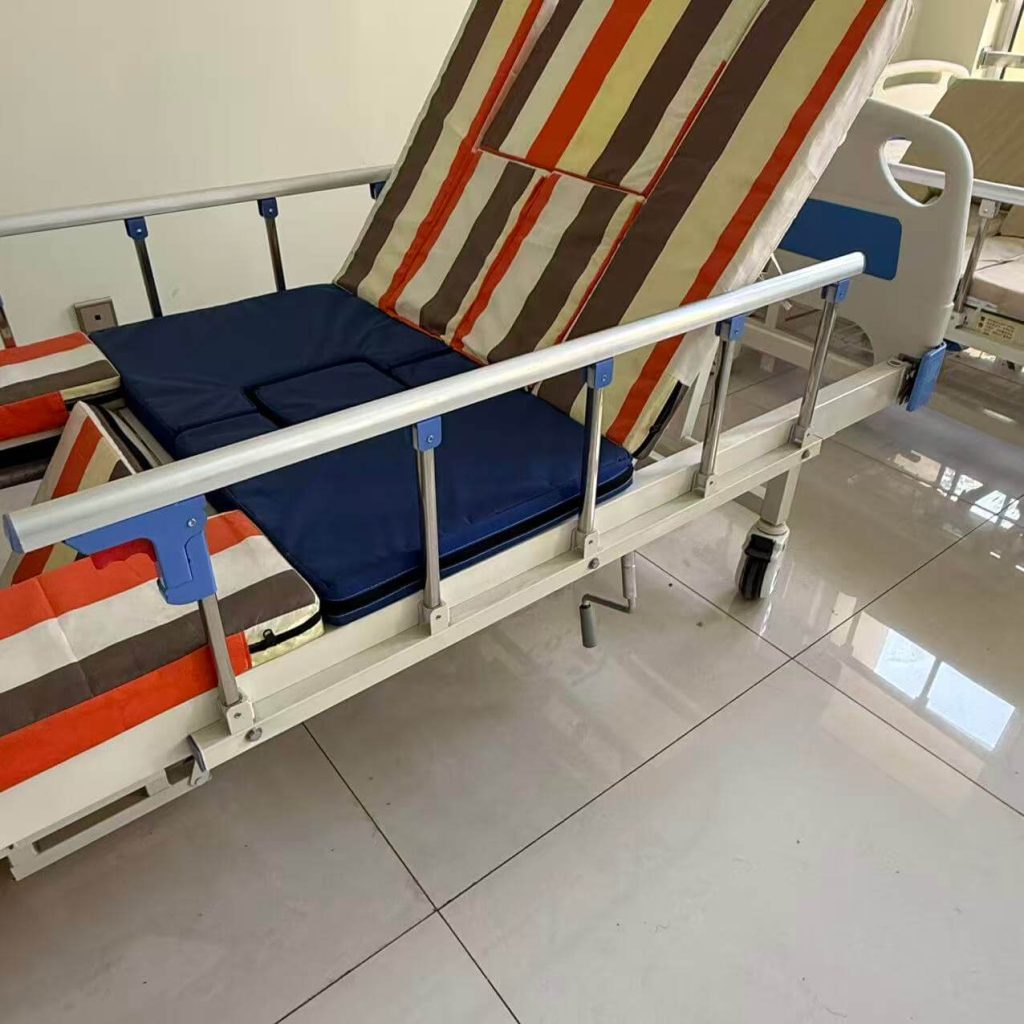
Emergency beds require frequent cleaning because patient turnover is high. Complicated joints, rough welds, exposed fasteners, and inaccessible gaps can trap fluids and increase turnaround time.
Easy-to-Clean Surfaces
Smooth surfaces, removable panels, protected mechanisms, and accessible mattress decks are easier to disinfect. Buyers should inspect the underside of the bed as carefully as the visible upper structure.
The coating must tolerate the hospital’s approved cleaning products. Poor finishes may crack, rust, fade, or become rough after repeated disinfection.
Headboards, Footboards, and Mattresses
Removable headboards and footboards can improve emergency access and simplify cleaning. They should detach quickly but remain secure during transport.
The mattress cover should be waterproof, durable, and easy to wipe. Seams and zippers must resist fluid penetration. Buyers should also confirm mattress dimensions, foam density, pressure redistribution, and compatibility with the platform.
What Dimensions Are Suitable?
Bed dimensions affect patient comfort, clinical access, movement, and space efficiency. Buyers should measure treatment bays, corridors, elevators, doorways, and storage areas before confirming specifications.
External width is often greater than mattress width because rails, controls, pedals, bumpers, and accessory mounts extend beyond the sleeping surface.
A narrow bed may improve movement in older buildings, but it should not compromise stability. Buyers should also compare bed length, turning radius, height range, and under-frame clearance.
Which Accessories Are Useful?
Common emergency accessories include IV poles, oxygen cylinder holders, urine bag hooks, monitor shelves, drainage supports, writing boards, restraint points, and under-bed baskets.
Accessories should not block castors, brake pedals, rails, or controls. It is better to plan them before production because some options require special mounting points.
Standardizing the same accessories across several models can simplify training and spare-parts management. Corner bumpers are also valuable because they help protect beds, walls, and doorframes during frequent transport.
How Can Buyers Evaluate Durability and Maintenance?
Emergency beds are used intensively, so long-term reliability matters more than showroom appearance. Buyers should request information about frame materials, coating, welding, castors, brakes, rails, motors, cranks, and hydraulic systems.
Maintenance teams should participate in purchasing decisions because they can identify service issues that clinical and procurement staff may overlook.
Spare-Parts Availability
A hospital bed remains useful only when replacement parts are available. Buyers should request a parts list before ordering.
Common service items include castors, brake pedals, rail components, hand controls, motors, actuators, cables, boards, cranks, and hydraulic parts.
The supplier should provide part codes, warranty terms, expected dispatch times, and installation guidance. Ordering a basic spare-parts package with the first shipment can reduce downtime.
Product Standardization
Too many unrelated bed models make training, maintenance, and spare-parts inventory more complicated. Many hospitals can use one basic observation model and one advanced resuscitation model to cover most emergency needs.
This approach reduces complexity without forcing every treatment area to use the same configuration.
Why Is Sample Testing Important?
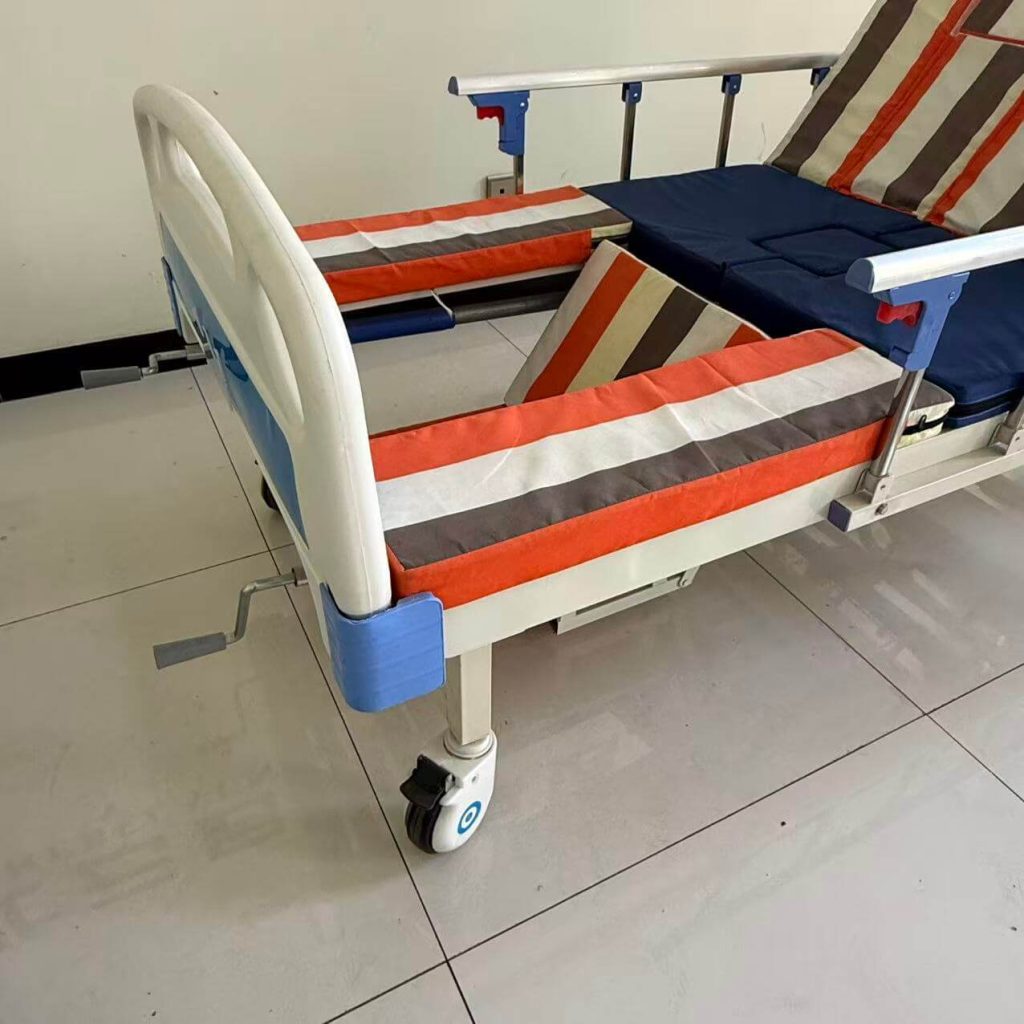
Catalogs and videos cannot fully show how a bed performs in a working emergency department. Sample testing helps buyers evaluate mobility, braking, adjustment, cleaning, stability, and accessory compatibility.
Nurses, doctors, transport staff, biomedical engineers, cleaners, and maintenance technicians should participate in the test.
The bed can be moved through corridors, turned inside elevators, locked in position, adjusted through its full range, fitted with accessories, and cleaned after use. Testing with an appropriate load can reveal weaknesses that are not visible when the bed is empty.
Feedback from several departments gives the purchasing team a stronger basis for final approval.
How Should Buyers Compare Total Cost?
The lowest quotation does not always offer the best value. Buyers should compare shipping, installation, accessories, spare parts, cleaning time, repair frequency, maintenance, expected service life, and equipment downtime.
A more durable bed may cost more initially but reduce repairs and downtime. Better mobility lowers staff effort, while easier cleaning shortens turnaround time.
Before ordering, buyers should ask about production time, export packaging, customization, inspections, technical documents, warranty coverage, and after-sales support.
Why Work With Jcare for Wholesale Hospital Beds?
Jcare supplies hospital beds, home care beds, rehabilitation products, medical furniture, and medical bed accessories for B2B buyers.
The company serves hospitals, private clinics, distributors, and medical equipment purchasers in India, the Middle East, Southeast Asia, Europe, the United States, Japan, and South Korea.
With a 3,000-square-meter processing facility, factory pricing, ample stock, and short delivery times, Jcare can support wholesale orders and customized requirements.
Buyers can discuss bed functions, dimensions, accessories, electrical systems, packaging, branding, spare parts, and destination-market needs before production. This helps reduce specification errors and improves purchasing efficiency.

Conclusion
Choosing hospital beds for emergency departments requires more than comparing prices and basic functions. Buyers should evaluate adjustment systems, mobility, braking, safety, infection-control design, dimensions, accessories, durability, maintenance, and spare-parts support.
The best bed is the one that fits the hospital’s workflow, patient population, building layout, staff capacity, and long-term service plan. Sample testing and supplier evaluation can reduce risk before a bulk order.
If this guide was useful, share it with your procurement or clinical team. You can also leave a comment about the emergency bed features that matter most in your market.