
Cardiology wards care for patients with different mobility, monitoring, and recovery needs, so choosing hospital beds can be difficult. A poorly matched bed may complicate nursing work, transfers, cleaning, or emergency response. By comparing positioning, safety, mobility, maintenance, and cost, buyers can select a more practical configuration for daily ward use.
For cardiology wards, choose hospital beds with reliable backrest adjustment, suitable height control, secure side rails, dependable brakes, smooth mobility, easy-to-clean surfaces, and appropriate emergency functions. CPR release, Trendelenburg, central locking, battery backup, and nurse controls may be useful depending on the ward. Buyers should match these features to clinical workflow instead of simply choosing the bed with the most functions.
The right specification depends on how the ward works. The following points provide a practical framework for comparison.
What Hospital Bed Functions Matter Most in Cardiology Wards?
A cardiology ward does not automatically need the same bed as an ICU or general medical ward. Some patients may be relatively mobile, while others need frequent repositioning or assisted transfers. Procurement teams should therefore begin with the patient profile and daily nursing tasks, separating essential functions from features that may rarely be used.
Start With the Daily Nursing Workflow
Ask how often nurses raise the backrest, change bed height, transfer patients, or move the entire bed. Also consider whether patients are commonly connected to monitors, infusion equipment, oxygen equipment, or drainage devices. Electric adjustment can simplify frequent repositioning, but the final configuration should reflect staffing, protocols, patient dependence, and budget.
A useful rule is simple: define the workflow first, then choose the functions.
Why Is Backrest Adjustment Important?
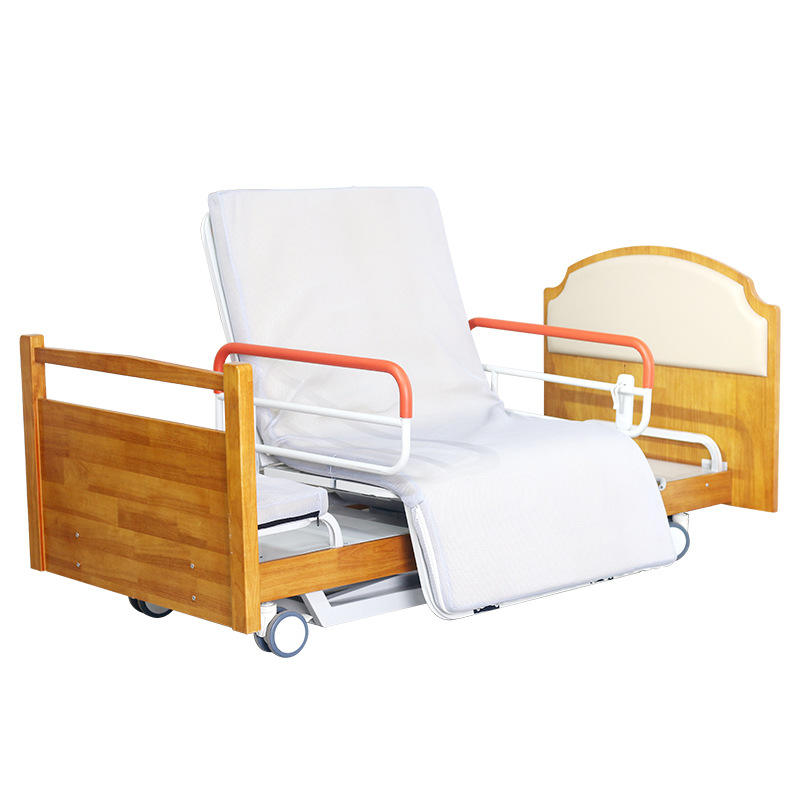
Backrest adjustment is one of the most frequently used movements on a hospital bed. It allows the upper mattress platform to move from a flatter position to a more upright position for different care and comfort needs.
The maximum angle is only one part of the comparison. Movement should be smooth, the frame should remain stable, and the actuator should hold the selected position reliably.
Evaluate Adjustment Range and Controls
Ask suppliers for the actual adjustment range instead of relying only on labels such as “three-function” or “five-function,” because manufacturers may count functions differently.
The hand controller should be easy to reach and understand. Where patient controls are provided, a lockout function may help staff restrict selected movements. Nurse control panels add centralized control, but also cost and complexity.
How Important Is Adjustable Bed Height?
Height adjustment affects patient access, transfers, nursing work, and overall usability. FDA hospital-bed safety guidance recommends beds that can be raised and lowered to accommodate patient and healthcare-worker needs and advises keeping beds low with wheels locked when appropriate.
For cardiology procurement, check both minimum and maximum platform height. A low position may support a broader fall-risk plan, while a higher position can assist some care tasks.
Compare Minimum and Maximum Heights Carefully
Ask whether the stated height is measured to the frame, mattress platform, or top of the mattress. This small detail can create large differences between quotations.
Hospitals should not treat a low bed or bed alarm as a complete fall-prevention solution. AHRQ describes fall prevention as multifactorial, and one randomized trial summarized by AHRQ found that increased bed-alarm use alone did not reduce falls.
Therefore, bed height should be considered together with brakes, rails, mobility, room layout, staff observation, and hospital procedures.
Should Cardiology Beds Have Trendelenburg Functions?
Trendelenburg and reverse Trendelenburg tilt the complete mattress platform. These functions are common on higher-specification electric beds, but they should not automatically be required in every cardiology ward.
The hospital’s clinical team should determine whether these positions are part of normal practice. A supplier should not present a bed position as a treatment for a cardiac condition.
Treat Tilt as a Workflow Requirement
If tilt functions are required, compare the available angle, movement stability, control access, lockout design, and battery operation.
Hospitals should also decide who is authorized to activate these movements. A nurse control panel may be useful when staff need centralized control over advanced functions.
If the ward rarely uses tilt positioning, removing it may reduce purchase cost and simplify maintenance.
What Emergency Functions Should Buyers Check?
Emergency features deserve careful attention. One common example is CPR release, which allows the back section to return quickly toward a flat position.
Beds may use mechanical CPR, electric CPR, or both. Mechanical release can remain available without normal electrical power, while electric CPR may be convenient when the system is powered.
Test CPR Controls Before Bulk Purchasing
Ask the supplier to demonstrate CPR operation with the exact bed configuration being purchased. Check whether the control is easy to reach and whether rails, bedding, or accessories could obstruct it.
Procurement teams should involve nursing and biomedical staff when evaluating emergency functions, since they can identify operational and maintenance issues. Controls should also be clearly explained in manuals and staff training.
How Should Side Rails Be Evaluated?
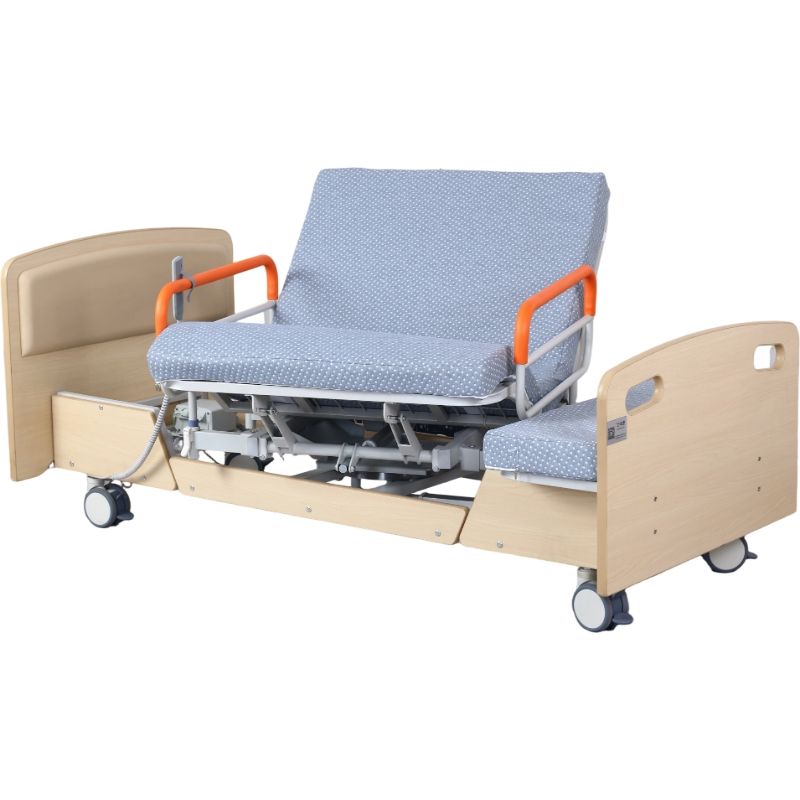
Side rails are more than a visual accessory. Buyers should compare rail height, coverage, locking strength, release mechanism, gaps, material, cleaning access, and mattress compatibility.
FDA guidance highlights entrapment risk within the complete bed system and treats the frame, mattress, rails, and compatible accessories as interacting components rather than isolated parts.
Match Side Rails With the Mattress
Mattress thickness and width affect the relationship between the mattress surface and side rail. Hospitals should therefore verify the complete bed-and-mattress combination before changing mattress specifications.
Split side rails can improve access to selected areas, while full-length folding rails may be simpler and more economical. Regardless of style, rails should lock clearly, release predictably, and move without excessive force.
Why Do Casters and Brakes Matter?
Hospital beds may move for examinations, cleaning, maintenance, room changes, or emergency transport. Poor maneuverability increases staff effort, while unreliable brakes can reduce stability during transfers and bedside care.
Compare caster diameter, rolling performance, brake access, steering function, and replacement availability. Whenever possible, test the bed on flooring similar to the hospital environment.
Consider Central Locking for Frequent Movement
Central locking allows several casters to be controlled through a coordinated mechanism. It can be useful when beds move frequently and staff need quick brake operation.
Directional steering can help with heavier electric beds in corridors, but these systems add cost and maintenance. For beds that rarely leave the ward, individual locking casters may still be practical.
What Load Capacity and Structural Details Should Buyers Compare?
Load capacity should match the hospital’s patient population and intended use. Buyers should ask what the supplier’s stated capacity represents and whether mattresses or accessories are included.
The frame also deserves close inspection. Compare steel sections, weld consistency, moving joints, actuator brackets, platform support, side-rail mounts, and head and foot board connections.
Consider Long-Term Mechanical Wear
Hospital beds are repeatedly raised, lowered, rolled, braked, cleaned, and repositioned. Weaknesses may not appear during a short demonstration.
For bulk orders, request available test information, spare-parts lists, warranty terms, replacement procedures, and control-box access. A sample order can also help evaluate the product before a larger purchase. Total cost should include maintenance and downtime, not only initial price.
How Important Are Battery Backup and Electrical Design?
Electric beds depend on actuators, controls, cables, and power supplies. Buyers should consider what happens when a bed is unplugged for transport or normal power is temporarily unavailable.
If battery backup is offered, ask which functions remain available, how the battery is charged, and how replacement is handled.
Cable routing also matters. Cables should be protected from casters, moving joints, pinch points, and repeated pulling during transport or cleaning.
Electrical configuration must match the destination market, including voltage, frequency, and plug type. Confirm these details before production.
What Makes a Cardiology Bed Easier to Clean?
Hospital beds are high-contact equipment and must fit the facility’s cleaning and disinfection procedures. CDC guidance emphasizes cleaning and disinfecting healthcare environmental surfaces according to their use, including patient-care furniture and equipment surfaces.
Cleanability should therefore be evaluated during procurement, not after installation.
Look for Smooth and Accessible Surfaces
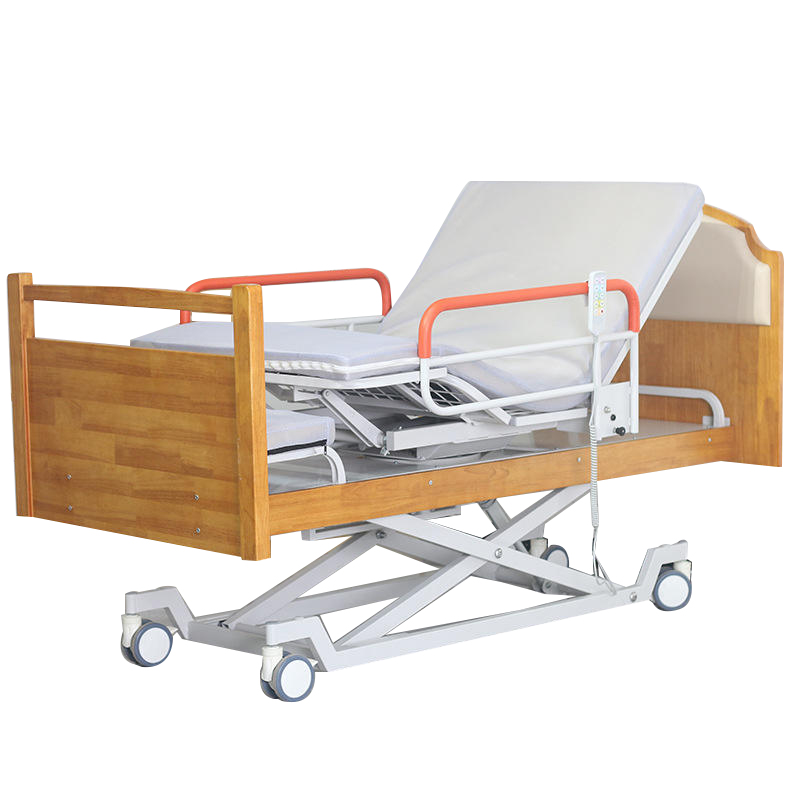
Inspect the mattress platform, rails, head and foot boards, controllers, joints, handles, and under-frame structure. Narrow gaps and difficult corners can make routine cleaning more time-consuming.
Detachable head and foot boards can improve access, while smooth surfaces may simplify wiping. Hospitals should confirm that plastics, coatings, labels, and controls are compatible with approved cleaning products and request cleaning instructions before purchase.
How Can Buyers Compare Hospital Bed Suppliers?
A good bed specification is only part of a successful purchase. Hospitals and distributors should also evaluate manufacturing consistency, documentation, packaging, spare parts, lead time, after-sales support, and export experience.
Create one requirement sheet and send the same version to every shortlisted supplier. Include dimensions, height range, backrest movement, knee adjustment, tilt functions, load capacity, controls, side rails, casters, mattress, accessories, voltage, plug type, packaging, and quantity.
Request a Sample or Structured Video Inspection
Before bulk purchasing, inspect a sample where practical. If a physical sample is not convenient, request a detailed video showing every movement and major component.
The inspection should cover height adjustment, backrest and leg movement, CPR release, rails, caster brakes, steering, head and foot board removal, controllers, accessories, mattress fit, and packaging.
Also ask for packing dimensions, gross weight, loading quantity, spare-part recommendations, lead time, and warranty terms. These details affect landed cost and project planning.
How Can Jcare Support Cardiology Ward Procurement?
Jcare supplies hospital beds, home care beds, rehabilitation products, other medical furniture, and medical bed accessories for wholesale projects. For cardiology wards, Jcare can discuss bed configurations according to required functions, dimensions, accessories, packaging, and target budget.
As a China-based supplier serving hospitals, private clinics, medical-equipment purchasers, and distributors, Jcare focuses on factory pricing, available stock, and short delivery arrangements for suitable projects.
Conclusion
Choosing hospital beds for cardiology wards requires more than comparing motor quantity or appearance. Buyers should evaluate backrest movement, height adjustment, emergency controls, side rails, casters, brakes, load capacity, structure, battery backup, electrical design, mattress compatibility, cleanability, maintenance, and supplier support.
Most importantly, match the bed to the ward’s actual workflow. A practical configuration should support patient care and staff operation while avoiding functions that add cost without being regularly used.
Which hospital bed functions does your cardiology ward consider essential? Share your experience in the comments, or send this article to colleagues involved in hospital equipment selection and procurement.