
Hospital bed distributors often struggle to decide which models belong in a complete catalog. Too few products can lead to lost projects, while too many similar models increase inventory pressure and after-sales complexity. The solution is to build a balanced range around customer types, care environments, price levels, accessories, and local demand.
To build a complete hospital bed product range, include flat beds, manual beds, electric ward beds, ICU beds, home care beds, selected specialty models, mattresses, bedside furniture, mobility products, accessories, and spare parts. Organize them by application, function, and price. Stock fast-moving models, display samples of higher-value beds, and purchase specialized products mainly for confirmed projects.
A strong portfolio should be easy to explain, quote, stock, and service. The following steps help distributors build one without unnecessary duplication.
Why Does a Complete Hospital Bed Range Matter?
Hospitals, clinics, nursing homes, rehabilitation centers, and home care dealers do not purchase the same beds.
When a distributor offers only one or two models, buyers may need several suppliers to complete a project. This weakens the distributor’s position in tenders and package orders. However, a catalog full of nearly identical beds can confuse sales teams and create slow-moving stock.
The objective is not to list every available bed. It is to create a logical product ladder that covers common applications, budgets, and care needs while remaining manageable.
Start with Target Customers and Market Demand
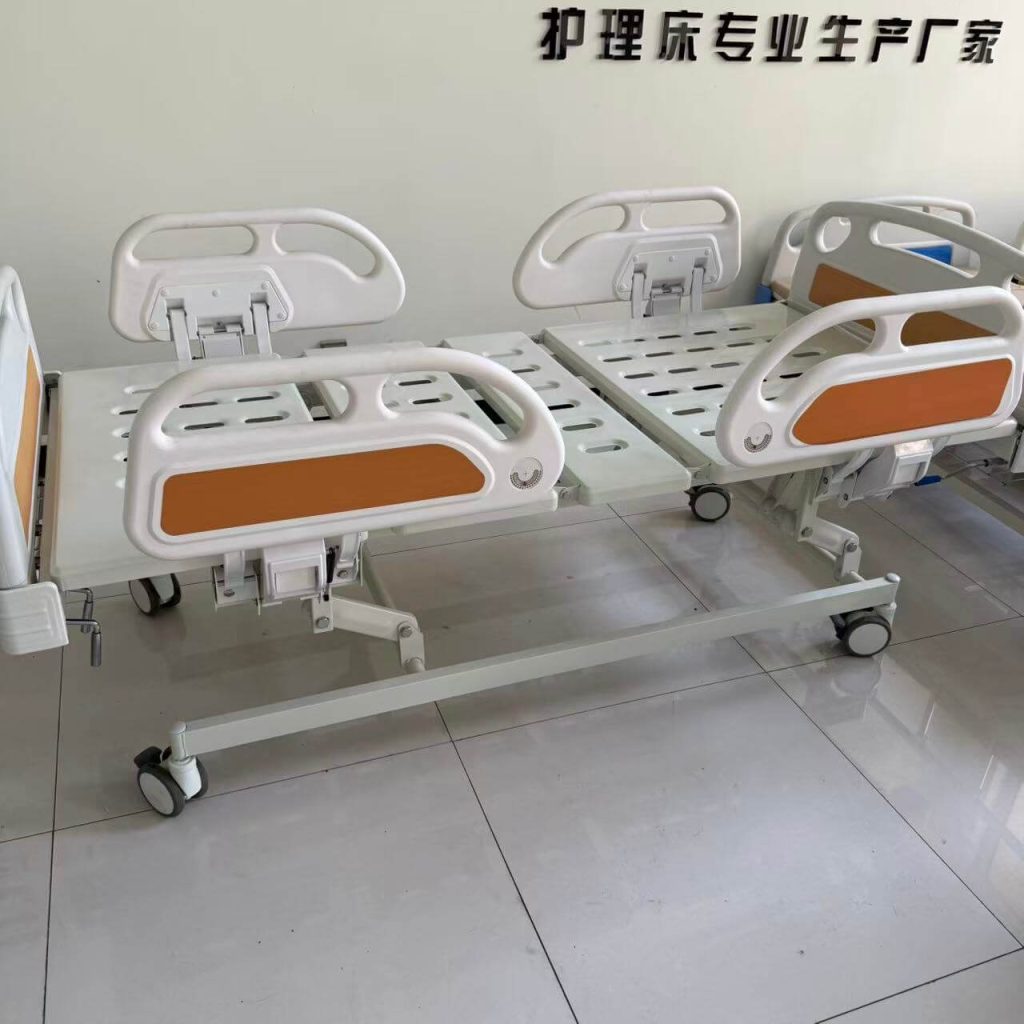
Before choosing products, identify the buyers that generate the strongest opportunities. These may include hospitals, clinics, nursing homes, rehabilitation centers, home care dealers, government agencies, project contractors, and medical equipment wholesalers.
Hospitals often focus on safety, durability, documentation, and caregiver access. Clinics may care more about price and delivery speed. Nursing homes value comfort, fall prevention, and easy operation. Home care customers may prefer compact packaging, quiet motors, and simple assembly.
Review past inquiries, tender documents, and local healthcare projects. Make frequently requested products core models and keep rare items as project options.
Build a Clear Manual Hospital Bed Range
Manual beds usually form the economy and standard sections of a distributor’s portfolio. They remain popular because they are affordable, simple to operate, and easy to maintain.
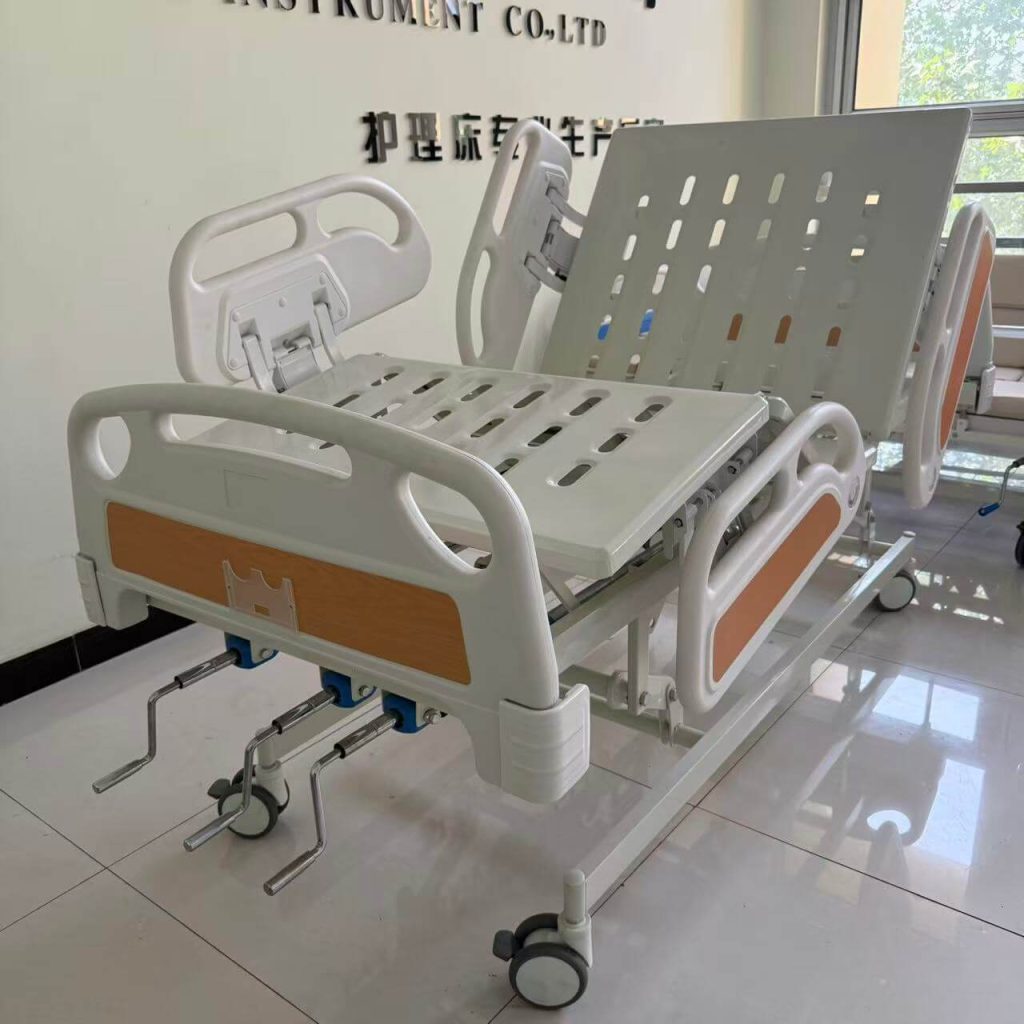
A flat bed can serve general wards, temporary facilities, and low-budget projects. A one-function manual bed normally adjusts the backrest. A two-crank bed usually controls the backrest and leg section, making it suitable for general wards and long-term care. A three-function manual bed may add height adjustment, improving transfers and caregiver working posture.
Choose one clear model at each functional level. Shared headboards, casters, crank systems, side rails, and platform parts can reduce costs and simplify training.
Create an Electric Bed Product Ladder
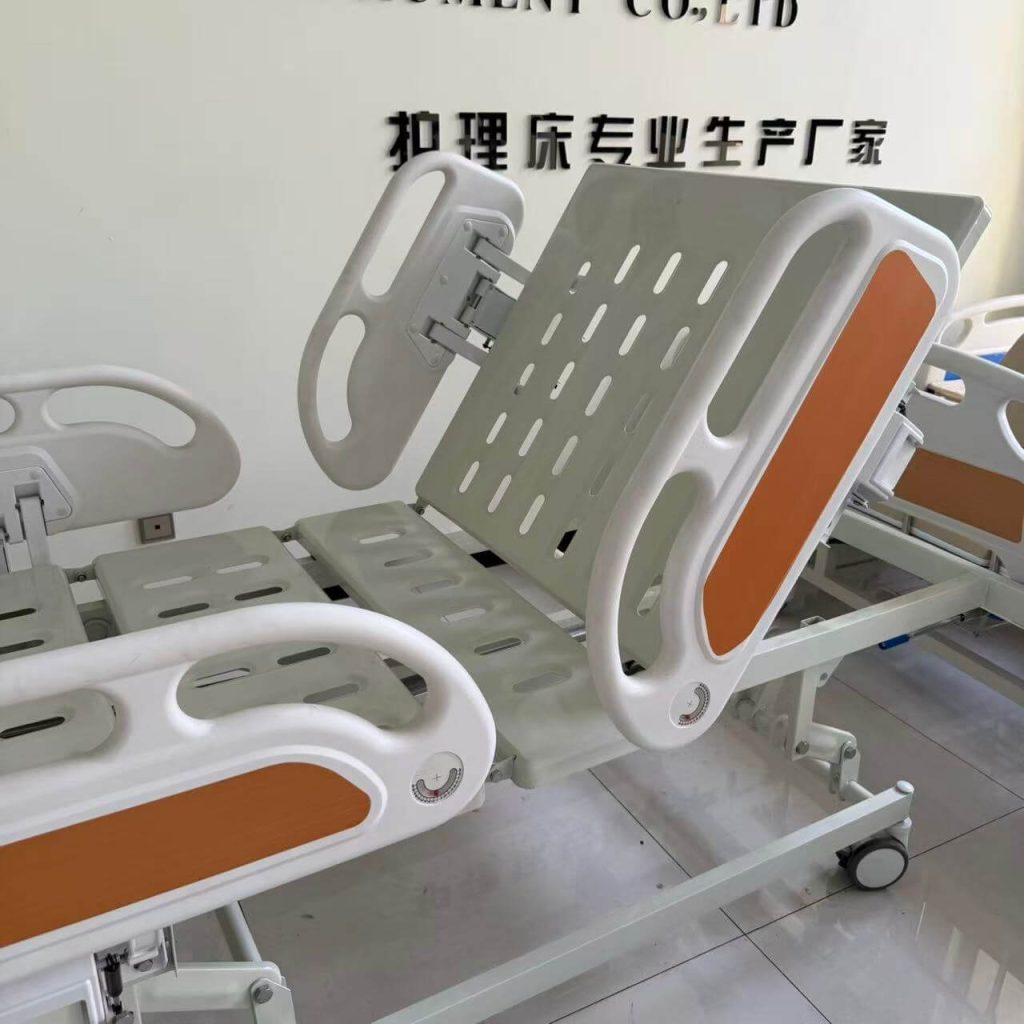
Electric beds allow distributors to serve modern hospitals, premium clinics, rehabilitation facilities, and home care markets. The range should progress clearly from basic positioning to advanced clinical functions.
A two-function electric bed usually adjusts the backrest and leg section. A three-function model commonly adds height adjustment. A five-function bed may provide backrest, leg, height, Trendelenburg, and reverse Trendelenburg adjustment.
Premium models can add central locking casters, battery backup, nurse controls, CPR functions, weighing systems, bed exit alarms, or X-ray-compatible platforms. These features should match real demand because advanced configurations increase purchase and service costs.
A practical range can include an entry-level bed, a three-function model, a five-function model, and a premium option.
Add ICU, Home Care, and Specialty Beds
ICU beds are important for hospital projects and critical care departments. A standard model should support frequent positioning, emergency access, safe movement, and caregiver control. Common features include electric adjustment, Trendelenburg positions, CPR release, split side rails, central braking, removable boards, IV pole sockets, and battery backup.
A premium ICU bed may add weighing, lateral tilt, alarms, X-ray compatibility, and advanced controls. One standard and one premium model are usually enough, with larger quantities ordered after project confirmation.
Home care beds should be presented separately from ward beds. Useful features include quiet motors, low platform height, simple hand controls, foldable side rails, wooden designs, compact packaging, and easy assembly. One economical model, one standard electric model, and one multifunction bed can cover many requests.
Specialty beds may include pediatric, bariatric, ultra-low, maternity, psychiatric, dialysis, traction, rotating nursing, and emergency department beds. Select them according to local demand and manage most as project products instead of regular stock.
Include Furniture, Mattresses, and Mobility Products
Hospital bed buyers often need supporting products in the same order. Adding medical furniture and mobility equipment makes the catalog more useful and increases quotation value.
Bedside cabinets are commonly purchased in the same quantity as beds. Offer an economical model and a stronger premium version. Over-bed tables should have stable bases, smooth height adjustment, easy-clean surfaces, and reliable casters.
At minimum, offer a standard medical foam mattress and a higher-grade pressure-relief option. Additional choices may include waterproof mattresses, brown fiber and sponge combinations, latex mattresses, multi-layer foam, and anti-decubitus air mattresses. Mattress dimensions must match the platform, while cover material, foam density, cleaning method, and fluid resistance should be clearly stated.
Useful additions include IV stands, stretchers, trolleys, wheelchairs, walkers, commode chairs, and patient lifts. Combine them into simple ward, ICU, clinic, or home care packages.
Standardize Accessories and Spare Parts
A hospital bed range is incomplete without compatible accessories and replacement parts. Components may wear, become damaged during transport, or need replacement after long-term use.
Common accessories include IV poles, drainage hooks, oxygen cylinder holders, monitor stands, dining boards, batteries, control panels, traction frames, bed extensions, and side rails. Quotations should clearly identify which items are standard, optional, or customized.
Priority spare parts include motors, control boxes, handsets, power cables, batteries, casters, brake components, crank handles, side rail locks, headboards, fasteners, and plastic covers.
Choose product families that share motors, controls, casters, board connections, and side rail parts. Standardization reduces inventory costs, repair time, and training needs.
Organize the Range by Price and Inventory Method
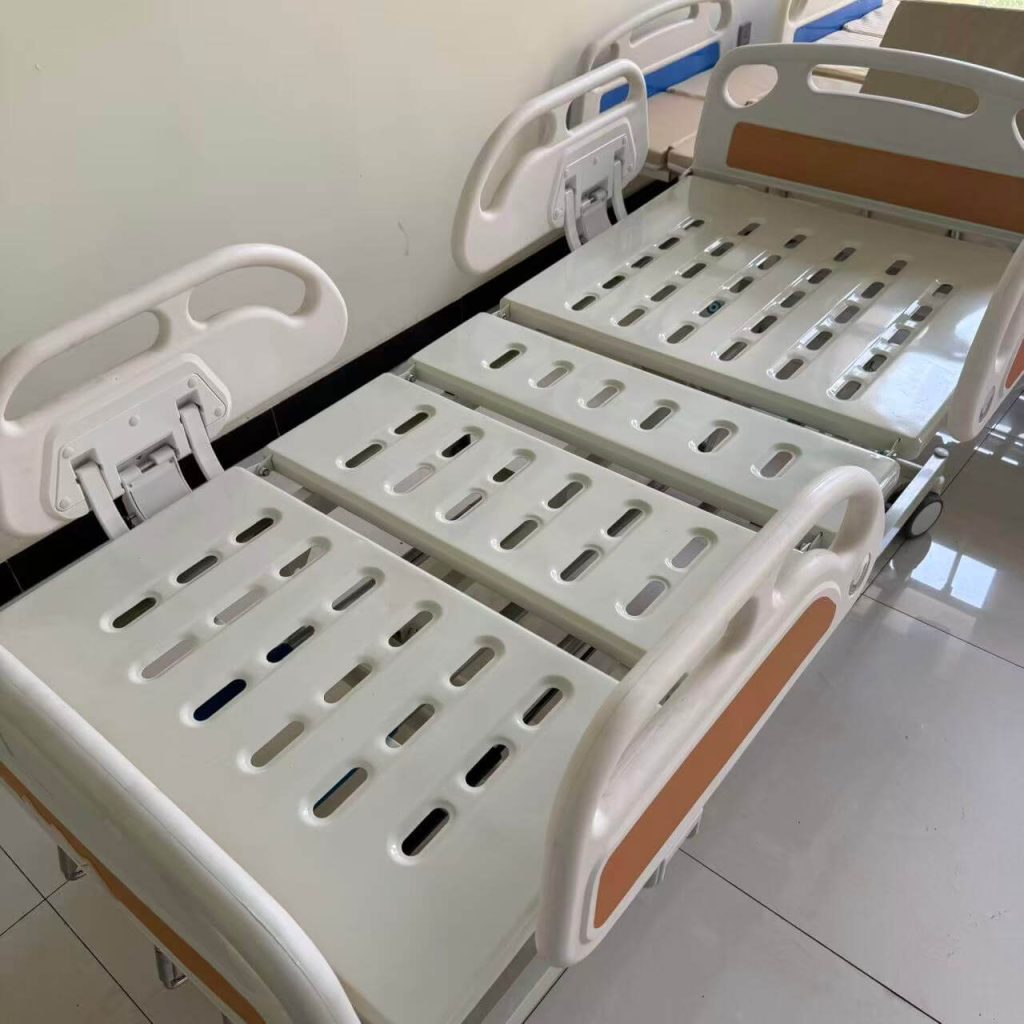
A clear catalog structure helps sales teams recommend products quickly. Divide the range into economy, standard, premium, and specialty levels.
Economy products provide essential functions at competitive prices. Standard products offer the best balance of durability, function, and cost. Premium products add advanced controls, safety features, better materials, or improved appearance. Specialty products address specific clinical requirements and are usually quoted for projects.
Products should also be divided into stock, sample, and project categories. Stock items are fast-moving products such as flat beds, two-crank beds, basic electric beds, mattresses, bedside cabinets, and IV poles. Sample products may include five-function beds, ICU beds, and advanced home care models. Project products include bariatric, pediatric, maternity, psychiatric, and other specialized beds.
Combine beds, mattresses, cabinets, and accessories to improve container use and reduce freight cost per unit.
Choose a Manufacturer That Can Support the Portfolio
The strength of a distributor’s catalog depends on the manufacturer’s production capability, quality control, documentation, customization, spare-parts service, and delivery performance.
Before confirming products, review materials, welding, coating, load capacity, electrical systems, assembly quality, inspection procedures, and export packaging. Confirm whether the supplier can provide technical sheets, user manuals, test reports, labels, and documents required in the destination market.
OEM and ODM services may include logos, colors, packaging, carton marks, voltage, plugs, manuals, side rail styles, mattress choices, and configuration changes. These options help distributors build a consistent local brand.
Choose a supplier that maintains stable specifications, provides spare parts, and supports both trial orders and container shipments.
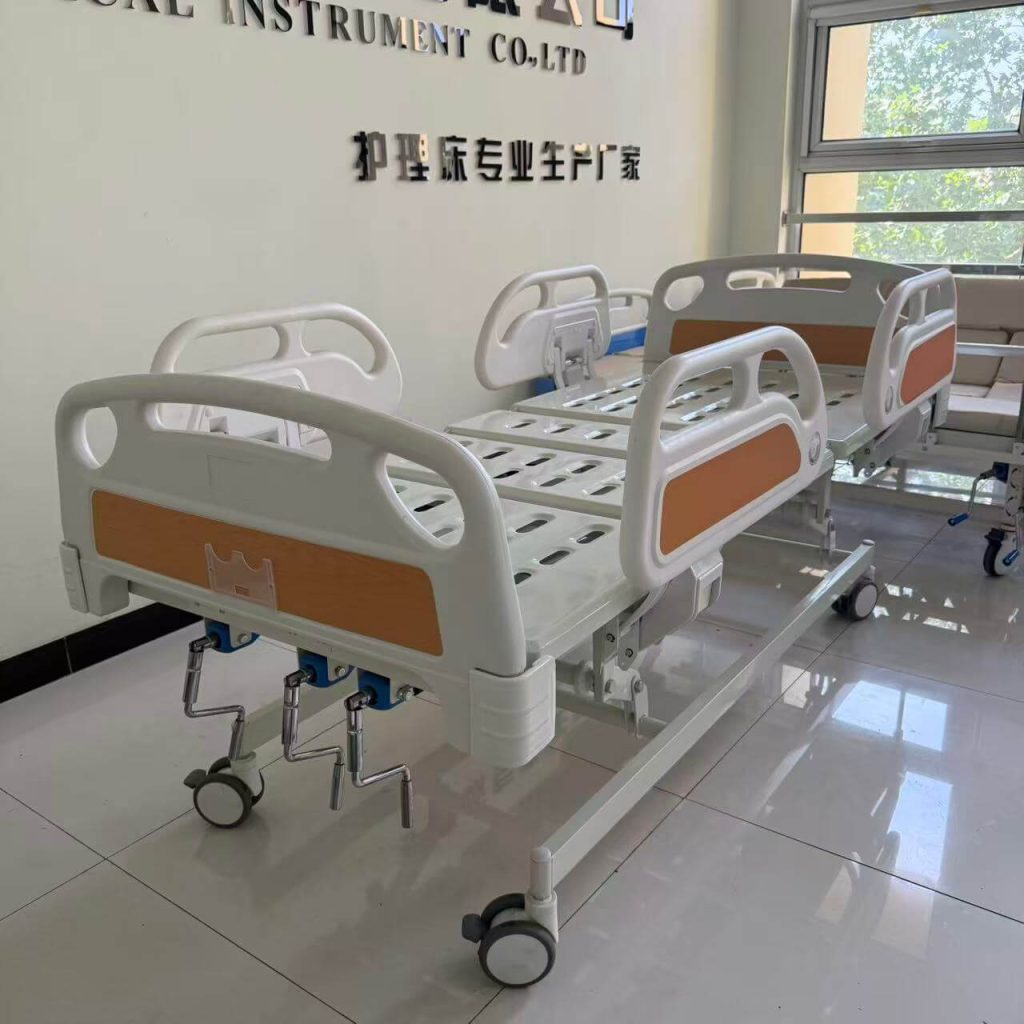
How Jcare Supports Hospital Bed Distributors
Jcare supplies hospital beds, home care beds, rehabilitation products, medical furniture, and hospital bed accessories for B2B wholesale customers. Our range supports distributors serving hospitals, private clinics, nursing homes, rehabilitation centers, and home care buyers.
Jcare owns a 3,000-square-meter production facility in China and focuses on factory-direct prices, ample stock, short delivery times, and practical customization. We serve buyers in India, the Middle East, Southeast Asia, Europe, the United States, Japan, South Korea, and other regions.
A coordinated supplier helps distributors compare models, standardize parts, prepare package quotations, and combine container loads. Jcare can recommend products by customer type, function, budget, and market.
Conclusion
Building a complete hospital bed product range requires careful selection, not simply a larger catalog. Start with target customers, then create a logical structure covering manual beds, electric beds, ICU beds, home care beds, selected specialty models, furniture, mattresses, accessories, and spare parts.
Use clear economy, standard, premium, and specialty levels. Stock fast-moving products, display higher-value samples, and order specialized beds for confirmed projects. Standardized components, reliable documents, efficient container planning, and strong after-sales support will make the range easier to sell and maintain.
Share this article with your sales or purchasing team, and leave a comment about which hospital bed categories are most important in your market.