
Hospital bed buyers often ask whether the frame is strong, the brakes hold properly, and the moving parts work reliably. If defects appear only after delivery, installation delays, complaints, and after-sales costs can increase. A structured factory inspection helps identify problems before shipment and confirms that the finished bed matches the approved specification.
Before leaving the factory, a hospital bed is typically checked for frame quality, dimensions, adjustable functions, casters, brakes, side rails, load-related performance, electrical operation, accessories, surface finish, labels, and packaging. Routine checks may be completed on each finished unit, while destructive, endurance, or formal compliance tests are usually performed during product validation or on selected samples. The exact inspection plan depends on the bed type, configuration, rated load, destination market, and applicable requirements.
Factory testing is not one single test. It is a sequence of inspections. Understanding these steps helps hospital and distributor buyers evaluate product quality more accurately.
Why Does a Hospital Bed Need Factory Testing?
A hospital bed combines a frame, mattress platform, moving sections, side rails, casters, brakes, and, on electric models, actuators and controls. Even acceptable components can perform poorly if assembly or adjustment is incorrect. Factory testing helps detect defects before packing and confirms that the finished bed matches the approved order or specification.
Routine Inspection Is Different From Type Testing
Buyers should distinguish routine production inspection from product validation. A manufacturer may check every finished bed for movement, braking, appearance, accessories, and basic functions. However, extreme-load, long-cycle durability, or formal electrical safety tests may be performed on prototypes, representative samples, or selected batches.
Therefore, “100% inspected” should not be interpreted as meaning that every finished bed has undergone every laboratory-level test.
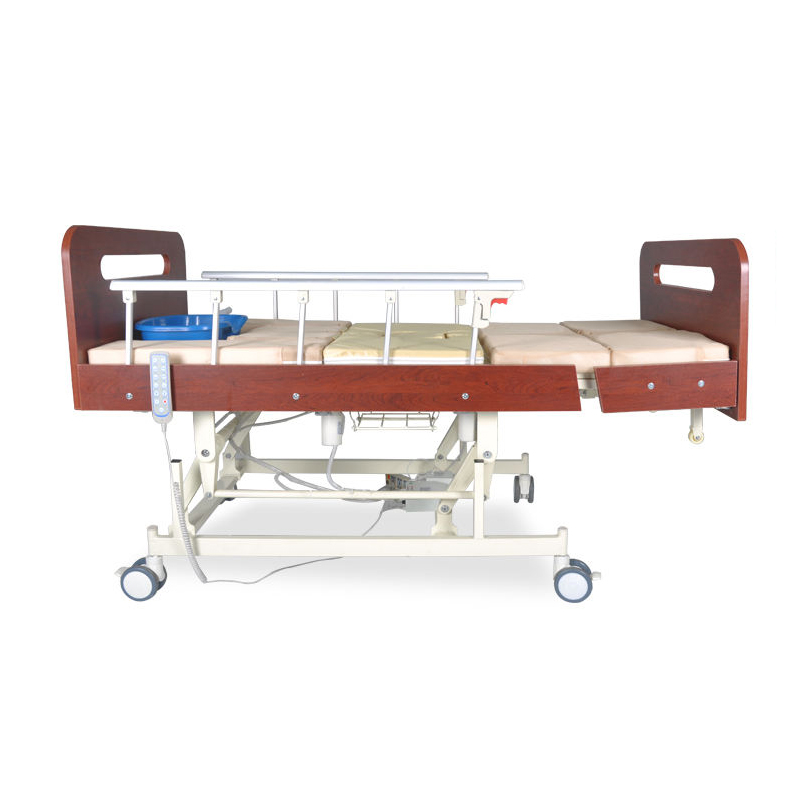
What Is Checked Before Final Assembly?
Quality control normally begins before the bed is fully assembled. Metal parts, molded components, casters, fasteners, actuators, control boxes, and other components may be inspected before they enter final production.
Frame, Welding, and Surface Quality
The frame and mattress platform can be checked for deformation, poor alignment, incomplete welds, visible cracks, sharp edges, loose joints, and incorrect mounting holes. Assemblies should fit together without forced positioning.
Powder-coated steel parts may also be inspected for scratches, exposed metal, or uneven coating. Plastic headboards, footboards, and covers can be checked for cracks, warping, or damaged fixing points. These checks help protect function, cleanability, corrosion resistance, and appearance.
How Are Dimensions and Bed Functions Verified?
After assembly, the finished bed should be compared with the approved specification. Typical dimensional checks may include overall length, width, mattress platform size, bed height, and relevant adjustment ranges.
The checklist changes with the model; a fixed-height manual bed does not require the same checks as a multi-function electric bed.
Manual and Electric Adjustment Checks
Each intended movement should be operated through its normal range. Depending on the model, this may include backrest adjustment, knee or leg movement, height adjustment, Trendelenburg, reverse Trendelenburg, or other positioning functions.
For manual beds, crank handles, lead screws, hinges, gears, and linkages should move without abnormal resistance or slipping. The selected position should remain stable.
For electric beds, the handset or control panel should activate the correct actuator and direction. Movements should be smooth, without unusual vibration, abnormal noise, or intermittent operation. If the bed includes CPR release, lockout, backup battery operation, or other optional functions, those items should be checked according to the approved configuration.
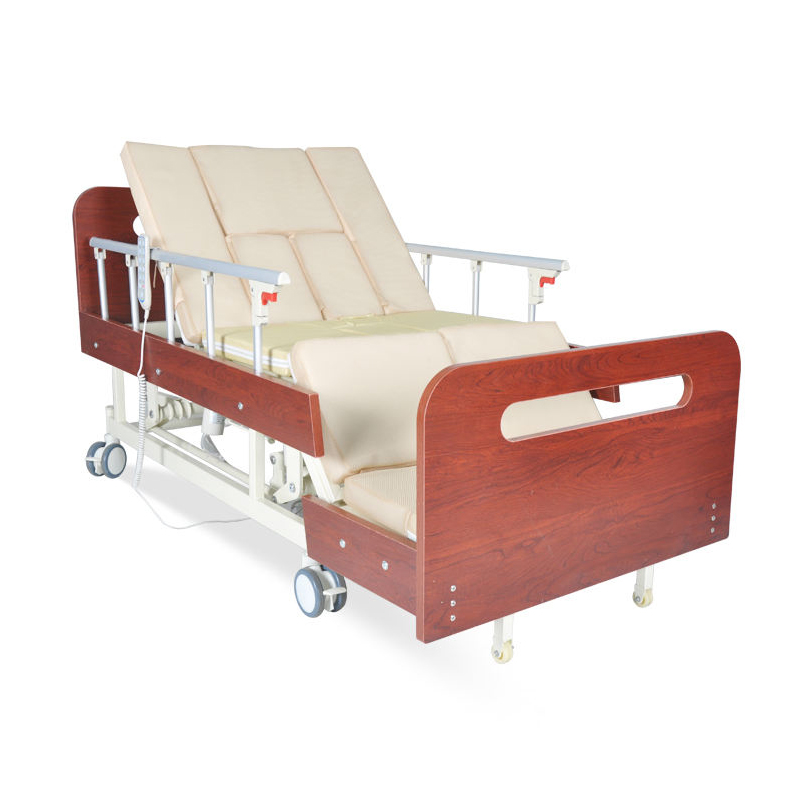
How Are Casters, Brakes, and Side Rails Tested?
Mobility and stability are essential to daily hospital-bed use. Inspectors commonly confirm that each caster is correctly installed, rotates freely, swivels properly, and shows no obvious damage.
Rolling and Brake Function
The assembled bed may be pushed over a suitable test surface to identify excessive resistance, wheel binding, vibration, or tracking problems. Brakes are then engaged and released. Central braking, directional locks, or steering functions should also activate correctly when fitted.
Side Rail Operation and Bed Gaps
Side rails should raise and lower correctly, latch securely when required, release intentionally, remain aligned, and contain no loose or damaged parts.
The relationship between the rail, mattress, platform, headboard, and footboard also matters. FDA hospital-bed entrapment guidance identifies dimensional assessment areas around the bed system and provides test methods for Zones 1 through 4. Mattress dimensions and compressibility can change these gaps, so the intended mattress should be considered together with the bed rather than as an unrelated accessory.
For buyers, this means mattress length, width, thickness, and compatibility should be confirmed before shipment.
How Is Hospital Bed Load Capacity Evaluated?
Load capacity is a common purchasing concern, but buyers should distinguish between the rated safe working load and the test loads used during design validation.
During development, manufacturers may carry out static, dynamic, stability, impact, or repeated-cycle testing according to the design, applicable requirements, and internal procedures.
Why Every Finished Bed Is Not Tested to Failure
A sellable bed is not normally overloaded until it bends or breaks. Destructive testing would make that unit unsuitable for shipment.
Instead, routine production control checks whether the manufactured bed remains consistent with the approved design. This can include verification of structural parts, materials, welds, fasteners, assembly, and selected load-related items.
B2B purchasers can ask four useful questions: What is the rated safe working load? How was it validated? Which load checks are routine? Which strength or durability tests are sample-based? These questions are more informative than simply asking whether the bed is “load tested.”
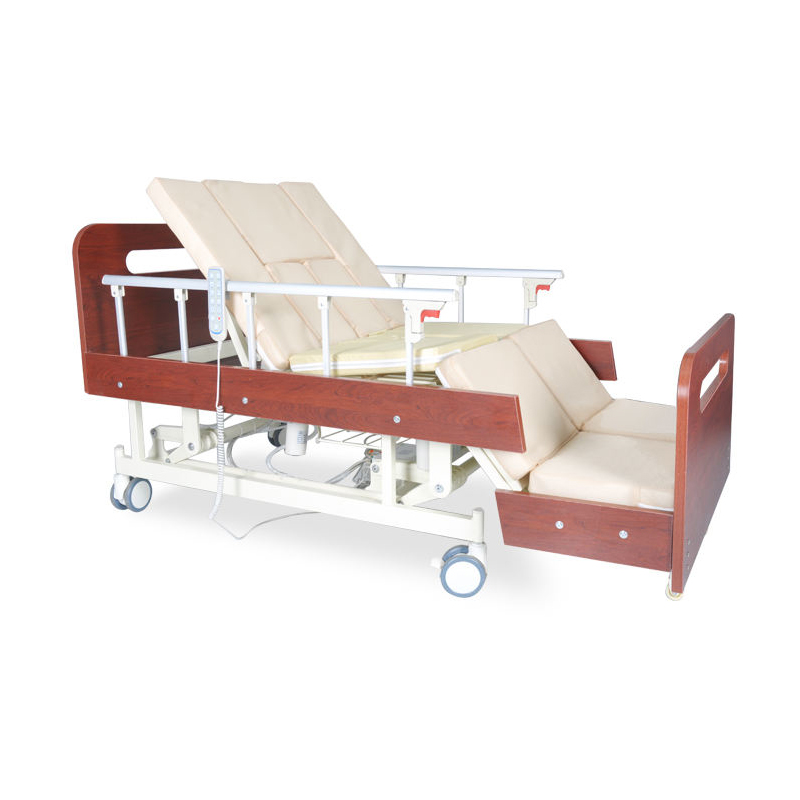
How Are Electric Hospital Beds Checked?
Electric models require additional inspection because their performance depends on actuators, control boxes, handsets, cables, plugs, power supplies, and sometimes batteries.
Electrical Function and Cable Routing
Each control command should operate the intended motor and direction, and movement should stop as expected. Cables should remain clear of pinch points throughout the movement range. They should not be stretched excessively, trapped between moving structures, or positioned where normal adjustment could damage them.
Electrical safety checks depend on the product, destination market, and applicable inspection plan. They may include items related to protective earth, insulation, leakage current, markings, or other relevant parameters.
As of 2026, IEC 80601-2-52:2026 covers the basic safety and essential performance of medical beds intended for adults and includes both electrical and non-electrical medical beds within its scope. It replaced the previous IEC 60601-2-52 series. The regulatory or certification requirements for a particular bed still depend on the destination market and product configuration.
What Is Included in the Final Inspection?
Once functional checks are complete, inspectors normally compare the finished bed with the order and review accessories, appearance, identification, and completeness.
Accessories and Removable Parts
Depending on the order, a bed may include a mattress, IV pole, drainage hooks, bumpers, dining table, extension parts, headboard, footboard, or other accessories. Inspectors should verify that the correct parts and quantities are included and that attachment points work properly.
Small missing items such as pins, clips, bolts, or brackets can create installation problems, especially when export beds are shipped partly disassembled.
Appearance, Labels, and Documents
The final visual inspection may look for scratches, dents, dirty surfaces, damaged plastic parts, exposed metal, uneven coating, loose fasteners, or labels in the wrong position.
Model identification, serial numbers, warning labels, carton marks, electrical information, manuals, and assembly instructions should also match the agreed product and destination requirements.
A bed can work correctly and still fail final inspection if it contains the wrong accessory, model label, color, logo, or OEM detail.
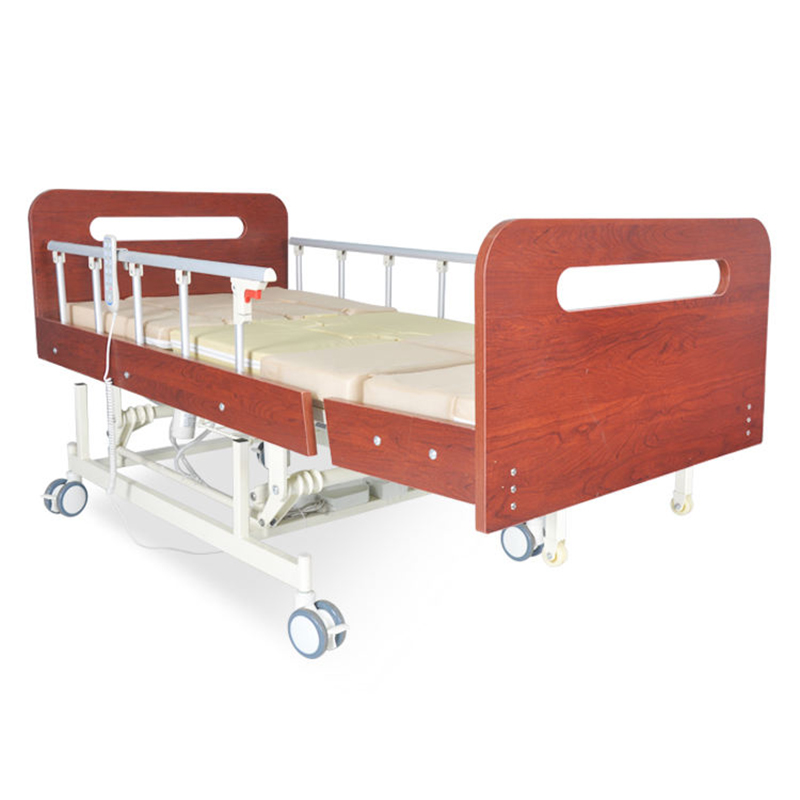
Why Is Packaging Part of Hospital Bed Quality Control?
A bed may pass all functional checks and still arrive damaged if export packaging is poor. Before packing, movable sections should be secured, detachable parts protected, cables positioned safely, and coated or plastic surfaces separated from parts that could rub against them.
Pre-Shipment Packaging Checks
Packing may use cartons, foam, protective film, reinforced frames, wooden cases, or a combination of materials, depending on the model.
Before release, the team should confirm bed quantity, accessory quantity, package identification, carton marks, and model-specific packing instructions. Buyers may also request packing photos, loading photos, package dimensions, gross and net weights, or pre-shipment inspection records.
Packaging does not improve the bed’s mechanical design, but it protects the condition already verified during factory inspection.
Does Every Hospital Bed Receive the Same Tests?
No. The inspection plan should reflect the bed type, intended use, functions, ordered options, risk level, destination market, and manufacturing process.
A basic manual bed does not need the same electrical checks as a multi-function electric model. Home-care, pediatric, bariatric, and specialized beds may also require different testing considerations.
IEC 80601-2-52:2026 specifically addresses adult medical beds, including electrical and manual models, while some other categories fall outside its scope.
For procurement teams, the key is to ask for information related to the exact model being purchased. A generic report for another model cannot automatically demonstrate that a different configuration has been evaluated in the same way.
What Should B2B Buyers Ask Before Ordering?
Price and appearance are easy to compare, but quality-control questions reveal more about production management. Before ordering, buyers can ask for the inspection checklist, approved specification, available test reports, packaging standard, and pre-shipment documentation.
Questions That Help Evaluate a Supplier
Useful questions include:
- Which inspections are performed on every finished bed?
- Which structural or durability tests are performed on samples?
- What is the rated safe working load, and how was it validated?
- How are casters and brakes checked?
- How are side rails and mattress compatibility evaluated?
- Which electrical checks apply to the electric model?
- How are accessories and OEM details verified?
- What happens when a bed fails an inspection item?
- Is a corrected product inspected again?
- What pre-shipment records or photos can be provided?
These questions help hospitals, clinics, distributors, and medical equipment purchasers compare suppliers on process control instead of relying only on catalog descriptions.
Conclusion
A hospital bed is tested before leaving the factory through a series of inspections rather than one final test. Typical checks cover the frame, dimensions, adjustable functions, casters, brakes, side rails, mattress compatibility, load-related performance, electrical operation, accessories, appearance, labels, and packaging.
Buyers should also separate routine production inspection from destructive testing, endurance validation, laboratory testing, and formal certification. The most effective purchasing approach is to confirm which checks apply to the exact model, configuration, rated load, and destination market before production.
For Jcare’s B2B customers, defining inspection requirements early can make technical communication clearer before mass production and shipment. Which hospital bed factory test matters most to your purchasing team? Share your view in the comments or pass this article to colleagues responsible for medical bed procurement.