
Hospital beds rely on power cords, actuator cables, hand controls, sensors, and other electrical connections. Buyers often ask whether cable routing really affects safety. Poorly managed cables can be pinched, stretched, crushed, or caught during bed movement. A well-designed cable system reduces these risks and supports safer operation, transport, cleaning, and maintenance.
Hospital bed cable management improves safety by keeping power and control cables away from pinch points, casters, sharp edges, and moving mechanisms. Proper routing, strain relief, cable clips, protective sleeves, and storage points can reduce electrical damage, unexpected function loss, trip hazards, and maintenance problems. It also makes inspection easier and helps cables remain protected during repeated bed adjustments and transport.
Cable management may seem like a small design detail. In practice, it affects electrical reliability, mechanical movement, maintenance efficiency, and the overall bedside environment.
Why Is Cable Management Important on a Hospital Bed?
Modern electric hospital beds use several wiring paths. A mains cable connects the bed to power, while internal cables may connect the control box, actuators, hand controller, battery, sensors, and optional accessories.
Each cable must remain secure while the bed changes position. When the backrest rises, the leg section moves, or bed height changes, cables may flex or pass close to moving parts. If routing is poor, a cable can rub against the frame or become trapped between structures.
Good cable management creates a defined path for every cable. The goal is not just a neat appearance. The routing should remain safe through the bed’s full movement range.
Cable Routing Helps Prevent Pinching and Crushing
Hospital beds contain hinges, lifting arms, brackets, and actuator linkages that can create pinch or shear points.
If a cable crosses one of these areas, repeated movement can compress the jacket or damage internal conductors. The bed may continue working for some time before an intermittent fault appears.
A safer design keeps wiring outside movement zones. Clips, guides, sleeves, and routing channels help cables stay in predictable positions. During procurement, buyers should operate all bed functions and watch for trapping, stretching, or sharp bending.
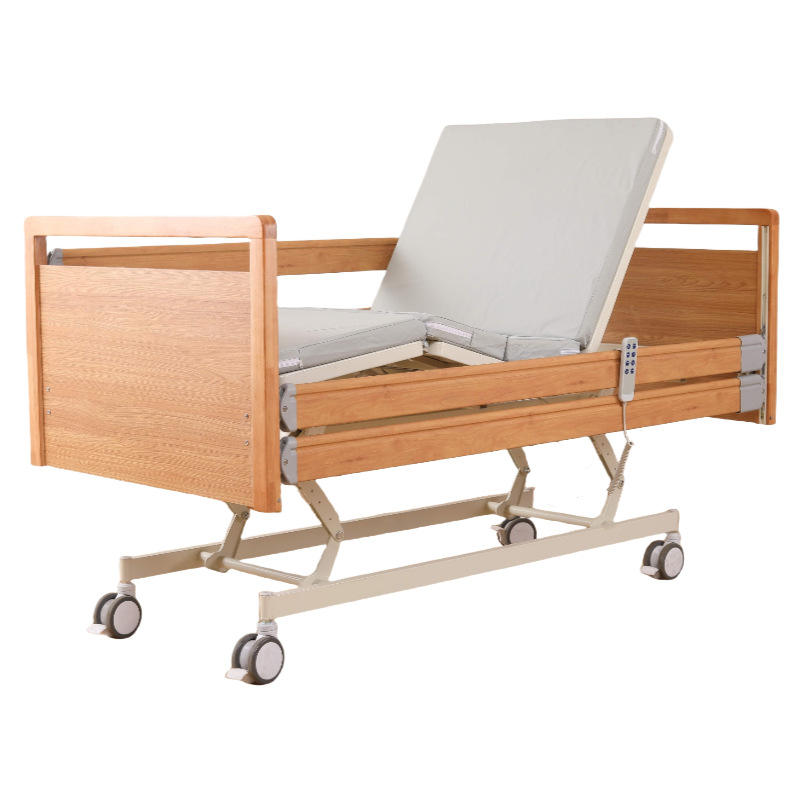
How Does Cable Management Reduce Electrical Risks?
Electrical safety depends on more than motors and control boxes. The cables between components must also remain mechanically protected.
Damaged wiring can interrupt power, cause a short circuit, or stop an actuator from operating normally. Even without an immediate hazard, repeated cable damage can increase service calls and bed downtime.
Strain Relief Protects Plugs and Connectors
Cable damage often develops near connectors because these areas receive repeated pulling and bending. If cable movement is transferred directly to a plug, the connection may loosen over time.
Strain relief helps absorb this force. Depending on the design, it may include molded cable entries, clamps, retaining brackets, flexible boots, or grommets.
B2B buyers should inspect how cables enter the control box, actuators, battery, and power supply. Supported connections are preferable to wiring that hangs freely from plugs.
Correct Cable Length Reduces Stretching and Loose Loops
Cable length must be balanced. A cable that is too short may become tight when the bed reaches its highest or most extended position. A cable that is too long may form loops that hang below the chassis or move toward casters.
Good cable management provides enough slack for movement while controlling excess length.
During inspection, raise and lower the bed fully and adjust the backrest and leg section. A well-routed cable should move smoothly without excessive tension, twisting, sharp bending, or uncontrolled loops.
How Does Cable Management Protect Cables From Casters and the Floor?
Hospital beds are frequently moved for cleaning, patient transfer, maintenance, and room organization. This creates another risk: cables contacting the floor or casters.
A low-hanging power or actuator cable can be rolled over, crushed, or pulled as the bed moves. Repeated caster contact may damage the outer insulation even if the cable still functions.
Keeping wiring above the lowest parts of the chassis helps reduce this risk. Supports should also prevent cables from sagging downward when the bed changes position.
Power-Cord Storage Makes Transport Safer
The main power cable needs special attention because it extends outside the bed frame.
Before transport, the cord should have a clear storage position. A cord hook, holder, or retaining point lets staff secure the cable instead of leaving it on the floor.
Without a defined storage location, staff may wrap the cord around a convenient part of the frame. If that part later moves, the cable can become stretched or trapped. A dedicated storage point helps establish a more consistent handling routine.
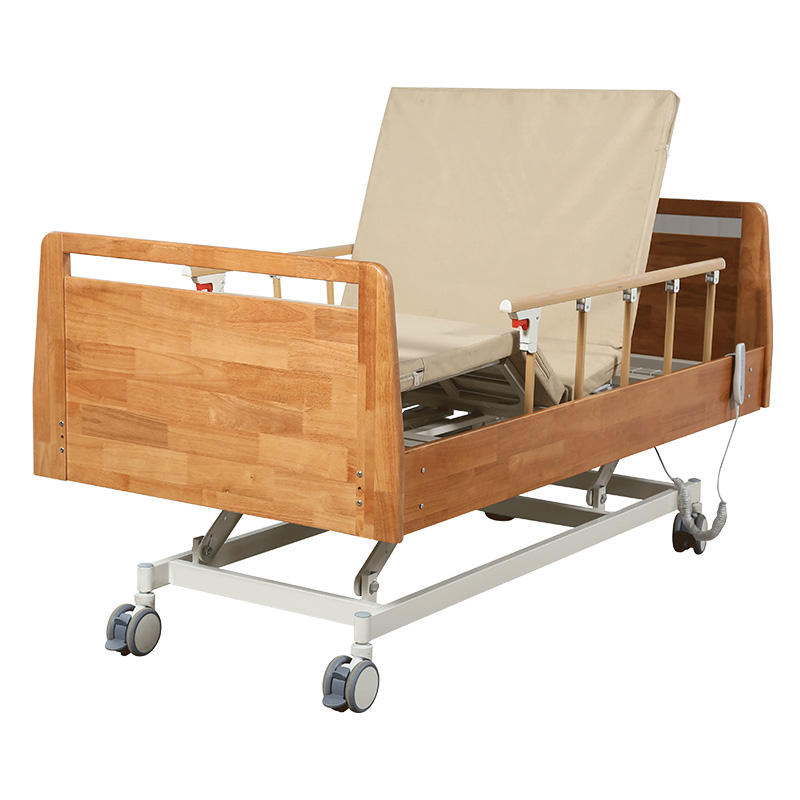
Can Better Cable Routing Improve Hospital Bed Reliability?
Yes. Electric hospital beds are adjusted repeatedly throughout their service life, so cable routing affects long-term reliability.
A cable that rubs against the same frame edge every time the backrest rises may eventually fail even if the actuator remains in good condition. Likewise, a connector under constant tension may gradually loosen.
Cable Guides Reduce Repetitive Rubbing
Cable clips and guides define where wiring can move. Correct placement can prevent contact with metal edges, moving brackets, and the floor.
However, excessive fastening can create a new stress point. If a cable is clamped too tightly, it may bend repeatedly at one fixed location.
The best routing system allows controlled movement. The cable should have enough flexibility to follow the mechanism without swinging freely underneath the bed.
Protected Connectors Reduce Accidental Disconnection
Hospital beds may contain actuator plugs, handset connectors, battery cables, and accessory connections.
If a cable is repeatedly pulled, a plug can partially disconnect. This may cause intermittent problems because the bed can work normally in one position and fail in another.
Connector retention, nearby cable support, and logical routing reduce this risk. Clear connector locations also help technicians identify components more quickly during maintenance.
How Does Cable Management Affect Caregiver and Patient Safety?
Cable management also affects the space around the bed.
Loose cords can interfere with patient transfers, cleaning equipment, mobile devices, or staff movement. External cables crossing normal walking paths may create trip hazards, while hanging internal cables may catch on nearby equipment.
A well-organized bed keeps most internal wiring close to the frame and gives external cords a predictable route.
Organized Wiring Keeps the Bedside Area Clearer
Hospital rooms may contain infusion pumps, monitors, nurse-call equipment, and other devices. Each can add more cables around the patient.
Organized routing gives staff a cleaner foundation for arranging other equipment. It also makes it easier to distinguish the bed’s wiring from cables belonging to separate medical devices.
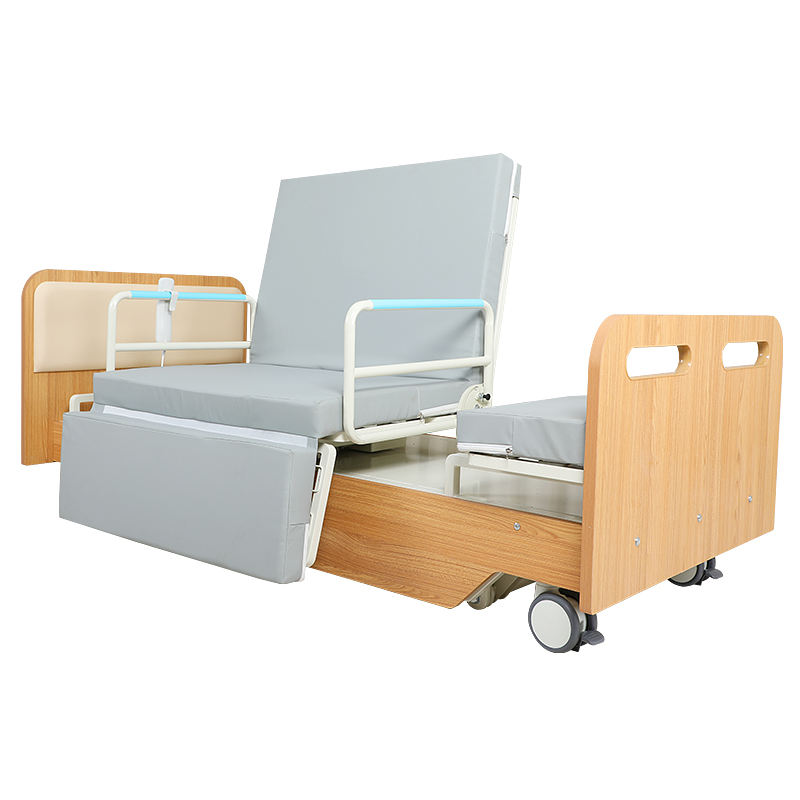
Does Cable Management Make Cleaning and Maintenance Easier?
Yes. A logical cable layout can support cleaning and preventive maintenance.
Loose or tangled wiring can make the underside of the bed harder to access. However, completely hiding important cables may make damage more difficult to inspect.
A practical design balances protection with accessibility. Critical cable sections, connectors, and service points should remain visible enough for inspection while staying protected from mechanical damage.
Visible Routing Supports Preventive Inspection
Maintenance teams should be able to check cables for cuts, crushing, fraying, discoloration, loose connections, and abnormal bending.
If the cable path is clear, technicians can identify where each wire runs and whether it remains in the intended position. This is especially useful after transport, cleaning, or repair.
Preventive inspection matters because a cable may still work electrically even when its outer jacket is already damaged. Finding the problem early can help avoid more serious faults later.
Logical Routing Simplifies Component Replacement
Actuators, hand controls, batteries, control boxes, and power cords may require replacement during the bed’s service life.
If wiring follows a clear route, technicians can remove and reinstall components more efficiently. If cables are bundled without a logical pattern, maintenance can become slower and errors are more likely.
Buyers should ask whether replaceable components use clearly identified connectors and whether routing is documented. After replacement, technicians should be able to restore the original cable path instead of creating a new one by guesswork.
What Should B2B Buyers Check When Inspecting Hospital Bed Cable Management?
Cable management should be evaluated while the bed is operating, not only through catalog photos.
Start with the bed flat and inspect the underside. Look for cables that hang below the frame, cross moving linkages, rub against edges, or sit close to casters.
Then operate every powered function through its full range. Watch whether cables become tight, twisted, pinched, or excessively loose.
Buyers should also inspect the power-cord storage point, actuator connections, control box, handset cable, battery wiring, and optional accessory cables.
Evaluate Cable Management Together With the Whole Bed
Good cable routing is important, but it is only one part of hospital bed safety.
Procurement teams should evaluate it together with the frame, lifting mechanisms, motors, control system, side rails, brakes, casters, mattress platform, accessories, and maintenance documentation.
For customized beds, routing deserves additional attention. Adding an actuator, weighing system, nurse controller, light, battery, or other electrical accessory can change the amount and position of wiring.
Every additional cable should have a defined route and sufficient movement allowance rather than simply being added to an existing bundle.
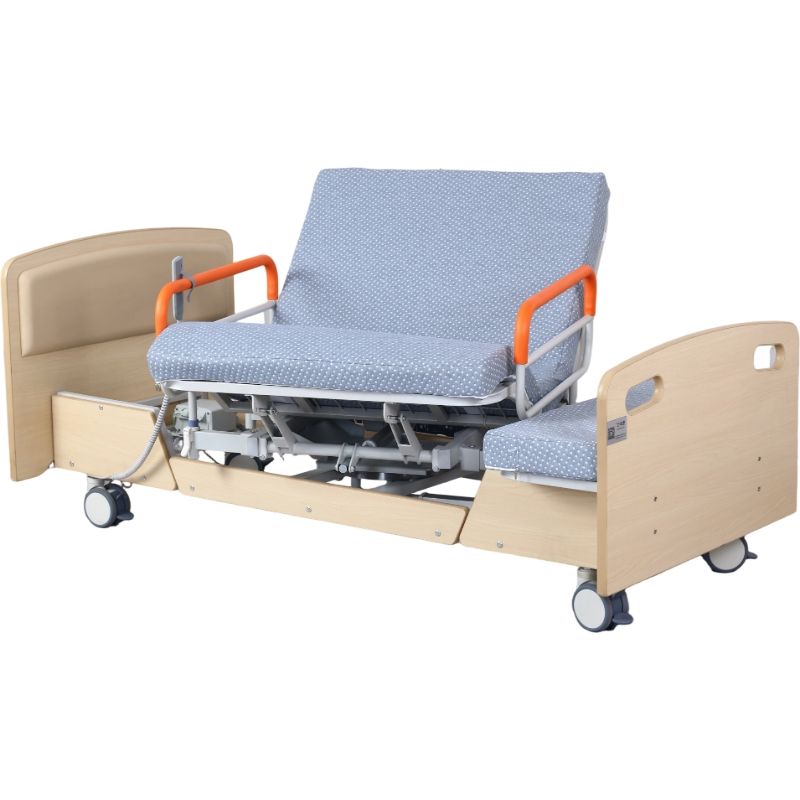
What Are Common Cable-Management Problems on Electric Hospital Beds?
Common problems include cables hanging below the chassis, crossing moving joints, bending sharply beside connectors, rubbing against metal edges, or forming large unsupported loops.
Another issue is a missing or poorly located power-cord holder. If staff do not know where to place the mains cable during transport, it may be wrapped around the frame or left on the floor.
Maintenance can also create new problems. A replacement motor may be installed correctly, but its cable may not be returned to the original route.
The solution is not simply adding more cable ties. Effective cable management combines correct routing, controlled slack, strain relief, mechanical protection, accessible connectors, and clear service instructions.
How Can Hospitals Maintain Safe Cable Routing Over Time?
Even a well-designed bed can develop problems if cords are pulled, rolled over, wrapped around moving parts, or reinstalled incorrectly.
Hospitals should include cable inspection in preventive maintenance and follow the manufacturer’s instructions for service and replacement.
After replacing an actuator, handset, control box, battery, or power cable, technicians should restore the intended routing and operate the bed through its complete movement range before returning it to use.
Staff should also know where to store the power cord before moving the bed and avoid pulling equipment by its cables. Maintenance teams should not relocate clips without understanding their purpose, because a small guide may be keeping wiring away from a pinch point or caster path.
Conclusion
Hospital bed cable management improves safety by keeping electrical wiring controlled, protected, and away from pinch points, casters, sharp edges, and moving mechanisms. Proper cable length, strain relief, guides, connector support, and power-cord storage can reduce damage, unexpected function loss, maintenance problems, and bedside clutter.
For hospitals, private clinics, distributors, and medical bed purchasers, cable management should be checked during product evaluation and preventive maintenance rather than treated as a minor detail.
Jcare supplies hospital beds, home care beds, rehabilitation products, medical furniture, and related accessories for B2B buyers. If you have questions about hospital bed design, cable routing, maintenance, or purchasing specifications, share your requirements or comments.