
Hospital buyers often ask which bed functions are truly necessary for orthopedic wards. Choosing a model that is too simple can make repositioning, transfers, and nursing work harder, while over-specification increases costs. Reviewing positioning, safety, mobility, accessories, and lifecycle cost helps hospitals choose suitable beds.
To choose hospital beds for orthopedic wards, focus on adjustable backrest and leg sections, practical height adjustment, secure side rails, reliable braking casters, suitable load capacity, easy-clean surfaces, and compatibility with required accessories. Electric beds are often useful for higher-care wards, while manual or semi-electric models may suit simpler workflows or tighter budgets. The best choice should match patient mobility, nursing procedures, room layout, maintenance capacity, and budget.
The correct configuration depends on ward workflow. These factors help procurement teams compare beds effectively.
Why Do Orthopedic Wards Need Different Hospital Bed Features?
Orthopedic wards care for patients recovering from fractures, joint replacement, spinal procedures, trauma, and other musculoskeletal conditions. Many have limited mobility, so the bed becomes part of daily care and transfer.
Patient Positioning Needs More Attention
Adjustable backrest and leg sections allow staff to change patient position for meals, examinations, rest, and routine care. Height adjustment can improve nursing access and support transfers when the bed must align with wheelchairs or other equipment.
Procurement teams should evaluate how often these adjustments will be used. A function that looks attractive in a catalog may provide little value if it does not match actual workflow.
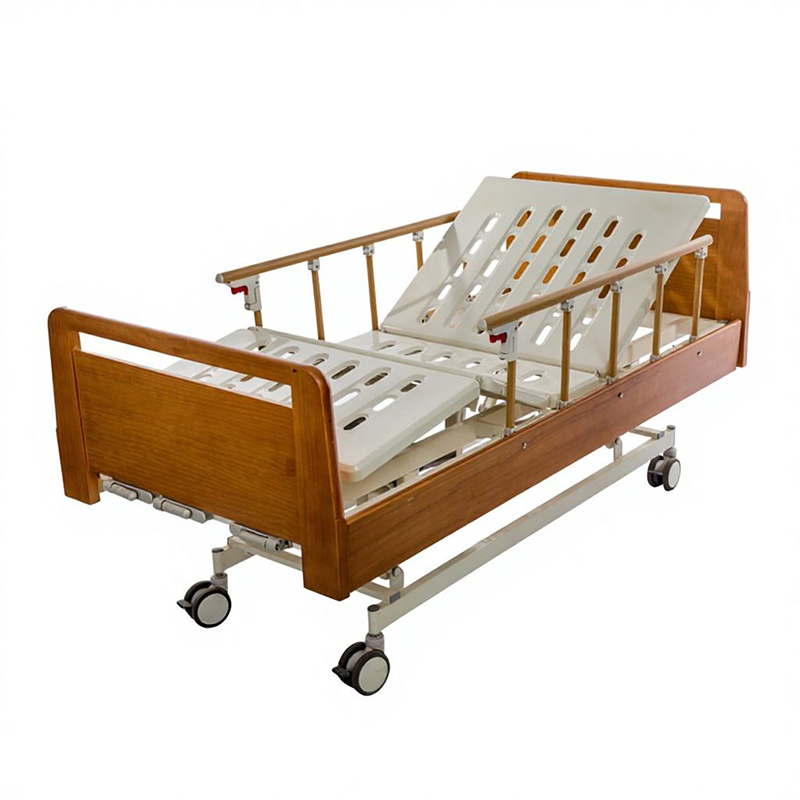
Which Bed Functions Matter Most for Orthopedic Patients?
Different hospitals require different configurations, but several functions are commonly useful.
Backrest, Leg, and Height Adjustment
Backrest and leg adjustment support different body positions, while height adjustment helps staff set a practical working level or lower the platform for patient access.
Buyers should compare adjustment range, operating method, stability, and ease of use instead of focusing only on the number of functions.
Trendelenburg y Trendelenburg inverso
Some hospitals also require Trendelenburg or reverse Trendelenburg positioning. These functions should be selected according to clinical protocols and real ward needs.
If specified, buyers should confirm the angle, control method, locking performance, and stability when the bed is loaded.
Should Orthopedic Wards Choose Electric or Manual Hospital Beds?
Electric and manual beds can both be used in orthopedic wards, but they fit different priorities.
Electric hospital beds make frequent position changes easier. They can be useful where patients require more assistance or staff frequently adjust bed height and body position.
Manual beds use cranks or mechanical systems and may suit lower budgets, less frequent adjustments, or simpler maintenance programs.
Semi-electric beds provide a middle option by motorizing selected functions. Buyers should compare how often each movement is required before deciding whether full electric operation justifies the extra cost.
How Important Are Side Rails for Orthopedic Hospital Beds?
Side rails deserve careful attention because many orthopedic patients have limited movement or balance.
Check the Rail Design and Locking System
Buyers should review rail material, locking mechanism, stability, and cleanability. Foldable rails can improve access during transfers and nursing procedures.
The rail should be easy for trained staff to operate but secure during normal use. Mattress dimensions and rail geometry should also be checked together.
Consider Transfer and Rehabilitation Access
Orthopedic care often includes gradual return to sitting, standing, and walking. Side rails should therefore provide protection while allowing adequate access when staff assist with transfers or mobility training.
This is why buyers should evaluate the bed as part of the full care process rather than one component in isolation.
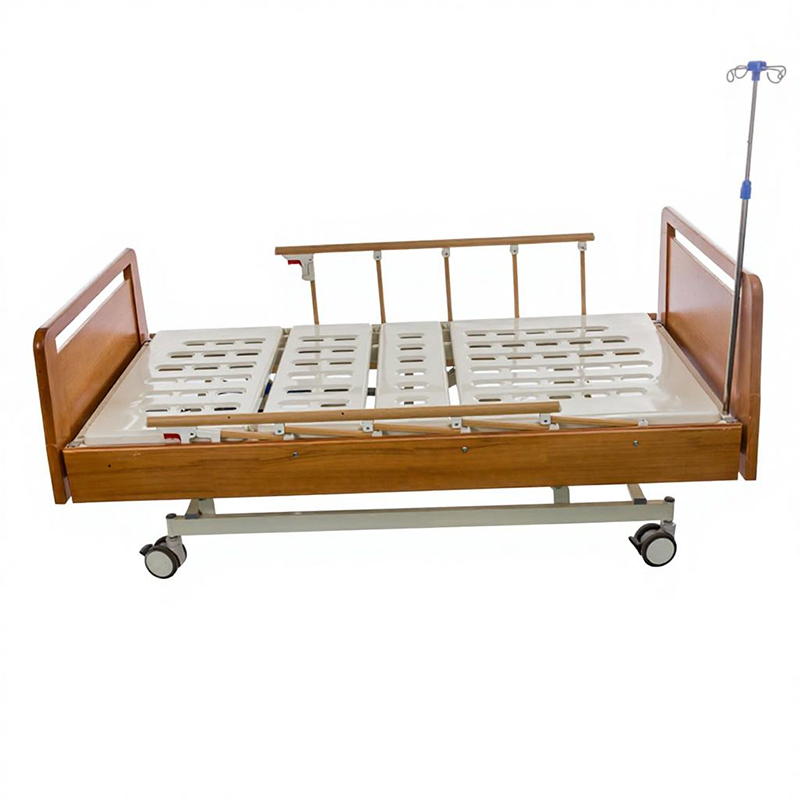
What Caster and Braking System Should Buyers Look For?
Orthopedic beds may be moved for cleaning, room changes, examinations, or transfers. Caster and brake performance therefore affects daily efficiency.
Medical casters should move smoothly across hospital flooring. Buyers should compare rolling resistance, noise, turning ability, and maneuverability in narrow rooms.
Central locking can simplify wheel control, while individual locking casters may suit simpler applications. In either case, the bed should remain stable when parked and components should be serviceable.
How Should Load Capacity and Frame Strength Be Evaluated?
Hospital beds must support the patient, mattress, bedding, accessories, and forces created during repositioning. Buyers should therefore review stated load ratings carefully instead of relying on general terms such as “heavy duty.”
Frame construction, weld quality, moving joints, caster mounting points, and adjustment mechanisms should all be checked.
Hospitals serving a wide range of patients may also consider a separate higher-capacity bed category rather than expecting one standard model to meet every requirement.
What Mattress Platform and Cleaning Features Are Best?
Cleanability is important in every hospital ward. A mattress platform with smooth, accessible surfaces can simplify routine cleaning between patients.
ABS or coated steel components can provide durable, wipeable surfaces. Buyers should also look for difficult corners or areas where dirt and fluids may accumulate.
Removable headboards and footboards may improve cleaning access. The mattress should match the platform and side-rail geometry, with suitable thickness, cover material, and cleaning method.
Which Accessories Are Useful in Orthopedic Wards?
Accessories should be selected according to real ward procedures rather than added simply to increase the specification list.
Common options include IV poles, drainage bag hooks, overbed tables, mattress retainers, and accessory mounting points. Some hospitals may also need rehabilitation equipment compatibility.
Confirm Accessory Compatibility Before Ordering
Hospitals often already use wheelchairs, tables, mattresses, lifting aids, or other equipment. Dimensions and connection points should therefore be confirmed before purchasing new beds.
For customized accessories, buyers can request drawings, samples, or pre-production confirmation to reduce compatibility problems after delivery.
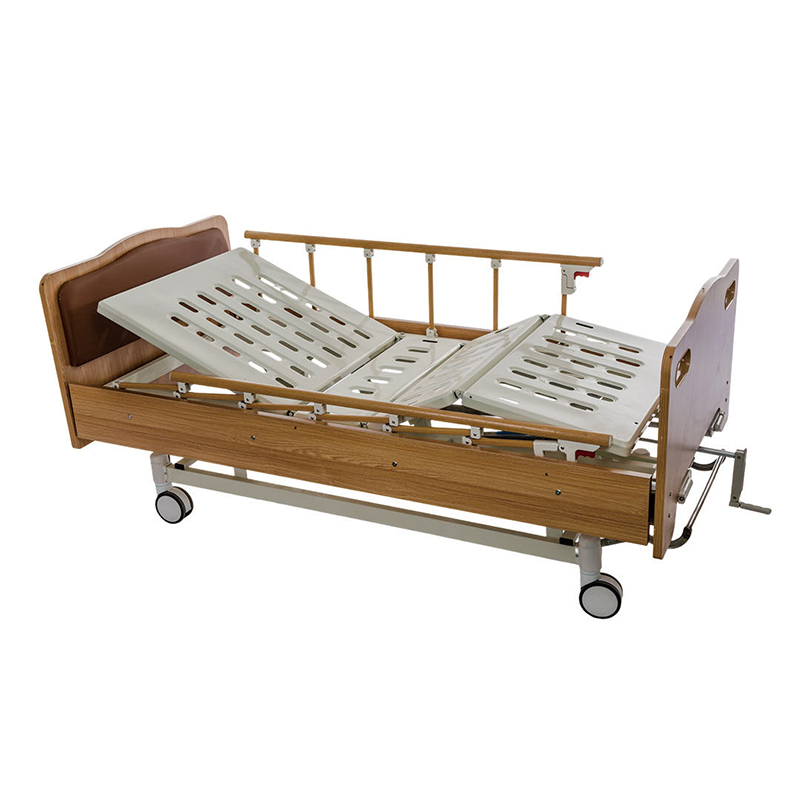
How Does Bed Height Affect Orthopedic Transfers?
Bed height affects nursing access, wheelchair transfers, patient mobility, and cleaning. A wider adjustment range can be especially useful where patients move between the bed and other equipment.
Raising the bed can provide a more practical working level for care tasks. Lowering it may help with certain transfer or rehabilitation routines.
However, minimum height should not be considered alone. Floor clearance, motor location, caster size, under-bed equipment, and wheelchair height can all affect compatibility.
Before bulk purchasing, compare bed dimensions with room layouts and transfer equipment.
What Should Buyers Check About Electric Controls?
For electric orthopedic beds, controls and actuators should be reviewed as carefully as the frame.
Hand controls should use clear buttons and durable cables; some models also provide nurse controls or function lockouts.
Procurement teams should confirm motor quantity, actuator position, power requirements, cable routing, backup options if offered, and replacement-part availability. Importers should also verify plug type, voltage, labeling, technical documentation, and applicable destination-market requirements.
How Can Hospitals Compare Total Cost Instead of Unit Price?
The lowest quotation may not create the lowest long-term cost. Orthopedic beds can remain in service for years, so maintenance and replacement expenses matter.
A total-cost comparison can include unit price, spare parts, motors, casters, mattresses, shipping, training, and expected maintenance.
Standardizing several bed models can simplify spare-parts management and training. Wholesale buyers should compare parts availability, packaging, supplier response, and repeat-order consistency together with purchase price.
What Should Procurement Teams Inspect Before Bulk Ordering?
Sample evaluation or pre-shipment inspection can help confirm that the final product matches the agreed specification.
Buyers should check dimensions, adjustment functions, side-rail locks, caster movement, brakes, headboards, footboards, accessory sockets, welding, surface finish, controls, cables, labels, and packaging.
Electric actuators should be tested through their intended movement range. Manual cranks and linkages should operate smoothly.
It is also useful to confirm carton dimensions, disassembly level, container-loading method, spare-parts list, manuals, and included accessories before shipment.
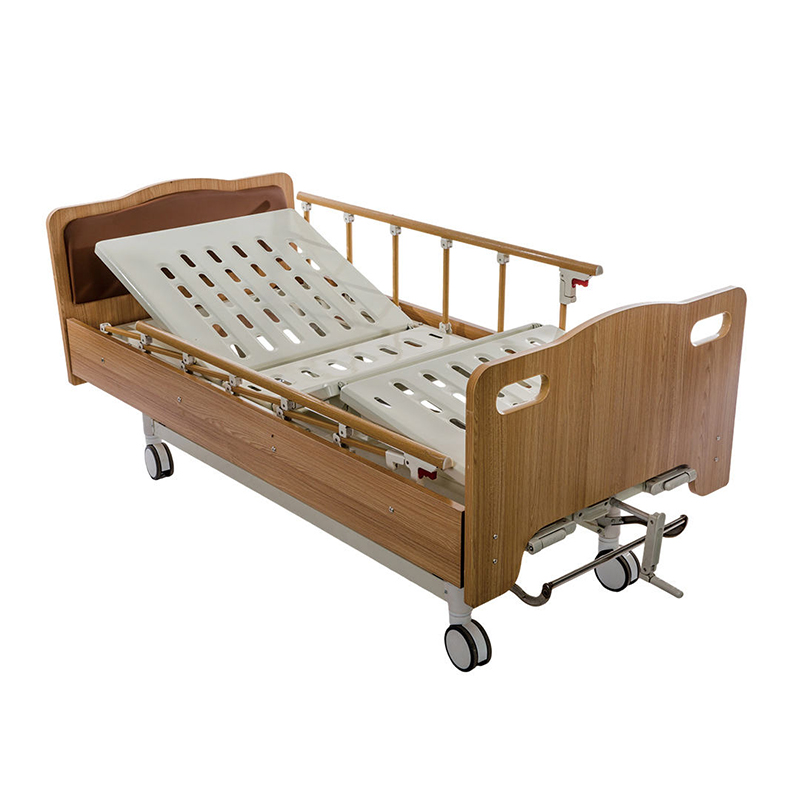
How Can Jcare Support Orthopedic Hospital Bed Procurement?
Jcare supplies hospital beds, home care beds, rehabilitation products, medical furniture, and medical bed accessories for wholesale buyers. Based in China, Jcare serves hospitals, clinics, medical equipment purchasers, and other professional buyers in India, the Middle East, Southeast Asia, Europe, the United States, Japan, and South Korea.
For orthopedic ward projects, buyers can discuss functions, dimensions, side rails, casters, mattresses, accessories, and packaging before ordering.
Jcare focuses on wholesale supply with factory pricing, available inventory for selected products, and short delivery arrangements where stock permits. Quotation requests should include quantity, destination, required functions, accessories, and documentation needs.
La gente también pregunta
Are Electric Beds Better for Orthopedic Wards?
Electric beds are often useful where patients require frequent position changes or staff need convenient height adjustment. Manual beds can still be practical for lower-acuity areas, budget-sensitive projects, or facilities that prefer simpler maintenance.
How Many Functions Should an Orthopedic Hospital Bed Have?
There is no universal number. The correct configuration depends on patient dependency, nursing workflow, transfer requirements, rehabilitation needs, and budget. Hospitals should select functions staff will actually use.
Should Buyers Request Samples Before Bulk Ordering?
For larger hospital, distributor, or tender projects, samples help buyers check dimensions, controls, accessories, cleaning access, and packaging before approval.
Conclusión
Choosing hospital beds for orthopedic wards requires more than comparing price or counting functions. Buyers should review positioning, height adjustment, side rails, caster and brake performance, load capacity, mattress compatibility, cleanability, controls, accessories, maintenance, and long-term cost.
Electric beds may provide greater convenience where frequent adjustments are required, while manual or semi-electric models can remain suitable for simpler workflows or tighter budgets. The best choice is the one that fits the hospital’s actual care process and existing equipment.
Jcare can support wholesale buyers with hospital beds, rehabilitation products, medical furniture, and related accessories for different project requirements. If you are planning an orthopedic ward purchase, confirm the technical specification before bulk ordering.
Which hospital bed features matter most in your orthopedic ward project? Share your experience or questions in the comments, and share this guide with other hospital procurement or medical equipment professionals.