
Choosing hospital beds for oncology wards involves more than comparing functions or prices. Cancer patients may experience fatigue, weakness, pain, reduced mobility, or treatment-related complications, so an unsuitable bed can affect comfort, transfers, nursing efficiency, and safety. A structured evaluation helps hospitals choose beds that better match oncology care.
For oncology wards, hospitals should prioritize adjustable positioning, low-height access, reliable side rails and brakes, pressure-management compatibility, easy-to-clean surfaces, quiet electric movement, nurse-friendly controls, and suitable accessories. The best configuration depends on patient acuity and workflow, but multi-function electric beds are often practical where patients need frequent repositioning, assisted transfers, or longer periods in bed.
The right choice starts with patient needs, then moves to safety, workflow, cleaning, maintenance, and total procurement cost.
Why Do Oncology Wards Need Different Bed Selection Criteria?
Oncology wards care for patients with different treatment plans and physical conditions. Some remain mobile, while others need assistance after surgery, during chemotherapy, symptom management, or advanced disease. Cancer-related fatigue can interfere with daily activity, and treatment-related neuropathy can also increase mobility and fall concerns.
Therefore, buyers should not choose one specification simply because it is common in a general ward. The bed should fit patient mobility, nursing intensity, room layout, cleaning procedures, and expected length of use.
Start With Patient Acuity and Mobility
Before comparing models, group expected patients by mobility and care level. A lower-acuity unit may mainly need reliable electric positioning and safe transfers. A higher-acuity area may need more positioning functions, stronger accessory integration, pressure-management support, and additional nurse controls.
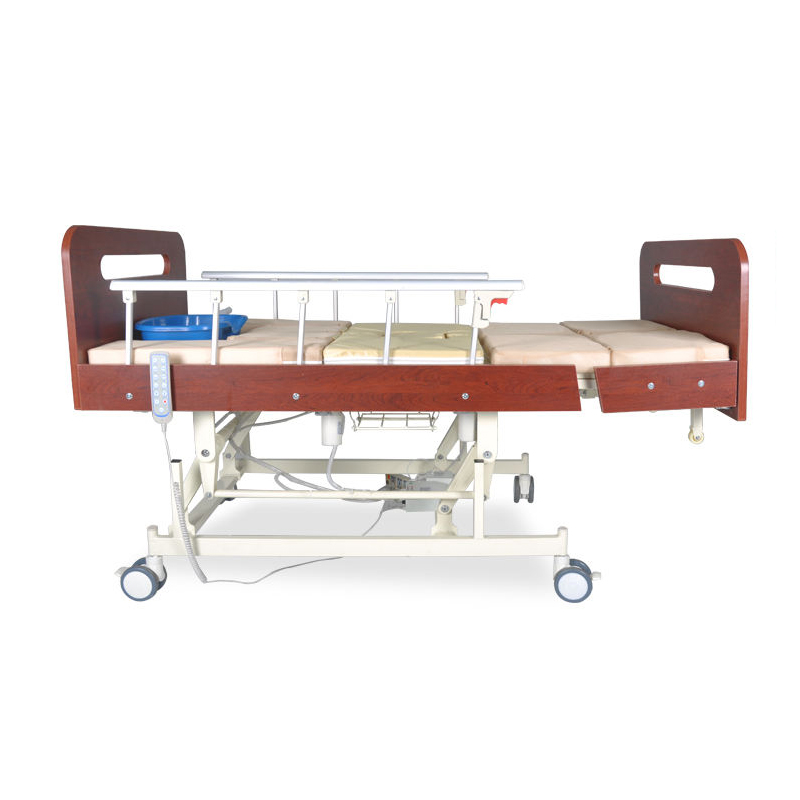
Which Bed Functions Matter Most in an Oncology Ward?
A long feature list does not automatically make a bed suitable. Procurement teams should focus on functions that solve repeated clinical and workflow problems.
Choose Electric Adjustment for Frequent Position Changes
Electric backrest and leg adjustment allow patients or staff to change posture without repeated manual cranking. This is useful when patients move between resting, eating, receiving care, and preparing to leave the bed.
Height adjustment is especially valuable. Raising the platform can support nursing tasks, while lowering it can create a safer resting or transfer position for selected patients. FDA bed-safety information recommends beds that can be raised and lowered close to the floor to accommodate both patient and healthcare-worker needs.
Evaluate Low Height, Rails, and Transfer Safety
Oncology patients who experience weakness, dizziness, fatigue, or neuropathy may need extra attention during transfers. Minimum bed height, side-rail operation, caster locking, and access to controls therefore deserve close review.
Fall prevention is broader than bed design. AHRQ emphasizes patient-specific fall-risk assessment and tailored prevention plans. From a procurement perspective, the bed should support that plan through dependable brakes, appropriate rails, useful low-height positioning, and enough space for staff or transfer aids.
How Important Are Comfort and Pressure Management?
Patients in oncology wards may spend long periods in bed, especially when fatigue, pain, postoperative recovery, weakness, or advanced disease reduces activity. Cancer pain can negatively affect function and quality of life, making flexible positioning important.
Match the Bed Platform With the Mattress
The frame and mattress should be evaluated as one system. Buyers should confirm mattress dimensions, platform width, side-rail geometry, allowable mattress thickness, and compatibility with pressure-redistribution surfaces.
Pressure management is not just about mattress thickness. AHRQ resources include repositioning, support surfaces, skin assessment, and individualized care among pressure-injury prevention measures.
For oncology procurement, consider whether the bed can support standard foam mattresses as well as higher-specification pressure-management mattresses when clinically required.
Look for Smooth and Quiet Positioning
Motor movement should be controlled rather than abrupt, and the platform should remain stable during adjustment. Quiet operation also matters because oncology patients may need prolonged rest.
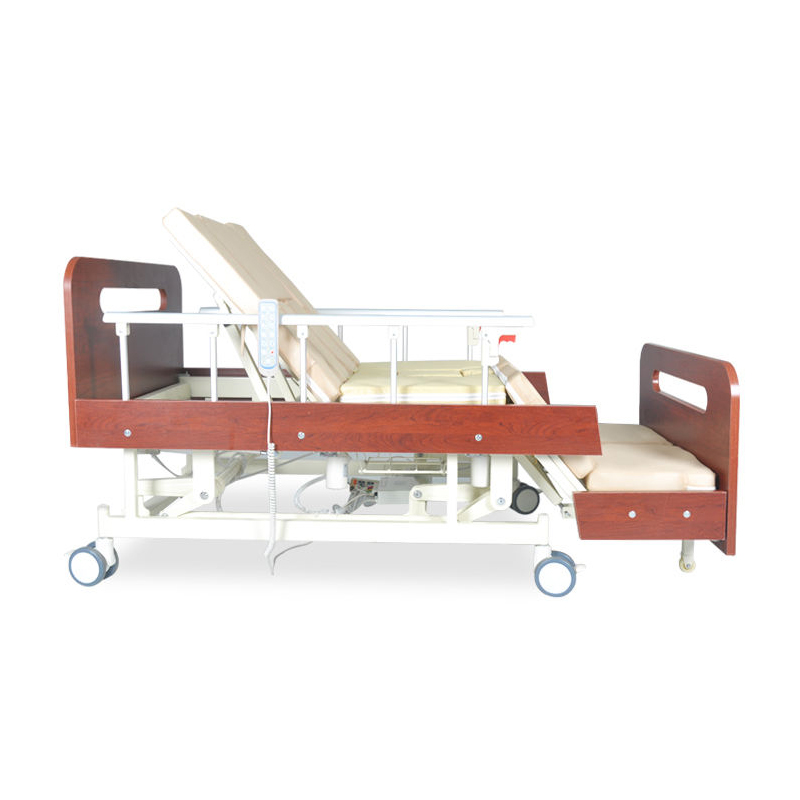
What Safety Features Should Buyers Check?
Safety should be evaluated at the complete bed-system level rather than by confirming that a model simply includes side rails.
Check Side Rails, Entrapment Risk, and Brakes
Side rails should lock securely, operate easily for trained staff, and match the intended mattress. Openings between the mattress, rails, platform, headboard, and footboard matter because unsafe gaps can create entrapment hazards. FDA guidance specifically addresses dimensional assessment of hospital bed systems to reduce entrapment risk.
Braking performance is also critical. A bed that moves during entry, exit, examination, or transfer can create avoidable risk. Central locking can simplify workflow on mobile beds because staff can secure multiple casters from one control point.
Buyers should test maneuverability on flooring similar to the hospital environment. Check straight movement, turning, caster noise, threshold crossing, brake engagement, and stability during transfers.
Review Load Capacity and Structural Quality
Procurement teams should distinguish between patient-weight capacity and total safe working load if the supplier lists them separately. The bed may also carry a mattress, accessories, and attached equipment.
Structural review should include the frame, welding consistency, deck, side-rail mounting points, caster brackets, actuator installation, and repeated-motion performance. A high load figure alone does not prove overall durability.
How Should Oncology Beds Support Infection Control?
Bed design cannot replace hospital infection-control procedures, but it can make routine environmental cleaning easier.
Prefer Smooth, Accessible Surfaces
Rails, control panels, headboards, footboards, handles, platforms, and brake controls are frequently touched or exposed during patient care. CDC cleaning guidance emphasizes appropriate cleaning and disinfection of patient-care surfaces, including high- and low-touch areas.
Buyers should favor designs with fewer unnecessary gaps, deep recesses, or decorative structures that are difficult to wipe. Removable head and foot boards can help when they are easy to clean and reinstall securely.
Ask suppliers which disinfectants are compatible with ABS parts, coatings, labels, control membranes, and mattress covers. Repeated chemical exposure can shorten the life of unsuitable finishes, so compatibility should be discussed before purchase.
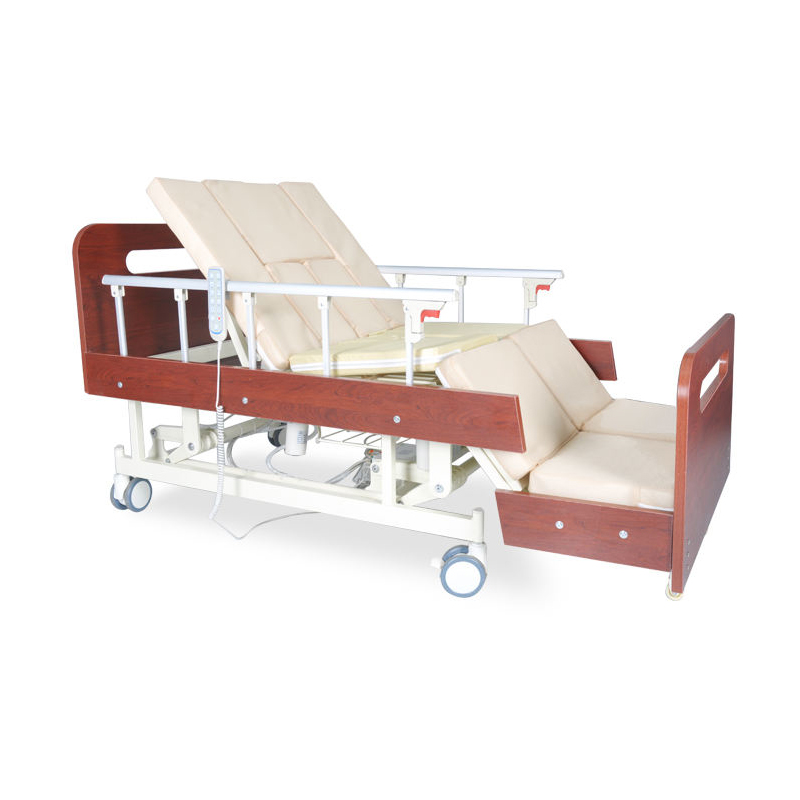
What Controls and Accessories Are Useful?
Oncology beds often work alongside IV equipment, monitoring devices, bedside furniture, and other accessories.
Select Practical Patient and Nurse Controls
Controls should be clearly labeled and positioned for safe use. Higher-specification models may include nurse controls or function lockouts, which can help staff restrict selected movements when needed.
Battery backup is another option to evaluate. Buyers should confirm which bed movements remain available on battery power, expected battery performance, charging method, replacement availability, and maintenance requirements.
Plan Accessories Before Finalizing the Bed
Common accessories may include IV poles, drainage hooks, oxygen-cylinder holders, monitor shelves, bedside tables, overbed tables, mattress retainers, and other department-specific items.
Compatibility matters more than accessory quantity. Attachments should not interfere with rails, transfers, movement, cleaning, or electrical components.
Should Oncology Wards Choose Manual or Electric Beds?
For inpatient oncology wards with frequent positioning needs, electric beds are generally more practical because patients and nurses can change common positions more easily. Height adjustment can also support different nursing and transfer tasks.
Manual beds may still suit lower-acuity areas, limited budgets, or locations where electrical infrastructure is a concern. Some hospitals may use a mixed strategy: electric beds in higher-dependency rooms and simpler models in selected lower-acuity areas.
The decision should be based on use frequency and lifecycle value rather than purchase price alone. If a bed is adjusted many times each day, usability and staff efficiency may justify a higher initial investment.
What Should Procurement Teams Compare Between Suppliers?
Beds that look similar in photos can differ in components, manufacturing consistency, serviceability, and long-term cost. Buyers should compare the exact configuration: motors, control system, rails, casters, frame, bed deck, head and foot boards, mattress, accessories, battery option, packaging, spare parts, warranty, and documentation.
Ask for a complete quotation because some suppliers include the mattress, IV pole, central locking, or battery while others price these separately.
After-sales support also matters. Ask how quickly actuators, controllers, handsets, casters, rails, and plastic components can be supplied and whether they can be replaced with standard tools. For export projects, also review packaging, internal protection, moisture control, labeling, and loading efficiency.
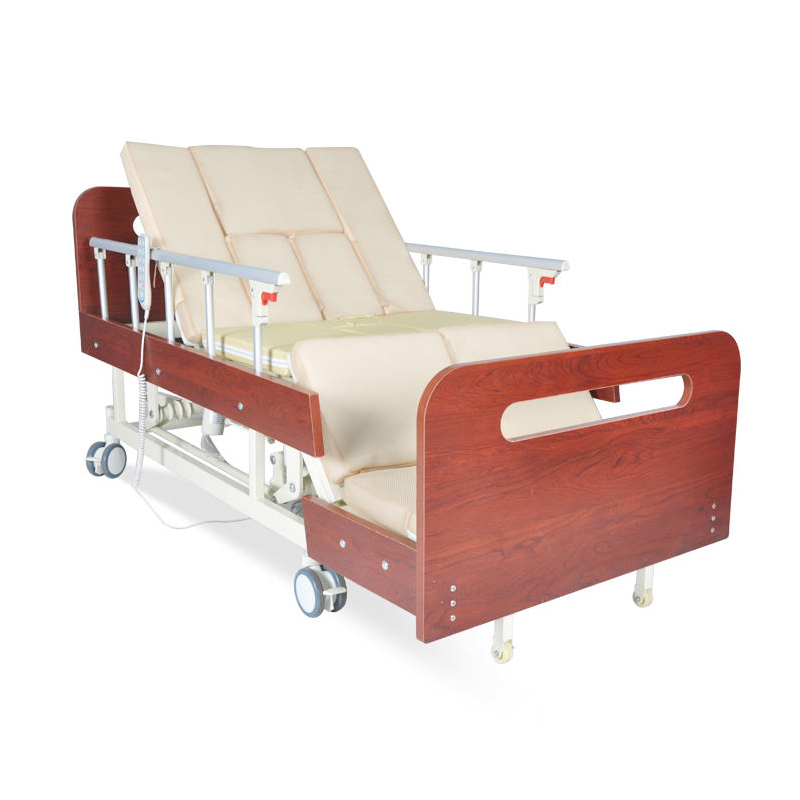
How Can Buyers Create an Oncology Bed Specification?
A good purchasing document converts clinical needs into measurable requirements. Instead of requesting a “high-quality oncology bed,” define the configuration suppliers must quote.
A specification may include:
- bed type and number of electric functions;
- overall and platform dimensions;
- minimum and maximum height;
- backrest and leg adjustment;
- Trendelenburg requirements where applicable;
- safe working load;
- side-rail type;
- caster size and braking system;
- central locking requirement;
- mattress size and pressure-surface compatibility;
- patient and nurse controls;
- battery backup;
- IV pole and accessory points;
- cleaning compatibility;
- spare parts, warranty, and service requirements;
- packaging method.
For larger projects, buyers should evaluate samples or use pre-shipment inspection to confirm dimensions, movement, brakes, rails, controls, accessories, labels, and finish before accepting mass production.
How Can Jcare Support Oncology Ward Bed Projects?
Jcare supplies hospital beds, home care beds, rehabilitation products, medical furniture, and medical bed accessories for wholesale projects. For hospital purchasers and medical-equipment distributors, the objective should be to match the bed configuration to the actual ward rather than automatically select the highest-function model.
Buyers can provide required functions, dimensions, load capacity, side-rail type, caster system, mattress, accessories, quantity, packaging, and destination market. Jcare can then prepare a more accurate configuration and quotation.
With factory pricing, available inventory, and short delivery times, Jcare focuses on B2B hospital-bed supply. For customized or larger orders, detailed specification confirmation before production can reduce misunderstandings about controls, rails, casters, accessories, and packaging.
Conclusión
Choosing hospital beds for oncology wards requires a balance of comfort, mobility support, fall prevention, pressure-management compatibility, infection-control design, nursing efficiency, and long-term serviceability. Electric positioning, low-height adjustment, dependable brakes, suitable rails, cleanable surfaces, compatible mattresses, and practical accessories are among the main features to evaluate.
The best bed is not necessarily the model with the most functions. It is the model that fits the ward’s patient profile, staffing workflow, safety procedures, cleaning methods, and lifecycle budget.
If you are planning an oncology ward project, compare specifications before comparing prices. Share your hospital-bed requirements or procurement questions in the comments, and feel free to share this guide with colleagues evaluating medical-bed options.