
Hospital bed buyers often see “Trendelenburg” listed beside backrest, height, and leg adjustments, yet the term is not always explained clearly. If buyers misunderstand this function, they may compare beds incorrectly or order an unsuitable configuration. Understanding how Trendelenburg works helps procurement teams evaluate positioning, controls, safety, maintenance, and clinical suitability more accurately.
The Trendelenburg function tilts the entire hospital bed so the patient’s head is lower than the feet while the mattress platform remains generally flat. Reverse Trendelenburg tilts the bed in the opposite direction, placing the head higher than the feet. Depending on the model, these positions may be created by electric actuators or a manual mechanism. They should be used according to appropriate clinical instructions and the bed manufacturer’s operating guidance.
The basic definition is simple, but bed design, tilt angle, control method, and safety features vary. Buyers should compare the complete system rather than the function name alone.
What Does Trendelenburg Mean on a Hospital Bed?
Trendelenburg positioning refers to tilting the patient support surface so the head end is lower than the foot end. Nursing references describe it as a position in which the head of the bed is placed lower than the patient’s feet.
The key point is that this is different from simply raising or lowering the backrest. During normal backrest adjustment, only one section of the mattress platform changes angle. During Trendelenburg positioning, the bed platform itself tilts along its length.
How Is Reverse Trendelenburg Different?
Reverse Trendelenburg creates the opposite tilt. The head end rises relative to the foot end while the bed platform remains inclined as a whole.
Some hospital beds provide both Trendelenburg and reverse Trendelenburg through the same control system. Simpler models may provide only one of these functions or may not include whole-bed tilt at all.
The maximum angle is model-specific. For example, one Stryker manual describes a manual bed capable of reaching a 14-degree inclination, while another hospital-bed manual defines its own operating range. Buyers should therefore never assume that all beds offer the same tilt angle.
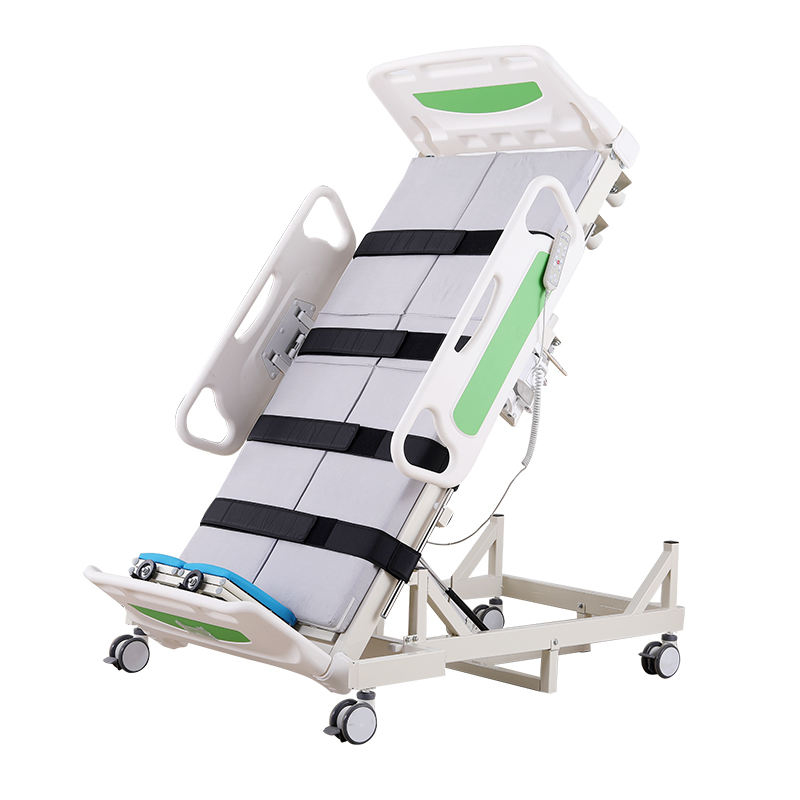
How Does the Trendelenburg Function Work?
The Trendelenburg function depends on the hospital bed’s lifting structure. In an adjustable bed, the head-end and foot-end lifting points can move to different heights.
When the head end moves lower than the foot end, the bed enters Trendelenburg. When the foot end moves lower than the head end, the bed enters reverse Trendelenburg.
How Does It Work on an Electric Hospital Bed?
Electric hospital beds normally use actuators and an electronic control system. Staff may activate Trendelenburg through a nurse control panel, footboard control, handset, or dedicated positioning button.
The actuators change the relative height of the two ends of the bed until the required inclination is reached.
Some higher-specification beds also display the current angle. A Stryker Spirit bed manual, for example, describes both an angle gauge and a staff-control display for monitoring Trendelenburg or reverse Trendelenburg positioning.
For buyers, the important question is not simply whether a Trendelenburg button exists. They should also evaluate movement smoothness, control accessibility, stopping response, angle indication, motor noise, and function lockout.
Can a Manual Hospital Bed Have Trendelenburg?
Yes. Trendelenburg is not limited to electric hospital beds.
Some manual beds use hand cranks, clutch levers, or mechanical linkages to create whole-bed tilt. A Stryker manual hospital-bed design, for example, uses a crank together with a clutch lever to produce Trendelenburg and reverse Trendelenburg positions.
This may be useful for hospitals that require the positioning capability without a fully electric adjustment system.
However, buyers should compare the physical effort required, adjustment speed, mechanical complexity, ease of maintenance, and staff workflow before choosing between manual and electric systems.
Why Do Hospital Beds Include the Trendelenburg Function?
Hospitals may require whole-bed tilt for specific clinical, procedural, or nursing situations. However, the presence of Trendelenburg on a bed should not be interpreted as a recommendation to use the position routinely.
Clinical suitability depends on the individual patient and situation.
A guideline addressing positioning in critically ill patients notes potentially unfavorable effects of Trendelenburg on hemodynamics, pulmonary gas exchange, and respiratory function and recommends limiting its use when specifically required.
Why Should Buyers Separate Bed Capability From Clinical Use?
Procurement teams select equipment. Healthcare professionals decide whether a position is appropriate for a patient.
This distinction is especially important when writing purchasing specifications.
A hospital may request Trendelenburg because it wants the positioning capability available in a particular ward. However, the bed supplier should not determine when a patient needs that position.
Therefore, buyers should focus on technical requirements such as:
- Tilt range
- Adjustment direction
- Control method
- Movement speed
- Braking
- سعة الحمولة
- الاستقرار الهيكلي
- Return-to-level operation
- Battery availability
- Maintenance
These specifications can be objectively compared between suppliers.
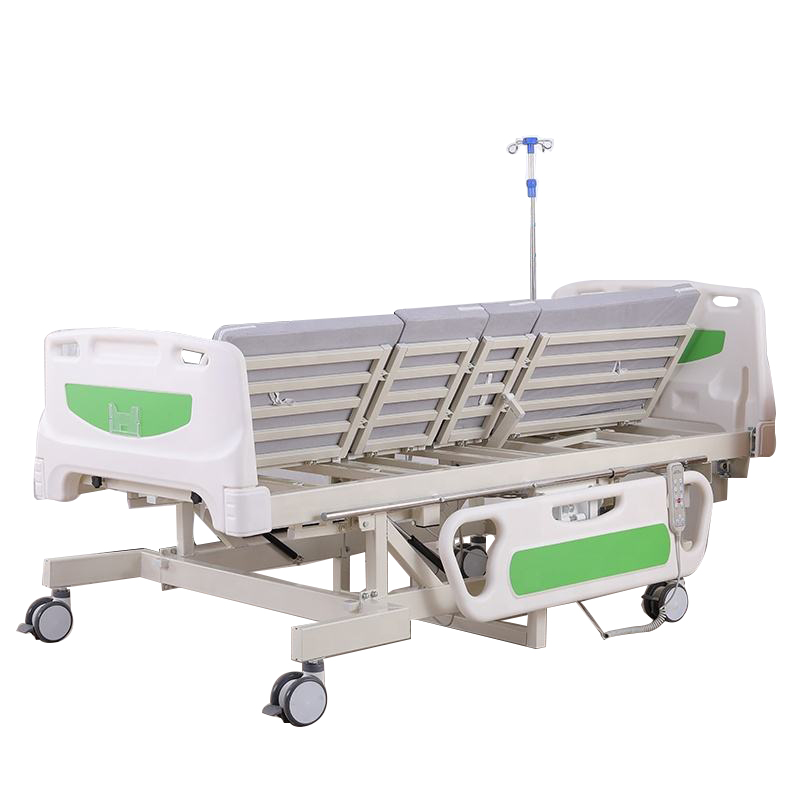
What Is the Difference Between Trendelenburg and Backrest Adjustment?
Trendelenburg and backrest adjustment are sometimes confused in online hospital-bed listings.
Backrest adjustment raises the upper section of the mattress platform while the overall bed can remain level.
Trendelenburg changes the angle of the entire patient support platform from head to foot.
A hospital bed can therefore have a backrest function without having Trendelenburg.
Why Does This Matter When Comparing Hospital Beds?
Suppose a quotation describes a product simply as a “five-function electric hospital bed.” Buyers still need to know exactly which functions are included.
A typical configuration could include:
- ضبط مسند الظهر
- ضبط طول الساق
- تعديل الارتفاع
- Trendelenburg
- Reverse Trendelenburg
However, another manufacturer may count the functions differently.
For accurate supplier comparison, purchasing documents should list the required movements individually instead of relying only on terms such as “three-function,” “five-function,” or “multifunction hospital bed.”
This also helps reduce disagreements after production.
What Trendelenburg Angle Should Buyers Check?
The maximum tilt angle is one of the most important specifications, but it varies by bed design.
Buyers should not assume that one angle is standard for every hospital bed. The required range depends on the intended market, hospital requirements, bed construction, and validated product design.
How Should the Tilt Angle Be Verified?
Ask the supplier to state Trendelenburg and reverse Trendelenburg angles separately.
على سبيل المثال:
Trendelenburg: 0° to specified maximum
Reverse Trendelenburg: 0° to specified maximum
During inspection, place the bed on a level surface and operate it through the full adjustment range.
Check whether:
- The movement reaches the specified angle
- The bed stops correctly
- The platform remains stable
- The angle can be maintained
- The bed returns smoothly to horizontal
- The indicator matches the actual position
If the bed includes a digital angle display, this should also be included in functional testing.
A specification stating only “with Trendelenburg” provides much less purchasing protection than one defining the required angle and test method.
What Safety Features Should Buyers Check?
Whole-bed tilting changes the relationship between the patient platform, mattress, rails, frame, casters, and floor. Therefore, braking and structural stability deserve careful attention.
A Stryker operating manual warns that a bed can shift during Trendelenburg or reverse Trendelenburg activation and instructs operators to engage the central braking system before activating the function.
Why Are Casters and Brakes Important?
The bed should remain stable while the platform changes angle.
For beds with central locking, buyers should confirm which casters are controlled and whether the pedal engages positively.
For beds using individual caster brakes, each required brake should be tested.
A useful inspection sequence includes:
- Brake engagement
- Trendelenburg movement
- Reverse Trendelenburg movement
- Return to horizontal
- Repeated adjustment cycles
- Caster stability
- Side-rail locking
- Motor response
- Noise and vibration
Testing the motors without checking the caster and braking system gives an incomplete picture of hospital-bed performance.
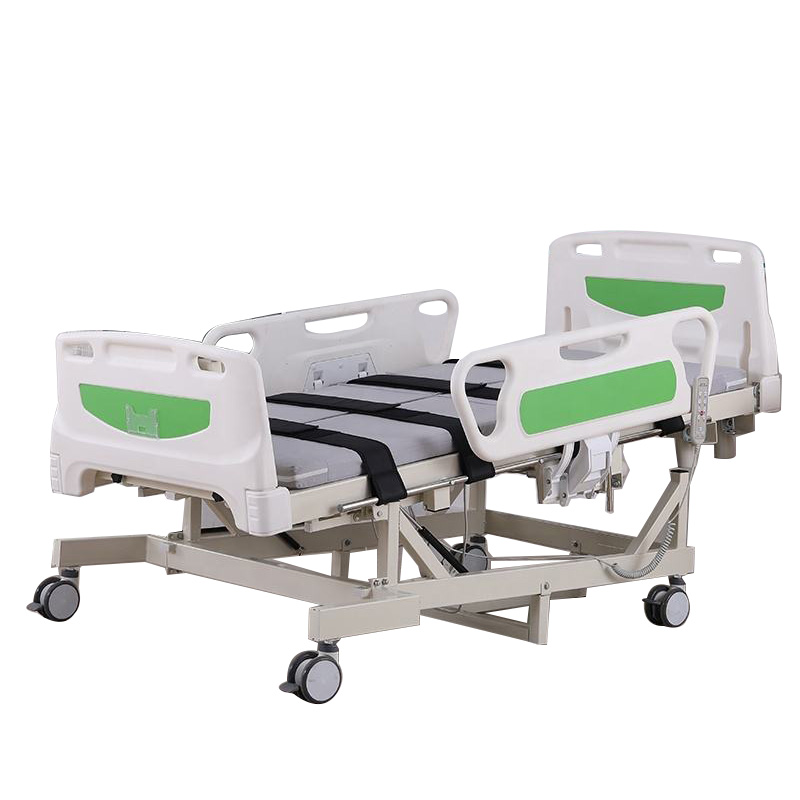
How Do Side Rails and Mattresses Affect the Function?
Trendelenburg should be evaluated as part of the complete hospital bed system rather than as an isolated actuator function.
As the bed tilts, the mattress must remain correctly positioned and the side rails must continue operating normally.
Mattress retainers, side-rail height, platform dimensions, mattress thickness, and frame geometry can therefore affect the overall system.
What Should Buyers Inspect?
Cycle the bed between level, Trendelenburg, and reverse Trendelenburg positions and observe the mattress.
The mattress should remain properly located on the support platform.
Buyers should also verify:
- Mattress dimensions
- Mattress retainers
- Side-rail locking
- Headboard security
- Footboard security
- Rail-to-mattress relationship
- Control accessibility
- Cable routing
If a hospital purchases the bed frame and mattress from different suppliers, mattress dimensions and thickness should be confirmed before placing the order.
How Should Buyers Evaluate Electric Controls?
Trendelenburg is generally associated with staff-controlled positioning because it changes the inclination of the entire bed.
Depending on the design, controls may be located on the footboard, side rails, staff panel, or control pendant. Some medical beds also include preset positioning options in the nurse control system.
What Questions Should Buyers Ask About Controls?
Before ordering, ask the supplier:
- Where is Trendelenburg activated?
- Is reverse Trendelenburg controlled separately?
- Can patients activate the function?
- Can staff lock out the function?
- Is the current angle displayed?
- Does movement stop when the button is released?
- How does the bed return to horizontal?
- Is battery backup available?
- What happens if power fails?
- Can the actuator or control box be replaced individually?
These details become especially important when hospitals purchase large quantities of electric beds.
A control system that is simple to use and easy to service can reduce long-term maintenance difficulties.
Is Trendelenburg the Same as CPR Release?
No. Trendelenburg and CPR release are separate hospital-bed functions.
Trendelenburg changes the angle of the entire bed platform.
A CPR release system is designed to help return relevant mattress sections toward an emergency position quickly, depending on the bed design.
A hospital bed may include both functions, only one, or neither.
Why Should Buyers List Them Separately?
If a purchasing specification simply requests an “emergency hospital bed,” suppliers may interpret the requirement differently.
Instead, buyers should specify each function separately:
- Trendelenburg
- Reverse Trendelenburg
- Electric backrest
- Manual or electric CPR release
- Battery backup
- تعديل الارتفاع
- Control lockout
Each function can then be inspected separately before shipment.
Does Battery Backup Affect Trendelenburg?
It can, depending on the electric bed design.
If the Trendelenburg movement depends entirely on electric actuators, hospitals may want to know whether it remains available when mains power is interrupted.
Not every backup battery supports every function in the same way.
What Should Buyers Confirm?
Ask which movements can operate from battery power and under what conditions.
Also confirm:
- Battery type
- Charging method
- Replacement procedure
- Battery-status indication
- Expected maintenance
- Spare battery availability
- Low-battery behavior
Battery backup should be tested according to the agreed inspection procedure rather than assumed from the product description.
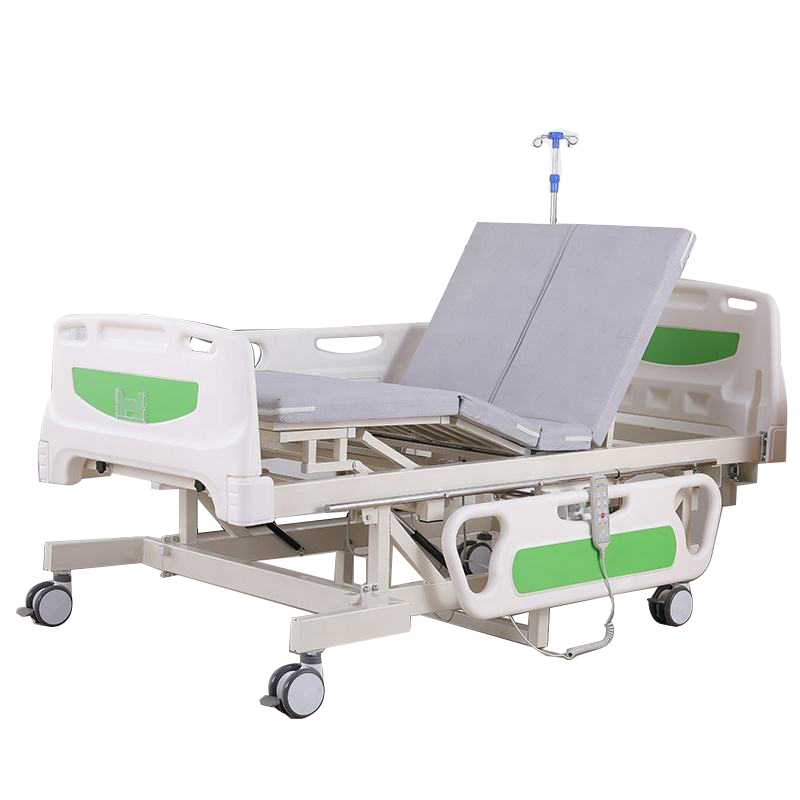
What Structural Quality Should Buyers Inspect?
Trendelenburg creates repeated movement through the bed’s lifting frame, pivots, actuators, mounting points, and welded structure.
For this reason, structural consistency can affect long-term performance.
Which Components Deserve Attention?
Inspect the:
- Main bed frame
- Lifting arms
- Actuator brackets
- Pivot points
- Welding
- Fasteners
- Caster mounts
- Mattress platform
- Linkages
- Electrical cables
Operate the bed repeatedly and listen for abnormal sounds.
Movement should be smooth without sudden jerking, excessive frame twisting, loose connections, or unusual vibration.
Buyers purchasing beds in bulk can include these items in their pre-shipment quality-control checklist.
How Should Trendelenburg Be Tested Before Shipment?
A factory inspection should verify actual operation rather than only checking whether the control button is installed.
A practical inspection can follow a simple sequence.
ما الذي يجب أن يتضمنه الاختبار الوظيفي؟
First, place the bed on a level floor and engage the brakes.
Then:
- Raise the bed to an appropriate test height.
- Activate Trendelenburg.
- Move to the specified maximum angle.
- Check stability and angle.
- Return the bed to horizontal.
- Activate reverse Trendelenburg.
- Check its specified range.
- Return the bed to horizontal again.
- Repeat the sequence several times.
- Recheck brakes, rails, motors, cables, and fasteners.
Stryker service documentation similarly includes functional checks for both Trendelenburg and reverse Trendelenburg during hospital-bed setup and inspection.
For bulk orders, buyers can record the acceptable tilt range and inspection method directly in the purchase order.
What Standards Should Hospital Bed Buyers Consider?
Requirements depend on the destination country, type of hospital bed, and applicable regulatory system.
Buyers should therefore determine which standards apply to their own market instead of relying only on supplier descriptions.
As of 2026, IEC 80601-2-52:2026 covers basic safety and essential performance requirements for adult medical beds within its scope, including both electrical and non-electrical medical beds. It replaced IEC 60601-2-52:2009 in May 2026.
What Documentation Should Buyers Request?
Depending on the project, buyers may need:
- Product specifications
- Operating manuals
- Test reports
- Electrical information
- Risk-management documents
- Labels
- Packing information
- Maintenance instructions
- Spare-parts lists
Documentation should correspond to the actual bed model and configuration being purchased.
For Jcare hospital-bed projects, Trendelenburg requirements can be defined together with height adjustment, backrest and leg functions, casters, central locking, side rails, mattresses, battery backup, CPR functions, accessories, packaging, and pre-shipment inspection criteria.
يسأل الناس أيضًا
Is Trendelenburg Available on Every Hospital Bed?
No. Some basic manual hospital beds do not provide whole-bed tilt. Other beds may offer manual Trendelenburg, electric Trendelenburg, or both Trendelenburg and reverse Trendelenburg. Buyers should confirm the exact configuration before ordering.
What Is Reverse Trendelenburg?
Reverse Trendelenburg tilts the hospital bed so the head end is higher than the foot end. It is mechanically the opposite of standard Trendelenburg. Clinical use should follow professional instructions and facility procedures.
Is Trendelenburg the Same as Raising the Legs?
No. Raising the leg section changes only part of the mattress platform. Trendelenburg tilts the entire patient support surface so the head and foot ends are positioned at different heights.
Can a Manual Hospital Bed Have Trendelenburg?
Yes. Some manual hospital beds use cranks, levers, and mechanical linkages to create Trendelenburg and reverse Trendelenburg without electric actuators.
What Trendelenburg Angle Should Buyers Order?
There is no single angle suitable for every procurement project. Buyers should determine the required range according to intended use, hospital requirements, applicable standards, and the manufacturer’s validated bed design, then verify it during inspection.
الخاتمة
The Trendelenburg function on a hospital bed tilts the entire patient support platform so the head end is lower than the foot end. Reverse Trendelenburg creates the opposite inclination. Depending on the bed design, these movements can be powered electrically or produced through manual mechanisms.
For procurement teams, the most important specifications include tilt direction and angle, control method, braking, structural stability, mattress and side-rail compatibility, return-to-level operation, battery behavior, maintenance, and inspection requirements.
Most importantly, equipment capability and clinical use should remain separate. Buyers should make sure the bed can reliably perform the required positioning function, while qualified healthcare professionals determine when that position is appropriate for an individual patient.
When comparing hospital beds, which feature matters most to your purchasing decision: Trendelenburg angle, electric controls, central locking, battery backup, or emergency functions? Share your experience in the comments, and send this guide to other hospital equipment buyers who may find it useful.