
Hospital buyers often focus on bed functions, load capacity, price, and delivery time, but overlook cleanability. Narrow gaps, unsuitable materials, and inaccessible mechanisms can increase labor and leave contamination behind. Selecting a bed with hygienic construction, durable surfaces, and clear cleaning instructions helps hospitals improve efficiency and support infection-control procedures.
Hospital beds that are easy to clean and disinfect should have smooth nonporous surfaces, rounded edges, minimal gaps, removable panels, accessible under-bed structures, sealed electrical parts, and materials compatible with hospital disinfectants. Buyers should also review the supplier’s cleaning instructions, test a sample bed, and confirm that coatings, plastics, controls, labels, and mattress covers can withstand repeated cleaning.
The following points can help hospitals, distributors, and procurement teams compare bed designs before placing a bulk order.
Why Is Easy Cleaning Important When Selecting Hospital Beds?
Hospital beds are touched frequently by patients, nurses, cleaners, technicians, and visitors. Side rails, controls, headboards, footboards, brake pedals, and mattress edges are all high-contact areas. Difficult access can increase cleaning time and cause surfaces to be missed.
Cleanability also affects room turnover. Complicated panels and inaccessible under-bed parts can delay preparation for the next patient. Repeated disinfectant exposure may also damage weak coatings, plastics, labels, adhesives, and electrical parts. Therefore, a suitable bed must be both accessible and durable.
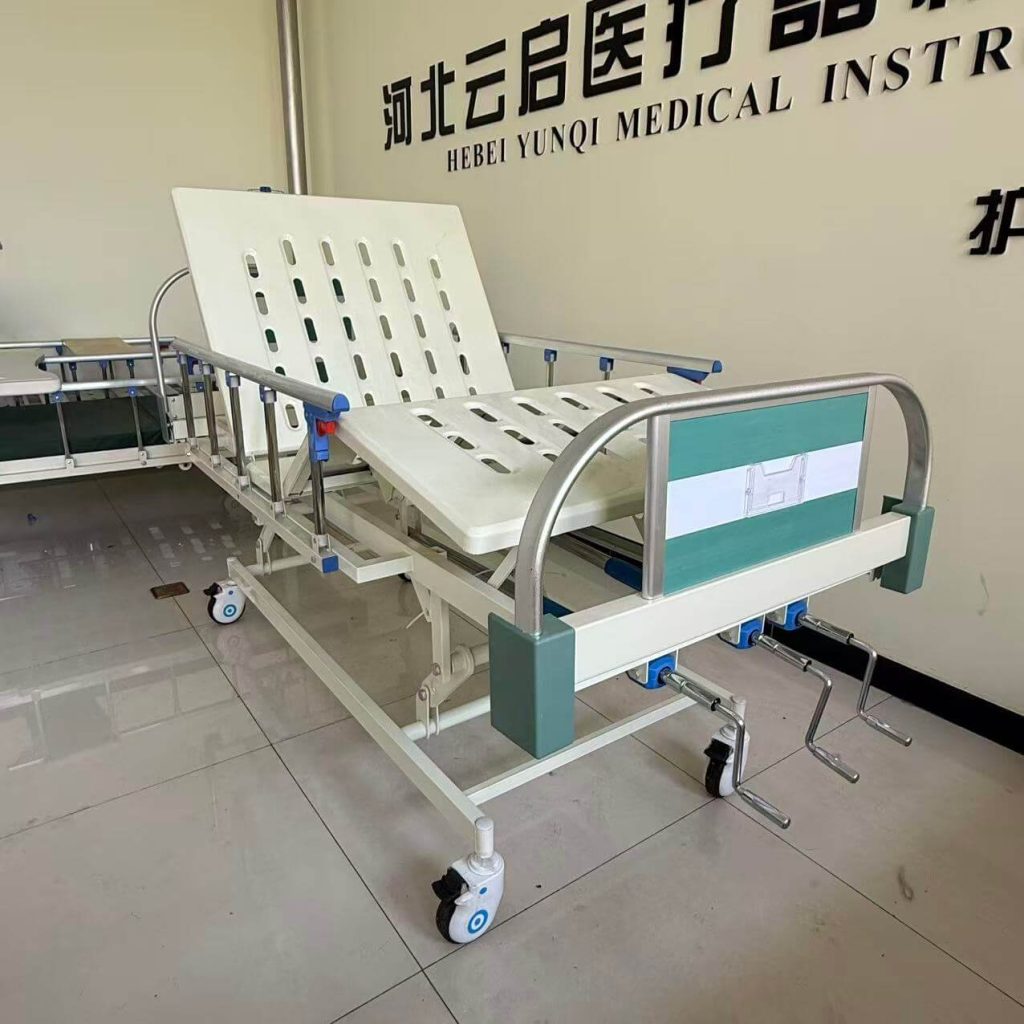
What Materials Are Best for Easy-to-Clean Hospital Beds?
Material choice affects wiping speed, chemical resistance, appearance, and durability. Buyers should examine every exposed component rather than only the main frame.
Smooth and Nonporous Surfaces
Smooth, nonporous materials prevent liquids and dirt from entering the surface. Powder-coated steel, stainless steel, molded ABS, and polypropylene are commonly used because they can be wiped efficiently when properly finished.
Material names alone do not guarantee good cleanability. Rough welds, deep textures, peeling paint, unfinished edges, and porous foam can collect residue. Rounded edges and one-piece panels are easier to maintain than sharp corners or overlapping joints.
Resistance to Hospital Disinfectants
Hospitals may use alcohol-based cleaners, chlorine solutions, quaternary ammonium products, hydrogen peroxide products, or other approved disinfectants. The supplier should provide written information about suitable chemicals, concentrations, contact times, and cleaning methods.
A surface may look resistant after one wipe but still discolor, crack, soften, or become sticky after repeated use. Compatibility should cover coatings, plastic panels, side rails, labels, buttons, cables, mattress covers, caster housings, and adhesive components.
How Should the Bed Structure Be Evaluated?
A hospital bed can use suitable materials and still be difficult to clean because of poor structural design. Buyers should inspect how the parts are shaped, connected, and positioned.
Minimize Gaps, Seams, and Recesses
Narrow gaps and deep recesses can trap dust, liquid, hair, and biological material. Beds with fewer joints, smooth welds, covered fasteners, sealed tube ends, and simple shapes are usually easier to clean.
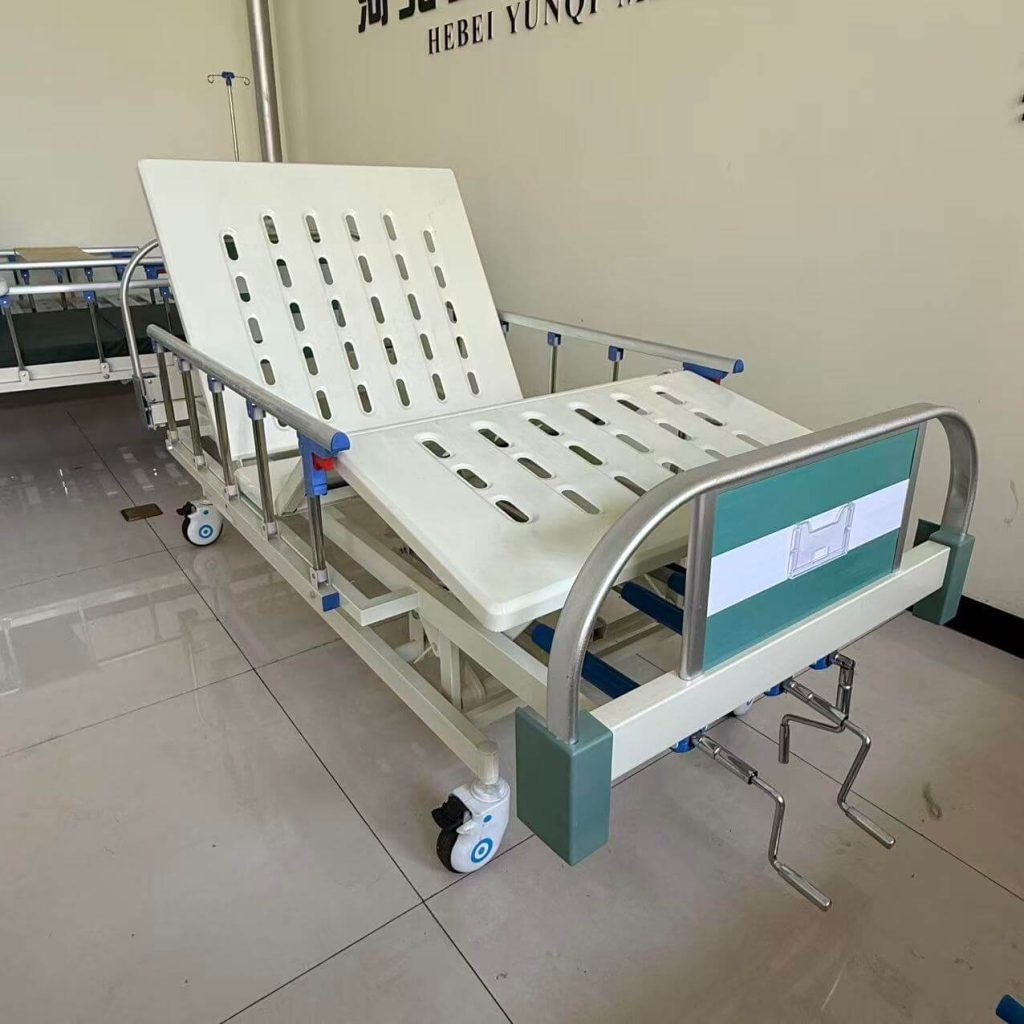
Pay close attention to side-rail joints, mattress retainers, crank handles, actuator brackets, control boxes, and caster supports. These areas may contain hidden spaces. Exposed screws should not sit inside deep holes, and maintenance fasteners should remain easy to wipe.
Prefer Removable and Accessible Components
Removable headboards, footboards, deck panels, and protective covers can improve terminal cleaning. Tool-free removal is useful when one trained employee can detach and reinstall a component safely.
Removable parts must lock securely. Buyers should test the locking method, clean the connection points, and check whether panel removal exposes motors or connectors to moisture.
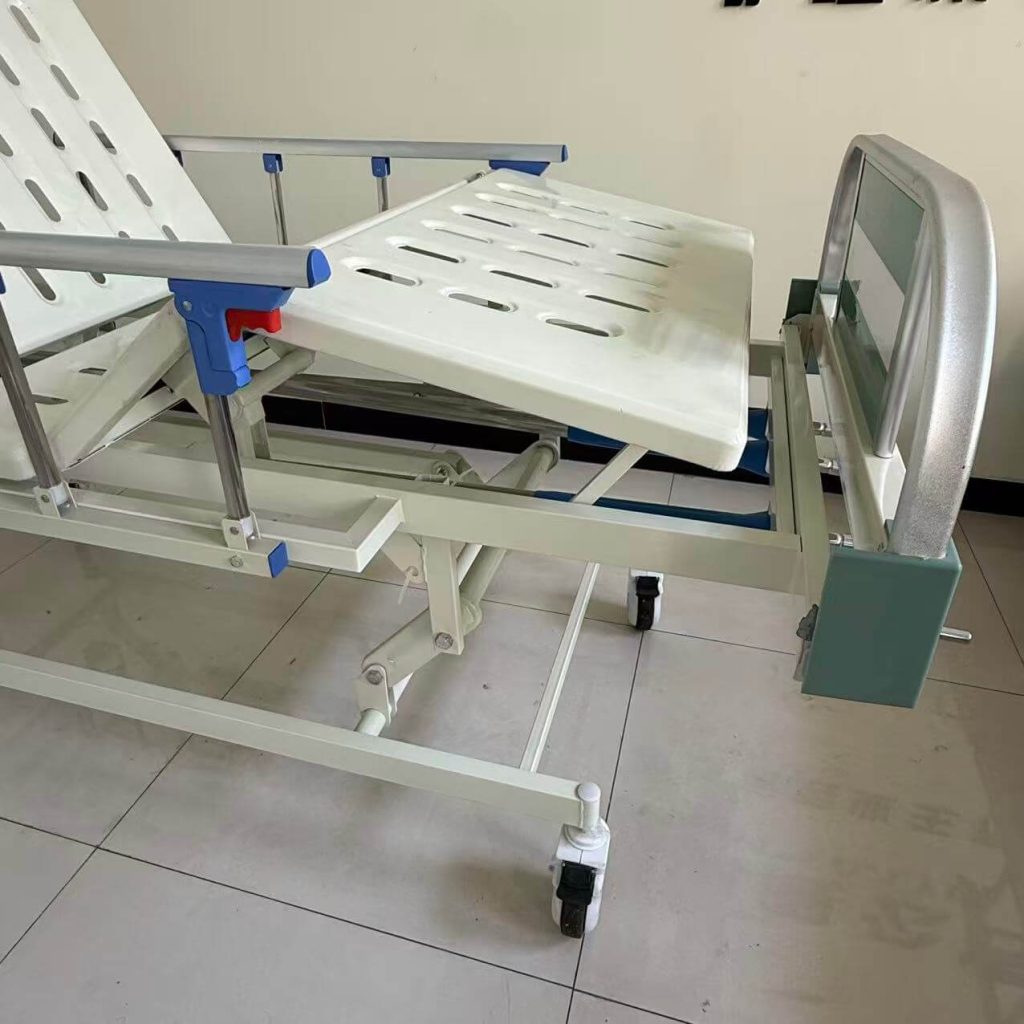
Which Hospital Bed Areas Need the Closest Inspection?
Some areas require more careful evaluation because they are frequently touched or commonly overlooked.
Side Rails, Headboards, and Footboards
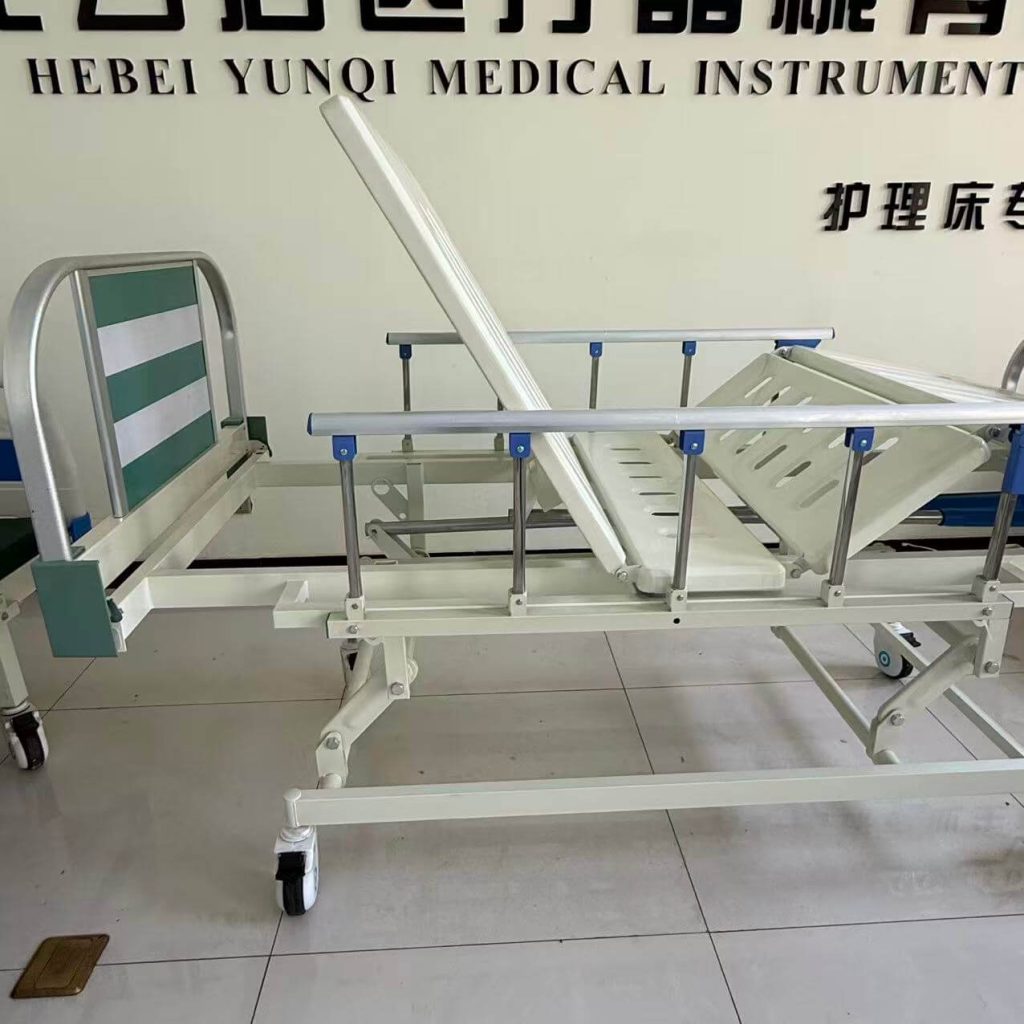
Side rails should have smooth inner and outer surfaces, rounded handholds, and accessible release mechanisms. Avoid designs with uncapped tubes, deep cavities, fabric coverings, or complicated decorative shapes.
The rail should be easy to clean in both raised and lowered positions. Staff must be able to reach the lower surface, hinge points, and attachment areas without special tools.
Headboards and footboards should be smooth on both sides, while slots, hooks, and accessory openings should remain wide enough to wipe.
Mattress Platform and Mattress Cover
The mattress platform should provide access to its upper surface, edges, hinges, and underside. Removable deck panels can make cleaning easier when they are lightweight, securely fixed, and simple to reinstall.
Inspect backrest hinges, knee joints, mattress retainers, and actuator openings. Raising each section should expose any hidden pockets or overlapping parts.
The mattress cover should resist liquids and repeated wiping. Welded seams, protected zippers, strong corners, and replaceable covers are valuable. Tears or damaged zipper flaps may allow moisture to enter the foam, making effective cleaning much more difficult.
Casters, Brake Pedals, and Under-Bed Components
Casters can collect hair, fibers, floor dust, and liquid. Smooth wheel housings and open, accessible forks are easier to clean than narrow structures with exposed bearing cavities.
Brake pedals should be reachable from several angles, including the rods and linkage covers of central-locking systems. Under the bed, avoid horizontal surfaces where liquid can collect. Cables, actuators, crossbars, and lifting linkages should remain organized and accessible.
Controls, Motors, Cables, and Connectors
Electric beds require extra evaluation because moisture can affect motors, hand controls, connectors, and control boxes. Buyers should request water-resistance information and approved cleaning methods for each electrical component.
Control panels should use sealed membranes or smooth buttons. Cables should be securely routed, easy to wipe, and kept away from the floor. Labels and warning symbols must remain readable after repeated disinfection.
What Cleaning Information Should the Supplier Provide?
A reliable supplier should provide detailed instructions instead of simply stating that the bed is easy to clean.
The documentation should explain the recommended cleaning sequence, compatible detergent types, approved disinfectant categories, maximum concentrations, contact times, water-temperature limits, and drying requirements.
It should identify areas that must not be sprayed or immersed. For electric beds, it should explain power disconnection and connector inspection.
Buyers should request removal and installation instructions for detachable components. The information must apply to the exact model and configuration being purchased because different motors, rails, mattresses, controls, or panel materials may require different procedures.
How Can Buyers Test Cleanability Before a Bulk Order?
A sample-bed test is one of the best ways to identify hidden cleaning problems before mass production.
First, ask cleaners, nurses, biomedical technicians, and infection-control personnel to inspect the sample. Each group may identify different access or moisture risks.
Next, apply a harmless visible test material to high-touch and difficult areas. Clean the bed according to the supplier’s instructions and inspect the rails, hinges, mattress retainers, caster forks, control buttons, and under-bed structure.
Record the cleaning time, number of removable parts, tools required, and areas that are repeatedly missed. Repeat the wiping process to check for discoloration, cracks, corrosion, peeling coatings, detached labels, sticky controls, damaged cables, or weakened mattress seams.
A single demonstration cannot show long-term performance. Repeated testing gives a better indication of how the bed will respond after months or years of use.
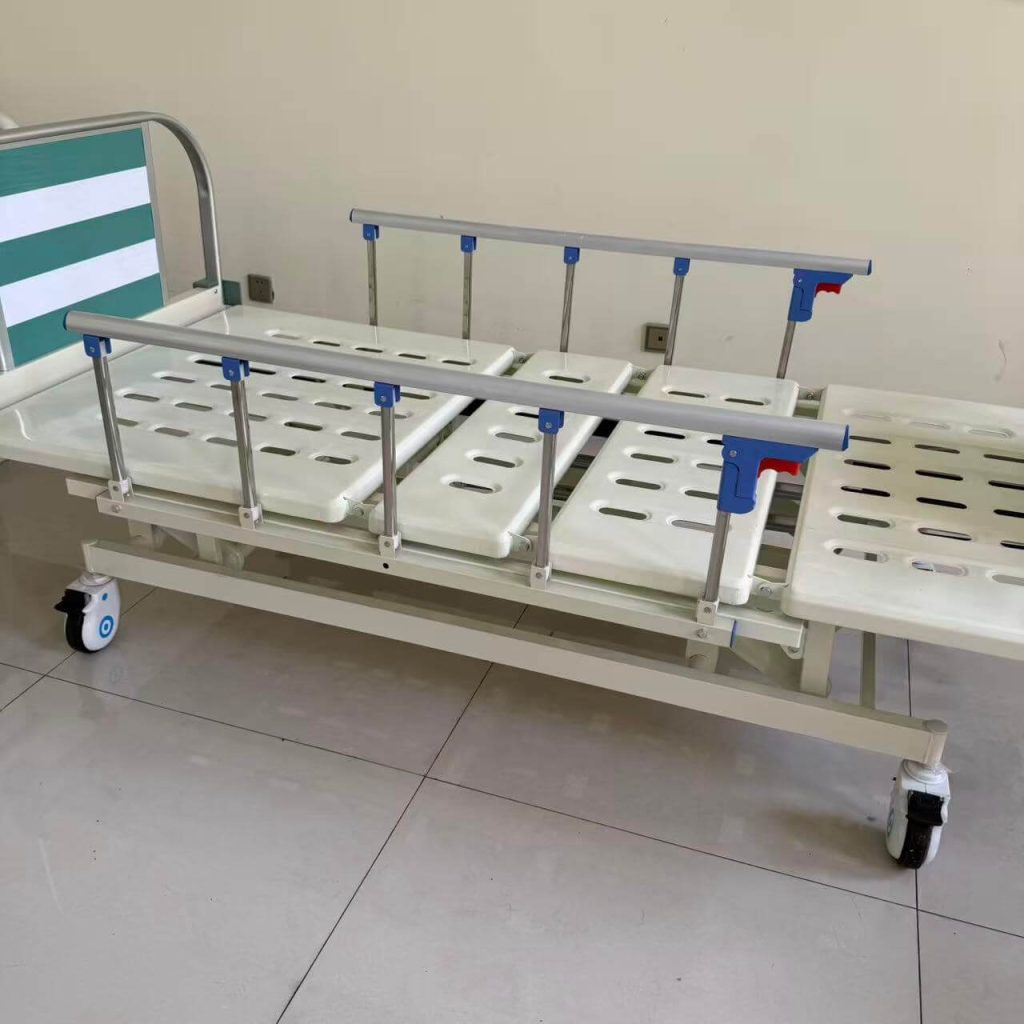
How Should Cleanability Be Included in Supplier Comparison?
Cleanability should be included in the same evaluation table as safety, functions, weight capacity, certification, price, delivery time, and spare-parts support.
Useful scoring categories include surface accessibility, number of gaps, removable parts, chemical compatibility, coating durability, electrical protection, mattress-cover quality, caster accessibility, documentation quality, and sample cleaning time.
Two beds may provide similar functions but use different fasteners, plastics, cable routes, coatings, or side rails. Compare exact design details rather than broad descriptions.
For bulk orders, approved materials and construction details should be included in the technical specification and purchase contract. Close-up photographs of rails, panels, controls, casters, and under-bed parts can help prevent unapproved production changes.
People Also Ask: What Is the Most Important Feature of an Easy-to-Clean Hospital Bed?
The most important feature is an accessible, nonporous design with minimal gaps and materials proven to tolerate the hospital’s approved disinfectants.
No surface coating can fully compensate for inaccessible joints, damaged mattress covers, exposed electrical components, or unclear cleaning instructions. Buyers should evaluate the bed as a complete system rather than judging only the frame.
The rails, panels, mattress, casters, controls, cables, documentation, and cleaning workflow must all support fast, consistent, and safe cleaning.
Заключение
Selecting hospital beds that are easy to clean and disinfect requires careful evaluation of materials, structural design, high-touch surfaces, removable parts, mattress construction, casters, electrical protection, and supplier documentation.
Smooth nonporous surfaces, rounded edges, minimal gaps, accessible mechanisms, durable coatings, and disinfectant-compatible materials can reduce cleaning time and protect equipment quality.
Before confirming a bulk order, buyers should test a sample bed, involve cleaning and technical teams, and record all approved specifications in the contract and inspection checklist.
What cleaning challenges have you experienced with hospital beds? Share your experience in the comments, and send this guide to colleagues responsible for procurement, infection control, environmental services, or biomedical maintenance.