
Choosing hospital beds for a dialysis center raises practical questions: Should you use electric or manual beds? Which adjustment functions matter most? How easy are the beds to disinfect? Poor choices can reduce comfort, complicate staff work, and increase operating costs. A careful specification helps buyers balance safety, positioning, cleaning, durability, and budget.
The best hospital beds for dialysis centers are stable, easy-to-clean, adjustable beds that support prolonged treatment, patient transfers, and efficient staff access. Buyers should prioritize backrest and height adjustment, reliable brakes, practical side rails, suitable load capacity, durable mattresses, and compatible accessories. Electric functions can improve positioning efficiency, while manual beds may suit simpler facilities. The final choice should match patient mobility, treatment workflow, room layout, cleaning procedures, and local requirements.
Dialysis beds should not be selected by motor count alone. The following factors help buyers create a practical specification for everyday use.
Why Do Dialysis Centers Need Different Hospital Bed Features?
Hemodialysis often keeps a patient at one treatment station for several hours. NIDDK notes that typical in-center hemodialysis is commonly scheduled three times per week, with each session lasting about four hours. This makes comfort, position changes, staff access, and surface durability especially important.
Long Treatment Time Makes Positioning Important
An adjustable backrest allows patients to move from a flatter resting position to a more upright position without leaving the bed. For buyers, movement quality matters as much as the maximum angle. The backrest should operate smoothly, stop reliably, and remain stable at intermediate positions.
For dialysis centers, this means buyers should focus on the functions staff will actually use during treatment. A more complex bed is not automatically a better bed if most of its adjustment functions rarely support daily clinical workflow.
Is a Hospital Bed Better Than a Dialysis Chair?
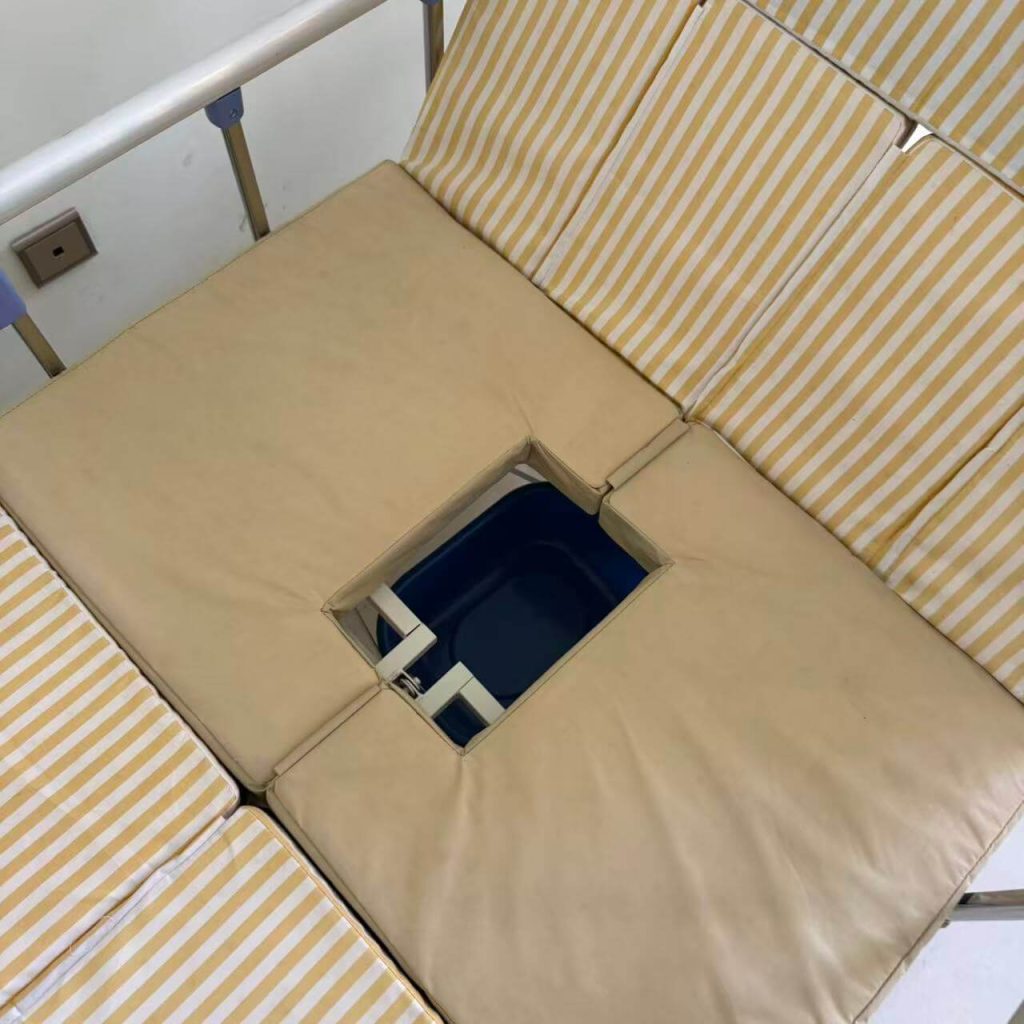
There is no single answer for every center. CDC guidance for hemodialysis stations refers to the patient chair or bed, confirming that both types of support equipment are used in dialysis settings.
Dialysis chairs can be space-efficient for ambulatory patients who transfer independently. Hospital beds may be more suitable for elderly, weak, mobility-impaired, hospitalized, or higher-dependency patients who need additional help with transfers and positioning.
Match the Equipment to the Patient Population
Before purchasing, review who the center actually treats. A facility serving mainly independent outpatients may not need beds at every station. A hospital-based dialysis department may receive patients from inpatient wards or other departments who require more assistance.
Height-adjustable beds can make wheelchair or transfer-device alignment easier. They also provide a broad supporting surface when a patient needs to lie flatter.
The decision should therefore begin with patient mobility and nursing requirements rather than with the product category itself. Some facilities may use beds throughout the unit, while others may reserve them for selected treatment stations.
Which Bed Adjustment Functions Matter Most?
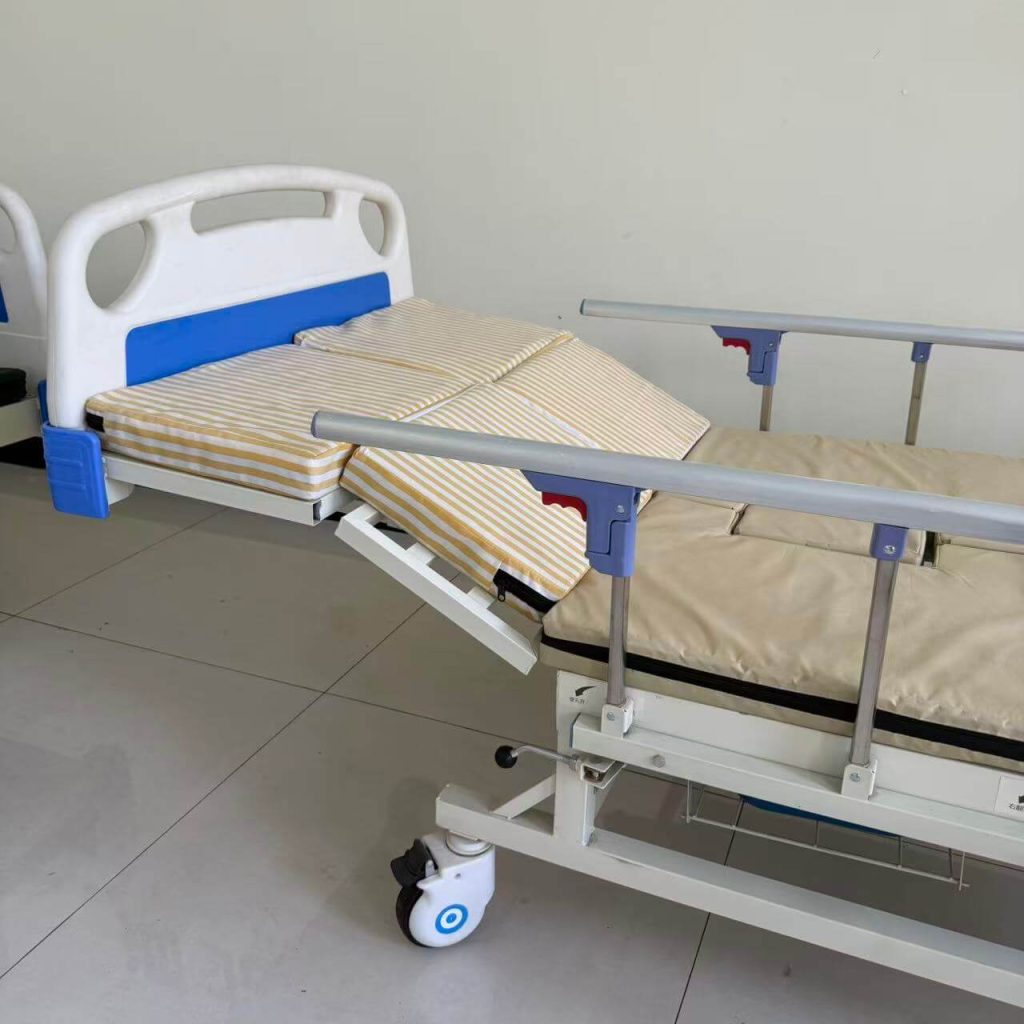
The number of adjustment functions should not be the main purchasing criterion. Instead, buyers should identify which movements staff use repeatedly during a normal dialysis shift.
In many centers, backrest adjustment and overall height adjustment offer more practical value than highly specialized positioning functions. Leg adjustment may also be useful depending on treatment procedures and patient needs.
Prioritize Backrest and Height Adjustment
Backrest adjustment supports changes between resting and semi-seated positions. Electric operation can make these changes easier and smoother than repeated manual cranking.
Height adjustment serves another purpose. Lowering the bed can support transfers for some patients, while raising the platform can provide a better working height for staff. Compare the minimum and maximum heights with wheelchairs, bedside furniture, and transfer equipment before placing an order.
Buyers should also evaluate how smoothly each section moves and whether staff can control the bed without unnecessarily disturbing the patient or nearby dialysis equipment. Practical operation is more important than simply having a long list of functions.
How Important Is Cleaning and Infection Control?
Cleaning is a major purchasing consideration in dialysis environments. CDC guidance states that dialysis-station surfaces should be cleaned and disinfected between patients and specifically includes the bed or chair among station surfaces.
This directly affects bed design. Decorative gaps, complicated joints, difficult corners, and poorly positioned accessories can increase cleaning effort. Buyers should evaluate a bed from the perspective of the staff member who must wipe and disinfect it repeatedly.
Choose Smooth and Accessible Surfaces
Headboards, footboards, bedboards, side rails, controls, and exposed frame areas should be easy to reach. Smooth components generally simplify routine wiping, while unnecessary recesses can trap dirt or make inspection more difficult.
The mattress is equally important. Its cover should be suitable for healthcare use and compatible with the cleaning and disinfection products used by the facility. CDC cleaning guidance also emphasizes material compatibility when selecting disinfectants for healthcare surfaces and equipment.
For procurement teams, cleanability should therefore be evaluated before bulk ordering rather than after beds have already entered service. A sample inspection can reveal whether rails, boards, joints, and mattress edges are easy for cleaning staff to access.
What Safety Features Should Dialysis Bed Buyers Check?
Safety should be assessed across the complete bed. Frame stability, casters, brakes, side rails, electrical components, mattress fit, and moving parts all affect daily operation.
For adult medical beds, IEC lists IEC 80601-2-52:2026 as the international standard covering basic safety and essential performance of medical beds for adults. Its scope includes electrical and non-electrical beds, with or without adjustable functions.
However, an international standard does not automatically satisfy every country’s regulatory or tender requirements. Importers should confirm applicable registration, testing, labeling, documentation, and local standards before purchasing.
Focus on Casters, Brakes, and Side Rails
A dialysis bed may need to move for cleaning, maintenance, transport, or room changes, but it must remain stable during treatment and patient transfer. Caster and brake quality are therefore fundamental.
Central locking can be convenient where beds move frequently because staff can control several casters together. Individual locking casters may remain practical for simpler facilities where movement is limited.
For side rails, check height, length, locking security, operating force, and the space available when the rail is lowered. The rail should support patient safety without unnecessarily blocking staff access.
Buyers should also test how easily the bed changes direction in the available room space. Good mobility is especially valuable when several beds, dialysis machines, bedside tables, and other equipment share the same treatment area.
What Bed Size and Load Capacity Should You Choose?
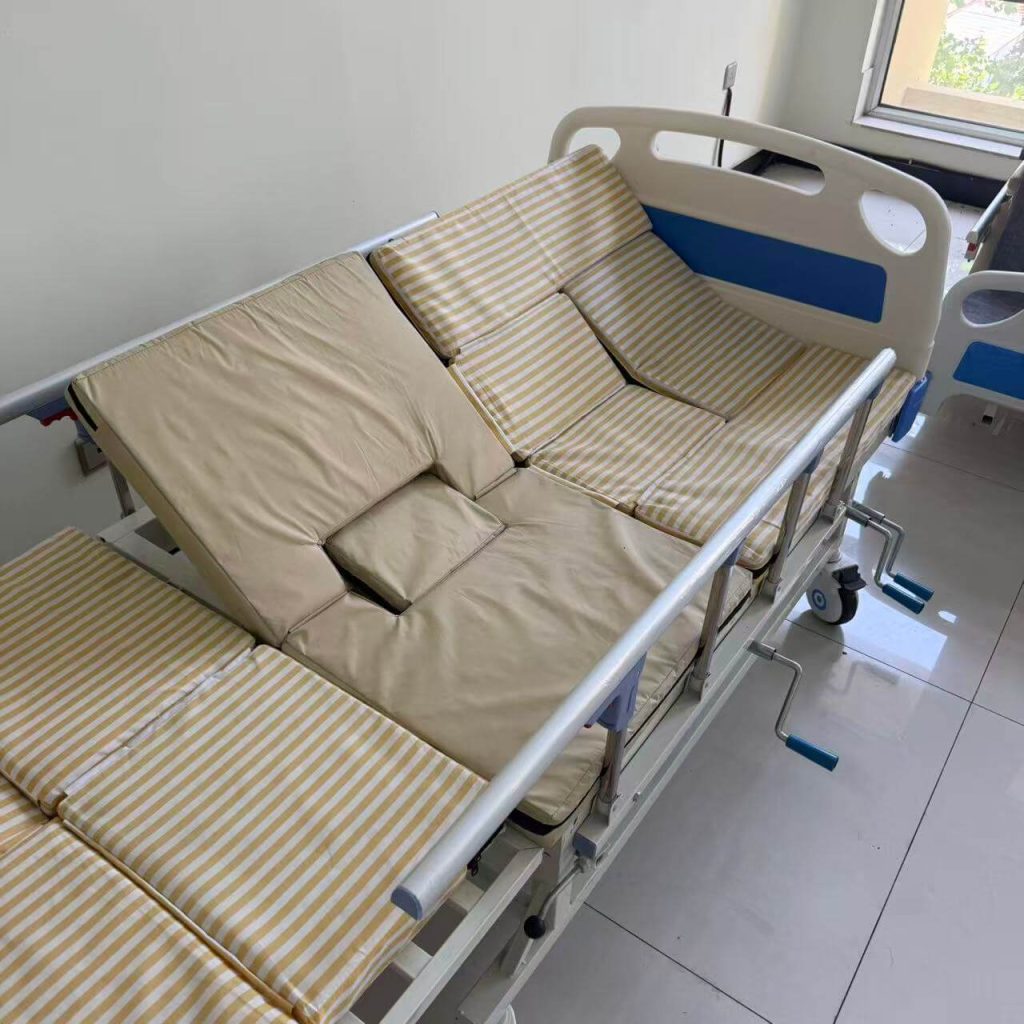
Bed size affects comfort, station spacing, transport routes, and staff access. A wider platform may improve comfort for some patients, but the wider overall frame also reduces space around the dialysis station.
Before ordering, measure treatment rooms, doorways, elevators, corridors, and the area needed for the dialysis machine and nearby furniture. Do not compare mattress width alone; overall bed dimensions matter when planning multiple stations.
Plan for More Than the Average Patient
Load capacity should reflect the range of patients the facility expects to treat, not only average body weight. Ask suppliers to state the relevant load specification clearly.
Some facilities may need several wider or higher-capacity beds rather than using the same oversized specification at every station. This can balance accessibility and purchasing cost.
Mattress dimensions must also fit the platform and side-rail system correctly. Poor fit can create gaps, allow excess movement, or interfere with bed functions.
In addition, purchasers should compare the bed’s dimensions with transportation routes before approving a model. A suitable treatment bed is of limited value if it cannot pass comfortably through doors, elevators, or corridors when relocation or maintenance is necessary.
Electric or Manual Beds: Which Is Better for Dialysis?
Electric beds offer greater adjustment convenience, while manual beds can reduce initial cost and simplify maintenance. The better option depends on how often staff change bed positions, the center’s workload, maintenance resources, and budget.
For busy units, electric backrest and height functions can reduce the physical effort required for repeated adjustments. They are particularly useful when patients need frequent assistance.
Compare Total Operating Value
Electric beds add components such as actuators, handsets, control boxes, cables, and power supplies. Buyers should ask whether these parts are standardized, replaceable, and available for future orders.
Manual beds have fewer electrical components and may be easier to maintain in markets with limited technical support. However, crank position, operating effort, and movement smoothness still need evaluation.
The better comparison is not simply electric versus manual. It is purchase price plus maintenance, spare parts, staff convenience, and expected service life.
For example, an inexpensive manual bed may initially reduce project costs, but frequent adjustments could increase staff effort. Conversely, a fully electric bed may add unnecessary cost if the facility rarely changes patient position. Matching the configuration to actual workload usually produces better value.
Which Accessories Are Useful for Dialysis Centers?
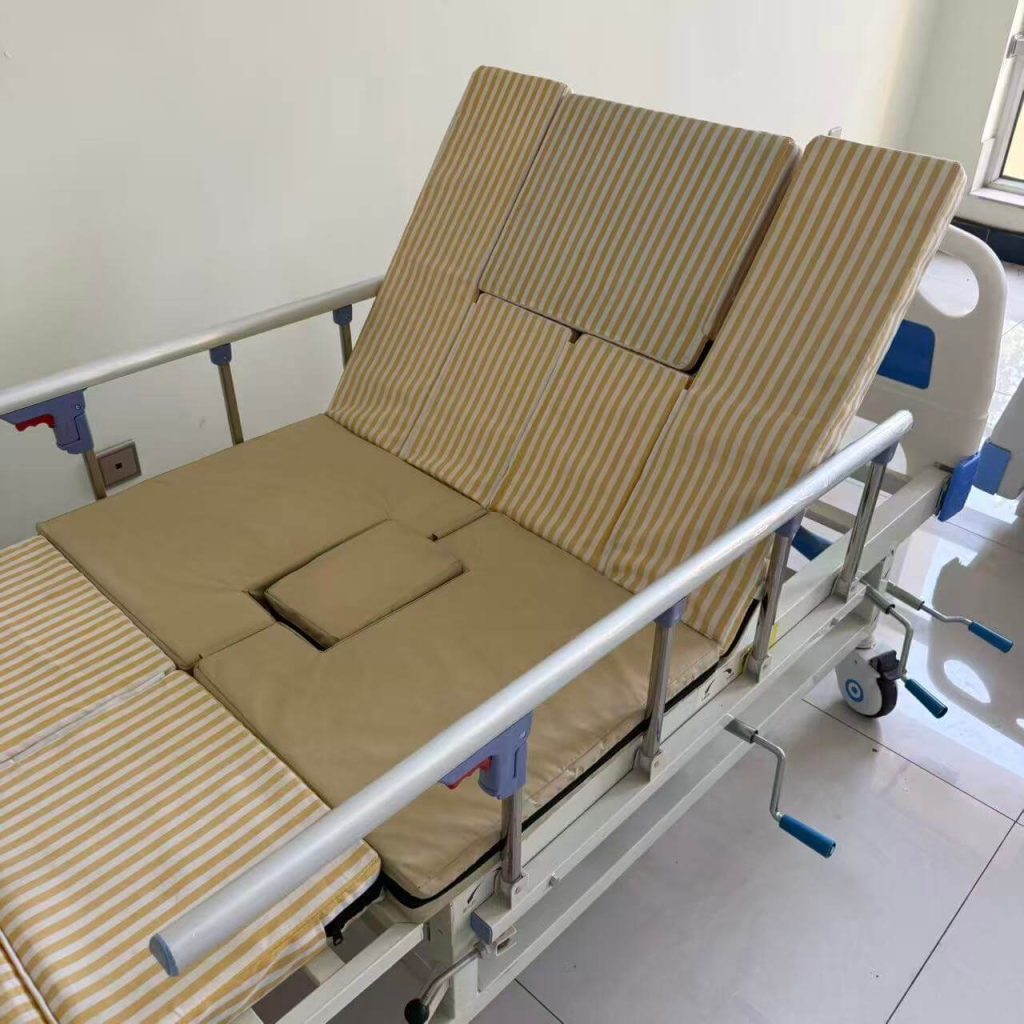
Accessories should solve practical problems without making the treatment station unnecessarily crowded. Every extra component adds cost, cleaning surfaces, inspection needs, and possible replacement parts.
Useful options can include IV poles, urine bag hooks, mattress retainers, bumpers, bedside tables, and accessory mounting points. The exact combination should reflect the facility’s workflow.
Accessory Position Matters
An IV pole should not interfere with side rails, tubing, the dialysis machine, or staff movement. Buyers should check mounting locations, stability, removability, and spare-part availability.
The same principle applies to other accessories. A useful accessory should improve workflow without making the bed harder to move or clean.
For bulk purchasing projects, standardizing the main accessory combination can also simplify quotations and future replacement orders. Specialized accessories can then be added only to the stations that actually need them.
How Should Buyers Evaluate a Hospital Bed Supplier?
A suitable bed can still become a poor investment if the supplier cannot maintain consistent specifications, supply spare parts, provide suitable export packaging, or support required documentation.
Price should therefore be considered together with production consistency, communication, after-sales support, packaging, spare-part availability, and the manufacturer’s ability to reproduce the same configuration for future orders.
Review Samples and Documents Before Bulk Purchasing
Before confirming a large order, request a complete specification sheet covering dimensions, functions, load information, materials, casters, brakes, side rails, mattress options, electrical components, accessories, packaging, and warranty terms.
Where possible, inspect a sample. Clinical staff can test positioning and transfers, cleaning staff can evaluate surface access, and maintenance staff can review moving and electrical components.
For international projects, buyers should separately verify certificates, registrations, labels, test reports, manuals, and import documents required by the destination market. For example, CMS maintains specific health and safety Conditions for Coverage for participating U.S. ESRD facilities.
This step is particularly important for distributors and hospital procurement teams planning repeat purchases. Consistent specifications help simplify maintenance, staff training, spare-parts management, and future expansion.
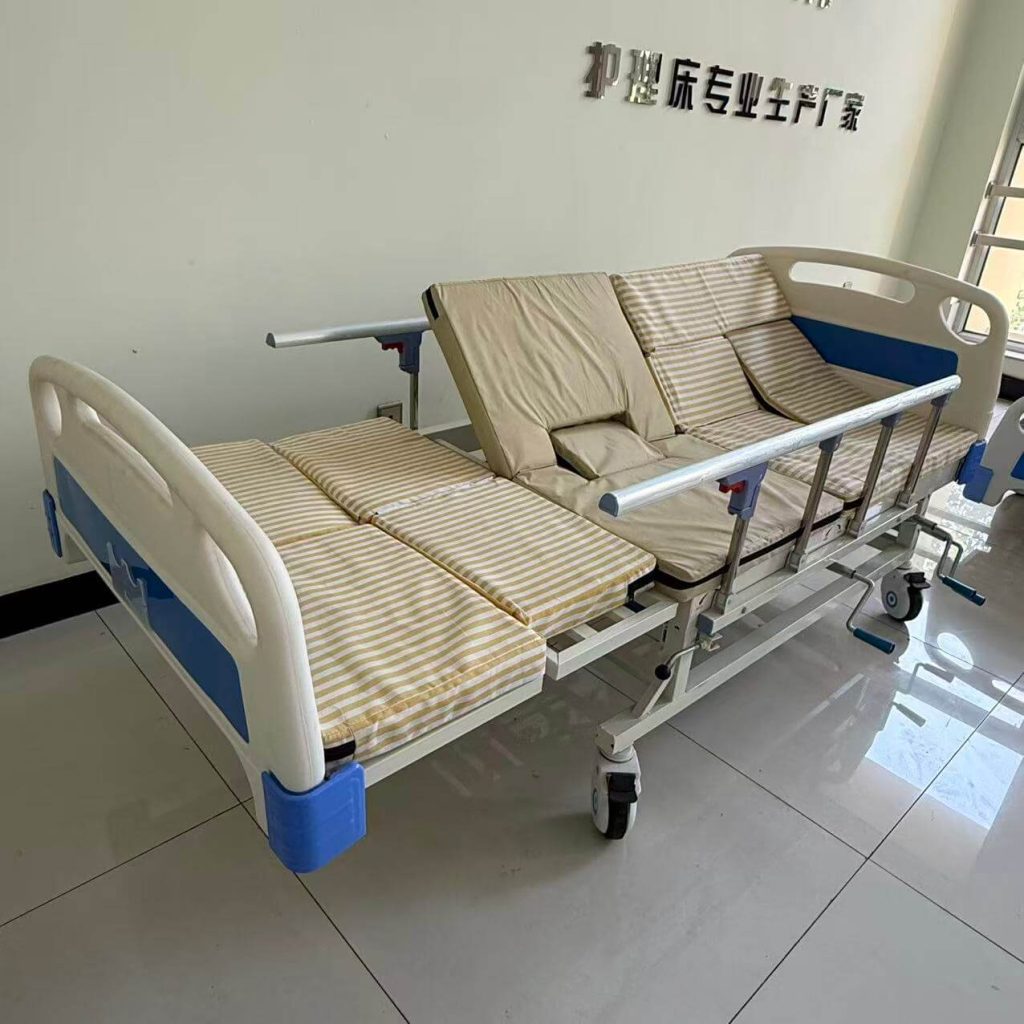
How Can Jcare Support Dialysis Center Bed Procurement?
Jcare supplies hospital beds, home care beds, rehabilitation products, medical furniture, and medical-bed accessories for wholesale purchasing projects.
For dialysis centers, hospitals, private clinics, medical-equipment purchasers, and distributors, configurations can be discussed according to required functions, bed size, side rails, casters, mattress type, accessories, order quantity, packaging, and budget.
Different dialysis projects have different patient profiles and facility layouts, so one bed configuration does not need to fit every inquiry. Buyers can first identify essential functions and then compare manual and electric options based on actual use.
Jcare’s factory-direct supply model, stock availability, and short delivery arrangements can support new projects, replacement programs, and distributor inventory. Buyers should still confirm all local regulatory and documentation requirements before placing orders for a specific market.
結論
Choosing hospital beds for dialysis centers requires a balance of patient comfort, staff access, cleaning efficiency, positioning, safety, room layout, durability, and long-term cost. For many projects, backrest and height adjustment, reliable brakes, practical side rails, easy-to-clean surfaces, suitable dimensions, sufficient load capacity, and available spare parts deserve priority.
Electric beds can improve adjustment convenience in busy facilities, while manual models may offer better value where fewer movements are needed or maintenance resources are limited. Most importantly, buyers should build the specification around real dialysis workflow rather than choosing the bed with the longest feature list.
What features matter most in your dialysis center? Leave a comment with your purchasing requirements, or share this guide with colleagues who are comparing hospital beds for a dialysis project.