
Hospitals often ask whether isolation wards need special hospital beds and which specifications matter most. Choosing the wrong bed can complicate cleaning, increase staff workload, slow patient transport, and create maintenance problems. A better approach is to evaluate cleanability, materials, mobility, safety, functions, mattresses, and long-term service needs together.
Hospital beds for isolation wards should be easy to clean and disinfect, durable under frequent cleaning, safe to operate, easy to move, and simple to maintain. Buyers should compare bed surfaces, side rails, casters, brakes, mattress covers, controls, electrical systems, load capacity, accessories, and spare-parts support. The final specification should match the hospital’s infection-control procedures, patient acuity, room layout, and maintenance capability.
The following factors can help procurement teams compare beds and select practical isolation-ward configurations.
Why Is Hospital Bed Selection Different for Isolation Wards?
Isolation wards are designed to reduce opportunities for infectious agents to spread between patients, staff, equipment, and surrounding surfaces. The hospital bed sits inside the patient zone and is touched repeatedly during nursing, repositioning, treatment, cleaning, and transport.
CDC guidance identifies bed rails and bed frames as high-touch surfaces, which generally require more frequent and rigorous cleaning than low-touch surfaces.
Therefore, buyers should not evaluate a bed only by comfort or adjustment functions. Its shape, materials, controls, accessories, and moving parts should also fit the hospital’s cleaning workflow.
Before purchasing, consider cleaning during occupancy and after discharge. The goal is equipment that can be consistently cleaned, disinfected, inspected, and maintained.
What Bed Surfaces Are Easier to Clean and Disinfect?
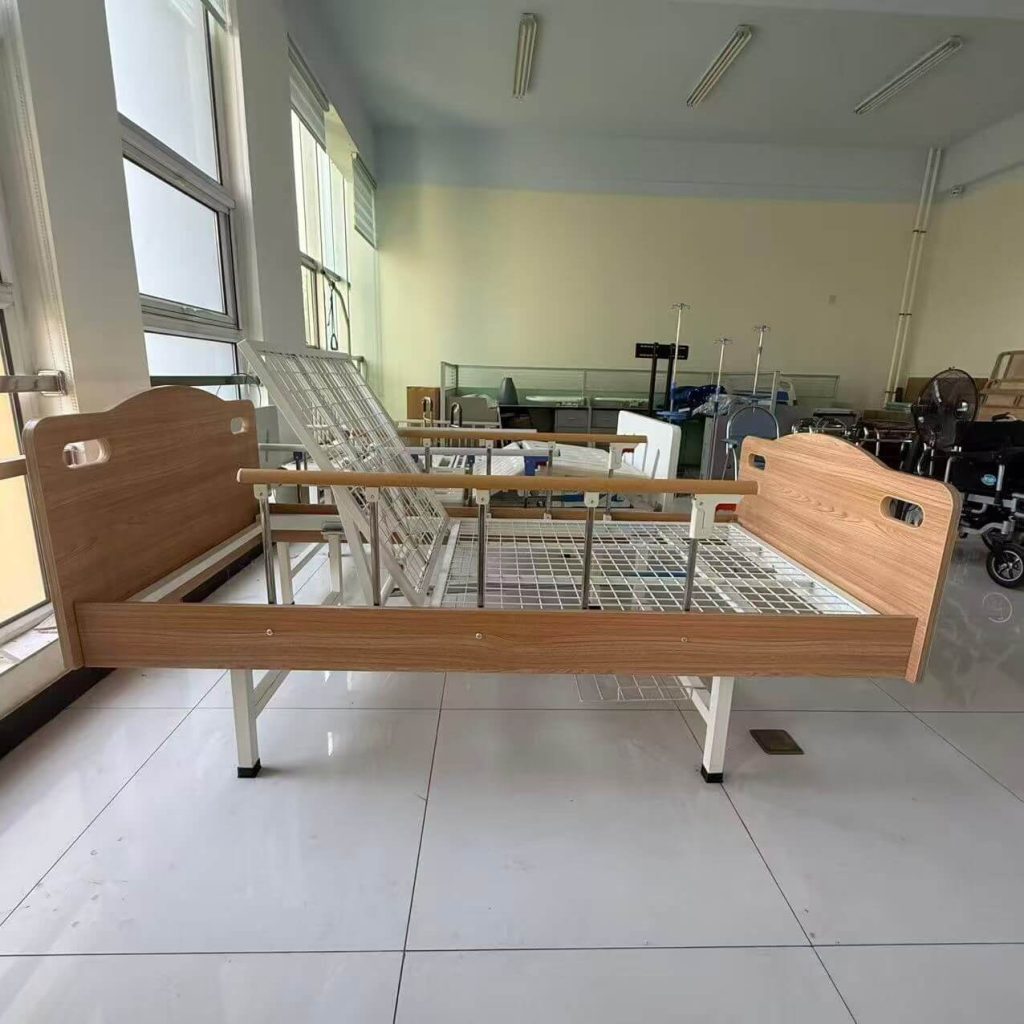
Cleanability should be one of the first items on the procurement checklist. Important areas include the headboard, footboard, side rails, hand controls, brake pedals, IV pole sockets, caster housings, mattress retainers, and frame joints.
Smooth, accessible surfaces are generally easier to wipe than structures with many deep recesses, decorative grooves, or exposed mechanisms. Detachable headboards and footboards can also improve access when removal is simple.
For bulk projects, request close-up photos or videos of rail hinges, corners, controls, and brake mechanisms. A sample bed can help staff test cleaning access.
CDC guidance also emphasizes that patient-care equipment should be capable of effective cleaning and disinfection and that manufacturer instructions should be followed.
As a result, buyers should request clear cleaning instructions rather than assuming every bed can tolerate the same process.
How Important Is Material and Disinfectant Compatibility?
Isolation-ward beds may be cleaned frequently for years. Repeated chemical exposure can affect coatings, plastics, labels, control panels, mattress covers, and metal components.
A bed may look durable when new but later develop faded surfaces, cracked plastic, corrosion, or stiff moving parts if materials are poorly matched to the hospital’s cleaning products.
Procurement teams should confirm frame material, surface treatment, plastic components, corrosion protection, recommended cleaning methods, and chemical restrictions provided by the manufacturer.
For coated steel frames, pay attention to corners, welds, and joints where surface damage could expose metal.
Hospitals should select disinfectants according to their own infection-prevention policies and local requirements. Suppliers should provide accurate material and maintenance information so buyers can judge compatibility before bulk purchasing.
Should Isolation Wards Use Manual or Electric Hospital Beds?
There is no universal rule that every isolation ward needs a fully electric bed. The right choice depends on patient acuity, positioning frequency, nursing workload, power availability, maintenance resources, and budget.
Manual beds may suit lower-acuity environments where only basic positioning is required. Electric beds can be more practical when staff frequently adjust backrest angle, leg position, bed height, Trendelenburg, or reverse Trendelenburg positions.
Electric adjustment can reduce manual effort, but motors, cables, handsets, control boxes, batteries, and panels add components that must be cleaned, inspected, and maintained.
Therefore, buyers should begin with required clinical functions rather than selecting the model with the most features. A simpler configuration with the correct functions may deliver better long-term value.
What Should Buyers Check About Side Rails?
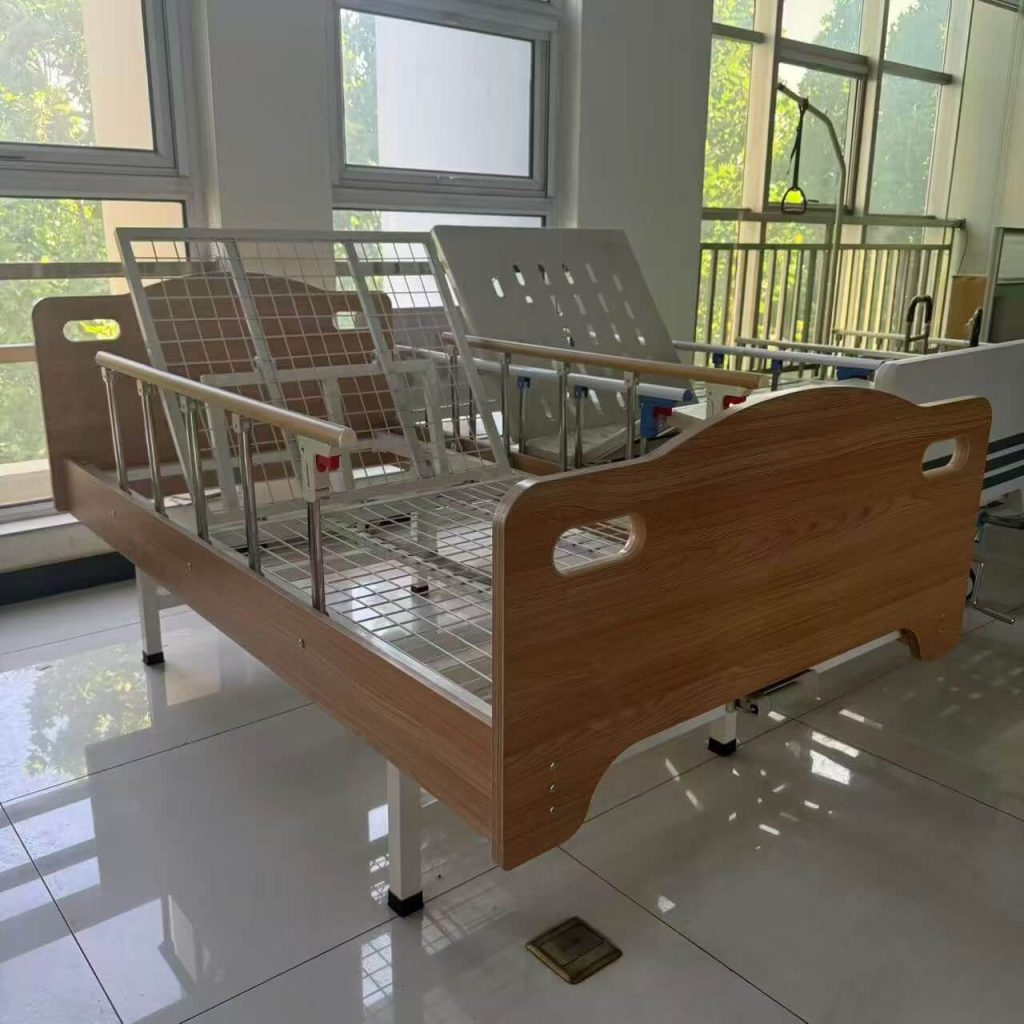
Side rails are safety components and frequently touched surfaces. Buyers should review rail height, locking reliability, gap design, release mechanism, structural strength, material, and replacement method.
The rail should be easy for trained staff to operate, including when gloves or other protective equipment are being worn. Hinges and locking points should also remain reasonably accessible for cleaning.
Hospitals should ask whether damaged rails can be replaced separately. Modular replacement can reduce downtime and maintenance expense, especially when many identical beds are in service.
Because bed rails are recognized as high-touch surfaces in healthcare environments, their design deserves more attention than appearance alone.
How Should Casters, Brakes, Dimensions, and Load Be Selected?
Isolation patients may still require transport for examinations, procedures, transfers, or emergency care. Consequently, beds must remain easy to control in corridors, elevators, doorways, and treatment areas.
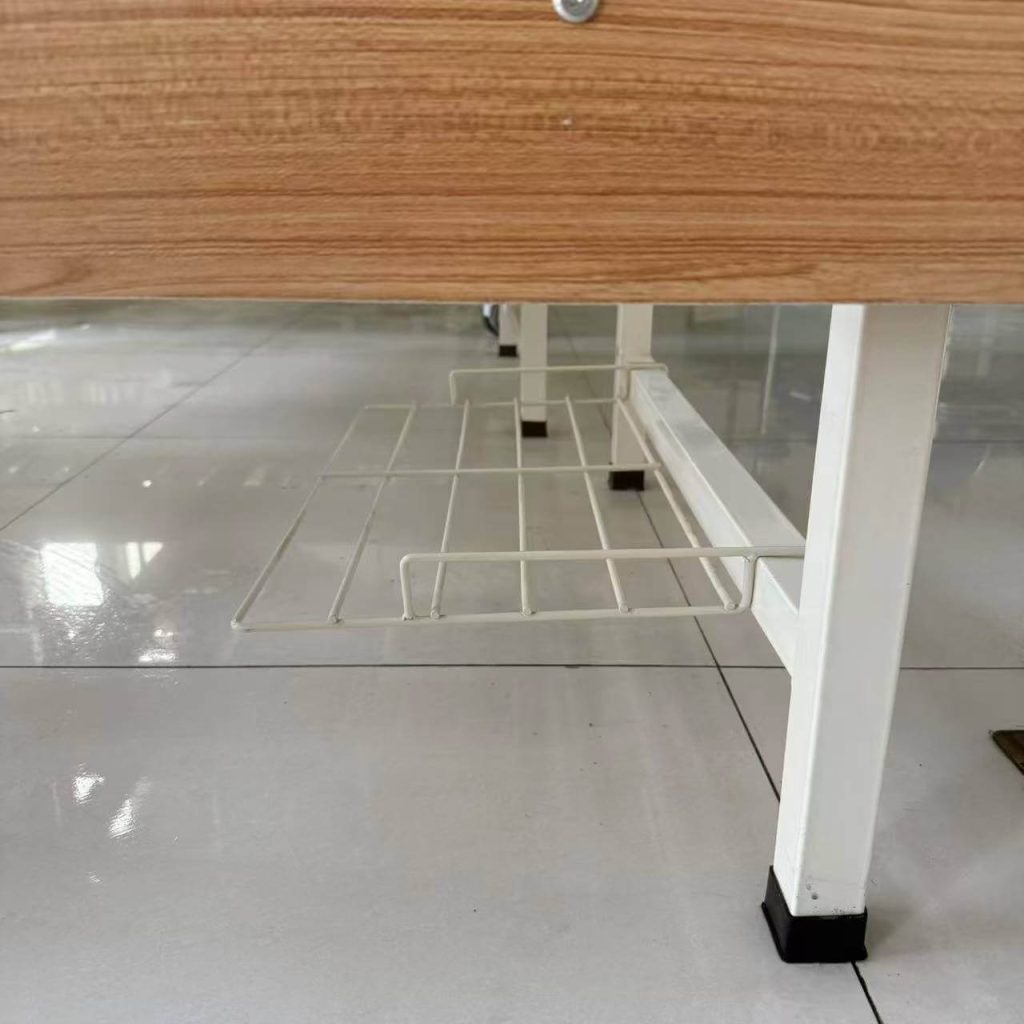
Review caster diameter, wheel material, braking system, directional control, turning radius, and brake-pedal accessibility. Central braking can be useful where beds are moved frequently, while simpler individual brakes may suit other settings.
Whenever possible, test the bed under realistic load. An empty showroom bed may move smoothly but behave differently when carrying a patient, mattress, IV pole, and accessories.
Room dimensions also matter. Isolation rooms may contain monitors, oxygen equipment, protective supplies, and bedside furniture. Before ordering, confirm overall length, width, mattress platform size, height range, under-bed clearance, door dimensions, elevator dimensions, and required load capacity.
Buyers should also distinguish safe working load from patient-weight limits and check the manufacturer’s specifications carefully.
What Mattress Features Matter in Isolation Wards?
The mattress should be evaluated together with the bed frame. If its cover becomes torn, absorbs fluid, or cannot tolerate the facility’s cleaning process, the bed becomes more difficult to manage.
Buyers should review cover material, fluid resistance, seam construction, zipper protection, cleaning instructions, disinfectant compatibility, thickness, foam structure, and pressure-management requirements.
The cover should be easy to inspect for visible damage. Hospitals can then follow their own procedures for repairing or replacing compromised mattresses.
For large orders, ask whether replacement covers are available separately and confirm that mattress dimensions correctly match the platform.
Which Accessories and Electrical Features Are Necessary?
Isolation-ward beds may include IV poles, drainage hooks, oxygen-cylinder holders, monitor shelves, or other accessories. However, more accessories do not automatically create a better configuration.
Every attachment adds surfaces and joints that require cleaning and inspection. Buyers should ask whether each accessory is routinely necessary, easy to clean, simple to replace, and unlikely to interfere with bed movement.
For electric beds, confirm voltage, plug type, motor system, control configuration, cable routing, and destination-market requirements before production.
Battery backup may be useful when limited electrical operation is needed during transport or a temporary power interruption. Buyers should ask about battery type, charging method, expected use, replacement interval, and spare availability rather than assuming backup power provides unlimited operation.
How Important Are Maintenance and Spare Parts?
The purchase price is only one part of the total cost of a hospital bed. Over several years, spare parts, repair time, downtime, and technician workload can significantly affect operating cost.
Before ordering, ask whether the supplier can provide replacement casters, brake components, side rails, headboards, footboards, hand controls, motors, control boxes, batteries, mattresses, and other commonly serviced parts.
Also request maintenance instructions, manuals, warranty terms, and recommended inspection information.
Standardizing a smaller number of bed models can make maintenance easier, reduce the variety of spare parts that biomedical teams need to store, and simplify staff training. However, specialized beds should still be used where particular clinical needs justify them.
How Should Buyers Compare Isolation-Ward Bed Suppliers?
Comparing unit price alone can create problems. Beds that look similar in photographs may differ in frame construction, caster quality, rail mechanisms, surface finishing, electrical components, packaging, replacement parts, and after-sales support.
A standardized request for quotation can make comparison more accurate. The RFQ should define:
- Bed type and required functions
- Dimensions and load capacity
- Side-rail design
- Caster and brake requirements
- マットレスの仕様
- アクセサリー
- Electrical requirements
- Quantity and packaging
- Destination country
- Required documentation
- Spare-parts needs
When suppliers quote against the same specification, procurement teams can compare like with like rather than comparing different configurations only by price.
For bulk purchasing, a sample evaluation, factory inspection, or pre-shipment inspection can provide additional assurance. Involving clinical, infection-control, biomedical, maintenance, and procurement staff can also reveal issues before approval.
What Should Be on an Isolation-Ward Hospital Bed Checklist?
Before approving a purchase, buyers can use the following checklist:
- Smooth and accessible surfaces
- Clear cleaning and disinfection instructions
- Suitable frame and component materials
- Reliable, cleanable side rails
- Appropriate mattress and cover
- Strong casters and effective brakes
- Correct dimensions and load capacity
- Necessary positioning functions
- Accessible controls
- Correct electrical specification
- Appropriate accessories
- Replaceable components
- Spare-parts availability
- Maintenance documentation
- Suitable export packaging
The final decision should reflect the hospital’s clinical workflow and infection-prevention procedures rather than relying on one specification such as price, motor quantity, or appearance.
How Can Jcare Support Hospital Bed Procurement?
Jcare supplies hospital beds, home care beds, rehabilitation products, other medical furniture, and medical bed accessories for wholesale and project procurement.
For isolation-ward projects, buyers can discuss functions, dimensions, side rails, casters, mattresses, accessories, electrical specifications, packaging, quantity, and destination-market requirements before confirming the final configuration.
As a China-based supplier serving markets including India, the Middle East, Southeast Asia, Europe, the United States, Japan, and South Korea, Jcare focuses on factory pricing, ample stock, short delivery times, and practical supply solutions for hospitals, clinics, distributors, and medical bed purchasers.
A detailed RFQ helps both buyer and supplier confirm requirements early and reduce changes later.
結論
Choosing hospital beds for isolation wards requires a balance of infection-control compatibility, patient safety, staff usability, mobility, durability, and maintainability. Buyers should pay particular attention to cleanable surfaces, material compatibility, side rails, casters, mattresses, electrical systems, accessories, and spare-parts support.
The best bed is not simply the model with the most functions. It is the configuration that fits the hospital’s patient needs, cleaning procedures, room layout, maintenance capability, and long-term procurement plan.
What specifications does your hospital prioritize when selecting isolation-ward beds? Share your experience in the comments, and feel free to share this guide with hospital procurement teams, clinics, or medical equipment distributors.