
Hospital bed buyers often ask how much technical detail a purchase order should contain. If specifications are vague, suppliers may interpret dimensions, functions, materials, accessories, or packaging differently, causing costly changes and inspection disputes. A structured PO helps buyers and manufacturers confirm exactly what must be produced before mass production begins.
A clear hospital bed purchase order should define the model, dimensions, functions, materials, load capacity, side rails, casters, mattress, accessories, electrical requirements, packaging, labeling, inspection criteria, quantity, and delivery terms. Each requirement should be measurable and linked to an approved specification sheet, drawing, or sample so production and inspection follow the same standard.
Clear specifications reduce uncertainty, improve quotation comparison, and give purchasing teams a stronger basis for production control and pre-shipment inspection.
Why Are Clear Hospital Bed PO Specifications Important?
A hospital bed is not a single standardized product. Two beds described as “three-function electric hospital beds” may differ in platform size, motor configuration, side-rail design, caster diameter, load capacity, mattress, and accessories.
Therefore, a product name or photograph is rarely enough for a wholesale order.
Avoid descriptions such as “strong frame,” “large wheels,” or “high quality.” Instead, specify frame material, load capacity, caster diameter, brake type, mattress thickness, and exact functions. Measurable language is easier to quote, manufacture, and inspect.
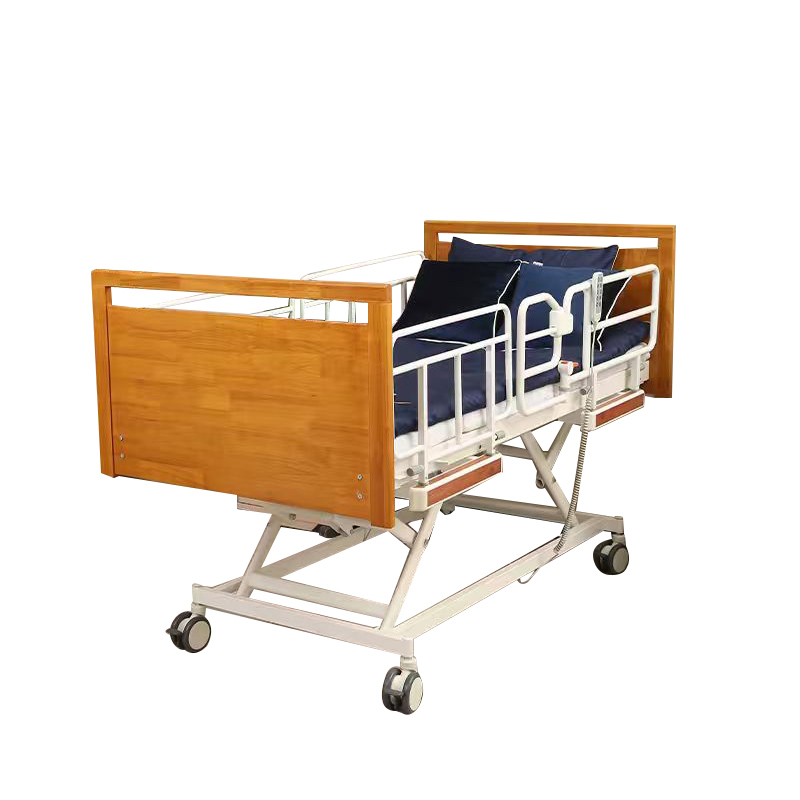
What Basic Information Should a Hospital Bed Purchase Order Include?
Every PO should clearly identify the product and commercial requirement.
Include the product name, model number, buyer reference number, quantity, destination market, delivery schedule, configuration, packaging requirement, and customization instructions.
For example, “Manual hospital bed, 500 units” is too broad. A clearer description is:
“Two-function manual hospital bed, model HB-02, 500 units, including mattress, IV pole, urine bag hooks, specified side rails, export packaging, and approved labeling.”
For complex orders, attach a technical specification sheet and reference its revision number in the PO. This prevents confusion if a caster, mattress, rail, color, or accessory changes during sample approval.
How Should Hospital Bed Dimensions and Functions Be Written?
Dimensions should be numerical and clearly identify what is being measured.
Typical items include overall length and width, bed-platform length and width, bed height, adjustable height range, mattress size, and caster diameter.
Avoid “standard hospital bed size,” because requirements vary by market and project. The figures should match the approved model and drawing.
Functions should be listed separately rather than described only by number. A “three-function bed” may not mean the same thing to every supplier.
Specify the required functions, such as backrest adjustment, leg adjustment, height adjustment, Trendelenburg, reverse Trendelenburg, lateral turning, or bed-chair operation.
The PO should also state whether operation is manual or electric. When a tender requires specific performance, include approved adjustment ranges.
What Materials and Components Should Be Specified?
Key materials influence durability, appearance, maintenance, cleaning, and cost.
Depending on the model, buyers may need to define the main frame, bed platform, headboard and footboard, side rails, caster components, surface treatment, accessories, and mattress cover.
A hospital bed may combine a steel frame, detachable molded head and foot boards, and aluminum alloy side rails. Another model may use a different configuration. The PO should reflect the exact approved product.
Side rails should include type, material, quantity, folding or lowering method, and locking method. Headboards and footboards should state whether they are detachable and what material is required.
For casters, define diameter, quantity, brake arrangement, and whether central or directional locking is required. “Hospital casters” is too broad for a detailed order.
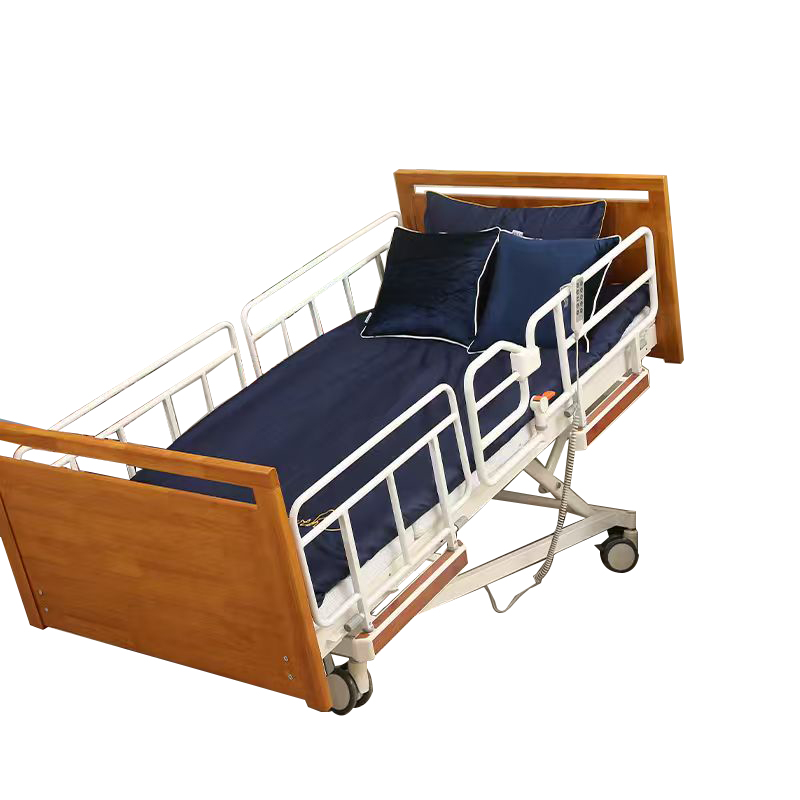
How Should the Mattress and Accessories Be Specified?
The PO should clearly state whether a mattress is included, excluded, or optional.
If included, define its length, width, thickness, internal structure, cover material, and quantity.
For example, one Jcare manual hospital bed configuration may use a PU-cover mattress with brown fiber pad and high-density sponge. However, buyers should always use the mattress specification confirmed for the actual order.
Accessories should also be listed separately because they can change both cost and delivered configuration.
Common items include IV poles, IV pole sockets, urine bag hooks, fender wheels, dining tables, controllers, backup batteries, and other medical bed accessories.
A clear list may state:
IV pole: 1 piece per bed
IV pole hooks: 4 hooks
Urine bag hooks: both sides
Mattress: 1 piece per bed
Where installation position matters, it should also be shown in the specification or approved drawing.
What Extra Details Are Needed for Electric Hospital Beds?
Electric beds require technical information that does not apply to manual models.
Important items may include the number of motors, motor functions, hand controller, control panel, input voltage, frequency, plug type, power cable, and backup battery requirement.
Electrical specifications should match the destination market. Writing only “electric hospital bed for export” is not specific enough.
If several electrical versions are needed for different countries, separate each version by item code or quantity. Buyers should also confirm which movements are motorized and whether any functions remain manual.
How Should Load Capacity Be Written?
Load capacity should always be expressed numerically rather than with terms such as “heavy duty.”
For example, some Jcare manual hospital bed configurations can be specified with a maximum load of up to 250 kg, depending on the confirmed model. However, this value should not be applied automatically to every hospital bed.
Each model should have its own confirmed requirement. Beds intended for heavier patients may require a different frame, platform, caster, actuator, or mattress configuration.
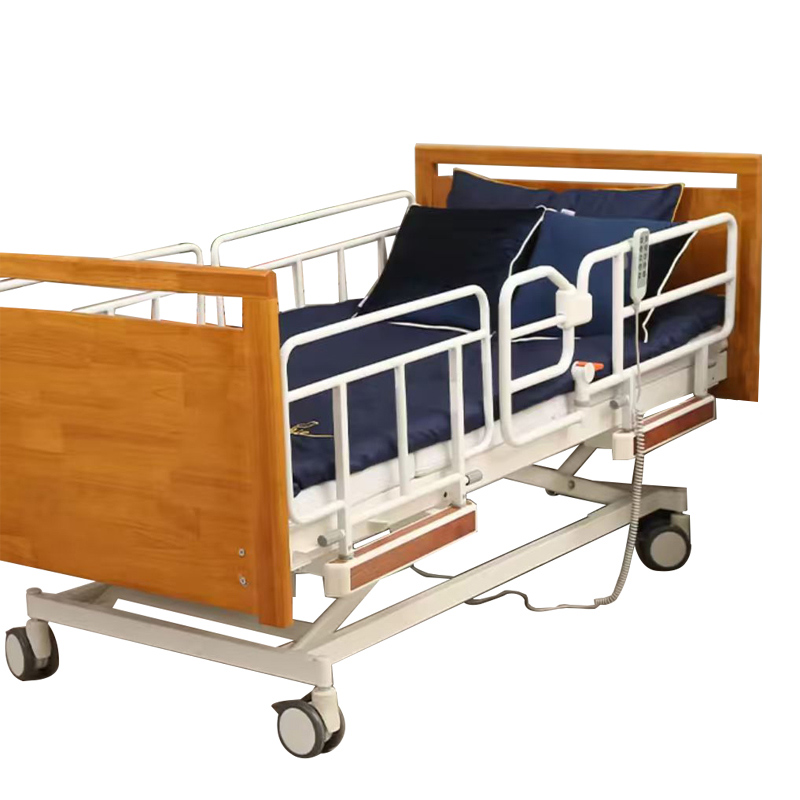
How Should Packaging and Labeling Be Specified?
Packaging affects product protection, container loading, transportation cost, and warehouse handling.
The PO may need to define whether beds are shipped assembled or disassembled, units per carton, protective materials, accessory packing method, outer-carton requirements, shipping marks, barcodes, manuals, logos, and private-label packaging.
For export orders, required languages for labels and manuals should also be confirmed.
Product labels identify the bed or model, while shipping marks help logistics teams identify cartons.
If custom logos, labels, or printed cartons are required, artwork should be confirmed early enough to avoid shipment delays.
Should Inspection Requirements Be Included in the PO?
Yes. Inspection requirements should be connected directly to the written specification.
Typical checks may include quantity, dimensions, frame appearance, surface coating, adjustment functions, side-rail operation, caster movement and braking, headboard and footboard installation, mattress configuration, accessories, electrical operation, labels, and packaging.
For large orders, buyers may also define sampling procedures or third-party inspection requirements.
An inspector cannot objectively verify a phrase such as “good quality,” but can confirm whether measurable details match the approved specification. This is why PO language should use numbers, materials, quantities, and approved references whenever possible.
How Can Buyers Prevent Specification Changes During Production?
Changes after production begins can increase cost and delay shipment.
Before mass production, the buyer and supplier should confirm the final technical specification, drawing, sample photos, color reference, logo artwork, packaging artwork, accessory list, and inspection requirements.
Each file should have a clear revision number or approval date.
Multiple versions sent through email or messaging apps can create confusion. One file may show one caster size while another shows a different size. One quotation may include a mattress while another excludes it.
The safest method is to keep one final approved specification and reference it directly in the PO. Repeat orders can then use the previous version as a baseline and clearly record any changes.
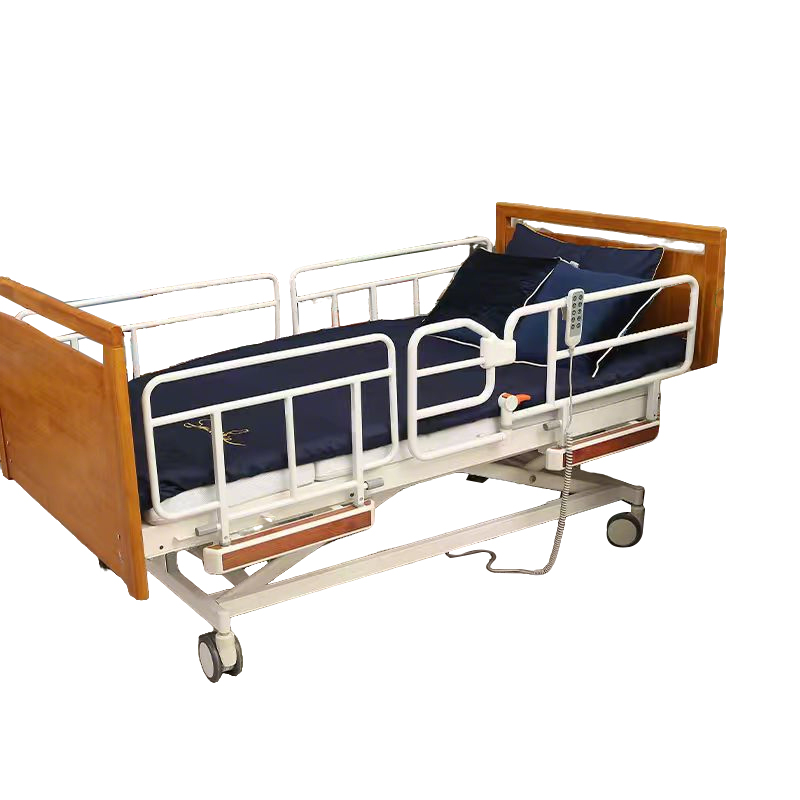
What Does a Clear Hospital Bed PO Specification Look Like?
A simplified specification can include:
Product: Manual Hospital Bed
Model: Confirmed model
Quantity: 500 units
Overall size: According to approved drawing
Functions: Backrest and leg adjustment
Operation: Manual crank
Frame: Confirmed steel construction
Head/foot boards: Detachable, confirmed material
Side rails: Confirmed material and folding design
Casters: Confirmed diameter and brake type
Load capacity: Confirmed numerical requirement
Mattress: Confirmed size, structure, thickness, and cover
Accessories: Approved accessory list
Color and logo: Approved references
Packaging: Approved export packaging
Labeling: Approved labels and shipping marks
Inspection: According to approved specification
Delivery: According to PO schedule
More complex beds may need additional rows, but every important requirement should be clear enough to manufacture and inspect.
Common PO mistakes include relying on product photos, using vague terms such as “standard” or “luxury,” failing to confirm included accessories, and comparing supplier prices before aligning specifications.
The best comparison is based on one specification sheet sent to every shortlisted supplier so each manufacturer can confirm compliance line by line.
How Does Jcare Support Hospital Bed Purchase Orders?
Jcare supplies hospital beds, home care beds, rehabilitation products, other medical furniture, and medical bed accessories for international wholesale buyers.
Our customers include hospitals, private clinics, medical bed purchasers, distributors, and home care bed buyers in markets such as India, the Middle East, Southeast Asia, Europe, the United States, Japan, and South Korea.
For wholesale projects, Jcare can communicate with buyers about dimensions, functions, materials, side rails, casters, mattresses, accessories, customization, packaging, quantities, and delivery requirements before production.
As a factory-direct supplier, Jcare focuses on competitive factory pricing, ample stock, short delivery times, and practical order support for international B2B purchasing projects.
結論
A clear hospital bed purchase order should define far more than product name and quantity. Buyers should confirm dimensions, functions, materials, load capacity, side rails, casters, mattresses, accessories, electrical requirements, packaging, labeling, inspection criteria, and delivery terms before mass production.
Using measurable requirements and one final approved specification helps buyers compare quotations accurately, reduce production misunderstandings, and inspect finished beds against a clear standard.
For hospitals, clinics, distributors, and medical equipment buyers, a detailed PO is an important purchasing-control document rather than unnecessary paperwork.
What information does your purchasing team consider essential in a hospital bed PO? Share your experience in the comments, or send this guide to colleagues involved in medical equipment sourcing.