
Wholesale buyers often ask what can be customized, how long the process takes, and whether custom orders raise costs. Poorly planned changes can delay production, create compatibility issues, and reduce profit margins. A structured process helps buyers control specifications, quality, packaging, and delivery.
Hospital bed customization usually starts with a requirement list covering functions, dimensions, load capacity, side rails, casters, motors, accessories, branding, packaging, and destination requirements. The manufacturer reviews feasibility, provides a quotation and technical drawing, prepares a sample when necessary, and produces the bulk order according to approved standards. Clear written confirmation at every stage reduces delays, unexpected costs, and differences between samples and finished products.
This guide explains customization from inquiry to shipment.
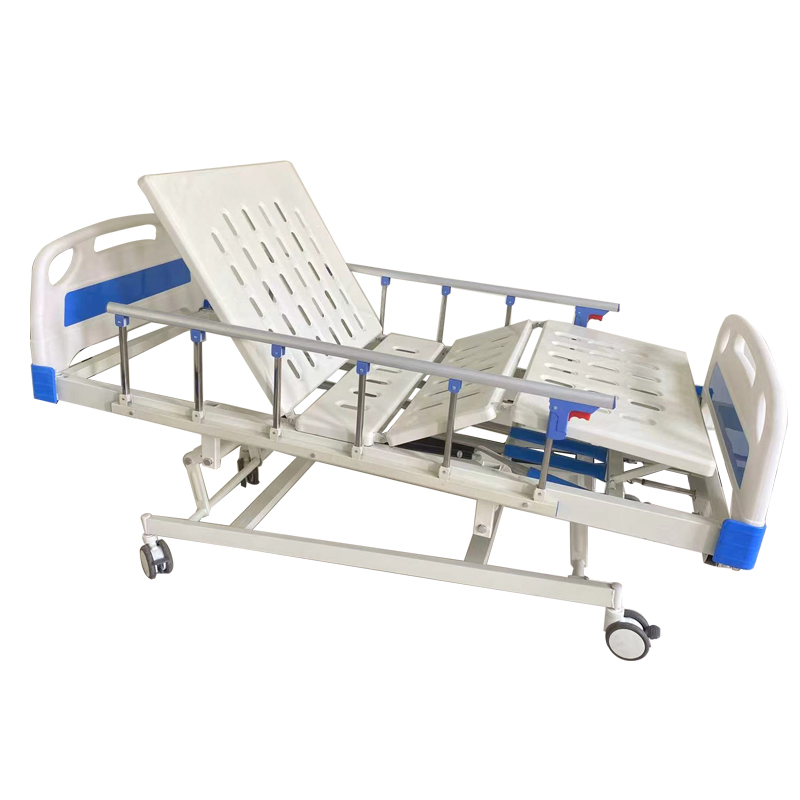
Why Wholesale Buyers Customize Hospital Beds
Hospital beds serve different environments. A model for a small clinic may not suit an ICU, rehabilitation center, nursing home, or home-care distributor. Markets may also require different heights, plugs, mattress sizes, rails, labels, and packaging.
Customization lets wholesalers adapt a proven platform to a target market. Often, changes such as stronger casters, another rail style, an extra function, or private-label packaging are enough.
Define the Intended Care Environment
The care environment should guide the specification. Hospitals may prioritize durability, easy cleaning, central braking, and efficient positioning. Home-care buyers may prefer wooden panels, quiet motors, and lower heights. Rehabilitation facilities may need transfer support or matching mobility products.
Buyers should describe the patient group, user weight, room size, flooring, movement frequency, and daily nursing tasks. This helps the supplier recommend useful features.
Main Hospital Bed Features That Can Be Customized
Most projects start with an existing manual, electric, or home-care bed frame. Buyers then select compatible functions and components, reducing cost and development time.
Typical options include functions, dimensions, load capacity, rails, headboards, casters, motors, controls, accessories, labels, manuals, and packaging.
Select Functions, Dimensions, and Load Capacity
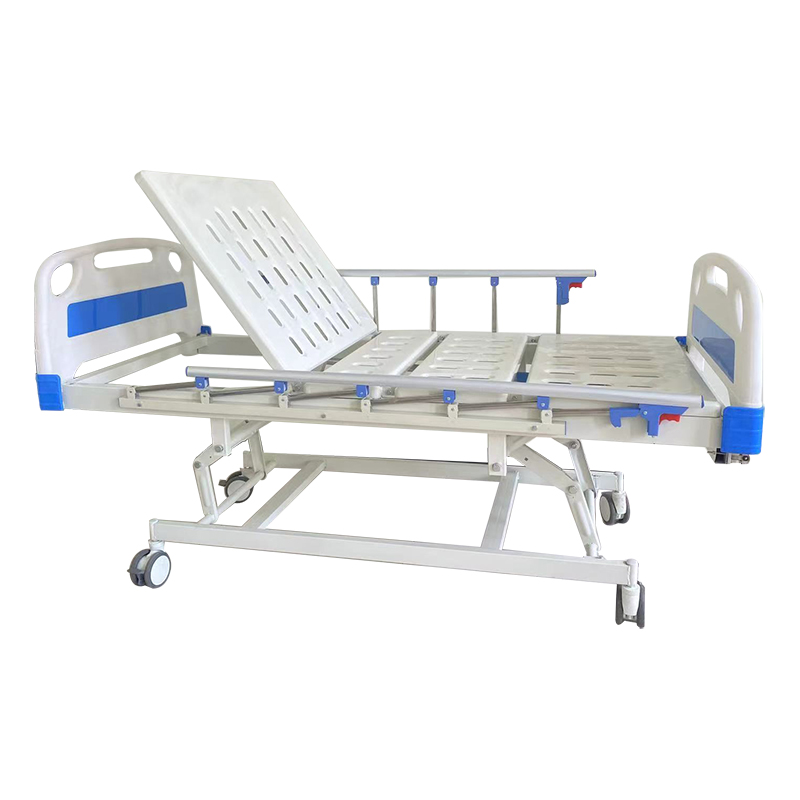
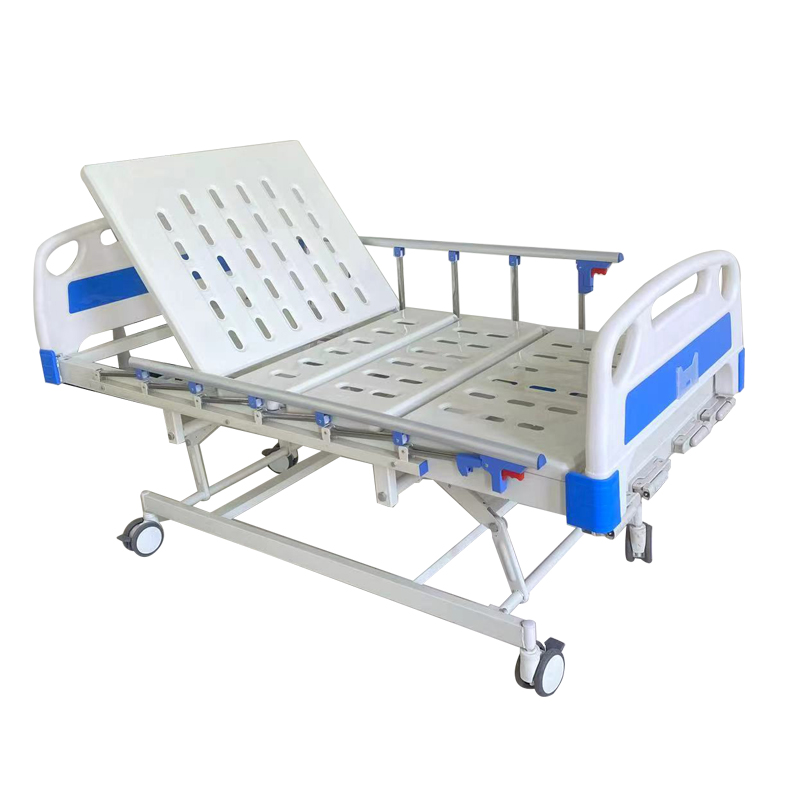
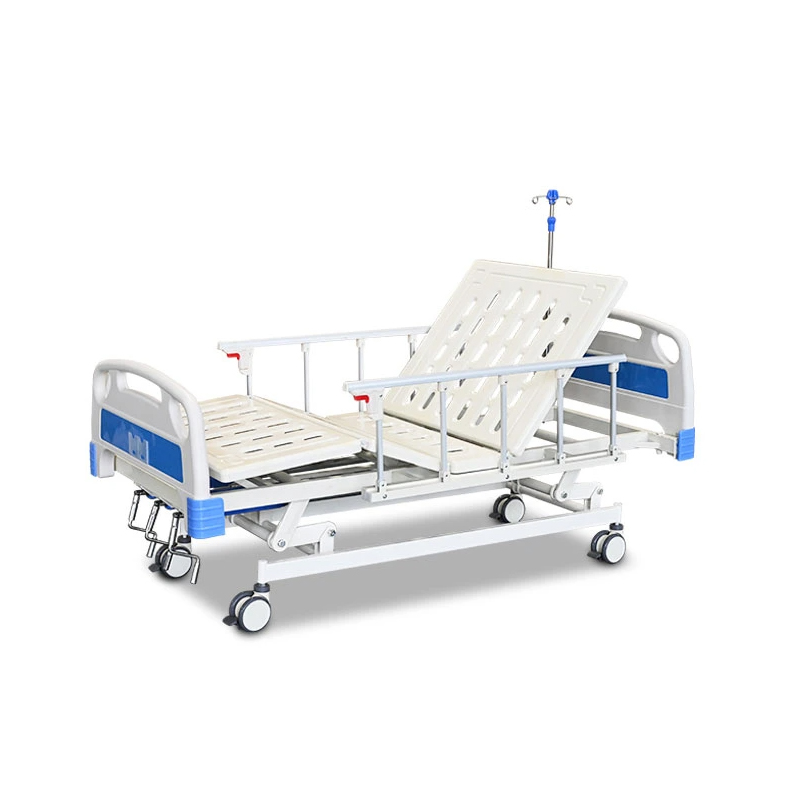
Hospital beds may be flat, one-function, two-function, three-function, five-function, or designed for specialized care. Common adjustments include the backrest, leg section, overall height, Trendelenburg, and reverse Trendelenburg.
Manual beds suit price-sensitive markets and simple maintenance systems. Electric beds make positioning easier, but each function affects the frame, actuators, controls, wiring, packaging, and price.
Buyers should also confirm the sleeping-platform size, overall dimensions, minimum and maximum height, under-bed clearance, and mattress size. A higher load capacity may require reinforced steel, stronger welding, larger actuators, and upgraded casters. It should never be treated as a label-only change.
Choose Rails, Panels, Casters, and Motors
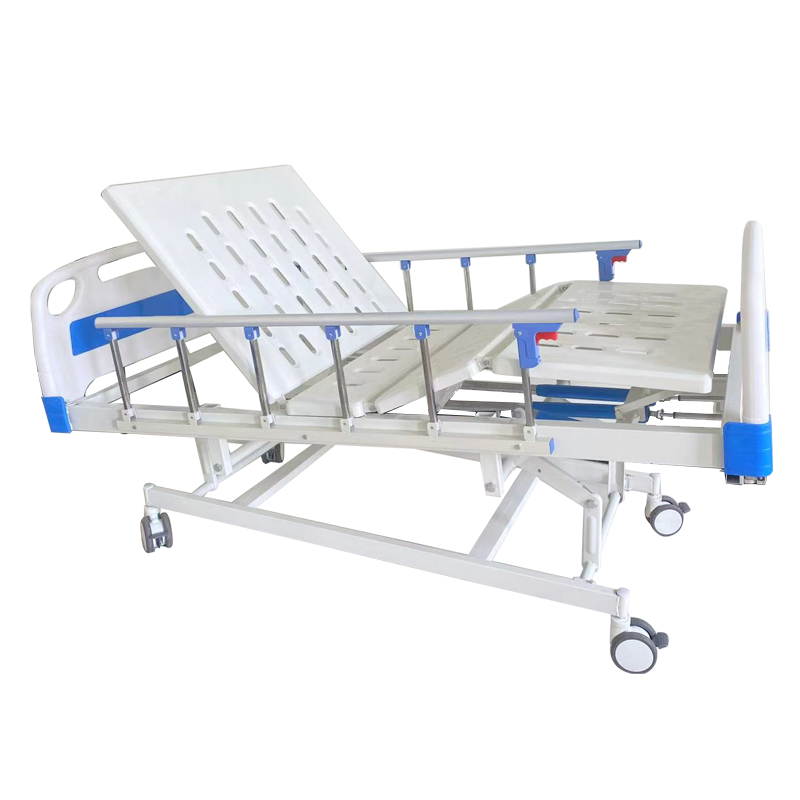
Side-rail options may include ABS split rails, foldable aluminum-alloy rails, full-length rails, or steel guardrails. The correct choice depends on the care setting, target price, fall-prevention needs, and cleaning procedures.
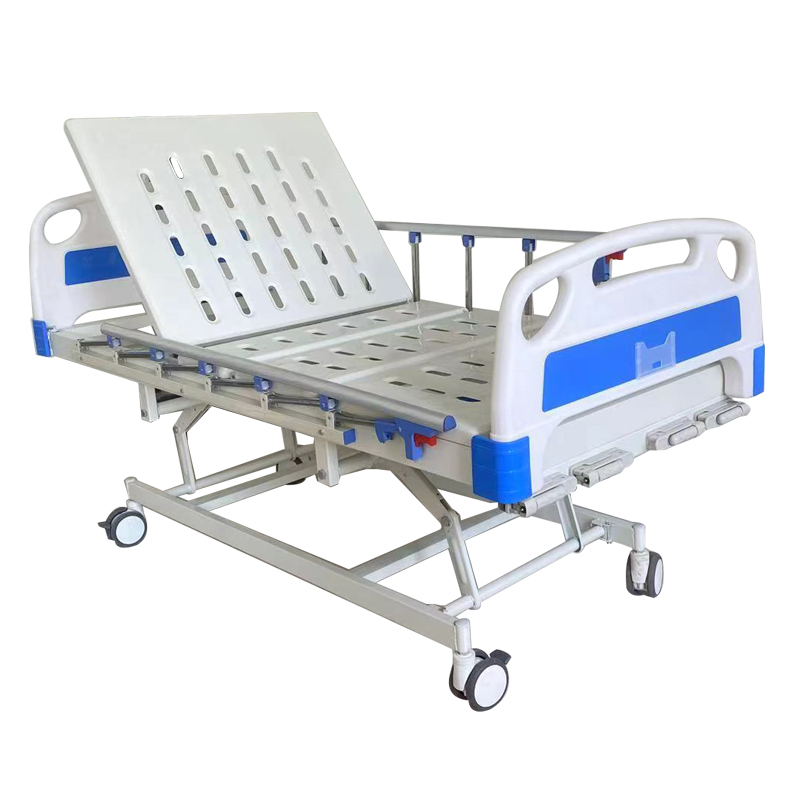
Headboards and footboards may use ABS, steel-plastic combinations, or wood-look materials. ABS is common in hospitals, while wooden styles suit home care.
Caster choices may include individual brakes, central locking, directional control, different diameters, and quieter tread materials. For electric beds, buyers should confirm motor type, handset, control box, emergency battery option, voltage, frequency, plug type, and cable length.
Accessories, Branding, and Private Labels
Customization can also cover mattresses, IV poles, overbed tables, bedside cabinets, lifting equipment, transfer products, and spare parts. Complete packages simplify hospital purchasing.
Accessory compatibility must be checked in advance. A mattress should fit the deck and must not reduce the effective side-rail height. An IV pole must match the socket diameter, while spare motors, handsets, casters, and rails should correspond to the exact bed model.
Match Accessories and Build a Branded Product
Mattress specifications may cover thickness, foam density, cover material, waterproof performance, and cleaning method. Buyers should confirm whether mattresses and accessories are included in the unit price or listed separately.
Private labeling may cover headboards, product labels, cartons, manuals, control panels, and accessory packaging. Buyers should provide clear artwork, model names, carton marks, and required languages.
Technical labels must match the actual product. Voltage, frequency, load capacity, warnings, and production information should be accurate. Unsupported certification or performance claims should not be printed. Custom colors may also be possible, although special molded or coated colors can require a higher minimum order quantity.
The Hospital Bed Customization Process
A successful project follows a clear sequence: requirements, feasibility review, quotation, technical confirmation, sample approval, production, inspection, and shipment. Skipping a stage often creates problems later.
Jcare works with B2B buyers purchasing hospital beds, home-care beds, rehabilitation products, other medical furniture, and bed accessories. For export projects, every custom detail should be recorded in a final specification.
Submit a Detailed Requirement Sheet
The inquiry should include the bed type, required functions, dimensions, load capacity, rail style, headboard material, caster system, motor requirements, accessories, quantity, destination, target price, and requested delivery time.
Reference photos and tenders are useful, but a photo is not a specification. Similar-looking beds may use different steel, motors, brakes, welding, or deck designs.
Buyers should also explain their sales channel and expected annual volume, since a trial order and a tender project may require different solutions.
Review the Quotation and Technical Drawing
The quotation should describe the exact configuration, separate standard and optional items, and state packaging, quantity, lead time, payment terms, and development costs.
A technical drawing or specification sheet is equally important. Buyers should review dimensions, functions, materials, rails, panels, casters, motors, accessories, colors, logos, voltage, and plug type. Any change should appear in a revised document.
Price comparisons must use matching specifications. A lower price may exclude the mattress, use smaller casters, provide fewer accessories, or use a different motor system. Comparing each component is more reliable than comparing only the total unit price.
Approve a Sample or Pre-Production Unit
A sample is useful for new distributors, private labels, tenders, and complex configurations. Buyers can inspect stability, movement, controls, welding, coating, rail locks, caster brakes, mattress fit, labels, and packaging.
When a full sample is impractical, approval may use photos, videos, component samples, drawings, or a pre-production unit. The method should match project risk.
Approval should be written and specific. Any remaining changes must be listed before bulk production. The approved sample and final specification then become the reference standards for the order.
Production and Quality Control
After approval, the manufacturer purchases materials and schedules production. Custom parts may require longer preparation than standard components. Late changes can delay delivery, create unused materials, and increase costs.
Jcare serves wholesale buyers in India, the Middle East, Southeast Asia, Europe, the United States, Japan, and South Korea. Because destination needs differ, electrical details, labels, documentation, and packaging should be confirmed before production.
Control Bulk Production Consistency
Quality control should compare bulk units with the approved sample and specification. Common checks include dimensions, adjustment range, actuator movement, control response, welding, coating, rail locking, caster braking, wiring, accessory quantities, labels, and carton contents.
Depending on risk, buyers may request photos, video tests, inspection reports, third-party inspection, or a pre-shipment check. Mixed orders require clear model codes and packing lists.
Spare parts should also be considered. Including frequently replaced components can reduce future service delays, especially where international express delivery is costly.
Packaging and International Delivery
Hospital bed packaging must protect steel frames, plastic panels, electrical parts, and accessories throughout loading, transport, unloading, and local delivery.
Buyers should decide whether beds will be shipped assembled, semi-knocked-down, or fully knocked-down. Compact packaging can improve container utilization, but it may increase assembly work at the destination.
Confirm Packaging and Container Loading
Typical protection may include cartons, foam, plastic wrapping, corner guards, straps, and wooden reinforcement where necessary. Motors, handsets, rails, and accessories should be secured so they cannot move inside the package.
Package size, gross weight, stacking limits, container quantity, and unloading sequence should be confirmed. For mixed orders, every carton should show the model number, quantity, and package number. Installation instructions and packing lists should help buyers identify parts quickly.
The goal is not simply heavier packaging. Effective packaging protects vulnerable points while controlling transport volume and cost.
Cost, MOQ, and Lead-Time Factors
Customization does not always make a bed expensive. Minor changes to logos, manuals, accessory combinations, plugs, or carton marks may have limited cost impact. Structural changes, special colors, higher load capacities, new molds, custom controls, or unusual motors usually require more time and investment.
Buyers should separate essential requirements from optional preferences. The supplier can then offer a basic configuration and several upgrades, allowing wholesalers to build entry-level, mid-range, and premium product lines.
Understand MOQ and Development Costs
Minimum order quantity depends on the requested change. Logo stickers and printed cartons may be possible for smaller orders. Custom molded colors, exclusive panels, new tooling, or structural changes normally require higher quantities.
Development costs may include drawings, prototypes, molds, testing, special materials, and sample freight. Buyers should ask whether these are one-time charges.
For a first purchase, adapting an existing platform is usually safer. Buyers can test demand before investing in deeper customization.
人々はこうも尋ねる
Can wholesale buyers customize a small hospital bed order?
Small orders can often include logos, carton marks, manuals, plug types, or accessory combinations. Complex structural changes may require a higher quantity because special materials, tooling, or production adjustments are needed.
How long does hospital bed customization take?
Lead time depends on complexity, material availability, sample approval, quantity, and packaging. Buyers should allow time for confirmation, quotation, drawings, sampling, production, inspection, and export preparation.
What information should buyers send to a manufacturer?
Buyers should provide the application, functions, dimensions, load capacity, rails, panels, casters, motors, voltage, plug type, mattress, accessories, branding, quantity, destination, target delivery date, and any tender requirements.
結論
Hospital bed customization works best when wholesale buyers translate market needs into a precise specification. The main decisions include functions, dimensions, load capacity, rails, panels, casters, motors, accessories, branding, packaging, and destination requirements.
A reliable process includes feasibility review, an itemized quotation, technical drawings, sample approval, bulk quality control, and packaging confirmation. Using an existing platform with selected upgrades can control costs while helping distributors build a differentiated product line.
Which customization options matter most in your market? Share your experience in the comments or send this guide to colleagues planning a wholesale hospital bed purchase.