
Hospital buyers often focus on bed frames, side rails, casters, and adjustment functions, yet the IV pole can be overlooked. A poorly designed pole may disrupt infusion management, caregiver movement, or bed transport. Understanding IV pole design helps buyers choose hospital beds that better support daily nursing work, safety, and equipment organization.
IV pole design matters on hospital beds because it affects infusion stability, caregiver access, bed mobility, equipment organization, and daily workflow. A good IV pole should be securely mounted, height-adjustable, easy to clean, corrosion-resistant, and equipped with suitable hooks. Buyers should compare mounting strength, pole position, hook design, adjustment range, and compatibility with other bed functions before purchasing.
The IV pole is a small component with a practical impact. The following sections explain what hospital buyers should evaluate before selecting a bed.
Why Is IV Pole Design Important on a Hospital Bed?
An IV pole supports infusion bags and other hanging items used during treatment. Because nurses may adjust, remove, reposition, or load the pole many times each day, its design should be considered part of the bed’s overall usability rather than a minor accessory.
A hospital bed can have reliable motors, strong side rails, and smooth casters, but an inconvenient IV pole may still create problems. If it shakes, sits in the wrong position, or is difficult to adjust, staff may spend extra time organizing equipment.
For procurement teams, the key question is not simply whether an IV pole is included. It is whether the pole’s structure, location, and adjustment method suit the intended ward.
IV Poles Support Routine Nursing Work
Nurses need to hang and replace infusion bags quickly while keeping tubing organized around the patient. A practical pole places hanging points close to the bed without blocking normal access.
Room layout also matters. Beds may sit beside walls, cabinets, monitors, or overbed tables. A pole that works well only in one position can reduce flexibility, so buyers should examine the mounting location and number of available sockets.
How Does IV Pole Position Affect Caregiver Workflow?
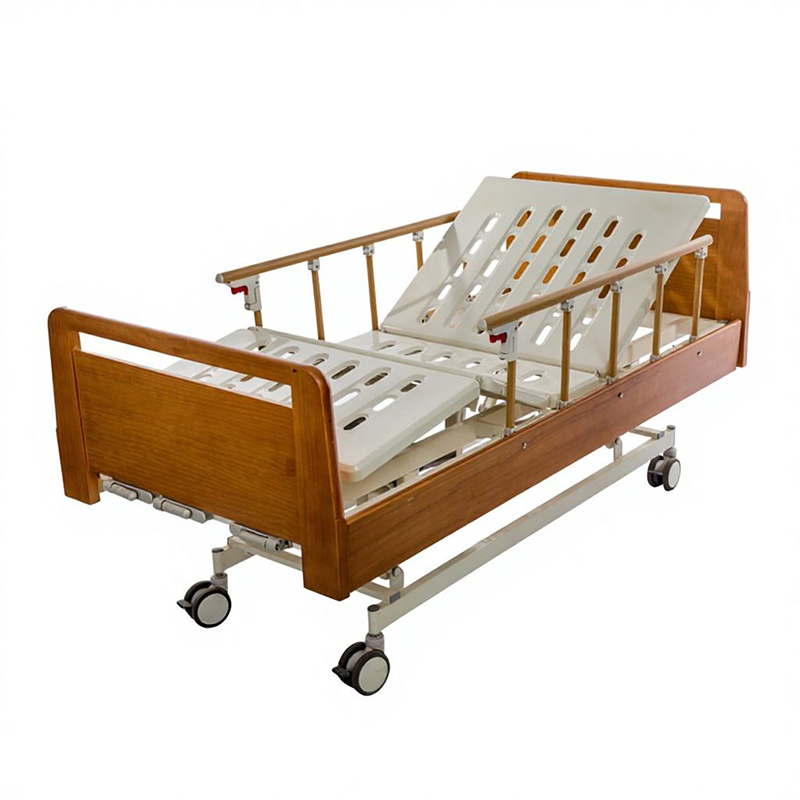
Pole position influences how easily staff can approach the patient and use nearby equipment. An IV pole mounted too close to a side rail, control panel, or moving backrest may interfere with normal bed functions. One that extends too far outward can occupy valuable bedside space.
A good location should balance access and clearance. Caregivers should be able to reach the pole while still having room for patient transfer, bedside care, and bed adjustment.
Multiple Mounting Positions Improve Flexibility
Many hospital beds use IV pole sockets near the bed corners. Some designs provide sockets on more than one corner, allowing staff to move the pole from one side to another.
This is useful when the bed is positioned against a wall or when other equipment occupies one side. For buyers, the number and position of sockets should therefore be included in the technical comparison.
Why Do Stability and Mounting Strength Matter?
The IV pole must remain stable while supporting infusion bags and while the hospital bed is moved. If it wobbles excessively, rotates unintentionally, or feels loose inside the socket, equipment can become harder to manage.
Stability depends on more than the visible tube. The socket, locking method, pole diameter, frame connection, and manufacturing quality all influence performance. A strong stainless steel pole can still perform poorly if its mounting point is weak.
Check the Socket as Carefully as the Pole
During supplier evaluation, ask how the IV pole socket is fixed to the frame and whether repeated removal affects the fit. Buyers should also inspect whether the socket allows unnecessary movement.
For larger orders, sample testing is useful. Load the pole, adjust its height, move the bed, and check whether the connection remains firm. The mounting area should also be examined for weld quality and reinforcement.
Why Is Height Adjustment Important for IV Poles?
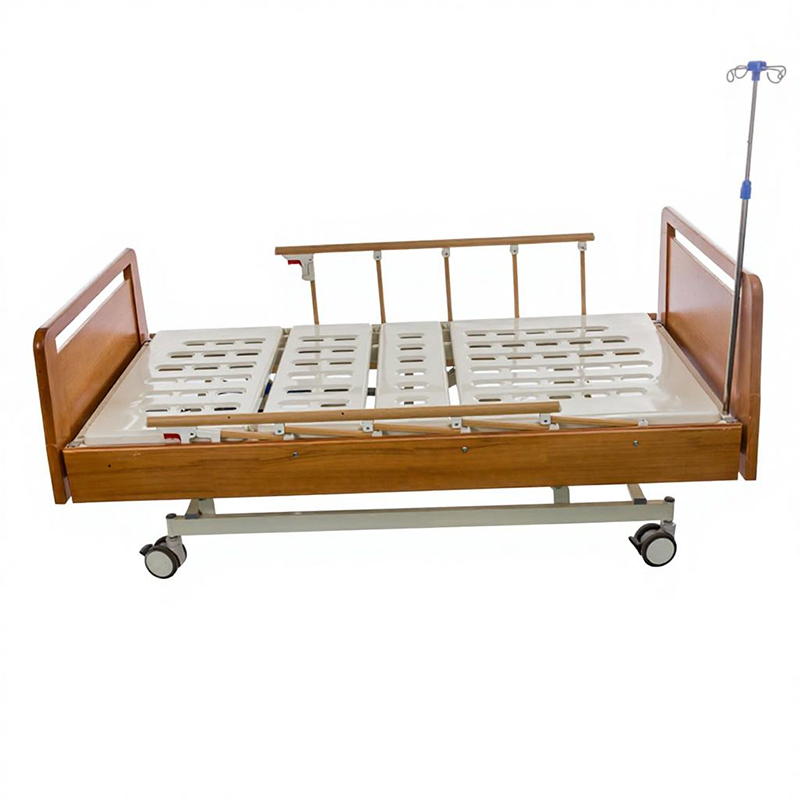
Different treatment situations may require different hanging heights. Patient position, bed height, bag size, and room layout can all influence the most practical setting. A height-adjustable IV pole therefore gives caregivers more flexibility than a fixed-height design.
The adjustment mechanism should be simple to operate but secure after locking. If it is difficult to tighten, staff may lose time. If it loosens too easily, the pole may slide down during use.
Smooth Adjustment Improves Daily Usability
A telescopic pole should extend and retract without excessive force. Caregivers should be able to change the height quickly without tools.
During sample inspection, buyers should test the pole at several heights rather than checking only the fully extended position. They should also confirm that adjustment remains easy while side rails or other accessories are in place.
How Many Hooks Should a Hospital Bed IV Pole Have?
Hook quantity affects how many infusion bags or related items can be organized on one pole. Two-hook and four-hook designs are common, and the right choice depends on the intended application.
A four-hook configuration can offer more flexibility, but more hooks do not automatically mean better performance. Stability, load distribution, hook shape, and spacing also matter.
Hook Shape and Spacing Affect Organization
Hooks should allow staff to hang and remove bags easily while keeping them secure during normal movement. If hooks are too close together, several bags may become crowded. If they are too shallow, hanging items may be easier to dislodge.
Good spacing can make the infusion setup easier to view. Buyers should request close-up photos or inspect a sample because full-bed images often do not show hook thickness, weld quality, curvature, or spacing clearly.
What Materials Are Suitable for Hospital Bed IV Pololes?
Stainless steel is commonly used for IV poles because it provides strength, corrosion resistance, and a clean appearance. It is also suitable for hospital environments where equipment requires repeated wiping and cleaning.
However, not all stainless steel poles have the same durability. Tube thickness, material grade, weld quality, polishing, and manufacturing consistency all affect long-term performance.
Surface Quality Also Matters
A smooth surface is easier to clean and generally more suitable for clinical environments. Rough welds, sharp edges, or poorly finished joints may collect dirt or make routine cleaning more difficult.
Buyers should pay attention to hook joints, telescopic sections, locking collars, and the lower mounting area. These are high-contact points and may show wear earlier than the rest of the pole.
How Can IV Pole Design Affect Hospital Bed Mobility?
Hospital beds are often moved for cleaning, room changes, examinations, and patient transfers. A pole that extends too far beyond the bed or moves loosely during transport can make maneuvering more difficult.
A well-integrated pole should stay within a practical footprint and avoid unnecessary interference with doors, curtains, walls, and nearby equipment. Staff pushing the bed should also be able to see and control its position.
Bed-Mounted Poles Can Simplify Transfers
A securely mounted IV pole can reduce the need to move a separate mobile stand beside the bed. This may simplify internal transfers because staff can manage the patient and infusion setup as one coordinated system.
Buyers should still check whether the pole position works with doorways, elevators, narrow corridors, and turning spaces. During sample testing, move the bed through a typical route and observe whether the pole remains stable.
What Safety and Maintenance Details Should Buyers Check?
Hospital bed accessories should be assessed as part of the complete safety system. For the IV pole, buyers should inspect sharp edges, loose fittings, weak hooks, unstable locking points, and possible interference with moving parts.
The pole should not block side rails, patient controls, caregiver controls, or adjustment functions. It should also remain easy to remove, clean, inspect, and replace.
Test the Pole During Full Bed Operation
Do not evaluate the IV pole separately from the rest of the bed. Raise and lower the backrest, operate the side rails, move the bed, and check whether the pole conflicts with tables, drainage bags, monitors, cables, or caregiver movement.
This practical test can reveal problems that are not obvious in a catalog. Buyers should also confirm whether replacement poles and related accessories can be supplied later.
What Should Hospital Buyers Compare Before Ordering?
Before placing an order, buyers should compare IV pole specifications across suppliers rather than assuming all designs are equivalent.
Important points include material, hook quantity, adjustment range, mounting location, number of sockets, locking method, surface finish, removability, load requirements, and compatibility with other bed accessories.
Buyers should also confirm whether the IV pole is included as standard or offered as an option, because this affects total price, packing lists, and project budgeting.
Add IV Pole Requirements to the Purchase Specification
Technical requirements should be written clearly into the quotation, purchase order, or tender document. For example, buyers may specify stainless steel construction, four hooks, adjustable height, and defined mounting positions.
Clear specifications reduce misunderstandings and make supplier comparisons more accurate. For larger projects, requesting photos, videos, technical drawings, or samples can also help verify the final configuration before production.
How Does Jcare Configure IV Poles for Hospital Beds?
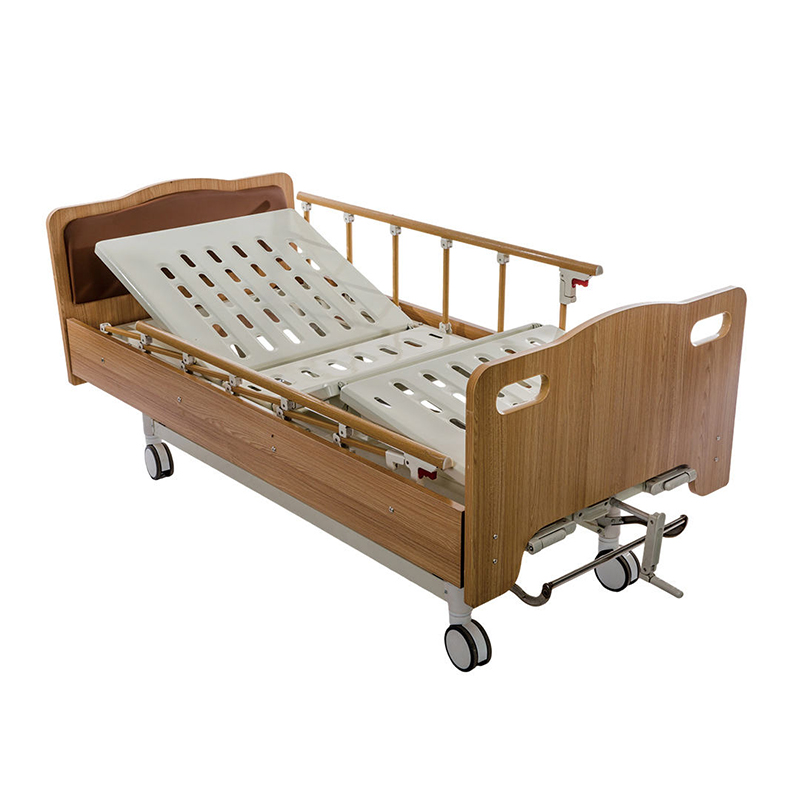
Jcare supplies hospital beds, home care beds, rehabilitation products, medical furniture, and related medical bed accessories for wholesale buyers. IV pole configurations can be matched to different bed models and project requirements.
Some Jcare manual hospital bed configurations use a stainless steel IV pole with four hooks. This provides multiple hanging positions and a durable structure suitable for routine ward use.
For project orders, buyers can confirm pole material, hook quantity, mounting position, and accessory package together with other bed specifications such as side rails, casters, mattresses, and adjustment functions.
Jcare works with hospitals, private clinics, medical bed purchasers, and home care bed purchasers in international markets. For wholesale and OEM projects, accessory requirements can be discussed as part of the complete bed configuration.
Questions fréquentes
Is a Four-Hook IV Pole Better Than a Two-Hook Pole?
A four-hook pole provides more hanging positions and may be useful when several infusion bags need to be organized. However, the best choice depends on the ward application, pole stability, hook spacing, and load requirements.
Should a Hospital Bed IV Pole Be Removable?
A removable pole can make replacement, shipping, storage, and maintenance easier. The connection should still remain secure during normal use and bed movement.
Is Stainless Steel a Good Material for an IV Pole?
Yes. Stainless steel is widely used because it is strong, corrosion-resistant, and suitable for repeated cleaning. Buyers should still verify tube construction, surface quality, and manufacturing consistency.
Should IV Pole Design Be Included in a Hospital Bed Tender?
Yes. Including material, hook quantity, mounting position, adjustment range, and accessory status in the tender helps buyers compare suppliers more accurately and reduces configuration differences after ordering.
Conclusion
IV pole design may seem like a small detail, but it can influence infusion organization, caregiver access, bed mobility, cleaning, maintenance, and overall bedside efficiency. Buyers should evaluate mounting strength, pole position, height adjustment, hook design, material, and compatibility with the complete hospital bed.
For hospital, clinic, distributor, or medical project orders, the IV pole should be included in the technical specification rather than treated as an afterthought. Clear requirements make supplier comparisons easier and help reduce problems after delivery.
If you found this guide useful, share it with your procurement or clinical engineering team. You can also leave a comment with questions about hospital bed accessories, IV pole configurations, or purchasing specifications.