
Electric hospital beds improve positioning and nursing efficiency, but buyers often ask what happens when normal electricity fails. If a bed cannot be adjusted during an outage, patient care and emergency response may become more difficult. Understanding battery backup, emergency lowering, and facility power planning helps buyers choose a more practical configuration.
During a power outage, an electric hospital bed may continue selected functions through a built-in backup battery, while other functions may stop until mains power returns. Some models also include mechanical CPR or emergency-lowering systems that work without normal electric adjustment. Because capabilities vary by model, buyers should confirm which movements remain available, how the battery is charged, and what emergency functions are included.
A power outage does not affect every electric hospital bed in the same way. The following sections explain what hospitals, clinics, distributors, and medical bed buyers should check.
Do Electric Hospital Beds Stop Working During a Power Outage?
Not always. The result depends on the bed design and whether it includes a charged backup battery.
When an electric hospital bed is connected to an AC outlet, its motors, control box, handset, and other electronic functions normally receive power from the facility supply. If that supply is interrupted, a bed without backup power may lose powered positioning until electricity returns.
A battery-equipped bed, however, can often continue selected movements while unplugged or during a blackout. Current manufacturer instructions for electric hospital beds show that battery backup can be used during power failure or patient transport.
Battery Backup Does Not Always Mean Full Functionality
A buyer may see “backup battery” on a quotation and assume every function remains available. That is not always correct.
The battery may support essential actuator movements while other electronic features operate differently or become unavailable. Buyers should therefore confirm whether battery power supports backrest adjustment, leg positioning, bed height, tilt functions, powered transport, and other required features.
How Does a Hospital Bed Backup Battery Work?
A hospital bed backup battery is usually rechargeable. While the bed is connected to normal AC power, the system charges or maintains the battery according to the manufacturer’s design.
When mains electricity is removed, some beds automatically enter battery mode, while others require staff to activate battery operation with a control. The battery then supplies temporary power to specified functions. Manufacturer documentation confirms that this behavior varies between bed designs.

Which Functions May Still Work Without Mains Electricity?
Battery-supported functions often focus on essential positioning. Depending on the model, these may include backrest elevation, leg adjustment, bed height, or tilt.
However, an electric hospital bed can contain many other electronic features, such as displays, scales, bed-exit monitoring, powered drive systems, communication functions, or powered therapeutic surfaces.
Hospitals that depend on particular electronic functions should verify them individually rather than assuming the battery supports the complete system.
Can an Electric Hospital Bed Be Lowered Without Power?
Some hospital beds provide an emergency method for lowering part of the bed when normal electric adjustment is unavailable.
A common example is the CPR release. On beds with a mechanical CPR mechanism, staff may be able to lower the back section rapidly without relying on normal powered adjustment.
CPR Release Is Not Full Manual Operation
A CPR handle may lower the backrest, but it does not necessarily provide manual control of the entire bed.
Bed height, knee positioning, or tilt may still require battery or mains electricity. Buyers should therefore avoid assuming that “CPR function” means every movement remains manually adjustable.
During product evaluation, confirm whether the CPR release is mechanical or electric, whether it works when the battery is empty, which section it lowers, and how the mechanism is reset.
What Happens If the Backup Battery Is Empty?
If the backup battery has little or no usable charge, electric positioning may become unavailable during an outage. The bed may remain in its current position until power returns unless an independent emergency function is available.
That is why battery condition matters as much as battery presence.
Preventive Maintenance Reduces Power-Loss Problems
Hospitals should keep batteries charged according to the manufacturer’s instructions and include battery checks in regular maintenance.
Useful checks may include battery status indicators, charging performance, selected movements while the bed is unplugged, cables and connectors, and emergency lowering.
Stryker’s current SV2 instructions specifically recommend checking backup-battery function as part of preventive maintenance and replacing a battery that no longer performs as intended.
A bed may work normally while plugged into the wall even when its backup battery has weakened. Testing unplugged operation helps reveal the problem before a real outage occurs.
Does a Hospital Generator Keep Electric Beds Working?
It may, but this depends on the hospital’s electrical system.
Healthcare facilities often use emergency power to support selected circuits and critical equipment after utility power is interrupted. However, buyers should not assume every wall outlet in every patient room is supplied in the same way.
The bed must be connected to the appropriate circuit, and the facility’s emergency-power plan determines what receives backup electricity.
Facility Backup and Bed Batteries Have Different Roles
Facility emergency power can restore electricity to designated circuits. The bed’s own battery provides temporary local power when the bed is unplugged, in transit, or while normal supply is unavailable.
These systems can complement each other. For procurement teams, the key question is whether the bed’s intended location and the facility’s power plan provide the required continuity for patient positioning.
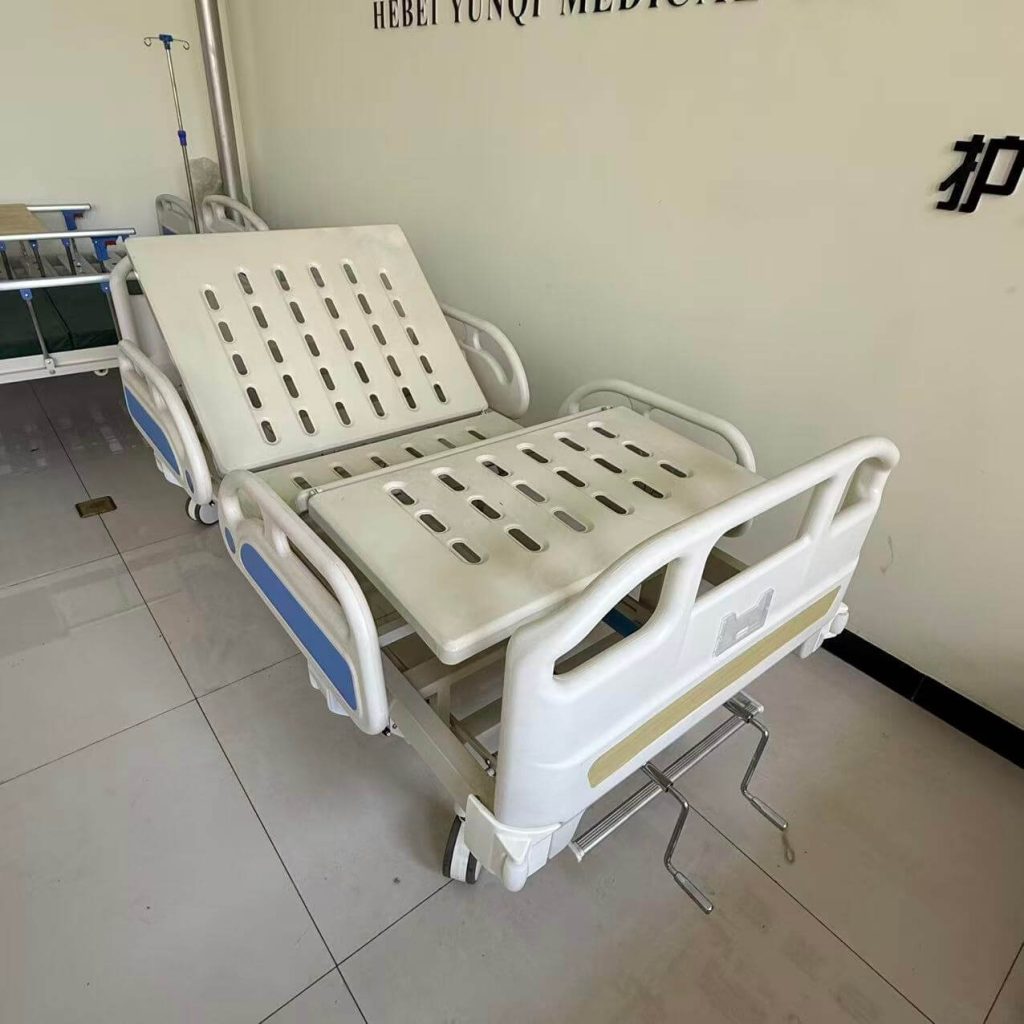
What Should Hospitals Do During a Power Outage?
The correct response depends on the facility’s emergency procedures, the patient’s needs, and the bed model.
Staff should follow the manufacturer’s instructions rather than forcing actuators, disassembling components, or improvising movements that the bed was not designed to perform.
Facilities should know which beds have battery backup, how battery mode is activated, what the charge indicator means, which functions remain available, where the CPR release is located, and who handles a failed bed or battery.
Training is particularly important when several bed models are used in the same facility because their controls and emergency behavior may differ.
Are Electric Home Care Beds Different During a Blackout?
The basic electrical issue is similar, but the environment is different.
Large hospitals may have generators or other emergency electrical infrastructure. A private home may not. Therefore, home care bed buyers should pay close attention to what happens during a prolonged residential outage.
Before purchase, confirm whether the bed includes a backup battery, which functions the battery operates, and whether an independent emergency-lowering method is provided.
Caregivers should also follow the product instructions and relevant healthcare guidance for patients who depend heavily on powered positioning.
Questions fréquentes
How Long Will an Electric Hospital Bed Run on Battery Backup?
There is no universal runtime.
Battery duration depends on capacity, condition, age, patient load, movement frequency, and the functions being used. Hospital bed batteries are generally used intermittently for positioning rather than continuous motor operation.
Buyers should ask how battery performance is measured instead of relying on a vague number of operating hours.
Do All Electric Hospital Beds Have Backup Batteries?
No. Battery availability depends on the model and configuration.
Some beds include a backup battery as standard equipment, while others may offer it as an option. For wholesale orders, the purchase order should clearly state whether the battery is included.
Can You Manually Adjust an Electric Hospital Bed?
Only when the bed has a manual or mechanical function designed for that purpose.
A mechanical CPR release may provide emergency backrest lowering, but it does not automatically provide full manual adjustment of bed height, legs, backrest, and tilt.
Should Hospital Beds Stay Plugged In?
When the bed is stationary and the manufacturer’s instructions call for AC connection, keeping it connected helps maintain normal operation and battery charge.
Charging, storage, transport, and maintenance should always follow the instructions for the specific bed model.
What Should Buyers Check Before Ordering Electric Hospital Beds?
For hospitals, distributors, private clinics, and medical equipment purchasers, power-outage performance should be checked before a bulk order is confirmed.
Confirm the Battery and Emergency Configuration
Ask whether the battery is standard or optional. Then confirm its charging method, replacement procedure, battery indicator, and which movements remain available when AC power is lost.
Buyers should also verify whether the bed has a mechanical CPR or emergency-lowering function and whether that function works when both mains power and battery power are unavailable.
Check Electrical Requirements for the Destination Market
International buyers should confirm voltage, frequency, plug type, grounding, power-cord configuration, and applicable destination requirements before shipment.
For medical bed projects, current safety standards should also be reviewed according to the target market. IEC lists IEC 80601-2-52:2026 as the current international particular standard for the basic safety and essential performance of medical beds for adults. National adoption and regulatory requirements can still differ by market.
Test Power-Loss Operation Before Shipment
For a large order, buyers can include a power-loss check in the pre-shipment inspection.
The inspection can verify that the battery charges, battery mode activates, selected movements work while unplugged, indicators function, and emergency lowering operates as specified.
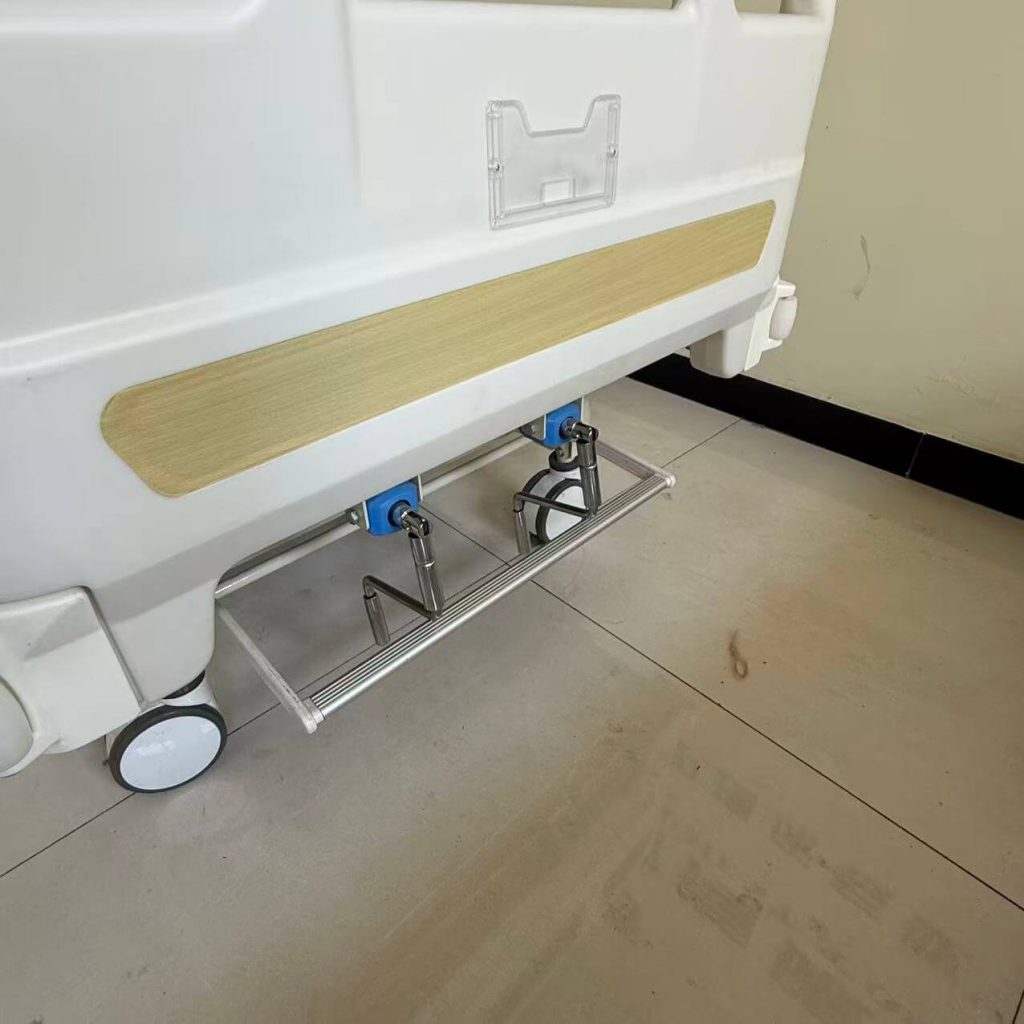
Why Does Power-Outage Performance Matter for B2B Buyers?
For one bed, a battery problem affects one unit. In a hospital project involving many beds, the same specification problem can affect an entire department.
That makes electrical configuration important for distributors and institutional buyers.
The correct configuration may also differ by market. A hospital with reliable emergency infrastructure may have different requirements from a rural clinic, rehabilitation center, nursing facility, or home care project in an area with more frequent outages.
Therefore, battery backup should be considered together with the application, maintenance capability, facility power environment, and required bed functions—not price alone.
How Can Jcare Support Hospital Bed Buyers?
Jcare fournit des lits d'hôpital, des lits de soins à domicile, des produits de rééducation, du mobilier médical et des accessoires pour lits médicaux, destinés à la vente en gros et aux achats dans le cadre de projets.
When buyers evaluate electric hospital beds, Jcare can confirm the selected model’s electrical functions, battery configuration, emergency features, dimensions, load requirements, accessories, packaging, and destination-market electrical specifications before an order is finalized.
For hospitals, private clinics, distributors, and medical bed purchasers, this specification-first approach helps reduce misunderstandings between quotation, production, and installation.
Battery backup, emergency lowering, voltage, plug type, siderails, casters, and accessories should all be checked as part of the complete hospital bed configuration.
Conclusion
During a power outage, an electric hospital bed does not automatically become unusable. A charged backup battery may continue selected positioning functions, while a mechanical CPR or emergency-lowering system can provide another option on some models. At the same time, certain electronic features may be limited, and an empty battery can remove most powered adjustment capability.
For buyers, the key is to verify the exact power-loss behavior before ordering. Confirm which functions work on battery power, how charging and maintenance are handled, whether emergency lowering works without electricity, and how the bed fits the facility’s backup-power plan.
Hospitals and distributors should include these points in technical comparisons and pre-shipment inspections rather than treating battery backup as a simple checkbox.
What power-outage features matter most in your hospital bed projects? Share your experience in the comments, and pass this guide to other hospital bed buyers or medical equipment purchasing teams who may find it useful.