
Hospital bed buyers often focus on motors, side rails, frames, and mattresses, while casters receive less attention. Yet weak wheels can make beds difficult to steer, increase noise, damage floors, and create safety risks. Understanding caster quality helps hospitals and distributors choose beds that remain smooth, stable, and reliable during daily use.
Hospital bed caster quality matters because the wheels directly affect mobility, braking, stability, noise, floor protection, and staff efficiency. High-quality casters roll smoothly, lock securely, resist wear, and withstand repeated cleaning and heavy loads. Poor casters can cause difficult steering, sudden movement, vibration, and higher maintenance costs, making caster performance a critical hospital bed purchasing factor.
Casters influence almost every bed movement. Buyers should therefore evaluate them as carefully as the frame, motor, side rails, and control system.
Questions fréquentes
What Makes a Good Hospital Bed Caster?
A good caster combines smooth rolling, responsive swiveling, reliable braking, sufficient load capacity, low noise, durable materials, and easy cleaning. It must perform consistently under the complete bed load, while its mounting connection remains secure.
Why Hospital Bed Casters Are So Important
Hospital beds are moved for transfers, cleaning, examinations, maintenance, and emergency care. The same bed may pass through corridors, elevators, treatment rooms, and wards several times a day.
Because casters connect the bed to the floor, poor wheel performance can make a strong bed feel unstable. In a wholesale order, a small steering issue can become a serious complaint across hundreds of units.
Casters Shape the Overall User Experience
Nurses and transport staff quickly notice whether a bed starts moving easily, travels in a straight line, turns smoothly, and stops securely. Quiet, predictable movement creates confidence. Dragging, wobbling, or vibration makes the complete product appear lower in quality.
For distributors, this affects customer satisfaction, repeat orders, and after-sales costs. Caster quality is part of the bed’s core performance, not a minor accessory detail.
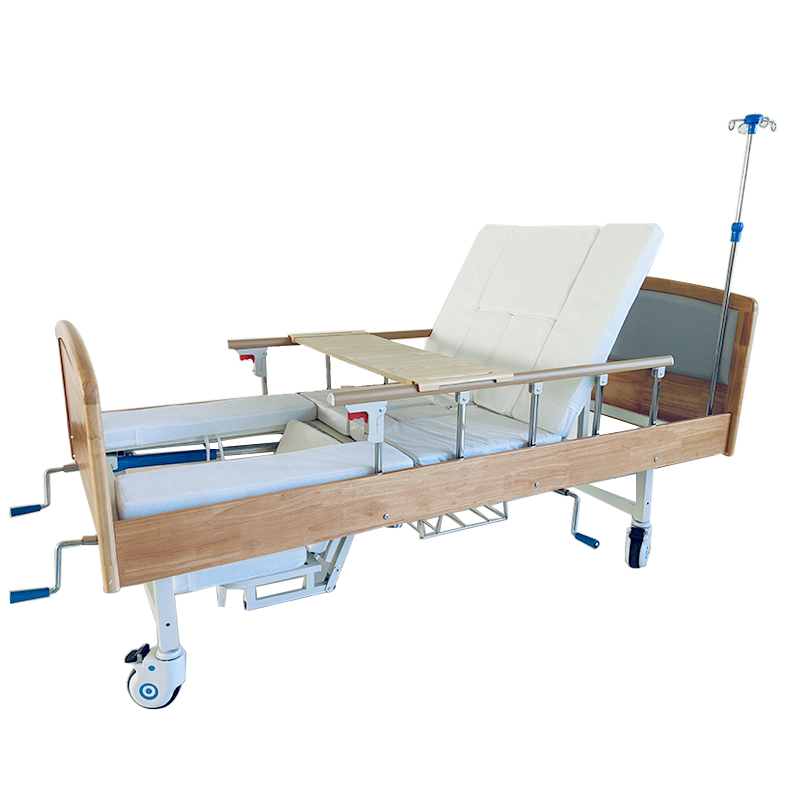
How Caster Quality Affects Daily Mobility
A hospital bed may carry a patient, mattress, IV pole, oxygen equipment, and other accessories. Good casters reduce rolling resistance, while poor wheels may pull sideways, resist turning, or require excessive force. Over repeated shifts, this reduces efficiency and increases staff strain.
Smooth Rolling Reduces Staff Fatigue
Accurate bearings, wheel alignment, and suitable treads help a bed start smoothly and follow a controlled path. Casters must also swivel freely in narrow corridors and elevators. Performance should always be checked under load, not only on an empty display bed.
Why Reliable Braking Is Essential
Once a hospital bed reaches its position, it must remain stable during patient entry, exit, examination, treatment, and nursing care. Weak brakes may permit small movements that increase fall risk or make patients feel insecure.
A quality brake should hold firmly on common hospital flooring, remain easy to operate, and continue working after repeated use and cleaning.
Central Locking and Individual Brakes
Central locking systems allow staff to control several casters from one pedal. This saves time and supports consistent locking, especially in emergency, ICU, and transport applications. Some systems also include directional control to help the bed travel in a straight line.
Individual brakes may suit basic manual beds, home care beds, or cost-sensitive projects, but staff must lock each wheel separately. The best option depends on workflow, safety expectations, and budget. In either case, repeated cycle testing is essential.
How Caster Materials Change Performance
Hospital bed wheels may use nylon, polyurethane, rubber, or composite materials. Each choice affects durability, rolling noise, grip, floor protection, and chemical resistance.
Nylon is hard, strong, and easy to clean but may create more noise. Polyurethane often balances wear resistance, quiet movement, and floor protection. Rubber can provide good grip and low noise, although some compounds wear faster or leave marks.
Material Quality Matters More Than the Label
Two wheels described as polyurethane may perform very differently. Low-grade tread material can crack, separate, flatten, or react with disinfectants. Buyers should therefore evaluate the formulation, hardness, bonding quality, and test results rather than relying only on the material name.
The final choice should match the flooring, cleaning chemicals, load, and noise expectations. Samples should be tested on similar surfaces.
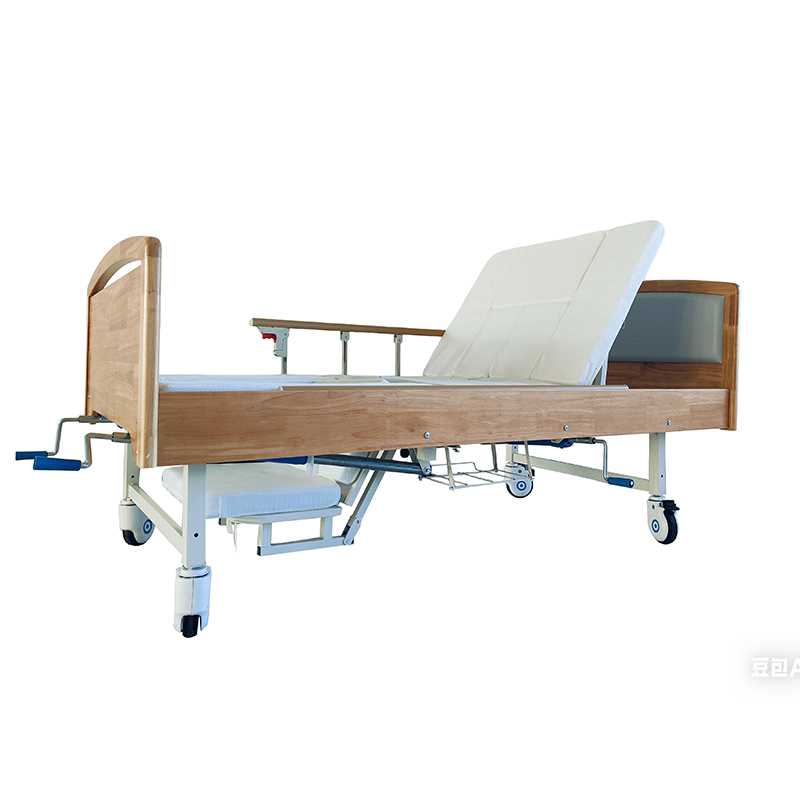
Load Capacity and Wheel Diameter
Caster load requirements should not be calculated from patient weight alone. The total load includes the bed frame, mattress, patient, side rails, accessories, and medical devices. Buyers also need a safety margin because weight is not always distributed equally across all wheels.
When a bed crosses a threshold or turns sharply, one or two casters may carry extra load. Under-specified wheels may deform, resist swiveling, or wear early.
Larger Wheels Can Improve Movement
A larger wheel generally crosses small floor joints, elevator gaps, and thresholds more easily than a small wheel. However, wheel diameter must suit the bed design, minimum height, brake system, and required ground clearance.
Buyers should request the caster load rating and compare it with the complete bed’s safe working load. The supplier should explain how the selected wheel size and quantity support the intended application.
Why Bearing Quality Matters
The bearing system controls rolling and swivel movement. Poor bearings create friction, noise, vibration, and uneven rotation even when the outer wheel appears strong. Precision, lubrication, sealing, and assembly quality all influence caster life.
Sealed Bearings Support Cleaner Operation
Water, disinfectants, dust, and debris can enter poorly protected bearings, causing corrosion or restricted movement. Sealed designs reduce this risk, although buyers should still follow approved cleaning methods.
Noise, Vibration, and Patient Comfort
Excessive noise can disturb patients, while rattling or squeaking may indicate worn bearings, loose mounts, or uneven wheels. Flat spots and damaged bearings can also transmit uncomfortable vibration through the frame.
Quiet Movement Requires a Complete System
Noise does not depend on tread material alone. Wheel alignment, bearing quality, frame connection, floor condition, and load distribution also matter. Testing should include slow movement, normal transport speed, turning, braking, and crossing small floor joints.
The caster should remain quiet after storage and repeated use, not only during a showroom demonstration.
Floor Protection and Cleaning Requirements
Hospitals invest in flooring that must remain clean, safe, and presentable. Poor casters may scratch surfaces, leave dark marks, or create pressure that damages softer materials.
Non-marking wheels can reduce cleaning work, but the claim should be verified on vinyl, tile, epoxy, or other intended flooring.
Casters Must Withstand Disinfection
Casters collect dust, threads, fluids, and residue. Smooth housings and accessible wheel areas simplify cleaning, while complicated gaps trap contamination. Buyers should also confirm chemical compatibility because disinfectants may make low-quality plastic brittle or cause treads to swell and crack.
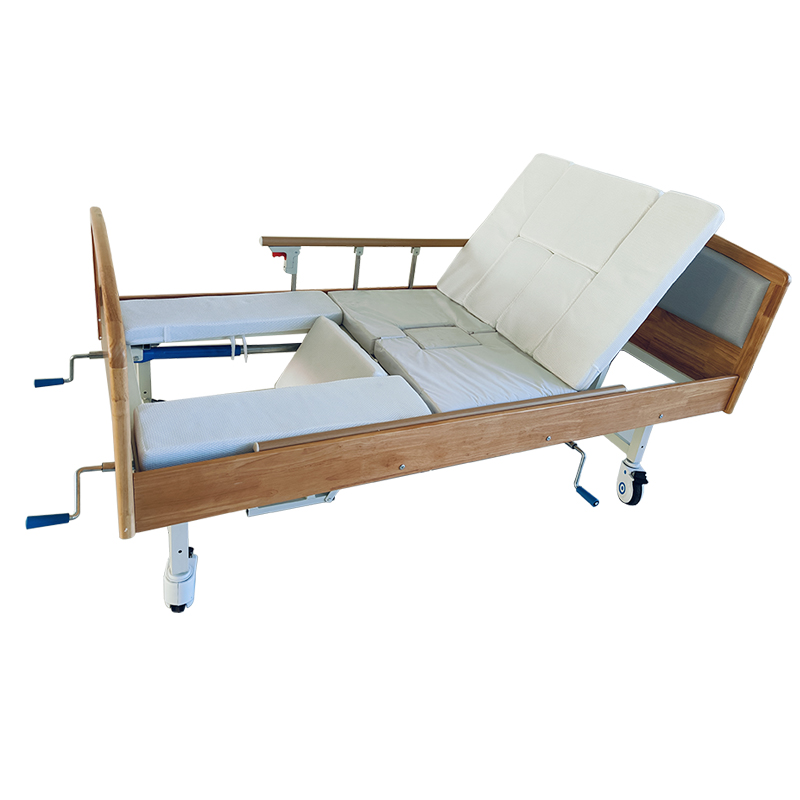
Common Signs of Low-Quality Casters
Warning signs include wheel wobble, loose swivel movement, uneven rolling, weak brakes, rough plastic edges, abnormal noise, and inconsistent performance between wheels from the same batch.
Some problems appear only after installation, such as flat spots, loose brakes, or chemical damage. A low purchase price becomes expensive when service teams must replace casters at the customer’s site.
Check Consistency Across the Batch
During inspection, buyers should test more than one bed and more than one caster. If one wheel rolls smoothly while another drags, the supplier may have inconsistent bearings, molding, assembly, or incoming material control.
Batch consistency is especially important for distributors that must provide the same user experience across multiple hospitals or regions.
How B2B Buyers Should Test Casters
Caster testing should simulate real use. Load the bed, push it in straight lines, turn it in narrow spaces, cross small thresholds, and brake on different surfaces. Inspect starting force, steering, swivel response, brake holding, noise, vibration, and floor contact.
Test Empty and Loaded Conditions
An empty bed may move easily even with average wheels, so realistic load and repeated brake-cycle tests are essential. Buyers should also confirm that casters can be replaced without complex frame disassembly and that spare parts will remain available.
What Buyers Should Ask the Supplier
Before purchasing, buyers should request the wheel diameter, tread material, bearing type, brake design, load rating, mounting method, chemical resistance, and relevant test information.
They should also ask how the specification matches the safe working load and intended environment. Answers should remain consistent across sales, engineering, production, and quality control.
Include Casters in the Factory Audit
During a factory audit, buyers can review incoming caster inspection, assembly methods, mounting torque, rolling tests, brake checks, and final bed inspection. They should also examine how defective parts are identified and separated.
For Jcare’s wholesale customers, including hospitals, private clinics, medical bed purchasers, and home care bed buyers, caster evaluation should form part of the complete product review. Jcare supplies hospital beds, home care beds, rehabilitation products, medical furniture, and bed accessories from China, supported by factory pricing, available stock, and short delivery times.
Why Better Casters Lower Total Cost
High-quality casters may slightly increase the initial bed price, but smooth rolling lowers staff effort, durable brakes reduce service calls, and reliable materials decrease replacements. Distributors face fewer complaints, while hospitals gain better workflow and less downtime.
Purchase Price Is Only One Factor
The cheapest wheel is not always the most economical. Buyers should compare service life, maintenance time, spare-part availability, warranty support, and replacement costs.
A well-selected caster protects the bed’s long-term value and the reputation of both manufacturer and distributor.
Conclusion
Hospital bed caster quality affects mobility, steering, braking safety, staff effort, patient comfort, noise, floor protection, cleaning, and maintenance. Buyers should evaluate wheel materials, diameter, load capacity, bearing quality, brake durability, chemical resistance, and replacement support under realistic loaded conditions.
Careful caster selection can prevent repeated complaints and improve the performance of the entire bed. Which caster problems have you encountered in hospital beds or previous wholesale orders? Share your experience in the comments, and send this article to other medical equipment buyers who may find it useful.