
Hospitals, nursing homes, rehabilitation centers, and healthcare distributors often ask the same question: how do you choose the right medical bed for sale when there are so many options available? Making the wrong choice can lead to patient discomfort, increased caregiver workload, higher maintenance costs, and reduced operational efficiency. Fortunately, by understanding bed functions, safety requirements, patient needs, durability standards, and supplier qualifications, buyers can select medical beds that deliver long-term value and better patient care.
The right medical bed for hospitals and nursing homes should match patient care requirements, offer appropriate adjustment functions, provide strong safety features, ensure caregiver efficiency, and deliver long-term durability. Buyers should evaluate bed type, patient population, weight capacity, safety systems, mattress compatibility, maintenance needs, and supplier reliability before making a purchasing decision.
Explore the factors below to make a confident and cost-effective purchasing decision.
Questions fréquentes
Why Is Choosing the Right Medical Bed So Important?
Medical beds are among the most frequently used pieces of equipment in healthcare facilities. Patients may spend days, weeks, or even months in these beds, making their design and functionality critical to recovery and comfort.
A poorly selected bed can create numerous problems:
- Risque accru de chutes chez les patients
- Higher incidence of pressure injuries
- Greater physical strain on caregivers
- Augmentation des frais d'entretien
- Baisse de la satisfaction des patients
- Shorter equipment lifespan
On the other hand, selecting the right medical bed can improve patient outcomes while reducing operational costs.
Healthcare facilities increasingly view medical beds as long-term investments rather than simple furniture purchases. The right choice can positively affect clinical performance, caregiver productivity, and facility reputation.
Quels sont les différents types de lits médicaux disponibles ?
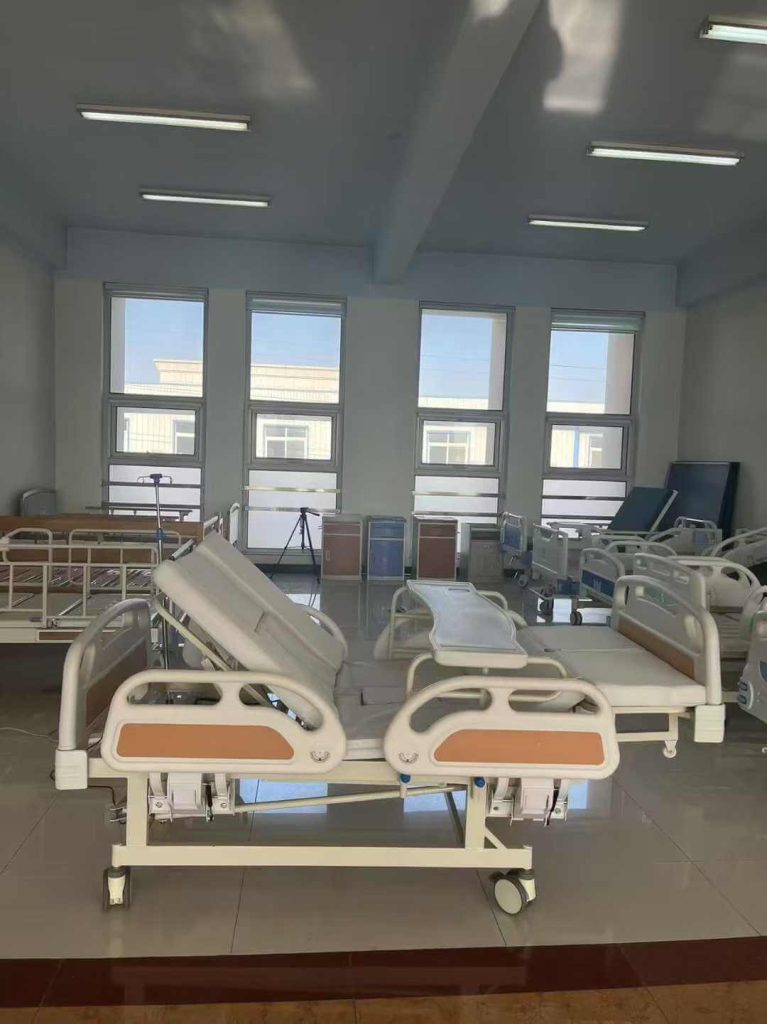
Understanding the major categories of medical beds is the first step toward making an informed purchasing decision.
Lits médicaux manuels
Manual medical beds use hand cranks to adjust bed positions.
Parmi les avantages, on peut citer :
- Coûts d'achat réduits
- Minimal electrical components
- Easier maintenance
- Reliable operation
They are commonly used in:
- Rural clinics
- Small healthcare facilities
- Budget-conscious institutions
However, manual beds require greater physical effort from caregivers.
Lits médicaux semi-électriques
Semi-electric beds combine manual and electric adjustment functions.
Les avantages comprennent :
- Improved convenience
- Moderate cost
- Allègement de la charge de travail des soignants
- Un meilleur confort pour le patient
These beds are suitable for facilities seeking a balance between functionality and affordability.
Lits médicaux entièrement électriques
Fully electric beds use powered systems to adjust all major bed positions.
Key functions often include:
- Élévation du dossier
- Surélévation du genou
- Réglage de la hauteur
- Position de Trendelenburg
- Position de Trendelenburg inversée
They are widely used in:
- Hôpitaux
- Centres de réadaptation
- Maisons de retraite
- Établissements de soins de longue durée
Intensive Care Unit Beds
ICU beds provide advanced functionality for critical patients.
Features may include:
- Positionnement du patient sur la chaise cardiaque
- Integrated scales
- Emergency CPR release
- Fonctions d'inclinaison latérale
- Electronic monitoring compatibility
These beds are designed for highly specialized medical environments.
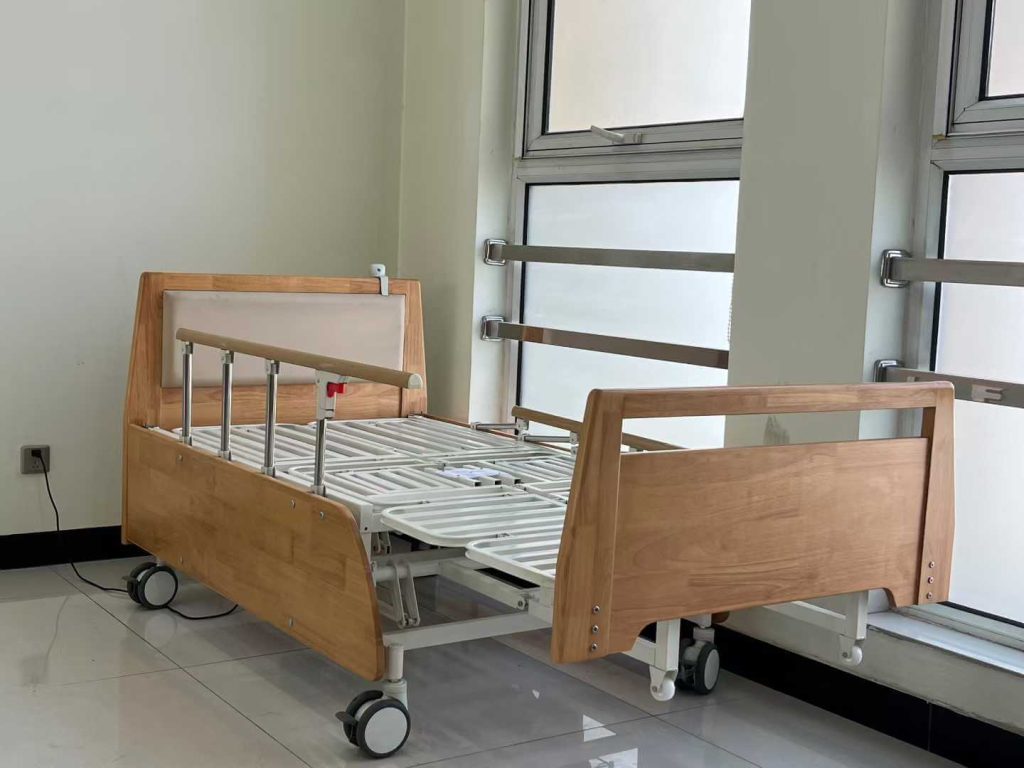
Lits de soins à domicile
Home care beds are designed for patients receiving treatment at home.
They typically prioritize:
- Facilité d'utilisation
- Confort
- Aspect convivial
- Entretien facile
Demand for home care beds continues to grow as aging populations increase worldwide.
How Do Patient Needs Affect Bed Selection?
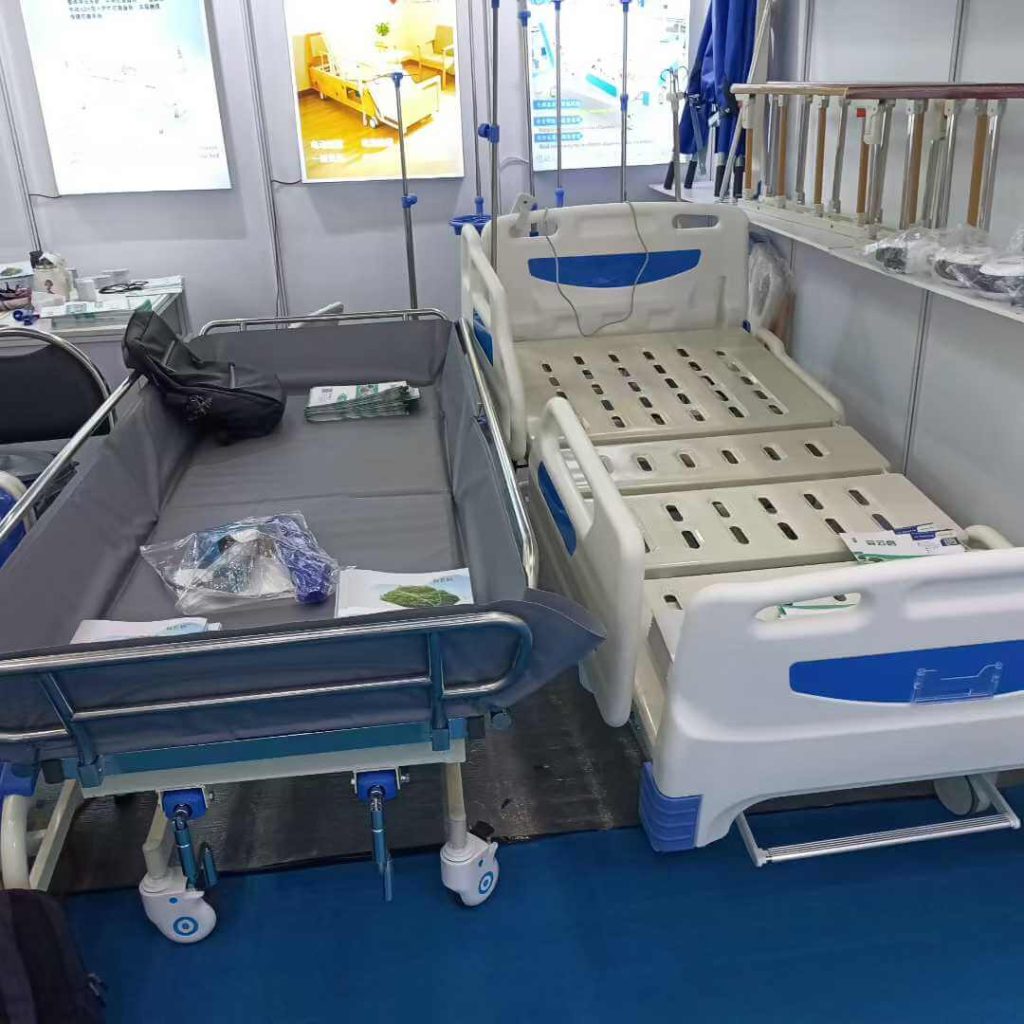
Patient requirements should always guide purchasing decisions.
Elderly Patients
Older patients often face mobility limitations and increased fall risks.
Important features include:
- Low-height positioning
- Easy transfer access
- Comfortable mattresses
- Barrières latérales fiables
Long-Term Care Residents
Residents in nursing homes may spend extended periods in bed.
Necessary considerations include:
- Pressure injury prevention
- Frequent repositioning support
- Comfort enhancement
- Easy caregiver access
Bariatric Patients
Obese patients require specialized solutions.
Critical features include:
- Reinforced frame construction
- Increased weight capacity
- Wider mattress platforms
- Enhanced stability systems
Rehabilitation Patients
Recovery-focused patients benefit from beds that support mobility and therapy activities.
Useful functions include:
- Multiple positioning options
- Easy transfer capabilities
- Adjustable height systems
Post-Surgical Patients
Patients recovering from surgery often require temporary support and positioning flexibility.
Proper bed selection can significantly improve recovery experiences.
Which Medical Bed Functions Are Most Important?
Healthcare buyers should understand which functions provide genuine value.
Réglage du dossier
Backrest elevation helps patients:
- Mangez tranquillement
- Regarder la télévision
- Read
- Improve respiratory function
This is one of the most frequently used bed adjustments.
Leg Elevation
Leg adjustment assists with:
- Circulation improvement
- Réduction des gonflements
- Comfort enhancement
Réglage de la hauteur
Height adjustment benefits both patients and caregivers.
Parmi les avantages, on peut citer :
- Easier transfers
- Reduced caregiver injuries
- Amélioration de la sécurité des patients
Position de Trendelenburg
Cette position consiste à incliner le patient de manière à ce que sa tête soit plus basse que ses pieds.
Applications include:
- Emergency care
- Récupération postopératoire
- Certain circulatory conditions
Position de Trendelenburg inversée
The opposite tilt provides additional clinical flexibility.
Many hospitals consider this function essential.
Auto Contour Function
Modern beds often adjust backrest and leg sections simultaneously.
Les avantages comprennent :
- Reduced patient sliding
- Confort amélioré
- Enhanced positioning efficiency
What Safety Features Should Hospitals Prioritize?
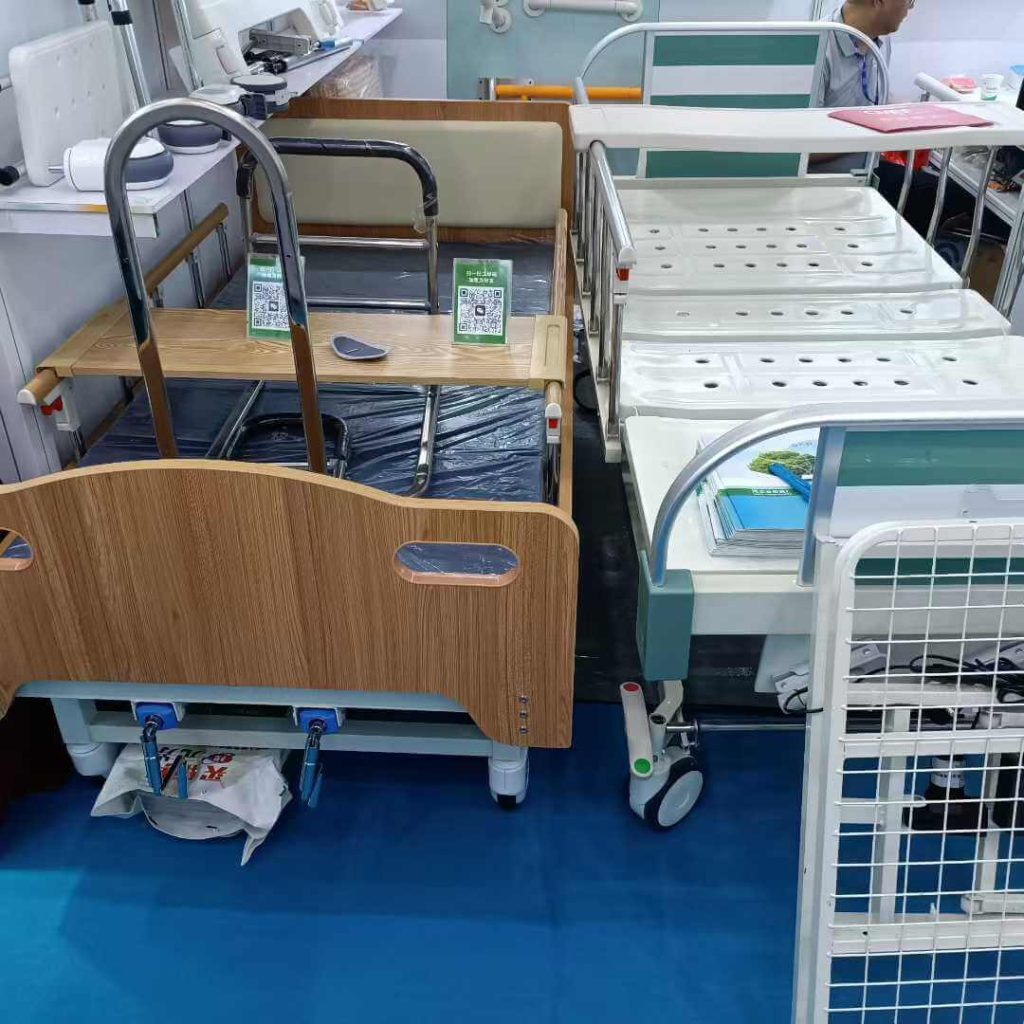
Patient safety remains one of the most important purchasing criteria.
Barrières latérales
Side rails help reduce fall risks.
Common options include:
- Barres latérales en ABS
- Aluminum alloy side rails
- Split side rails
- Rails sur toute la longueur
High-quality rails should be durable, easy to operate, and secure.
Roulettes à blocage central
Reliable casters ensure:
- Mouvement fluide
- Positionnement stable
- Safe transportation
Central locking systems provide added security.
Autorisation de réanimation cardio-pulmonaire en cas d'urgence
In emergencies, caregivers must quickly flatten the bed.
CPR release systems save valuable time.
Alarmes de sortie de lit
Advanced medical beds may include alarm systems that notify caregivers when patients attempt to leave the bed.
These systems help prevent falls.
Anti-Collision Protection
Protective bumpers reduce damage to walls, equipment, and the bed itself.
Why Is Mattress Compatibility Important?
Even the best bed frame performs poorly with an unsuitable mattress.
Foam Mattresses
Provide general comfort and support.
Suitable for:
- Standard patient care
- Short-term stays
Pressure Redistribution Mattresses
Designed to reduce pressure injury risks.
Particularly useful for:
- Patients âgés
- Long-term residents
- Immobile patients
Air Mattresses
Alternating pressure systems help improve circulation and reduce pressure points.
Widely used in:
- Maisons de retraite
- Rehabilitation facilities
- Long-term care environments
Specialized Medical Mattresses
Some patients require advanced support surfaces tailored to specific medical conditions.
Healthcare buyers should consider mattress compatibility during the bed selection process.
How Does Bed Durability Affect Total Cost of Ownership?
Purchase price alone does not determine value.
A low-cost bed that requires frequent repairs may ultimately cost more than a premium model.
Frame Construction
High-quality steel frames typically offer:
- Greater strength
- Durée de vie plus longue
- Better stability
Traitement de surface
Powder-coated surfaces help resist:
- Corrosion
- Scratches
- Produits chimiques de nettoyage
Motor Quality
For electric beds, motor reliability is critical.
Premium motors often provide:
- Quieter operation
- Durée de vie prolongée
- Reduced maintenance
Composants électriques
High-quality control systems improve reliability and reduce downtime.
Healthcare facilities should calculate total cost of ownership rather than focusing solely on purchase price.
What Role Does Caregiver Efficiency Play?
Medical beds directly affect staff productivity.
Réduction de l'effort physique
Electric adjustments minimize manual lifting and repositioning.
Les avantages comprennent :
- Fewer workplace injuries
- Improved staff satisfaction
- Increased efficiency
Des transferts de patients plus rapides
Adjustable height functions simplify transfers to:
- Fauteuils roulants
- Stretchers
- Examination tables
Simplified Positioning
Automated controls help caregivers reposition patients quickly and safely.
Un meilleur flux de travail
Well-designed beds support smoother daily operations.
Facilities often experience measurable productivity improvements after upgrading outdated beds.
How Should Nursing Homes Choose Medical Beds?
Nursing homes have unique requirements compared to hospitals.
Comfort Matters More
Residents may spend years using the same bed.
Comfort becomes a critical factor.
Fall Prevention Is Essential
Low-height beds and safety systems reduce fall-related injuries.
Ease of Use
Caregivers often manage multiple residents simultaneously.
Simple controls improve efficiency.
Durability Is Critical
High occupancy rates require equipment capable of withstanding continuous use.
Appearance Can Matter
Many nursing homes prefer beds with more residential-style designs to create a comfortable environment.
What Certifications Should Buyers Look For?
Quality certifications indicate compliance with international standards.
Common certifications include:
ISO 13485
Demonstrates quality management systems for medical devices.
Certification CE
Required for many products entering European markets.
Enregistrement auprès de la FDA
Important for products sold in the United States.
IEC Safety Standards
Ensure electrical safety and performance.
Working with certified manufacturers reduces purchasing risk.
How Can Buyers Evaluate Medical Bed Suppliers?
Supplier selection often determines project success.
Expérience en matière de fabrication
Experienced manufacturers typically offer:
- Un meilleur contrôle qualité
- Improved engineering
- Stronger production systems
Factory Capacity
Production capability affects:
- Lead times
- Order fulfillment
- Scalability
Inventory Availability
Adequate stock helps reduce delivery delays.
Expérience à l'exportation
International experience simplifies:
- Documentation
- Compliance
- Logistics
Technical Support
Strong after-sales support improves long-term customer satisfaction.
Why Do Many Buyers Prefer Factory-Direct Manufacturers?
Purchasing directly from manufacturers offers several advantages.
Competitive Pricing
Factory-direct purchasing removes intermediary costs.
Faster Communication
Direct communication accelerates project execution.
Better Customization
Manufacturers can provide:
- OEM services
- Custom branding
- Customized dimensions
- Special accessories
More Reliable Supply
Direct factory relationships improve production visibility and delivery control.
How Can Large Healthcare Projects Choose the Right Supplier?
Large hospital projects require additional considerations.
Production Capacity Assessment
Verify whether the manufacturer can handle large orders.
Sample Evaluation
Request product samples whenever possible.
Factory Audits
Conduct virtual or on-site inspections.
Project References
Review previous healthcare projects completed by the supplier.
Supply Chain Stability
Reliable suppliers maintain stable procurement channels and production schedules.
Why Are Chinese Medical Bed Manufacturers Popular Globally?
China has become a major source of healthcare equipment.
Parmi les avantages, on peut citer :
Cost Efficiency
Large-scale manufacturing reduces production costs.
Mature Supply Chains
Well-developed supplier networks support efficient production.
Product Diversity
Manufacturers offer a wide range of medical bed solutions.
Export Expertise
Many Chinese manufacturers have extensive international experience.
Countries importing medical beds from China include:
- Inde
- Middle East nations
- Southeast Asian countries
- European markets
- United States
- Japon
- Corée du Sud
Why Choose Jcare as Your Medical Bed Partner?
Jcare focuses on supplying high-quality medical beds and healthcare furniture to global buyers.
Our strengths include:
Wide Product Portfolio
- Hospital Beds
- Lits de soins à domicile
- Produits de réadaptation
- Medical Furniture
- Accessoires pour lits médicaux
Factory-Direct Pricing
We provide competitive wholesale pricing for distributors and institutional buyers.
Strong Production Capacity
Our manufacturing resources support both standard and customized orders.
Sufficient Inventory
Ready stock helps shorten delivery times.
Global Export Experience
We serve customers across multiple international markets.
Professional B2B Focus
Our business model is dedicated exclusively to wholesale and institutional procurement.
Reliable Delivery
Efficient production planning ensures timely order fulfillment.
Customer-Centered Service
Our team works closely with distributors, hospitals, nursing homes, and healthcare procurement professionals.
How Will Medical Bed Technology Continue to Evolve?
Healthcare technology continues advancing rapidly.
Parmi les tendances émergentes, on peut citer :
Smart Monitoring Systems
Beds increasingly integrate patient monitoring capabilities.
Digital Connectivity
Healthcare facilities benefit from connected equipment ecosystems.
Enhanced Safety Features
Manufacturers continue improving fall prevention and patient protection technologies.
Better Ergonomics
Future designs will further reduce caregiver workload.
Sustainability
Environmentally friendly materials and manufacturing processes are becoming more important.
Healthcare buyers should consider future technology requirements when making long-term purchasing decisions.
Conclusion
Choosing the right medical bed for sale requires more than comparing prices. Hospitals and nursing homes must carefully evaluate patient needs, safety features, caregiver efficiency, bed functionality, durability, mattress compatibility, certifications, and supplier reliability. A well-selected medical bed can improve patient comfort, enhance care quality, reduce caregiver strain, and lower long-term operating costs.
For healthcare facilities, distributors, and procurement managers, partnering with an experienced manufacturer is equally important. A reliable supplier can provide consistent product quality, competitive pricing, sufficient inventory, and dependable delivery support.
At Jcare, we are committed to helping healthcare organizations find medical bed solutions that meet their clinical, operational, and financial requirements. Whether you are sourcing hospital beds, home care beds, rehabilitation products, or medical bed accessories, our team is ready to support your wholesale purchasing needs.
What factors are most important when selecting medical beds for your facility? Share your thoughts, experiences, or questions in the comments, and feel free to share this article with colleagues who may find it useful.