
Patient transfer beds are designed to ensure safe, stable, and efficient movement of patients within hospitals, emergency departments, and long-term care facilities. By integrating structural stability, ergonomic controls, and advanced safety features, transfer beds significantly reduce the risk of falls, caregiver injuries, and transport-related complications.
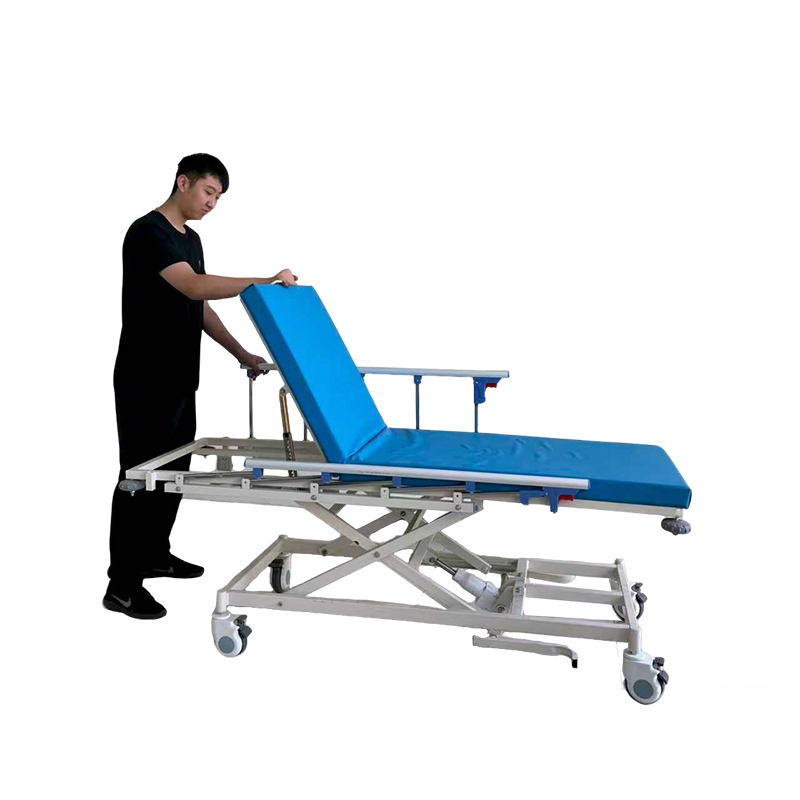
1. Enhanced Structural Stability
Transfer beds are built with reinforced steel or stainless-steel frames to maintain strength during movement. High load-bearing capacity ensures stability even for bariatric patients. A low center-of-gravity design further minimizes tipping risks during transport.
How this improves safety:
- Reduces bed sway and instability
- Prevents sudden structural failure
- Maintains patient balance during movement
2. Secure Side Rails and Fall Protection
Most transfer beds are equipped with full-length or split side rails. These rails prevent accidental falls and provide psychological reassurance for patients during transport.
Safety benefits:
- Minimizes fall risk
- Provides hand support for conscious patients
- Protects confused or weak patients during movement
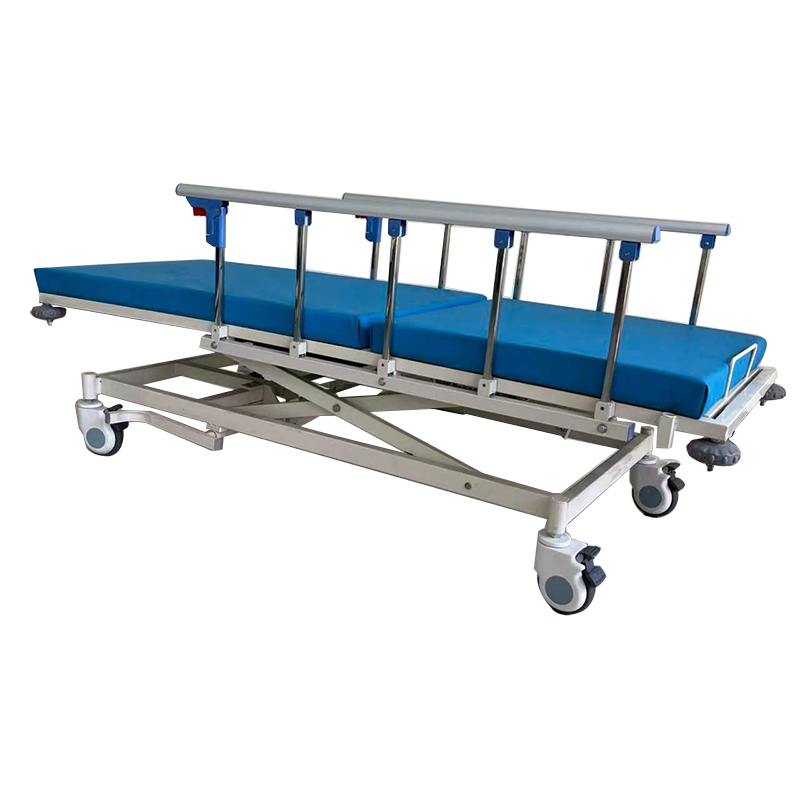
3. Central Locking Brake System
High-quality transfer beds include a central locking caster system. With a single foot pedal, caregivers can lock or unlock all wheels simultaneously.
Safety benefits:
- Prevents unintended movement during patient transfer
- Ensures stability when loading or unloading patients
- Improves control on slopes or uneven surfaces
4. Smooth Height Adjustment
Electric or hydraulic height adjustment allows caregivers to align the transfer bed with operating tables, imaging equipment, or hospital beds.
Safety benefits:
- Reduces lifting strain on caregivers
- Minimizes transfer gaps
- Lowers the risk of musculoskeletal injuries
5. Shock Absorption and Controlled Mobility
Premium models feature shock-absorbing casters and smooth steering systems, allowing controlled movement in corridors and elevators.
Safety benefits:
- Reduces vibration and patient discomfort
- Enhances directional control
- Prevents sudden jolts during transport
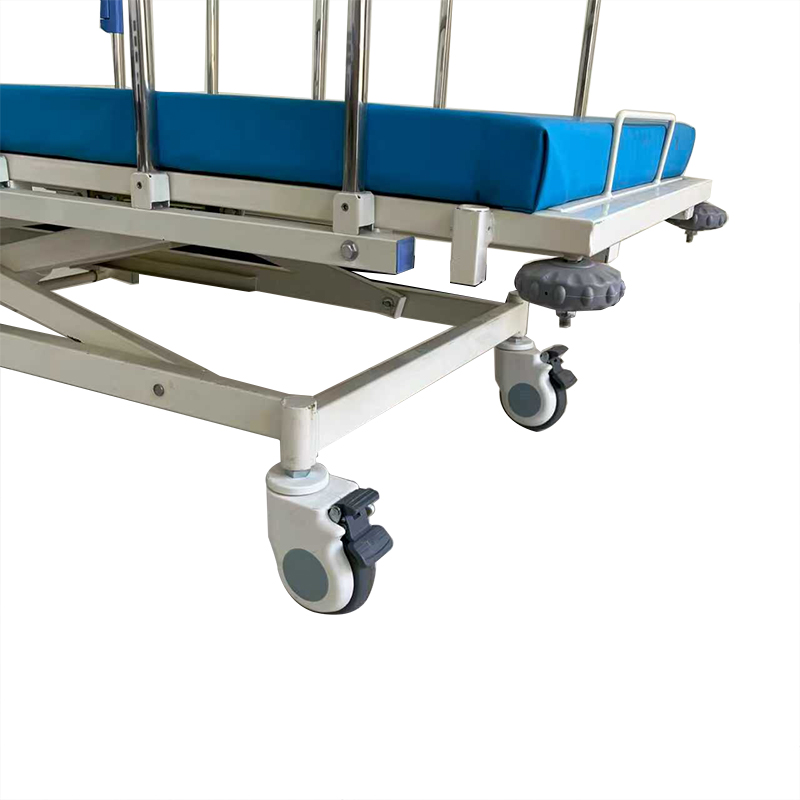
6. Hygienic and Easy-to-Clean Surfaces
Medical-grade surfaces with antimicrobial coatings help reduce infection risks during repeated patient transfers.
Safety benefits:
- Supports infection control protocols
- Simplifies cleaning between patients
- Improves overall hospital hygiene standards
Conclusion
Transfer beds play a crucial role in improving patient safety during internal transport. With reinforced frames, secure side rails, central locking systems, adjustable height functions, and controlled mobility features, they reduce fall risks, prevent caregiver injuries, and ensure smooth patient movement.
In modern healthcare settings, investing in high-quality patient transfer beds is essential for maintaining safety, efficiency, and clinical standards.