
Hospital beds contain moving parts such as side rails, adjustable platforms, lifting systems, and mechanical joints. Buyers may wonder where pinching risks occur and how design can reduce them. If these hazards are overlooked, patients and caregivers may face avoidable injuries. Understanding anti-pinch design helps purchasers evaluate safer hospital beds.
Hospital bed design can reduce pinching risk by controlling gaps between moving parts, protecting hinges and linkages, improving side-rail structures, and ensuring smooth mattress-platform movement. Safer beds also use predictable controls, secure connections, compatible mattresses, and accessible maintenance so that hands, fingers, clothing, and medical tubing are less likely to enter hazardous closing areas.
Pinching risks can appear in several areas of a medical bed. The following sections explain what buyers should inspect.
Where Do Pinching Risks Commonly Occur on a Hospital Bed?
A hospital bed is designed to move, so every moving connection can potentially create a closing gap. Manufacturers must control how components move.
Common areas include joints between mattress-platform sections, folding side rails, rail release mechanisms, backrest hinges, leg-section linkages, lifting structures beneath the bed, detachable boards, and actuator mounting points.
The risk may be highest while a component is moving. A gap that looks large when the bed is flat can become much narrower halfway through an adjustment.
Moving Gaps Need Special Attention
A fixed opening is easier to inspect because its dimensions stay almost the same. A moving gap can open, close, or shift during adjustment.
Manufacturers can reduce risk by controlling the movement path and making it harder for fingers, clothing, or tubing to enter hazardous areas. Rounded edges, recessed joints, covers, and suitable spacing can all help.
Buyers should ask: what happens to nearby spaces while the bed moves?
How Can Side-Rail Design Reduce the Risk of Pinching?
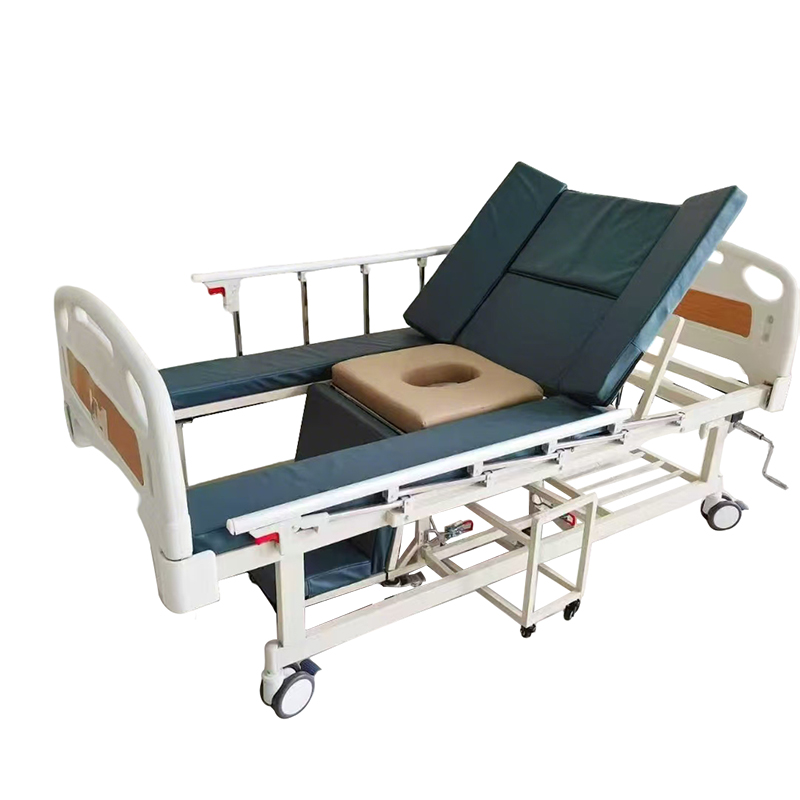
Side rails are among the most frequently operated components on a hospital bed. Caregivers may raise or lower them during transfers, examinations, cleaning, and repositioning.
Because users place their hands directly on the rails, hinges and release mechanisms require careful design. A well-designed rail should provide a clear gripping area and keep the operator’s hand away from closing joints.
Safer Hinges and Release Mechanisms
Folding side rails contain pivot points where the space between rail sections can quickly become smaller.
Manufacturers can reduce this hazard by using enclosed hinges, rounded contact surfaces, smooth linkage geometry, and release handles positioned away from folding points.
If a caregiver must place fingers close to a pivot to unlock the rail, the design creates unnecessary exposure. A better structure separates the release action from the closing movement.
Buyers should operate the rail repeatedly and observe whether the user’s hand naturally stays in a safer area.
How Does Mattress Platform Design Affect Pinching Safety?
Many hospital beds use articulated platforms with a back section, seat section, thigh section, and lower-leg section.
When the backrest rises or the leg section bends, the angles and spacing between these panels change. Poorly designed joints may allow fingers, bedding, clothing, or tubing to enter the closing area.
Smooth Articulation Helps Control Gaps
A good mattress platform should move through a predictable path without exposing unnecessary sharp edges or abrupt closing points.
Important details include rounded deck edges, appropriate spacing, stable hinges, protected linkages, smooth movement under load, and secure mattress retainers.
Purchasers should also observe whether the mattress shifts during movement. Excessive movement can change the space between the mattress, rail, and frame.
Therefore, the platform should be checked in several positions, not only when completely flat.
Why Is the Under-Bed Lifting Mechanism Important?
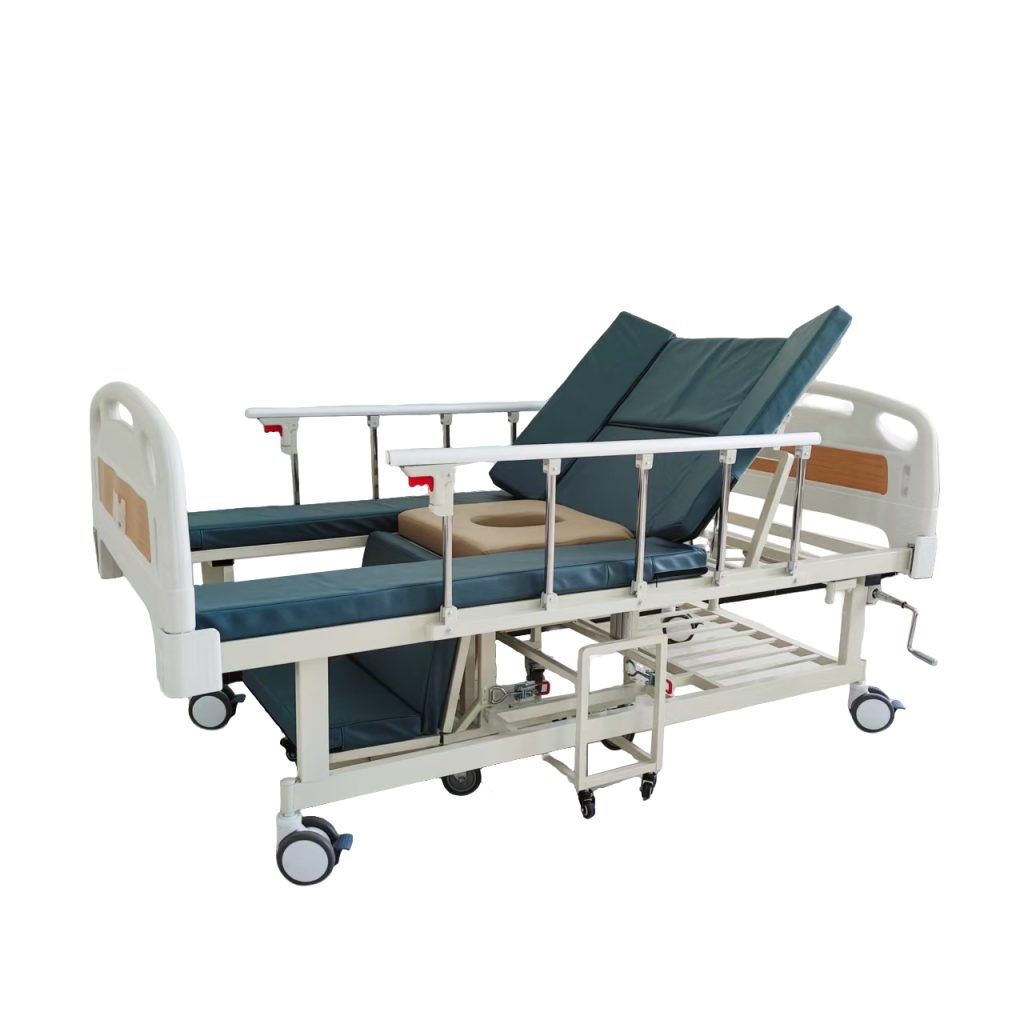
Height-adjustable beds may contain scissor structures, lifting columns, actuators, or other mechanisms beneath the platform. These systems are necessary for height adjustment, but they also create changing spaces.
Patients may not normally reach this area, yet caregivers, cleaners, maintenance staff, cables, and nearby equipment can still come close to it.
Protective Covers Can Reduce Access
Manufacturers may use plastic covers, metal guards, structural shielding, or recessed mounting positions to restrict access to active mechanisms.
However, guards should be durable and easy to inspect. A loose cover can create a new problem, while an overly complicated structure may make cleaning difficult.
A practical design balances protection, hygiene, accessibility, and serviceability. Buyers should inspect the underside of the bed at both minimum and maximum height.
Can Electric Controls Help Reduce Pinching Risk?
Yes. Mechanical construction is only one part of anti-pinch design. Control design also affects safety.
If buttons are confusing or easy to activate accidentally, the bed may move when the user does not expect it. Clear symbols and logical layouts help caregivers select the intended function before movement begins.
Useful features may include clearly identified buttons, caregiver controls, function lockouts, and responsive start-and-stop behavior.
Predictable Movement Gives Users Better Control
The movement itself should feel smooth and controlled.
If the backrest, leg section, or height mechanism starts abruptly, operators have less time to notice an object near a moving joint. Predictable movement gives users better awareness of what the bed is doing.
This matters in crowded rooms where tubing, cables, bedside furniture, and other equipment may be close to the frame.
How Can Proper Mattress Selection Reduce Risk?
The mattress is part of the complete bed system. Its dimensions and compression characteristics influence the spaces between the mattress, rails, headboard, footboard, and platform.
If a mattress is too narrow, too short, or unsuitable for the frame, unnecessary gaps may appear.
Mattress Compression Can Change Effective Gaps
A mattress may fit correctly when the bed is empty but behave differently under patient weight. Its edges may compress or shift, changing the space next to the rail.
Buyers should confirm the intended mattress dimensions and thickness for each bed model.
When beds and mattresses are sourced from different suppliers, compatibility deserves even more attention. The better approach is to evaluate the bed and mattress as one system.
How Do Headboards, Footboards, and Accessories Matter?
Detachable headboards and footboards can improve access during cleaning, transport, emergency procedures, and maintenance. However, their connection points should still be designed carefully.
A board that requires the operator to place fingers inside a narrow slot may create an avoidable pinch point. A partially inserted board may also move unexpectedly.
A better structure uses secure mounting points. Buyers should check whether the board locks firmly, whether brackets have sharp edges, and whether removal can be completed with a natural hand position.
The same principle applies to accessories. IV pole sockets, drainage hooks, control boxes, cables, and other attachments should not obstruct moving parts or create new closing areas.
Rounded edges and smooth surfaces also matter because they reduce harsh contact points and make cleaning easier.
How Does Maintenance Affect Anti-Pinch Performance?
A bed may leave the factory in good condition, but daily use can gradually change its mechanical behavior.
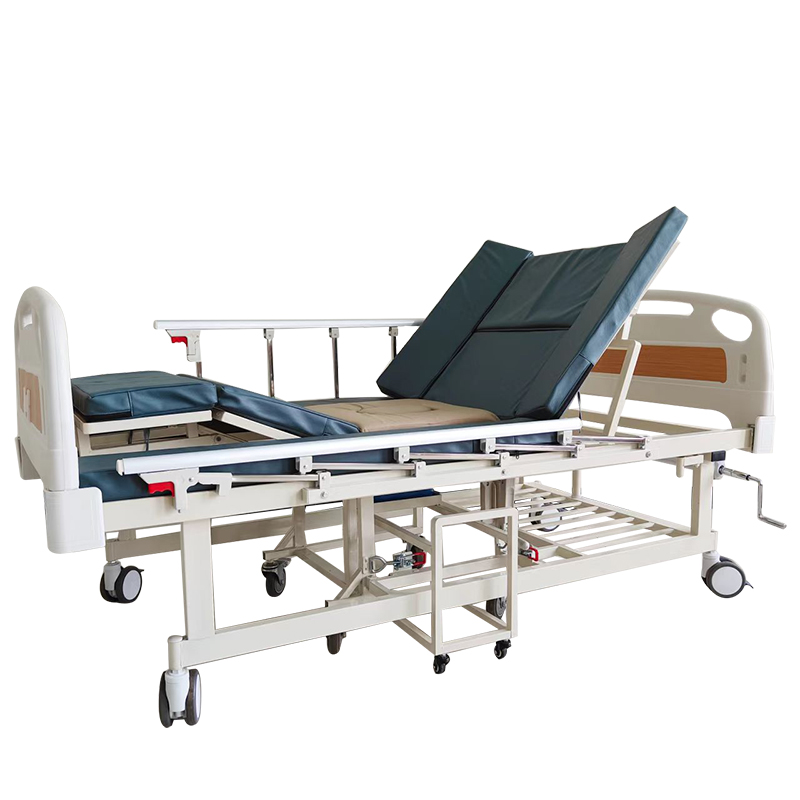
Fasteners may loosen, rail joints may wear, covers may crack, and linkages may develop excessive movement. These changes can alter the original size or behavior of gaps.
Regular Inspection Helps Preserve Safer Operation
Maintenance teams should periodically check side-rail hinges and locks, mattress retainers, platform joints, actuator mounts, protective covers, headboard connections, cables, casters, brakes, and structural fasteners.
A loose rail may create a larger or less predictable gap than when the bed was new.
For distributors and institutional buyers, spare-part availability is also important. Compatible replacement parts help preserve the original geometry and performance of the bed.
Are Manual Hospital Beds Also Exposed to Pinching Risks?
Yes. Pinching is not only an electric-bed issue.
Manual beds may still include adjustable backrests, leg sections, folding side rails, detachable boards, cranks, and moving linkages.
The movement is created by the caregiver rather than a motor, but the same principle applies: whenever two components move toward each other, the design should consider whether a hand, finger, clothing, or tube can enter the closing space.
Manual movement may be slower, but slower operation should not be the main safety measure. The structure itself should limit unnecessary access to hazardous areas.
What Should B2B Buyers Check Before Purchasing a Hospital Bed?
Hospital-bed buyers should inspect a sample whenever possible. Photographs, catalogs, and specification sheets cannot fully show how moving components behave.
During evaluation, operate the backrest, leg section, overall height, side rails, brakes, detachable boards, and any additional functions. Then observe the changing spaces from different angles.
Buyers can ask:
- Can fingers easily reach moving joints?
- Are side-rail hinges protected?
- Do the rails move smoothly?
- Are deck gaps controlled during articulation?
- Are under-bed mechanisms shielded where needed?
- Does the mattress fit the frame correctly?
- Can tubing or cables enter moving areas?
- Are controls clear and predictable?
- Are guards securely installed?
- Are spare parts and maintenance instructions available?
These questions help purchasers compare models more effectively than looking only at price or motor quantity.
Why Should Buyers Evaluate the Complete Bed System?
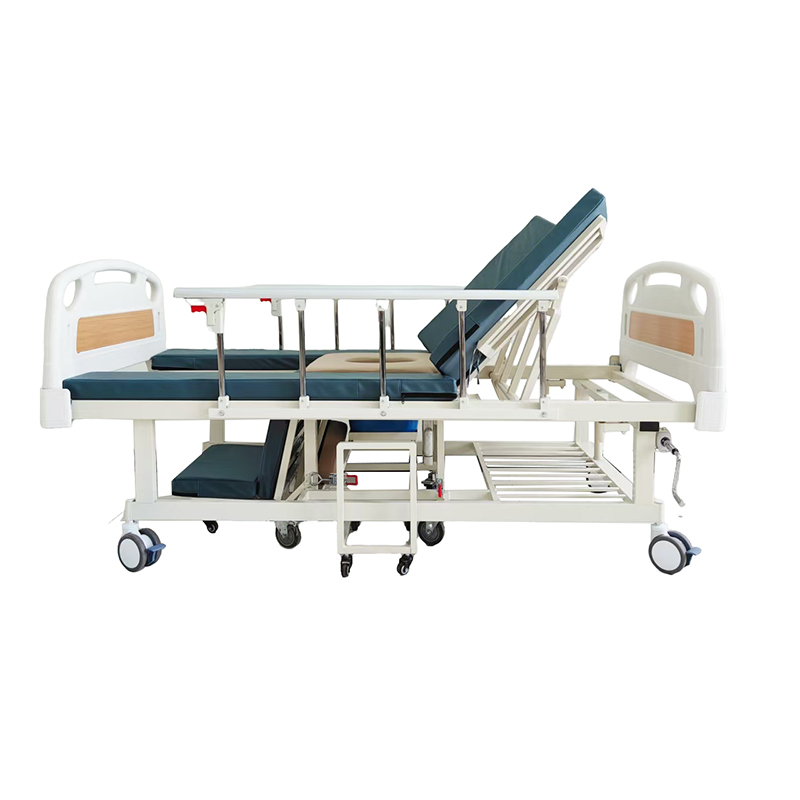
One component can affect another. A different mattress may change rail gaps. An accessory may obstruct movement. A replacement rail may alter spacing, while a loose board may introduce unexpected motion.
For this reason, a hospital bed should be treated as an integrated system.
This is especially important for distributors supplying the same model to different care facilities.
Before ordering, buyers should confirm the intended use, bed functions, mattress type, rail configuration, accessories, maintenance requirements, and target-market requirements.
Price matters in wholesale purchasing, but a lower initial price may not be economical if the bed later requires frequent repairs or unsuitable modifications.
Conclusión
Hospital bed design can reduce pinching risk by controlling moving gaps, protecting hinges and linkages, improving side-rail structures, creating smooth platform articulation, shielding lifting mechanisms, using compatible mattresses, and maintaining predictable controls.
For hospitals, clinics, distributors, and medical-equipment purchasers, the best approach is to evaluate the complete bed while every function is moving. Anti-pinch design should be considered together with durability, cleaning, maintenance, and usability.
Jcare supplies hospital beds, home care beds, rehabilitation products, medical furniture, and related accessories for B2B purchasing projects. Buyers can compare functions, specifications, and configurations according to their application and market requirements.
What anti-pinch features do you consider most important when selecting a hospital bed? Share your experience in the comments, or share this article with other medical-equipment buyers who may find it useful.