
Distributors often ask which hospital bed replacement parts should be stocked, how compatibility can be confirmed, and how long suppliers will support older models. Poor planning may cause bed downtime, delayed repairs, customer complaints, and higher after-sales costs. A structured spare-parts strategy helps distributors maintain service quality, protect customer relationships, and improve long-term profitability.
Hospital bed distributors should know which parts wear out most often, how to verify compatibility, which components deserve local stock, and how quickly suppliers can provide support. Common replacement parts include casters, side rails, hand controls, motors, actuators, control boxes, cables, headboards, footboards, and accessories. Accurate model identification, standardized components, technical documentation, and stable supply are essential for reducing downtime and supporting long-term hospital bed use.
Replacement parts influence purchasing decisions, distributor reputation, inventory costs, service efficiency, and the value of every hospital bed sold.
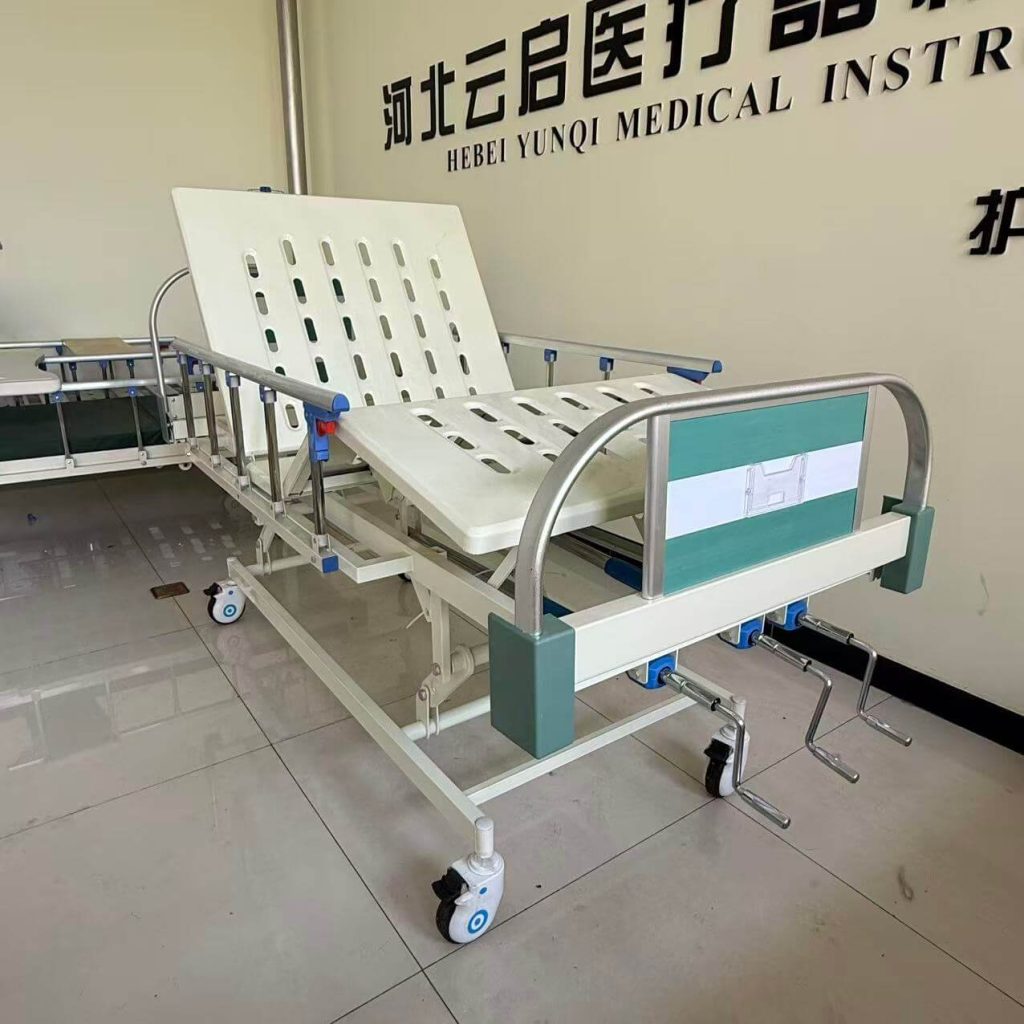
Why Are Hospital Bed Replacement Parts Important for Distributors?
Hospital beds may remain in use for years, but individual components can wear out earlier than the main frame. Wheels, side rails, cables, and electrical controls may eventually require replacement.
For distributors, solving these problems quickly can be as important as offering a competitive purchase price. If the correct part is unavailable, a bed may remain out of service and create pressure from customers.
Replacement Parts Affect Total Cost of Ownership
The initial price is only one part of a hospital bed’s total cost. Buyers must also consider maintenance, technician labor, shipping, downtime, and replacement components.
A low-priced bed may become expensive to support if every spare part requires a special international order. Standardized components can reduce inventory complexity, especially when several models share compatible casters, actuators, hand controls, or accessories. Spare-parts planning should therefore begin before the first bulk order.
Strong After-Sales Support Builds Customer Loyalty
Hospitals remember how efficiently a distributor responds after delivery. When equipment stops working, customers want a clear process: identify the problem, confirm the correct part, and restore the bed as soon as possible.
Fast parts service builds trust and can lead to repeat orders, referrals, maintenance contracts, and larger projects. In competitive markets, dependable after-sales support may matter more than a small difference in purchase price.
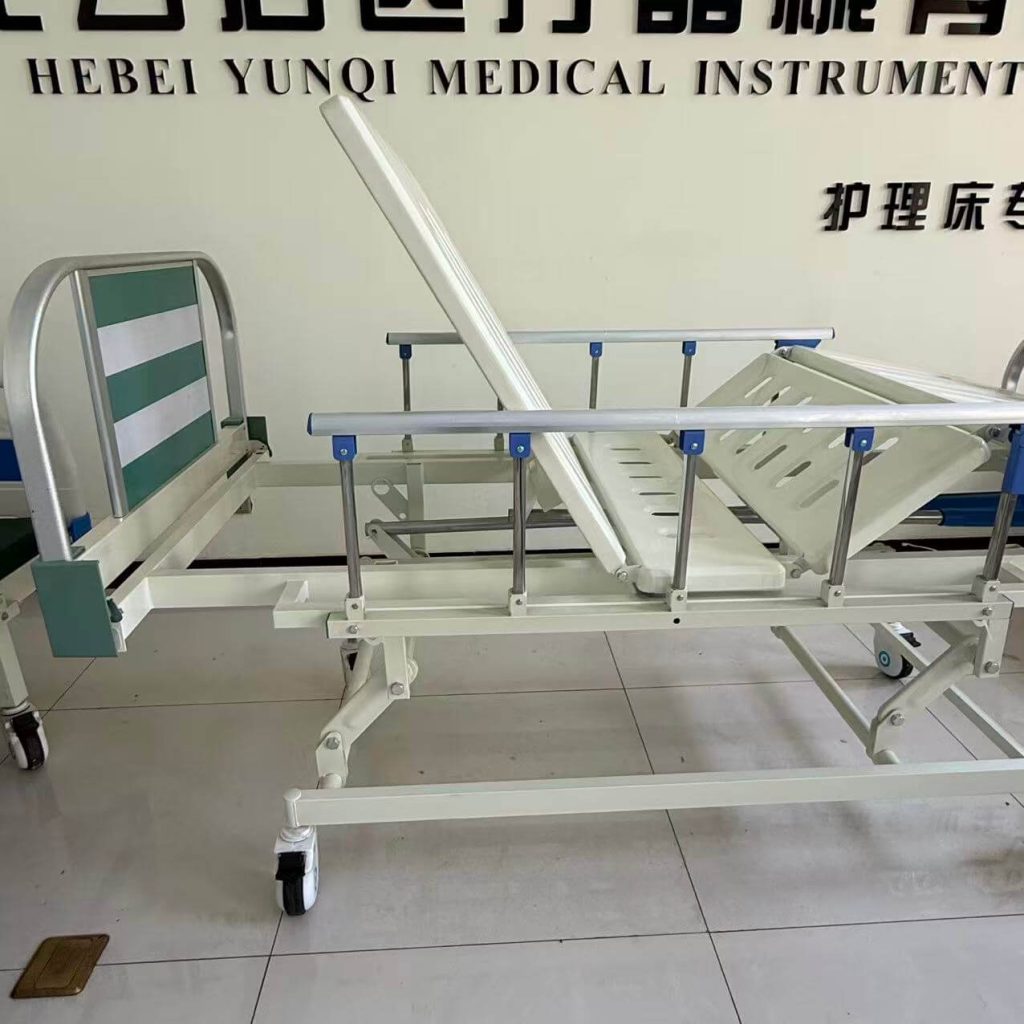
Which Hospital Bed Replacement Parts Should Distributors Understand?
Important spare parts vary by bed type, sales volume, and local service conditions.
Mechanical Wear Parts and Casters
Mechanical parts experience repeated movement, load, impact, and cleaning. Common examples include casters, brakes, crank handles, hinges, rail locks, bumpers, fasteners, and linkage components.
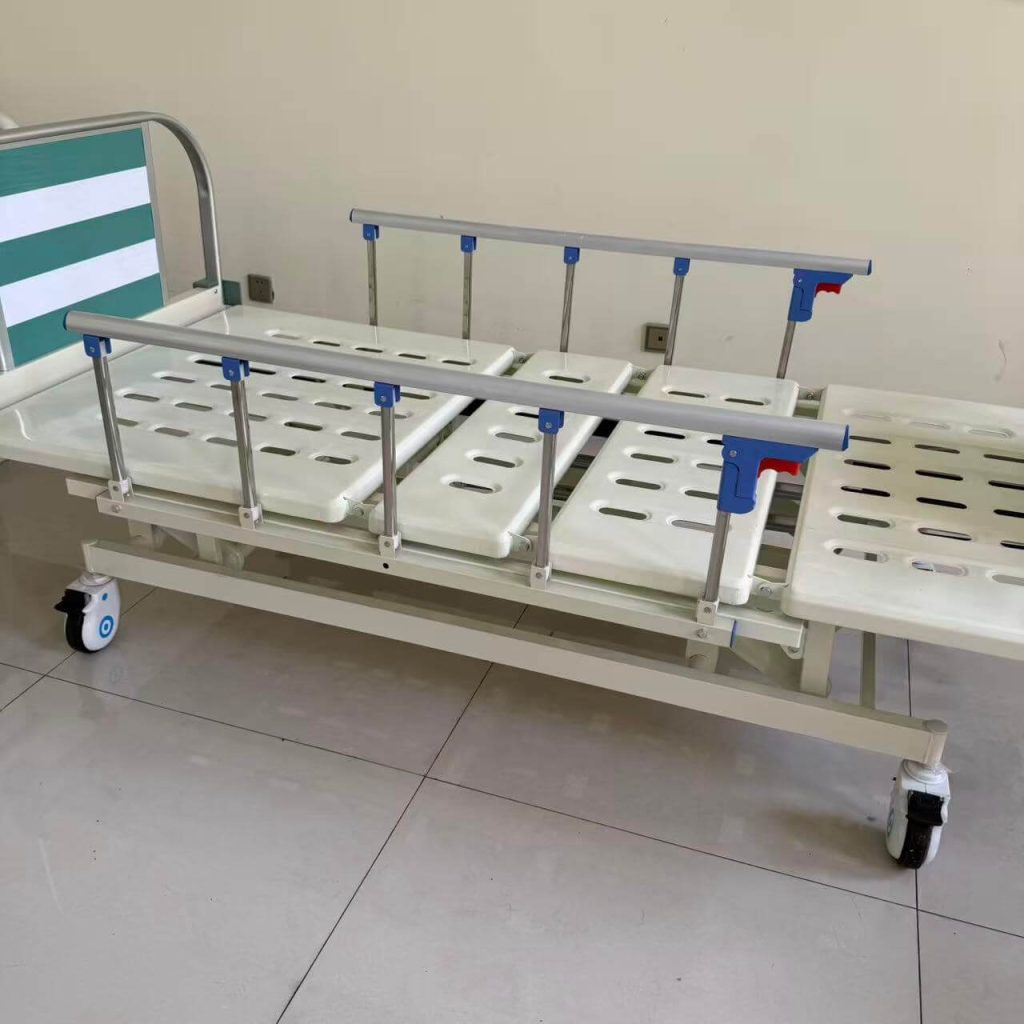
Casters deserve special attention because hospital beds are moved frequently. Over time, wheels may wear, brakes may weaken, or mounting points may be damaged. Distributors should know the caster diameter, mounting type, load rating, brake style, and whether the bed uses individual brakes or central locking.
Recording shared caster models can simplify inventory and speed up repairs.
Side Rails, Headboards, and Footboards
Side rails, headboards, and footboards may be damaged during transport, cleaning, or daily use. Although they may appear simple, compatibility should be checked carefully.
A side rail must match the frame, mounting points, folding mechanism, and overall bed design. Mattress dimensions and surrounding gaps can also affect safe use. Distributors should therefore avoid selecting a rail only because it looks similar to the original.
Headboards and footboards can also differ in material, locking method, mounting width, and attachment structure. Accurate records help distributors provide the correct replacement years after delivery.
Motors, Actuators, and Electrical Components
Electric hospital beds require additional planning. Common technical parts include linear actuators, motors, control boxes, hand controls, power supplies, cables, connectors, batteries, and wiring harnesses.
Visual appearance alone cannot confirm compatibility. Similar actuators may have different stroke lengths, load capacities, mounting dimensions, voltages, or connectors, while similar hand controls may use different control systems.
Before ordering electrical replacements, distributors should collect the bed model, part number, production batch, and clear photos. Wiring diagrams and model-specific parts lists can reduce errors.
How Can Distributors Confirm Replacement-Part Compatibility?
Compatibility is one of the biggest risks in hospital bed maintenance. Ordering the wrong part wastes time and money, while installing an unsuitable component may affect bed function or safety.
A reliable identification process should be part of every distributor’s service workflow.
Use Model Numbers, Serial Numbers, and Part Codes
The first step is to identify the exact bed. Distributors should record the model number, serial number, production batch or date, and original order information whenever possible.
The damaged component should be matched with an official part code or supplier reference. Photos help check labels, connectors, mounting holes, and dimensions but should not replace technical identification.
A simple database can record customer name, bed model, quantity, delivery date, warranty period, and replacement history. This speeds up future requests and helps forecast demand.
Avoid Unverified Substitutions
Using a part that merely appears similar can create problems, especially with side rails, mattresses, load-bearing mechanisms, electrical systems, and controls.
A substitute may fit physically but operate differently, causing incorrect movement, poor alignment, or control-system problems.
For safety-sensitive or function-critical components, distributors should request supplier confirmation and ask whether newer versions are backward compatible.
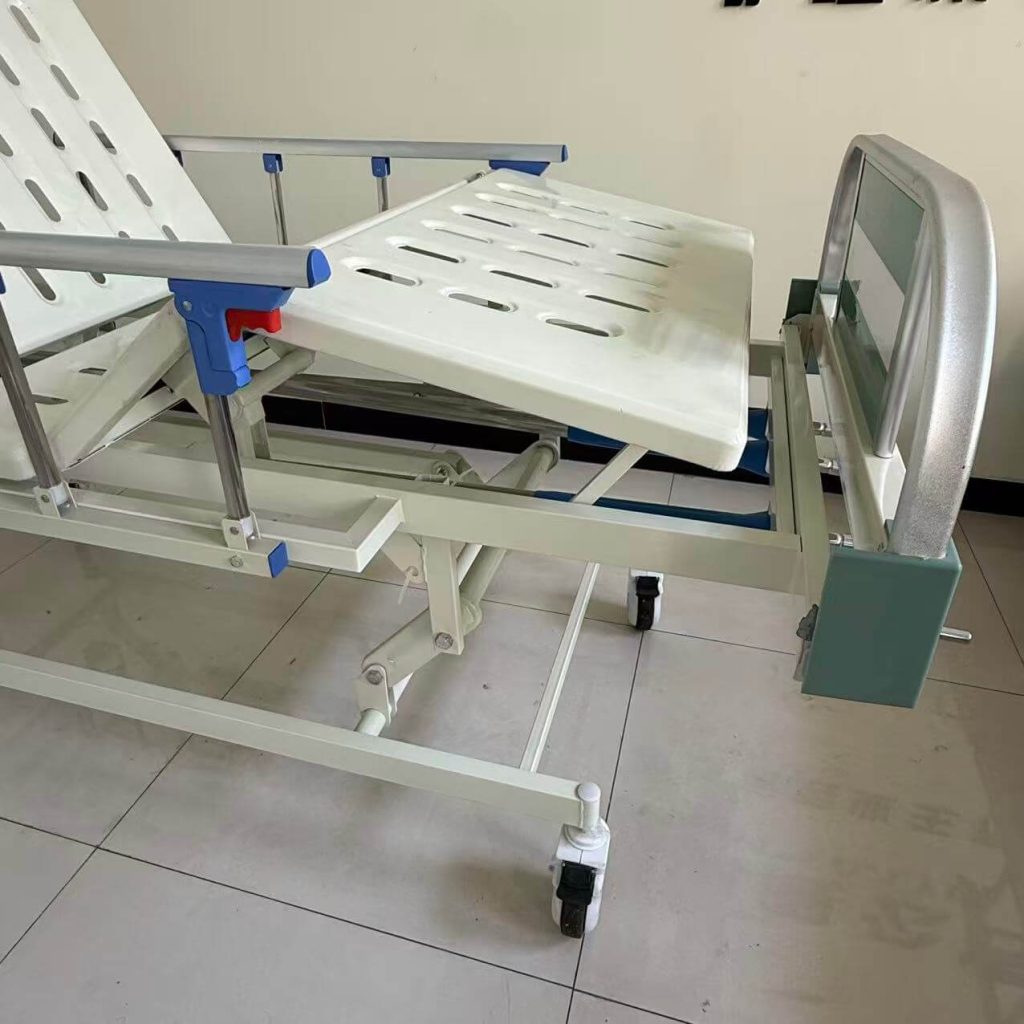
How Should Distributors Build a Spare-Parts Inventory?
Keeping every component in stock is expensive, while keeping nothing locally creates delays. Parts should be classified by replacement frequency, urgency, cost, and supplier lead time.
Stock Fast-Moving and Service-Critical Components
Frequently replaced, low-cost parts are often suitable for local inventory, including selected casters, cables, hand controls, crank handles, rail hardware, bumpers, hooks, and other wear items.
Distributors should also keep a small stock of components that can disable important bed functions, such as control boxes, actuators, or hand controls.
Stock quantities should reflect the installed base and the number of models being supported.
Use Service Data to Improve Stock Levels
Spare-parts inventory should change as the business grows. Distributors can review repair records regularly to identify which parts are requested most often.
This data shows which parts need higher stock levels and which items for older models are becoming slow-moving.
For large hospital projects, distributors may prepare a spare-parts kit with common wear items, selected technical components, and frequently damaged accessories. Shipping it with the original order can reduce freight costs and improve service readiness.
What Should Distributors Ask Hospital Bed Suppliers?
A reliable spare-parts program depends heavily on the supplier. Before selecting a hospital bed manufacturer, distributors should evaluate after-sales support as carefully as specifications and prices.
Ask About Availability, Lead Times, and Product Changes
Distributors should ask how long parts will remain available after model changes and understand lead times for regular and urgent orders.
Distributors should also ask about minimum order quantities, urgent air shipments, and whether spare components can be packed with future bulk orders.
Suppliers should also communicate product changes clearly. If a control box, actuator, caster, or rail design is updated, distributors need to know whether the new version can be used on earlier beds.
For international distributors, predictable parts supply is especially important because cross-border shipping adds time and cost.
Request Technical Documentation and Troubleshooting Support
Good documentation can prevent unnecessary replacement. A reported motor problem may actually come from a cable, connector, hand control, or control box.
Useful materials include exploded diagrams, parts lists, wiring diagrams, installation instructions, service manuals, troubleshooting guides, and videos.
A supplier should also be able to review photos, videos, symptoms, and test results before recommending a replacement.
Jcare supplies hospital beds, home care beds, rehabilitation products, medical furniture, and medical bed accessories for B2B wholesale customers. Factory pricing, available stock, and shorter delivery times can support more reliable long-term service.
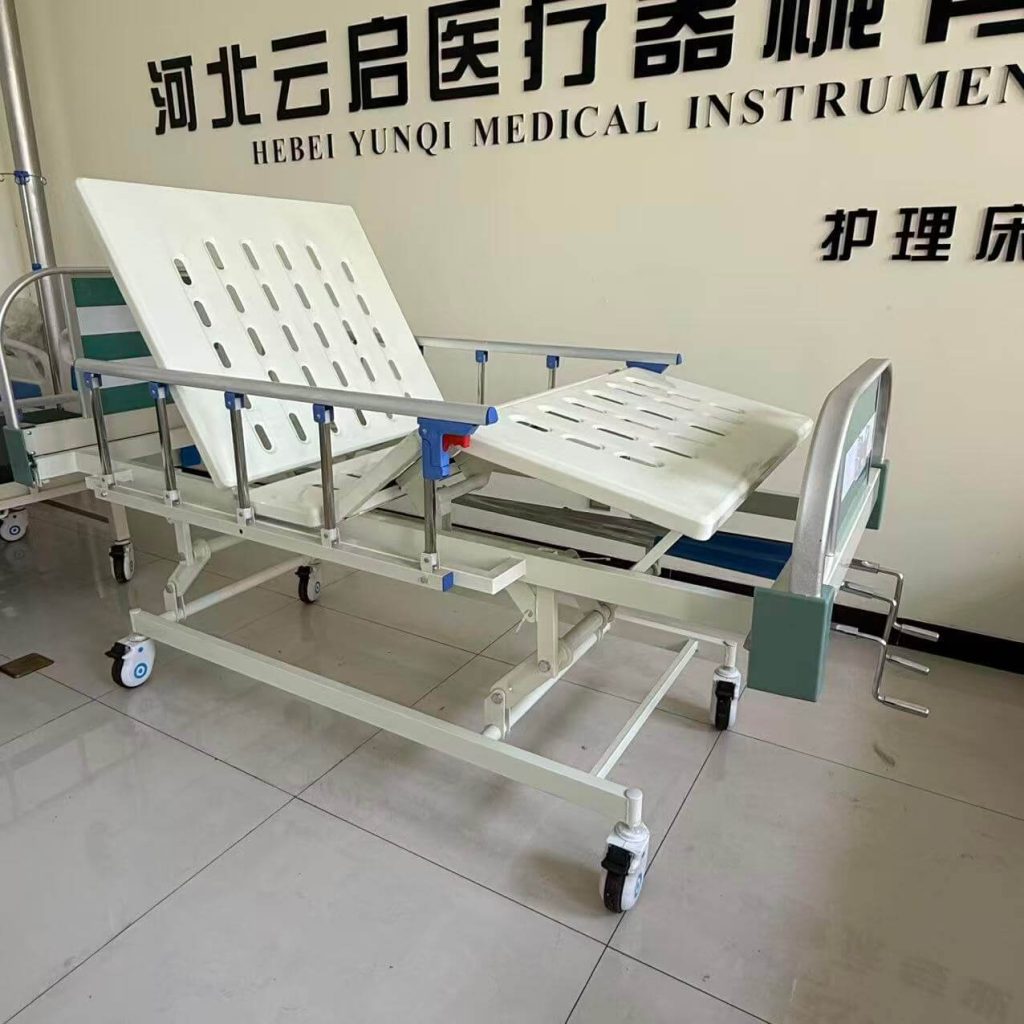
How Can Replacement Parts Strengthen a Distributor’s Business?
A well-organized spare-parts system can support a stronger after-sales business.
Distributors may offer preventive maintenance, inspections, technician training, service agreements, and long-term parts supply, creating value beyond the original bed sale.
Standardized product platforms improve efficiency because technicians learn fewer systems and distributors can stock fewer part types.
Customers should understand warranty coverage, normal wear items, information required for replacement requests, and expected delivery times. Clear policies reduce disputes and support long-term cooperation.
La gente también pregunta
What Hospital Bed Parts Should Distributors Stock First?
Distributors should begin with parts that are frequently replaced, inexpensive to store, or critical to bed operation. Common examples may include casters, hand controls, cables, crank handles, rail hardware, selected actuators, control boxes, and commonly damaged accessories.
The exact list should reflect the models sold and the installed base. For a first bulk purchase, the supplier can recommend a basic spare-parts package.
Should Spare Parts Be Ordered With the First Bulk Shipment?
In many cases, yes. Ordering an initial spare-parts package with the first container or bulk shipment can reduce future freight costs and improve local service readiness.
Distributors should focus on high-use wear parts and a limited number of important technical components, then adjust future orders according to actual service data.
How Long Should Hospital Bed Replacement Parts Remain Available?
There is no single support period suitable for every market. Expected availability should reflect the bed’s service life, customer requirements, contract terms, and supplier product policy.
For large tenders or long-term projects, distributors may include a spare-parts support period in the purchasing agreement.
How Can Distributors Reduce Emergency Spare-Parts Orders?
The best approach is to combine accurate records with carefully selected local inventory. Distributors should track installed beds, identify common failures, review service data, and maintain stock of high-priority components.
Ordering spare parts with regular bulk shipments can reduce urgent air freight and make after-sales costs more predictable.
Conclusión
Hospital bed replacement parts are a critical part of distributor strategy. They affect equipment uptime, customer satisfaction, maintenance costs, and long-term value.
Distributors should understand the mechanical, electrical, and accessory components most likely to require replacement. Compatibility should be confirmed through model numbers, serial numbers, part codes, and supplier documentation rather than appearance alone. Local inventory should focus on fast-moving and service-critical items, while actual repair data should guide future stock adjustments.
A dependable supplier should provide stable parts availability, clear lead times, technical documents, troubleshooting support, and transparent information about design changes. By planning spare-parts support before the first bulk order, distributors can reduce downtime, improve after-sales service, strengthen customer retention, and build a more sustainable hospital bed business.
What hospital bed replacement parts do your customers request most often? Share your experience in the comments, and pass this article to procurement, maintenance, or distribution teams who may find it useful.