
Hospital bed buyers often focus on functions such as backrest adjustment, side rails, casters, and load capacity while paying less attention to surface coating. However, a poor coating can deteriorate after repeated cleaning, moisture exposure, impact, and daily movement. Understanding coating quality helps buyers evaluate durability, hygiene, appearance, and long-term maintenance before purchasing hospital beds.
Hospital bed surface coating matters because it protects metal components from moisture, corrosion, scratches, cleaning chemicals, and repeated physical contact. A well-applied coating also makes surfaces easier to clean and helps hospital beds maintain a professional appearance during long-term use. Buyers should evaluate coating material, adhesion, coverage, surface preparation, corrosion resistance, cleaning compatibility, and manufacturing consistency when comparing hospital bed suppliers.
The coating may appear to be only a finishing detail, but it can influence maintenance requirements throughout the bed’s service life. The following factors explain why.
What Is Hospital Bed Surface Coating?
Hospital bed surface coating is the protective and decorative finish applied to metal components such as bed frames, support structures, bed decks, brackets, and other exposed parts.
Most hospital beds contain multiple metal components that may experience frequent contact with moisture, cleaning solutions, hands, shoes, equipment, and surrounding furniture. Bare or inadequately protected metal is more vulnerable to oxidation and cosmetic damage.
Therefore, manufacturers normally apply a protective finishing system to suitable metal surfaces after fabrication.
Surface Coating Is More Than Paint
Buyers sometimes treat hospital bed coating as ordinary paint applied mainly to improve appearance. In practice, a coating system can have several functions at the same time.
It may help:
- isolate the underlying metal from moisture;
- reduce the possibility of surface corrosion;
- create a smoother surface for routine cleaning;
- improve resistance to minor scratches and impacts;
- provide a consistent color and appearance;
- cover fabricated metal surfaces more uniformly;
- extend the usable appearance of the hospital bed.
The final performance depends not only on what coating material is used but also on how the metal is prepared and how consistently the coating is applied.
For procurement teams, asking only, “What color is the bed?” therefore provides very limited information about coating quality.
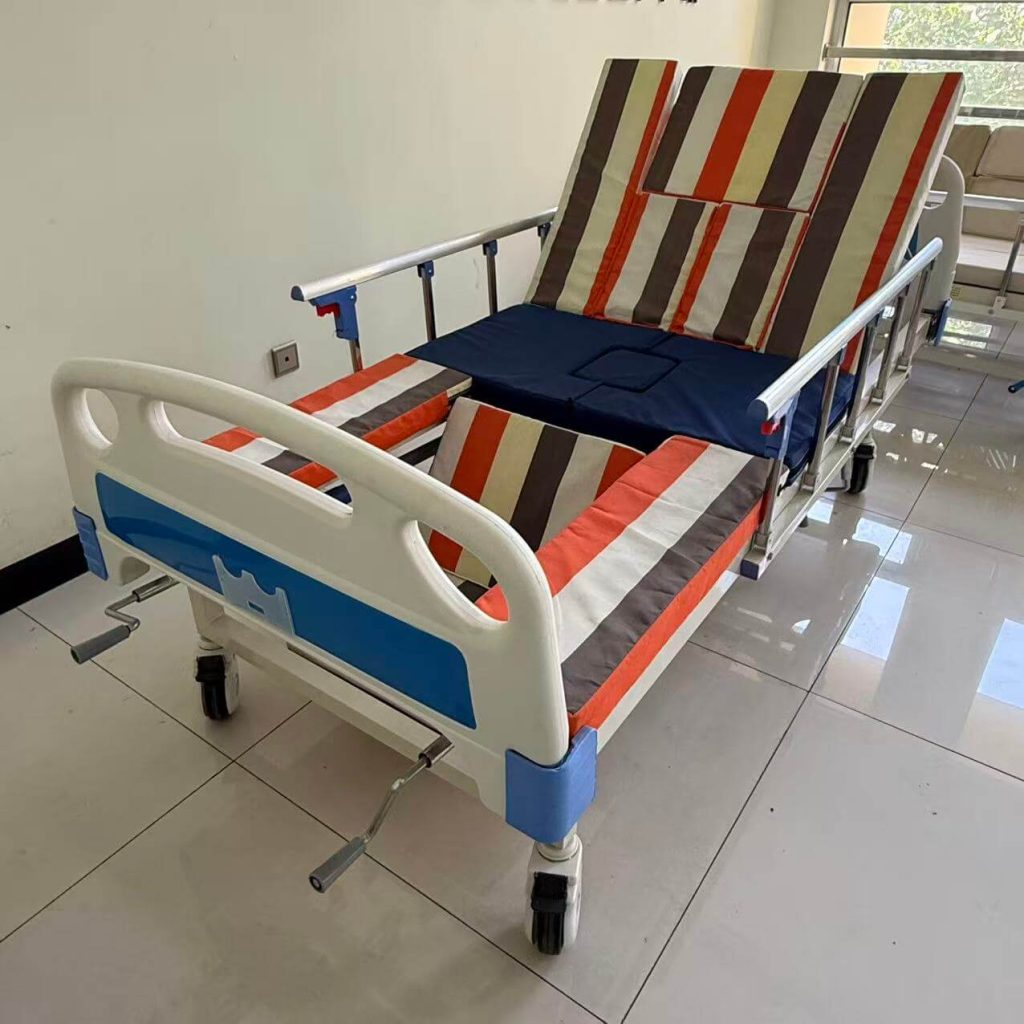
Why Does Hospital Bed Coating Matter in Daily Hospital Use?
A hospital bed is not installed and left untouched. It may be moved, adjusted, cleaned, disinfected, loaded, unloaded, and contacted by other equipment many times during normal use.
These repeated actions gradually challenge the bed’s surface finish.
A coating that looks acceptable when a bed is new may perform differently after months or years of daily operation.
Repeated Cleaning Places Stress on the Surface
Hospital environments typically require regular cleaning. Bed surfaces can therefore be exposed repeatedly to moisture, wiping, detergents, and facility-approved cleaning products.
A weak surface finish may gradually show:
- fading;
- loss of gloss;
- discoloration;
- rough areas;
- peeling;
- blistering;
- exposed metal around damaged points.
The cleaning method, concentration of cleaning agents, contact time, and frequency can all influence the result.
For this reason, hospitals and distributors should consider expected cleaning routines when selecting beds rather than evaluating the surface only by its appearance in a catalog.
Movement and Contact Can Cause Physical Damage
Hospital beds are frequently moved through wards, corridors, elevators, and treatment areas. During transportation and daily operation, the frame can occasionally contact walls, carts, furniture, or other equipment.
Even small impacts may damage poorly bonded coatings.
Edges, welded joints, corners, mounting points, and frequently contacted areas deserve particular attention because damage in these locations can eventually expose the base material.
A durable coating cannot eliminate every scratch, but good surface preparation and application can reduce premature coating failure.
How Does Surface Coating Help Protect Hospital Beds From Corrosion?
Corrosion is one of the most important reasons for protecting metal hospital bed components.
When exposed metal comes into contact with moisture and oxygen, oxidation can occur. The process may accelerate depending on environmental conditions and the type of metal involved.
Healthcare facilities can create demanding conditions because beds may be exposed to cleaning water, humid environments, accidental spills, and repeated wiping.
Coating Creates a Protective Barrier
A properly applied coating separates the metal substrate from much of the surrounding environment.
This barrier helps limit direct contact with moisture and other substances that can contribute to corrosion.
However, the protection depends on the integrity of the coating.
If the surface is scratched deeply enough to expose metal, or if the coating begins to peel away, moisture may reach the substrate.
Consequently, buyers should evaluate not only whether a bed is coated but also whether the coating is uniform and firmly attached.
Small inconsistencies around corners, welded areas, holes, and joints can become weak points.
Surface Preparation Influences Corrosion Protection
Coating performance begins before the visible finish is applied.
Metal surfaces may contain oil, dust, scale, welding residue, or other contaminants after manufacturing. If these are not adequately treated, the coating may fail to bond consistently with the substrate.
Appropriate preparation helps create a cleaner and more suitable surface for the following finishing process.
For procurement teams visiting a factory, this makes the pre-coating process worth discussing.
Questions may include:
- How are metal components cleaned before coating?
- How are welding residues handled?
- Are parts inspected before finishing?
- How is coating coverage checked?
- How are defective surfaces reworked?
These questions can provide more useful information than judging coating quality from photographs alone.

Why Is Powder Coating Commonly Used on Hospital Bed Frames?
Powder coating is widely used for many fabricated metal products, including components used in medical furniture.
In a typical process, dry coating powder is applied to prepared metal and then cured to form a continuous finish.
Its suitability depends on the substrate, part design, preparation process, coating formulation, application conditions, and curing control.
Powder Coating Can Provide a Durable Finish
For hospital bed applications, manufacturers often choose powder coating because it can provide a relatively uniform and durable surface on suitable metal structures.
Potential advantages include:
- good surface coverage;
- a clean finished appearance;
- resistance to routine handling;
- a range of available colors and textures;
- suitability for production-scale metal finishing.
However, buyers should not assume that every powder-coated hospital bed has the same quality.
The words “powder coated” describe a coating method, not the complete manufacturing quality.
Poor preparation, inadequate coverage, incorrect curing, contamination, or inconsistent production control can still result in premature coating problems.
Therefore, supplier evaluation remains important.
How Does Coating Affect Hospital Bed Cleaning and Hygiene Management?
The coating itself does not replace a hospital’s infection-control procedures, but the condition of the bed surface can influence how easily routine cleaning is performed.
Smooth, intact surfaces are generally easier to wipe than damaged, peeling, or heavily corroded ones.
This is particularly relevant for hospital beds because staff may need to clean the frame repeatedly between patients or during extended use.
Smooth Surfaces Are Easier to Maintain
When coating remains continuous and intact, dirt and residues have fewer damaged areas in which to accumulate.
By contrast, chipped coatings, deep scratches, rusted sections, and rough surfaces can complicate routine maintenance.
Hospitals therefore benefit from considering the cleanability of the entire bed structure, including:
- bed frame surfaces;
- bed deck components;
- side rail mounting areas;
- head and foot section connections;
- caster support structures;
- adjustment mechanisms;
- frequently touched points.
Not every component uses the same material or surface treatment, so buyers should evaluate the hospital bed as a complete system.
Cleaning-Chemical Compatibility Should Be Considered
Hospitals may use different detergents and disinfecting products depending on their internal procedures.
Some aggressive chemicals or incorrect concentrations can damage certain finishes over time.
For large procurement projects, buyers should ask suppliers for cleaning and maintenance guidance and then compare it with the facility’s normal practices.
This step is especially useful when beds are expected to undergo frequent cleaning.
It can also reduce misunderstandings after delivery, because both the buyer and supplier have a clearer understanding of how the finished surfaces should be maintained.
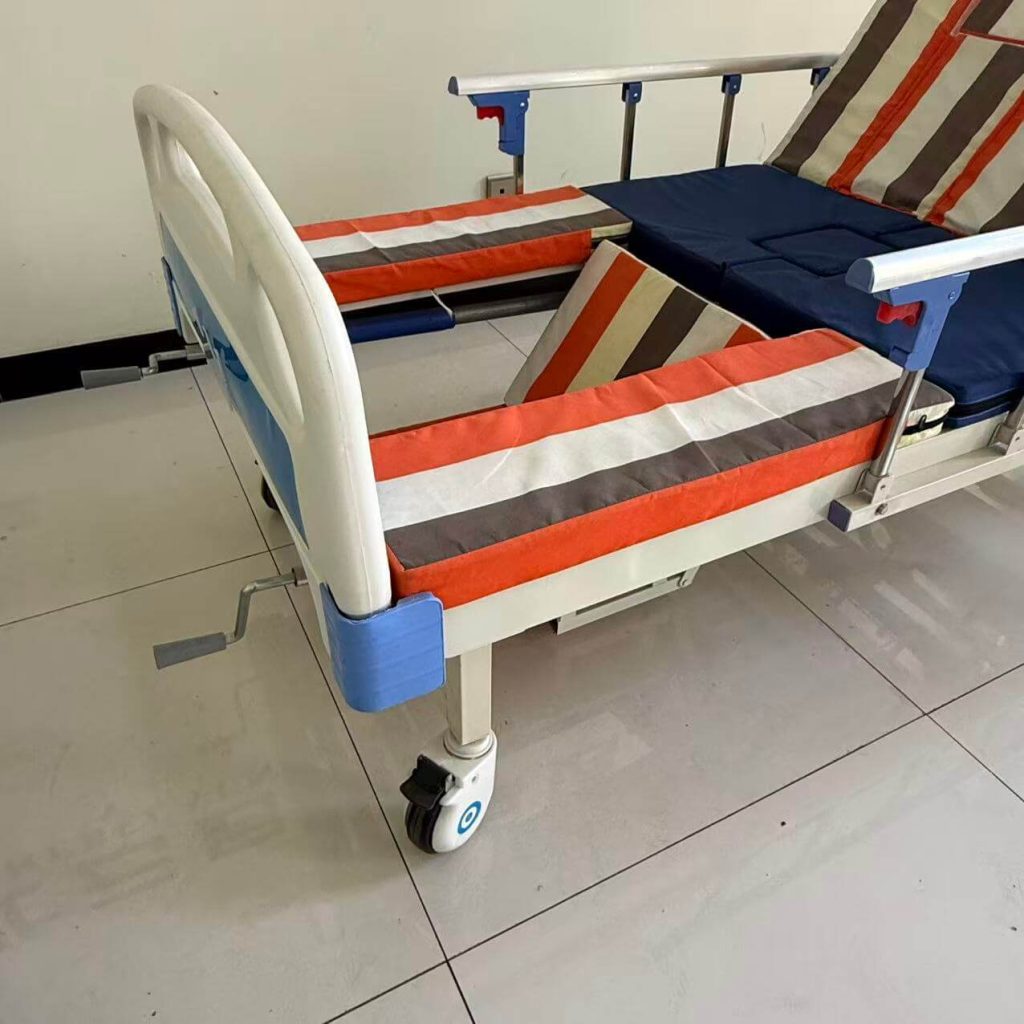
How Does Coating Quality Affect the Appearance of Hospital Beds?
Appearance may seem less important than mechanical performance, but it still matters in hospitals, clinics, rehabilitation facilities, and home-care environments.
A hospital bed is a highly visible piece of medical furniture.
Faded surfaces, scratches, peeling coating, or visible rust may make otherwise functional equipment appear old or poorly maintained.
Consistent Finishing Supports a Professional Appearance
Uniform coating helps provide consistency across the bed frame.
For buyers ordering dozens or hundreds of beds, consistency becomes especially important. Differences in shade, texture, gloss, or surface coverage can be much more noticeable when multiple beds are installed together.
During pre-shipment inspection, buyers can therefore check:
- whether colors are consistent;
- whether visible areas have complete coverage;
- whether the surface contains obvious bubbles or defects;
- whether edges are adequately finished;
- whether scratches occurred during assembly;
- whether welded areas have a consistent appearance.
These checks are simple but useful for reducing cosmetic quality problems before shipping.
Which Areas of a Hospital Bed Should Buyers Inspect Most Carefully?
A quick inspection of the center of the frame is not enough.
Coating problems frequently become more visible in complicated areas where application or handling may be difficult.
Pay Attention to Welds, Edges, Joints, and Hidden Areas
Hospital bed buyers should examine several locations carefully.
Welded areas:
Welding changes the metal surface and may leave residue that requires proper preparation before finishing.
Edges and corners:
These areas can receive physical contact and may be more vulnerable to impact during handling.
Bolt holes and mounting points:
Assembly can place pressure on the coating around fasteners and connections.
Lower frame sections:
These areas may experience contact with shoes, cleaning equipment, water, or floor-related contamination.
Caster mounting areas:
Repeated movement can create vibration and mechanical stress around the lower structure.
Areas beneath removable components:
Hidden sections should not automatically be assumed to have the same finish as easily visible surfaces.
For wholesale buyers and distributors, adding these areas to an inspection checklist can make incoming quality control more systematic.
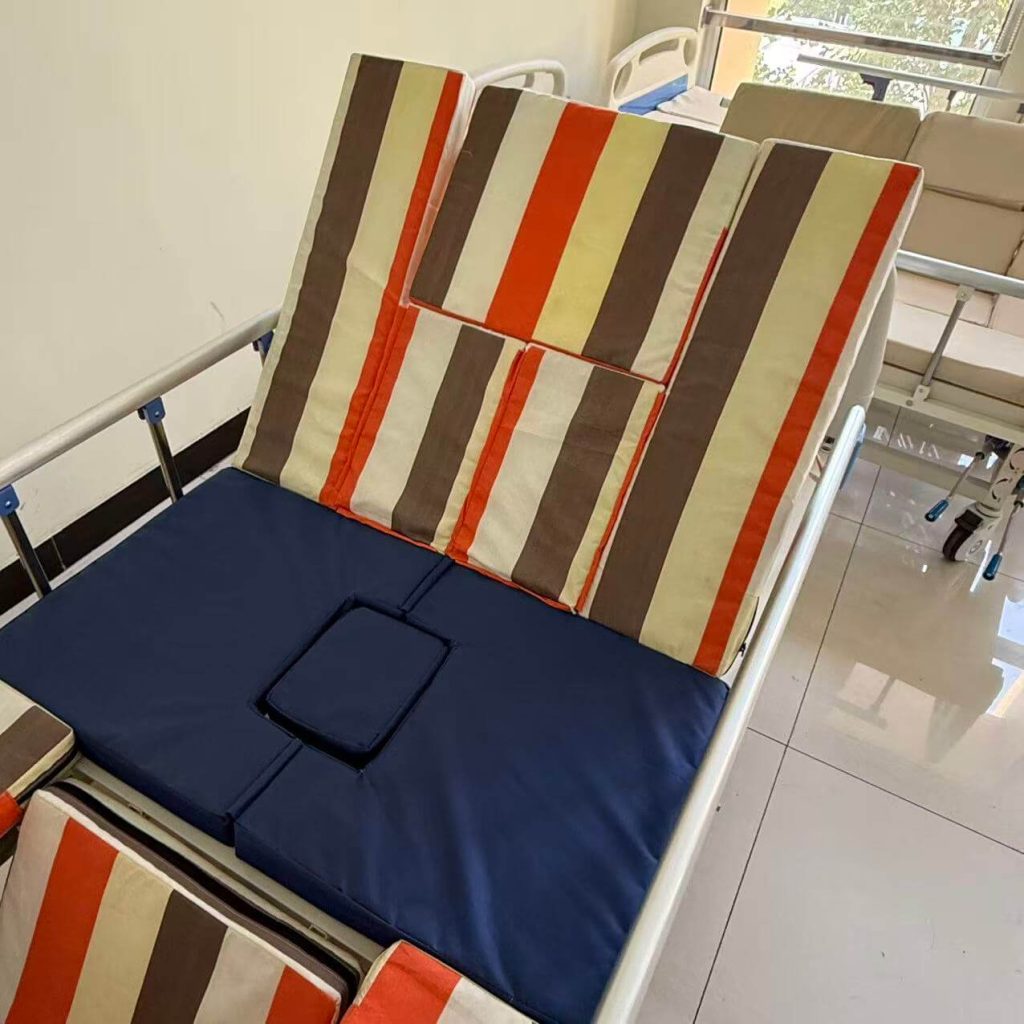
What Coating Problems Should Hospital Bed Buyers Watch For?
Coating defects are easier to manage before a large shipment leaves the factory than after hundreds of beds arrive at their destination.
Purchasers should therefore learn to recognize common warning signs.
Common Surface Defects Can Indicate Process Problems
Visible problems may include:
- peeling or flaking;
- bubbles or blisters;
- uneven coating thickness;
- obvious pinholes;
- rough contamination points;
- exposed metal;
- inconsistent color;
- incomplete edge coverage;
- scratches from assembly;
- rust appearing beneath damaged coating.
One small cosmetic defect does not necessarily mean the entire production batch is unsuitable. However, repeated defects across multiple units may indicate inconsistent preparation, application, handling, or inspection.
This is why random sampling across different beds can be more informative than examining only one prepared display sample.
Buyers should also distinguish production defects from damage caused during loading and transportation. Packaging and shipment protection remain important even when the original coating quality is good.
How Can Surface Coating Affect Hospital Bed Lifecycle Cost?
The cheapest hospital bed is not always the bed with the lowest long-term cost.
If a surface deteriorates prematurely, facilities may spend additional time and money on maintenance, refinishing, part replacement, or earlier equipment replacement.
For distributors, surface problems can also result in customer complaints and after-sales service requirements.
Initial Price Should Be Balanced With Maintenance Needs
Consider two hospital beds with similar functions.
One may have a lower purchase price but inconsistent finishing. Another may cost slightly more but have better manufacturing control and more durable exposed surfaces.
If the first product requires frequent maintenance or develops corrosion earlier, the initial saving may disappear.
Procurement teams can therefore consider coating together with:
- frame construction;
- welding quality;
- caster durability;
- side rail construction;
- adjustment mechanism quality;
- replaceable parts;
- cleaning requirements;
- packaging protection;
- after-sales parts availability.
A hospital bed is a complete piece of equipment. Surface coating is one part of that overall durability evaluation.
How Should Buyers Compare Coating Quality Between Hospital Bed Suppliers?
Supplier catalogs often use similar terms, making direct comparison difficult.
Instead of relying entirely on product descriptions, buyers can request more specific information and inspect actual samples.
Use a Structured Supplier Evaluation Process
A practical coating evaluation can include several steps.
First, confirm the substrate and finishing method used on major metal components.
Next, ask how the surfaces are prepared before coating.
Then inspect a production sample under good lighting. Look at both large flat surfaces and complicated areas around welds, corners, openings, and joints.
After that, discuss routine cleaning recommendations.
For larger orders, buyers can also include surface appearance and coating condition in their pre-shipment quality-control checklist.
Photographs can document major inspection points so that both buyer and supplier understand the accepted finish.
In addition, packaging should be reviewed. Metal frames may rub against accessories or other components during long-distance transportation unless adequate protection and separation are provided.
Good coating quality can still be damaged by poor packaging.

Does Coating Matter for Home Care Beds as Well as Hospital Beds?
Yes. Home care beds may operate in a different environment, but their metal structures still require protection.
Users may clean the bed frequently, and the equipment can remain in service for an extended period.
Appearance can be particularly important in residential environments because the bed becomes part of the living space.
Therefore, buyers sourcing home care beds can apply many of the same principles used for hospital bed procurement.
Different Markets May Have Different Priorities
Hospitals may prioritize frequent cleaning, durability, and standardized appearance across large quantities.
Private clinics may focus on clean appearance and straightforward maintenance.
Home care equipment buyers may give greater attention to appearance, comfort, ease of cleaning, and long-term household use.
Distributors may additionally consider how well the product maintains its finish during warehouse storage and transportation.
Understanding the final application helps suppliers recommend a more appropriate bed configuration.
Why Should Hospital Bed Buyers Discuss Surface Quality Before Ordering?
Hospital bed surface coating rarely receives as much attention as electrical functions, bed dimensions, side rails, or load capacity. Nevertheless, it directly contributes to the condition of the metal structure during everyday use.
A durable, consistent finish supports easier maintenance, protects exposed metal, improves appearance, and reduces the likelihood of premature surface deterioration.
More importantly, coating quality can provide buyers with clues about overall manufacturing control.
If a supplier pays attention to preparation, welding areas, coating coverage, assembly protection, inspection, and packaging, the finished bed is more likely to arrive with a consistent professional appearance.
For bulk procurement, surface requirements should therefore be discussed before production rather than after shipment.
الخاتمة
Hospital bed surface coating matters because the bed must withstand repeated cleaning, moisture, movement, physical contact, and long-term daily use. A suitable coating helps protect metal components from corrosion, supports easier maintenance, maintains a professional appearance, and can reduce avoidable surface problems over the product’s service life.
Hospital bed purchasers should look beyond color and ask how surfaces are prepared, coated, inspected, assembled, cleaned, and protected during shipment. Welds, corners, mounting points, lower frame sections, and frequently contacted areas deserve particular attention.
By including surface coating in supplier comparison and pre-shipment inspection, hospitals, clinics, distributors, and medical equipment buyers can make more informed purchasing decisions and reduce potential maintenance problems after delivery.
What surface problems have you encountered when purchasing hospital beds? Share your experience or send this guide to colleagues responsible for hospital equipment procurement.