
Hospital bed buyers often compare functions, materials, prices, and delivery schedules while overlooking welding quality. Yet poor welding can contribute to frame deformation, unstable joints, difficult assembly, and higher maintenance costs. By checking weld appearance, critical load areas, frame dimensions, sample performance, and factory controls before ordering, buyers can reduce these risks.
To check hospital bed welding quality before ordering, inspect weld consistency, cracks, porosity, undercut, spatter, incomplete joints, and frame deformation. Focus on high-load areas such as the main frame, lifting structure, actuator brackets, and caster supports. Buyers should also inspect an uncoated sample when possible, verify dimensions, operate the bed, review suitable load-test information, and confirm the manufacturer’s welding quality-control process before approving mass production.
Visual inspection is only the beginning. Buyers should also connect weld appearance with frame accuracy, bed operation, and production consistency.
Why Is Hospital Bed Welding Quality Important?
Welding connects many structural parts of a hospital bed, including the mattress platform, lifting mechanism, actuator brackets, lower frame, and caster supports.
Hospital beds are moved, adjusted, loaded, and cleaned repeatedly. Therefore, the welded structure must remain stable and correctly aligned.
Poor welding may cause inaccurate dimensions, abnormal movement, difficult accessory installation, uneven caster contact, or premature wear. These issues are also easier to correct during sample development than after hundreds of beds have been coated, assembled, packed, and shipped. Therefore, welding inspection should begin before bulk production.
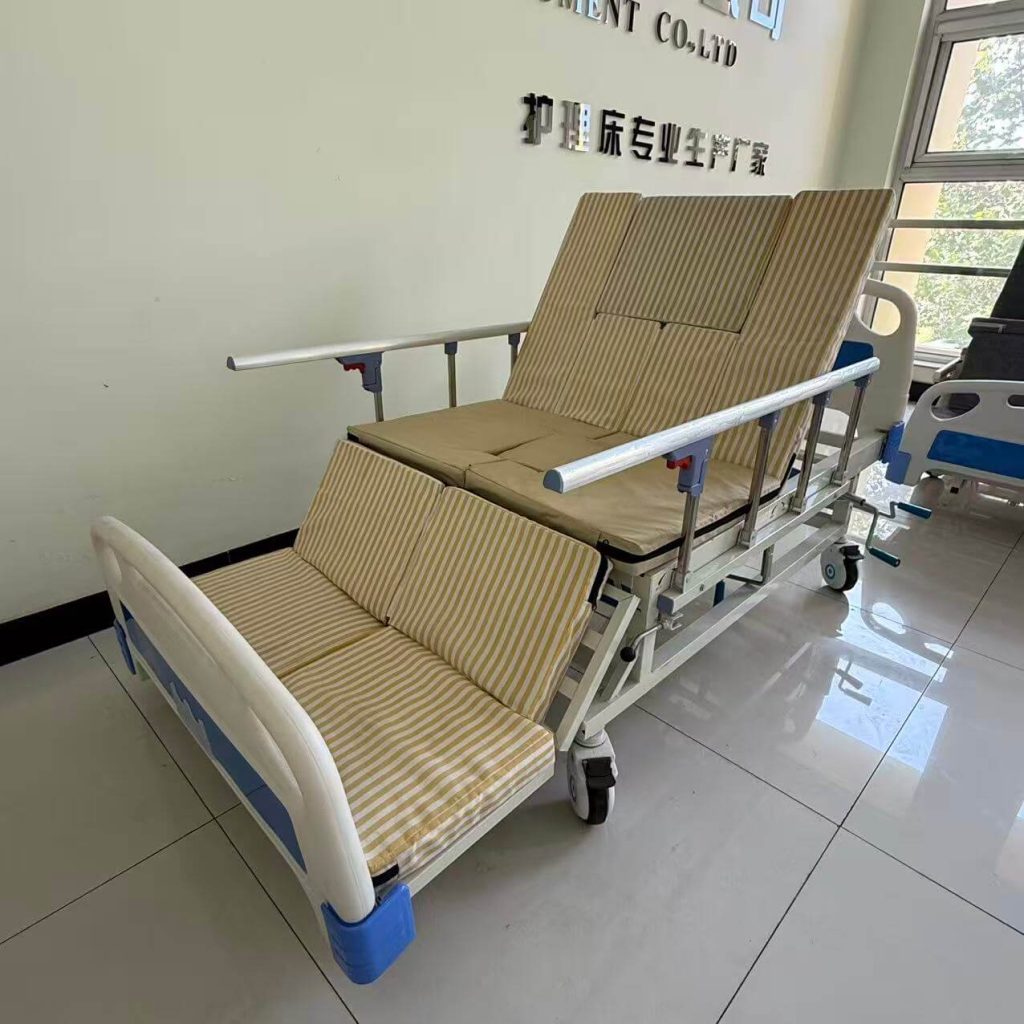
What Should Good Hospital Bed Welding Look Like?
A good weld should generally appear continuous, stable, and reasonably uniform for the specific joint. It should connect the intended parts without obvious cracks, large cavities, severe distortion, or excessive buildup.
However, buyers should not judge quality only by smooth appearance. Grinding and powder coating can improve the surface while hiding some irregularities.
Check Weld Bead Consistency
Compare several similar joints instead of inspecting only one attractive area. Look at both sides of the frame, the head and foot sections, support bars, lower frame, and repeated brackets.
Comparable welds should have reasonably consistent width and shape. Sudden changes may indicate unstable welding speed, inconsistent settings, poor positioning, excessive gaps between parts, or differences in operator technique.
Minor variation is normal. The key question is whether equivalent joints stay consistent across frames.
What Welding Defects Should Buyers Look For?
Buyers do not need to be welding engineers to identify common warning signs. Several visible defects can be checked during sample approval, factory visits, live video inspections, or third-party inspections.
Visible cracks require attention. A crack should not simply be covered by paint or powder coating. Instead, the supplier should explain the cause, corrective action, and reinspection method.
Porosity usually appears as small holes or cavities. Repeated porosity may suggest contamination, shielding problems, unsuitable settings, or inconsistent welding conditions.
Undercut appears as a groove near the edge of a weld. Severe undercut may reduce material around the joint and can indicate that welding parameters or technique need adjustment.
Buyers should also look for excessive spatter, incomplete welds, visible gaps, burn-through, sharp projections, severe grinding marks, and obvious deformation. One minor cosmetic issue may be acceptable, but repeated defects deserve investigation.
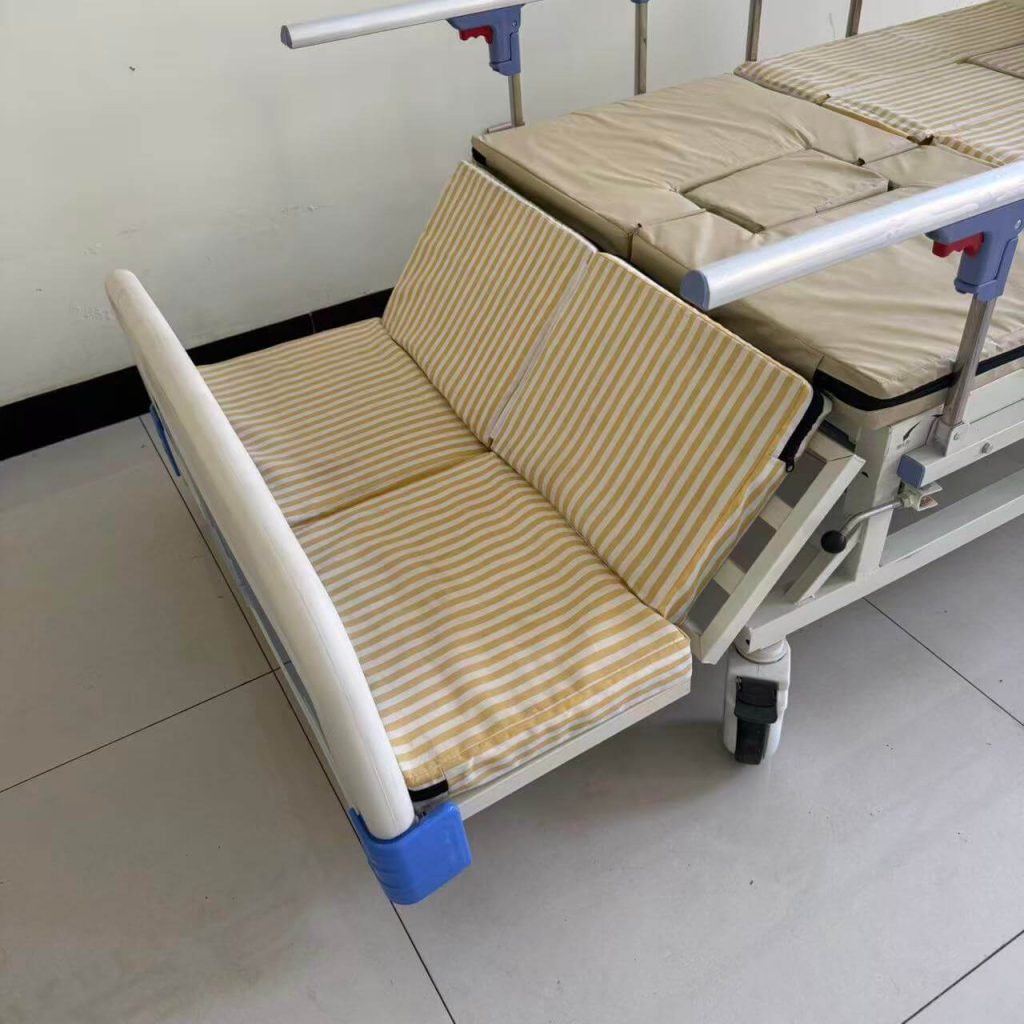
Which Hospital Bed Welds Need the Closest Inspection?
Not every welded joint carries the same load. Therefore, buyers should pay more attention to areas that experience higher force or frequent movement.
Main Frame and Moving Structures
Inspect corner joints, longitudinal tubes, crossbars, platform supports, lifting arms, adjustment brackets, and other major connections.
The frame should remain square and correctly positioned after welding. If it is distorted, side rails may not align, the mattress platform may sit unevenly, or moving parts may interfere with nearby structures.
On electric beds, actuator brackets require close inspection because actuator force is transferred into the frame through these points. Check bracket position, weld continuity, mounting-hole alignment, nearby deformation, and clearance around moving parts.
The lower frame and caster supports also deserve attention because hospital beds are frequently pushed, turned, and locked into position. After assembly, confirm that all casters contact the floor evenly.
Can a Smooth Weld Still Have Quality Problems?
Yes. Smooth appearance does not always prove that a welded connection is structurally adequate.
Grinding can make a weld look cleaner, while powder coating may cover small surface irregularities. Some internal welding problems also cannot be identified from finished product photographs alone.
Therefore, buyers should not approve a supplier only because catalog images show attractive welds.
Request an Uncoated Frame
For a new supplier or customized project, ask for close-up photos, video, or direct inspection of an uncoated welded frame.
Before coating, buyers can more easily examine weld continuity, repair marks, spatter removal, grinding, joint position, heat distortion, and gaps between components.
Afterward, inspect the coated sample separately for surface uniformity, exposed metal, rough areas, sharp edges, and overall finish. This two-stage approach helps separate welding problems from finishing problems.
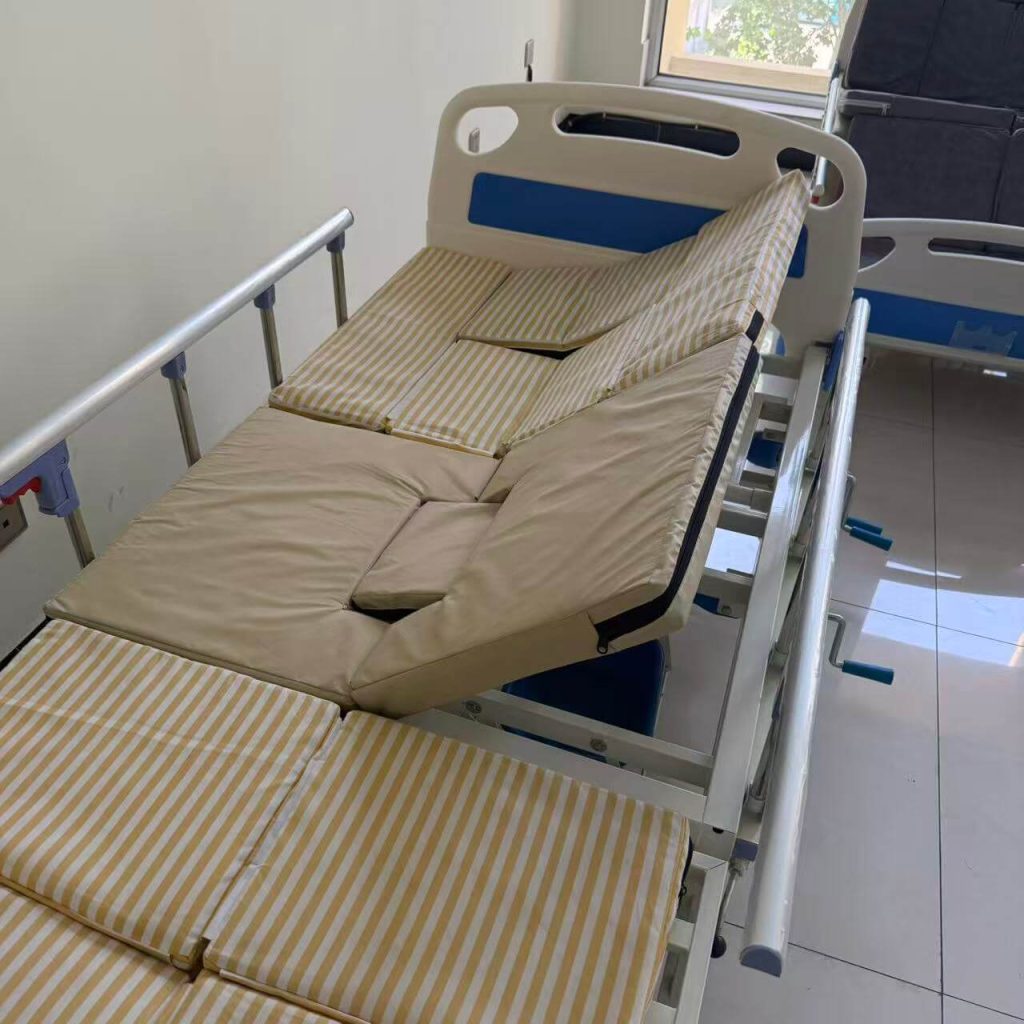
How Can Buyers Check Frame Deformation After Welding?
Welding introduces heat into metal parts. Without suitable fixtures, welding sequences, and process controls, tubes and brackets may move slightly from their intended positions. Even small dimensional changes can affect assembly and operation.
Measure the Frame and Check Assembly
Compare the welded sample with the approved drawing or agreed specifications. Useful checks include overall length, width, diagonal dimensions, support spacing, actuator bracket positions, side rail mounting points, and lower-frame dimensions.
Diagonal measurements help determine whether a rectangular structure remains square. Also compare the left and right sides for symmetry.
Next, install the headboard, footboard, side rails, casters, actuators, mattress-platform sections, and accessories. These parts should fit without excessive force or improvised adjustment.
If workers need to bend brackets, force bolts into position, or enlarge holes, the welded frame may not be sufficiently consistent. Smooth assembly therefore provides useful evidence about fixture accuracy and dimensional control.
How Should Welding Be Checked During Functional Testing?
A hospital bed should be evaluated as a complete working product, not only as a welded frame.
After assembly, operate all applicable functions, such as backrest adjustment, leg adjustment, height movement, Trendelenburg positioning, reverse Trendelenburg positioning, or other model-specific movements.
Look for unexpected bending, rubbing, frame twisting, abnormal bracket movement, or contact between components.
Noise alone does not prove that welding is defective because bolts, pins, actuators, and casters can also create sound. However, unusual noise combined with visible movement around a welded joint should be investigated.
After repeated operation, inspect important joints again for deformation, coating cracks, looseness, or alignment changes.
Should Buyers Request Load Testing?
For important orders, buyers should ask how the manufacturer verifies the structural performance of the completed bed.
The suitable test depends on the model, intended load, applicable requirements, and purchase specification. Therefore, claims such as “heavy duty” should be supported by clear test information.
Ask what load is applied, where it is positioned, how long the test lasts, whether bed functions are operated, whether deformation is checked afterward, and what acceptance criteria are used.
The test should confirm that the frame remains stable and the bed continues to operate correctly afterward.
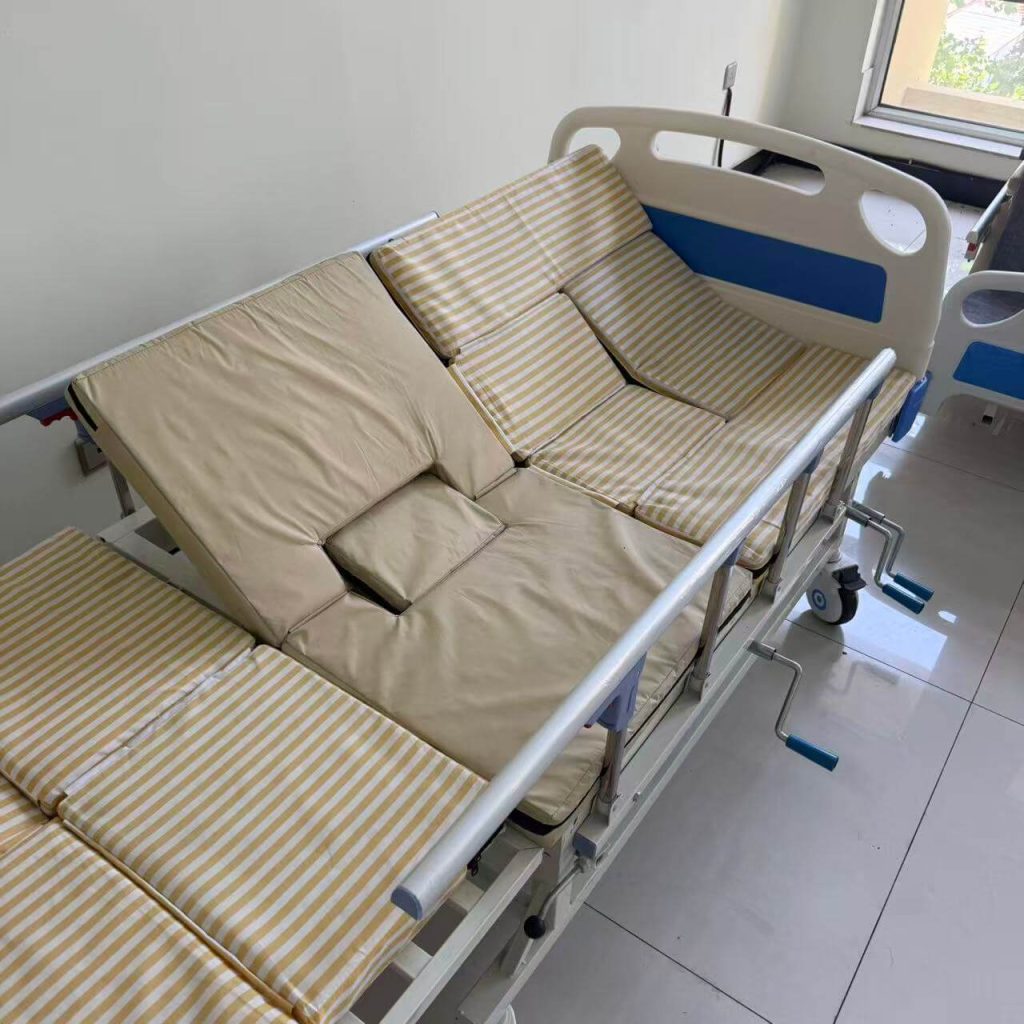
How Can Buyers Evaluate the Manufacturer’s Welding Quality Control?
One sample does not guarantee consistent bulk production. Buyers should evaluate the manufacturing process as well as the finished product.
Review Fixtures and Inspection Procedures
Fixtures help hold tubes, plates, and brackets in the correct position during welding. Ask whether dedicated fixtures are used for important assemblies and how they are checked over time.
Also ask how materials are prepared, welding settings are controlled, operators are trained, equipment is maintained, defects are recorded, and repaired welds are rechecked.
A practical production process may include inspections after cutting, fixture positioning, welding, grinding, coating preparation, final assembly, and before shipment.
The objective is to determine whether the factory uses repeatable controls rather than relying entirely on individual operator experience.
Should Buyers Approve a Sample Before Mass Production?
Yes, particularly for a new supplier, a new hospital bed model, or a customized order.
A physical sample creates a reference for welding, frame dimensions, functions, accessories, surface finish, labeling, and packaging before large-scale production begins.
Create a Written Approval Checklist
Avoid approving a sample only with comments such as “looks good.” Instead, record visible and measurable requirements.
A welding checklist may include:
- approved frame material and tube specifications;
- critical welded locations;
- unacceptable visible cracks or severe defects;
- dimensional and alignment requirements;
- grinding and finishing expectations;
- functional and load-related test requirements;
- photographs of approved key joints.
Written criteria and photographs reduce misunderstandings and provide a reference for later inspections.
What Questions Should Buyers Ask Before Ordering?
Specific questions make supplier comparison easier. Buyers can ask:
- What frame material and tube specifications are used?
- Which joints carry the highest loads?
- What welding process and fixtures are used?
- How are welded frame dimensions checked?
- Can you show an uncoated sample?
- How are defects repaired and re-inspected?
- What functional and structural tests are performed?
- How is batch consistency maintained?
These questions provide more useful information than simply asking whether the frame is “strong.”
What Is the Best Hospital Bed Welding Inspection Process Before Ordering?
A reliable process combines visual inspection, dimensional verification, functional testing, supplier process review, and written quality requirements.
A practical sequence is:
drawing review → raw welded frame inspection → dimensional check → sample assembly → coating → functional testing → performance verification → sample approval → mass production → pre-shipment inspection.
This sequence helps buyers find problems while they are still easier to correct. Repositioning one bracket during sample development may be straightforward. Discovering the same issue after hundreds of beds have been welded, coated, assembled, and packed is much more difficult.
International buyers who cannot visit the factory can use detailed photos, live video, dimensional records, sample testing, and third-party inspection. Ask to see critical joints rather than only selected attractive areas.
Therefore, welding inspection should be part of the purchasing specification from the beginning rather than treated as a final cosmetic check.
الخاتمة
Checking hospital bed welding quality before ordering requires more than looking for smooth welds. Buyers should inspect visible defects, compare repeated joints, focus on high-load areas, verify frame dimensions, examine an uncoated sample when possible, operate the bed, review suitable test information, and understand how welding is controlled during mass production.
Sample approval, written specifications, and pre-shipment inspection can further reduce differences between the approved product and the final order.Jcare supplies hospital beds, home care beds, rehabilitation products, medical furniture, and related accessories for international wholesale projects.
Which welding issue concerns you most—visible defects, frame deformation, structural performance, or production consistency? Share your experience in the comments or send this guide to other hospital bed buyers.