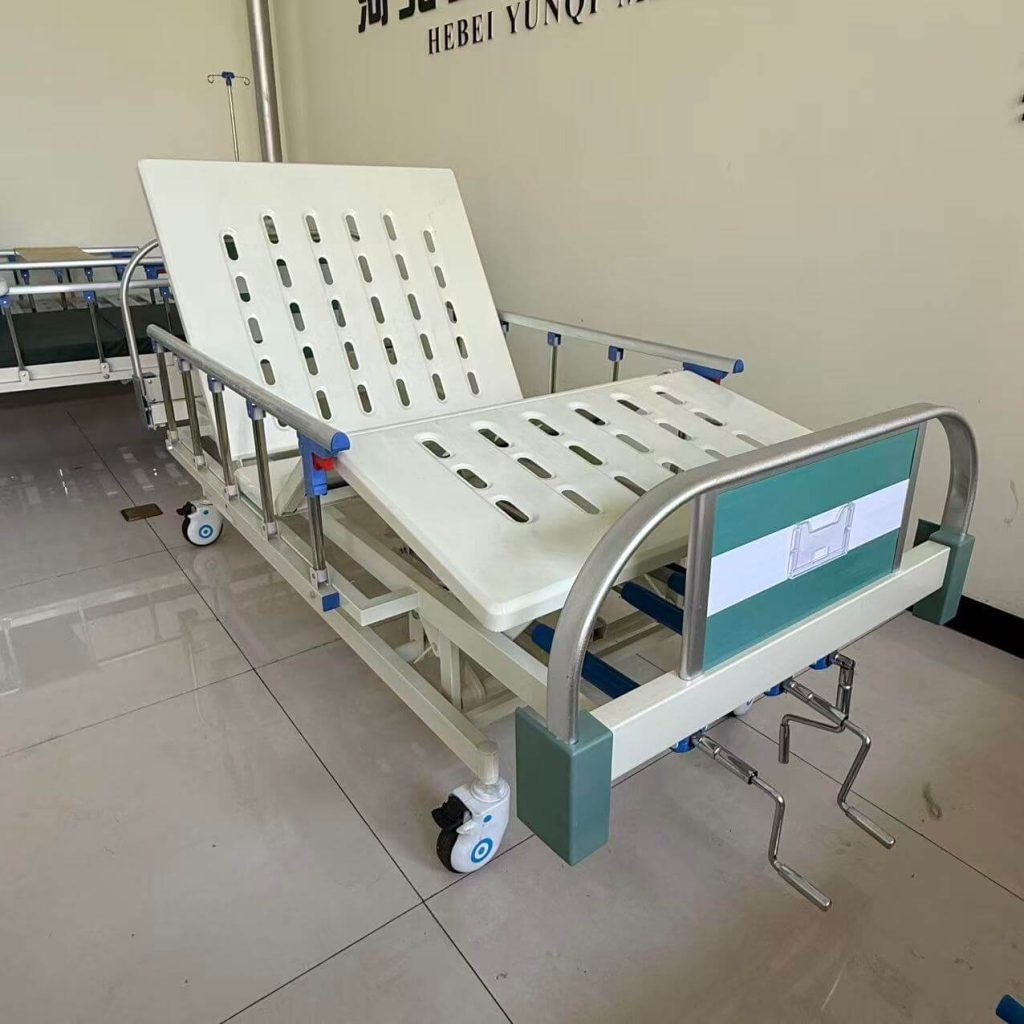
Hospital bed buyers often ask whether a standard-width bed suits every patient or whether wider models provide better care. Choosing incorrectly can reduce comfort, limit caregiver access, complicate transfers, and create room-layout problems. Evaluating patient needs, facility space, and bed specifications helps buyers make a more practical choice.
The right hospital bed width should match the patient’s body size, mobility, care requirements, mattress dimensions, and available room space. For many adult care settings, a sleeping platform around 90 cm wide is a common reference. Larger patients may require wider or expandable beds. Buyers should compare sleeping-surface width, overall width, safe working load, side-rail design, and mattress compatibility before ordering.
Bed width affects more than comfort. It also influences nursing access, transfers, transportation, and how efficiently a room can be used.
What Is the Standard Width of a Hospital Bed?
There is no single hospital bed width suitable for every facility. Hospitals, clinics, nursing environments, and home care projects may need different dimensions according to patient population and treatment conditions.
For many general adult hospital beds, a sleeping surface around 90 cm wide is a common reference. Actual dimensions vary by manufacturer and model, while bariatric or specialized beds can be much wider.
Buyers should therefore avoid writing only “standard width” in a purchase request. A reliable specification should include exact sleeping-platform width, overall bed width, bed length, and mattress size.
Sleeping Surface Width vs. Overall Width
Sleeping-surface width refers to the area supporting the mattress and patient. Overall width includes side rails, frame structures, bumpers, controls, and other external components.
A bed with a 90 cm platform may have an overall width well above 90 cm. If a buyer checks only mattress width, the delivered bed may still be too wide for a doorway, elevator, corridor, or patient room.
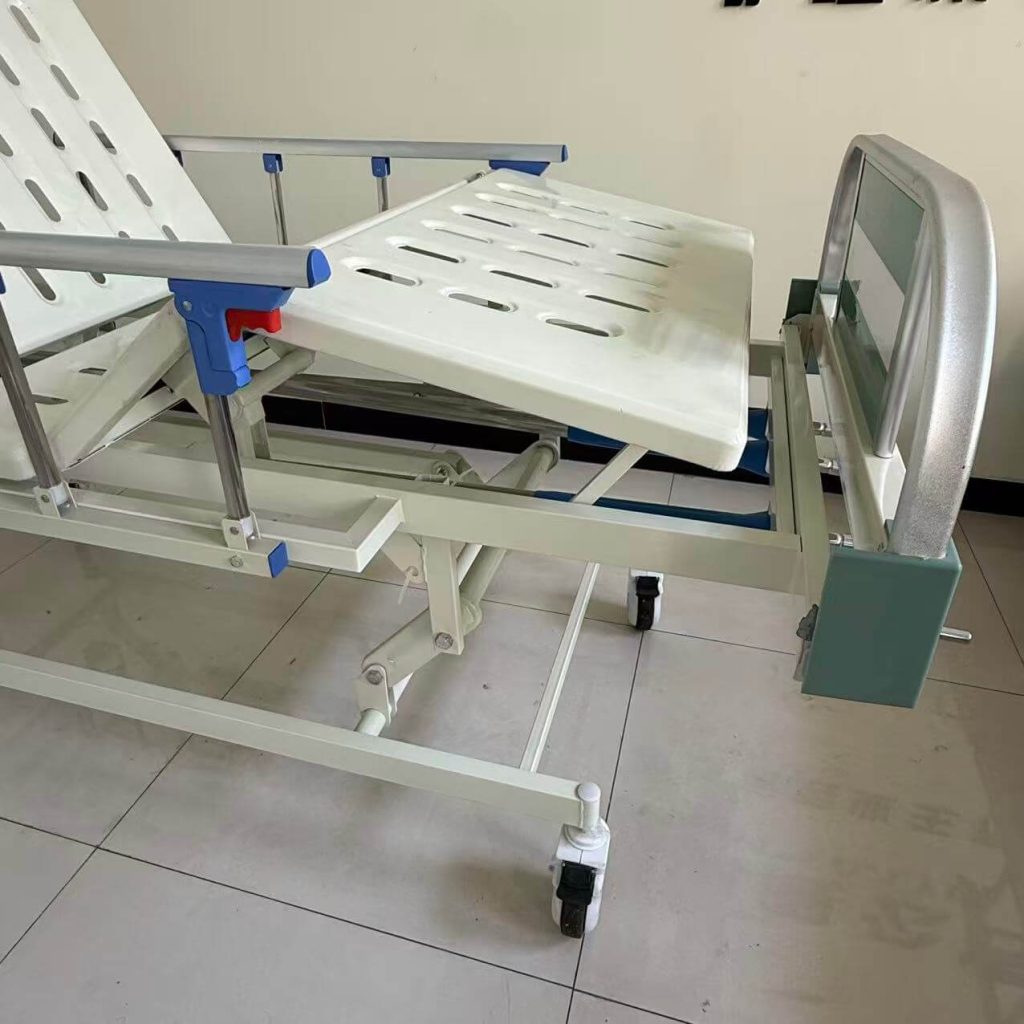
How Does Patient Size Affect Hospital Bed Width?
Patient size is one of the first factors to consider. The bed should provide enough room for comfortable positioning, turning, and nursing care without being unnecessarily wide.
For many average adult patients, a standard adult platform can be practical. Larger patients may require more lateral space and a stronger bed structure.
Width Should Match More Than Body Weight
Weight alone does not determine the right width. Two patients with similar weight can have different body shapes and mobility needs.
Purchasers should consider body width, mobility level, ability to reposition independently, need for caregiver assistance, and whether positioning cushions or special mattress systems will be used.
Adequate width can improve comfort and provide space for repositioning, while excessive width can increase the distance caregivers must reach across the bed. The aim is to give the patient sufficient usable space without making routine nursing unnecessarily difficult.
When Should Buyers Consider a Wider Hospital Bed?
A wider bed may be appropriate when patients need additional space for comfort, repositioning, rehabilitation, or bariatric care.
However, wider is not automatically better. A larger platform increases the distance between the caregiver and the center of the bed, which may make some procedures less convenient.
Bariatric Beds Require More Than Extra Width
A wider sleeping surface alone does not make a bed suitable for bariatric care.
Bariatric beds generally require increased width, higher load capacity, reinforced frame construction, suitable adjustment mechanisms, appropriate side rails, stronger casters, and compatible mattresses.
Some models also use expandable platforms. Buyers should confirm minimum and maximum widths, overall dimensions, mattress configuration, and safe working load before purchasing.
How Does Hospital Bed Width Affect Patient Transfers?
Patients may move between a hospital bed and a wheelchair, stretcher, examination table, rehabilitation device, or patient lift.
Width influences this process, but it should be considered together with bed height, side-rail design, mattress position, and transfer method.
A very wide bed can increase the distance to nearby transfer equipment, while a bed that is too narrow may not provide enough space for repositioning. Rehabilitation and home care buyers should therefore review width, minimum platform height, side-rail opening, and transfer method together.
Why Caregiver Access Matters During Transfers
Caregivers often need to work close to the patient while turning, lifting, or supporting them. If the bed occupies too much space in the room, staff may have less working clearance around its sides.
Before selecting a width, buyers should consider whether caregivers can access one or both sides of the bed and whether patient lifts, wheelchairs, or other equipment must be positioned beside it.
Should Hospital Bed Width Match the Mattress?
Yes. The mattress should match the sleeping platform correctly.
An unsuitable mattress can create gaps, shift during use, interfere with side rails, or reduce stability. These problems may become more noticeable when the backrest or leg section moves.
What Mattress Details Should Buyers Confirm?
Before ordering, confirm mattress width, length, thickness, material, and compatibility with the bed platform.
The quotation or technical sheet should clearly show both platform and mattress dimensions. If pressure-relief mattresses or other specialized surfaces will be used, buyers should also check compatibility with the selected bed width and rail design.
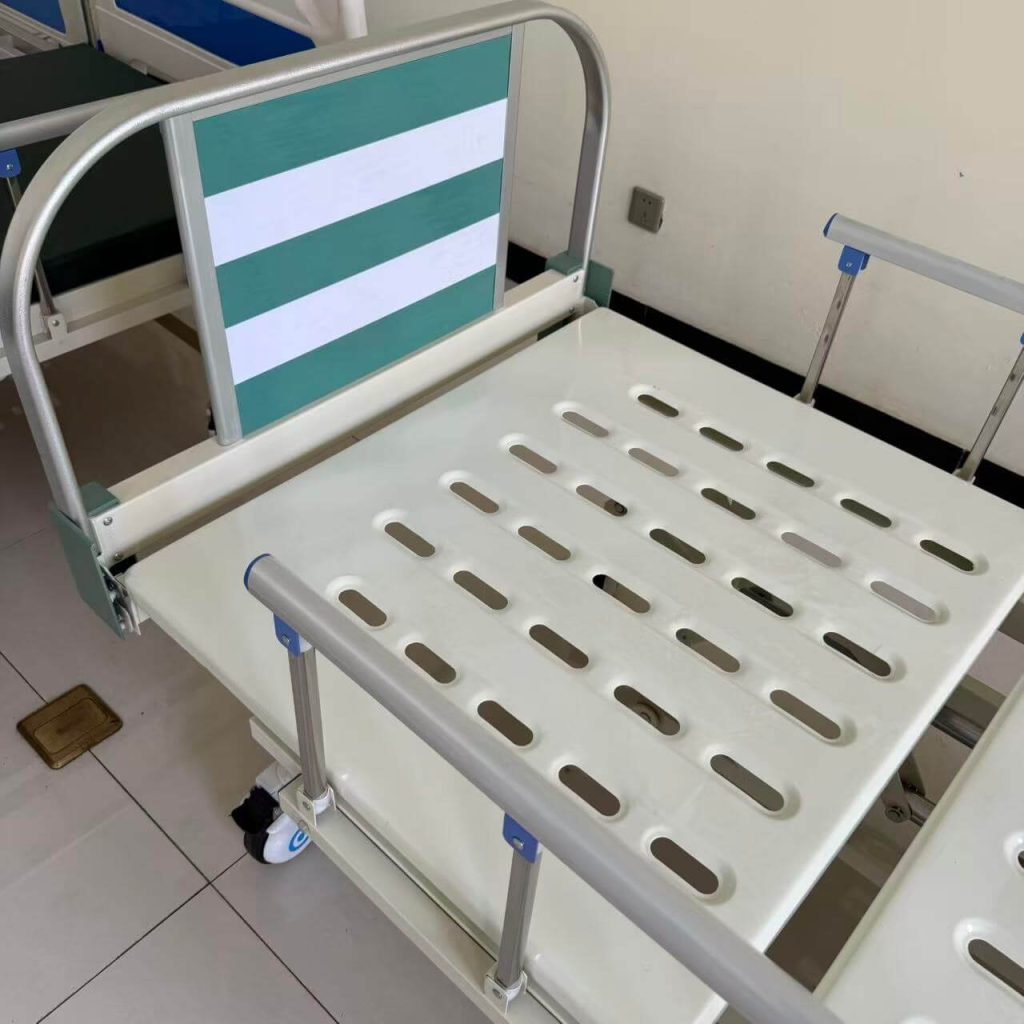
How Does Room Size Influence Hospital Bed Width?
A hospital bed must fit the building as well as the patient.
A wider bed requires more floor space. In multi-bed wards, even a modest increase in overall width can reduce space for caregivers, bedside cabinets, wheelchairs, medical carts, and other equipment.
Measure the Entire Transport Route
Do not measure only the final patient room.
The bed may need to pass through entrances, corridors, elevators, treatment rooms, and storage areas. For transportation, overall width is usually more important than mattress width.
Buyers should confirm whether rails, bumpers, handles, or other parts increase the maximum exterior dimension. Expandable beds should be checked in both narrow and wide configurations.
Which Width Is Suitable for Different Care Settings?
Different care environments may require different approaches.
الأجنحة العامة
General wards usually need a balance between patient comfort, caregiver access, room efficiency, and easy transportation. A standard adult platform may be suitable when it matches the expected patient population.
العيادات الخاصة
Clinics may have smaller rooms and narrower corridors, so overall width can be especially important. The bed should offer adequate patient space without occupying more room than necessary.
Rehabilitation and Home Care
Patients may frequently move in and out of bed. Width should support positioning while allowing caregivers to assist with transfers. Home care buyers should also measure bedrooms and doorways carefully.
Bariatric Care
Bariatric care may require wider or expandable beds with higher load capacity and reinforced structures. These should be selected as purpose-designed systems rather than simply wider standard beds.
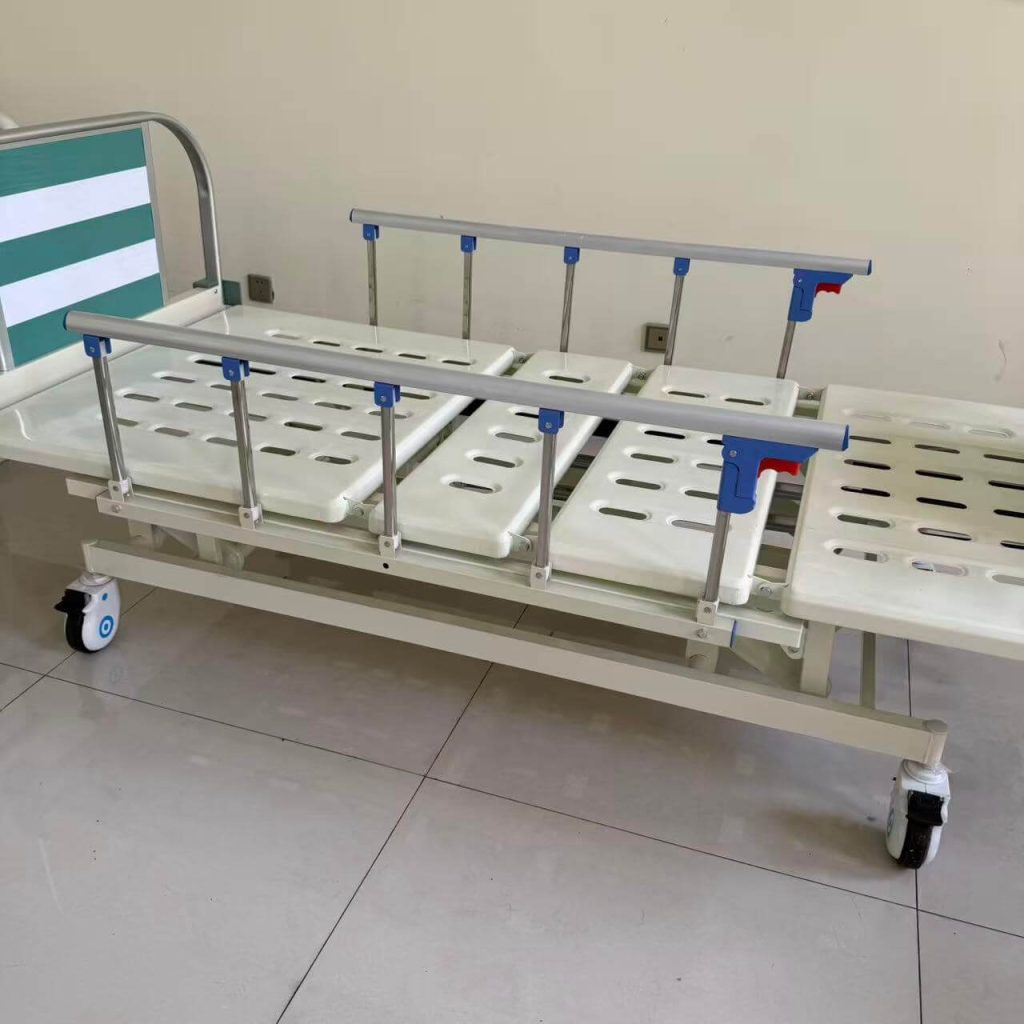
What Width Specifications Should Be Included in a Purchase Order?
Clear specifications reduce misunderstandings between buyers and manufacturers.
Instead of writing “standard hospital bed,” purchasers should list sleeping-platform length and width, overall length and width, mattress dimensions, minimum and maximum bed height, safe working load, side-rail type, and other key requirements.
Confirm Dimensions Before Mass Production
For bulk orders, final dimensions should appear in an approved quotation, technical drawing, specification sheet, or purchase order.
This is especially important when beds must match existing mattresses, room layouts, elevators, or tender specifications. A pre-production sample or detailed drawing can help identify dimensional issues before mass production.
What Should B2B Buyers Check Before Ordering in Bulk?
Before confirming a large order, define the intended patient group and care environment first.
Then confirm sleeping-platform width, overall dimensions, mattress compatibility, room clearance, caregiver access, and transfer requirements. Buyers comparing suppliers should request the same measurements from every manufacturer so that one supplier’s mattress width is not compared with another supplier’s overall width.
Jcare supplies hospital beds, home care beds, rehabilitation products, medical furniture, and related accessories for wholesale projects. Buyers can confirm bed dimensions, functions, side rails, mattresses, accessories, packaging, and quantity before production.
يسأل الناس أيضًا
Is a Wider Hospital Bed Always Better?
No. A wider bed can provide more space, but excessive width may reduce caregiver reach, take up unnecessary room space, and complicate transport.
Is a 90 cm Hospital Bed Wide Enough?
A sleeping platform around 90 cm is a common reference for many adult hospital beds, but the correct size depends on patient body size, mobility, and care requirements.
Should I Check Overall Width or Mattress Width?
Both. Mattress width determines sleeping space, while overall width determines whether the bed fits rooms, doors, elevators, corridors, and storage areas.
Can Hospitals Use More Than One Bed Width?
Yes. A facility can use standard-width beds for most patients and wider or expandable models for patients with additional space or load requirements.
الخاتمة
Choosing the right hospital bed width requires balancing patient body size, comfort, mobility, caregiver access, mattress compatibility, room dimensions, transfer needs, and safe working load. Buyers should never rely only on the word “standard.” Exact sleeping-platform and overall dimensions should be confirmed before ordering.
For general adult care, a platform around 90 cm wide is a useful reference, while larger or bariatric patients may require wider or expandable systems. The final choice should reflect the real patient population and facility environment.
For hospitals, clinics, distributors, and medical equipment buyers, clear dimensional specifications can reduce purchasing errors and make supplier comparisons easier. Share your experience or questions in the comments, and pass this guide to colleagues involved in hospital bed procurement.