
What are the correct positioning techniques for bedridden patients?
Correct positioning techniques for bedridden patients involve safely turning, aligning, and supporting the body to prevent pressure ulcers, improve circulation, enhance breathing, and ensure long-term comfort. Proper positioning is essential in hospitals, nursing homes, and home care settings.
For hospitals, private clinics, and home care providers, improper positioning can lead to serious complications such as pressure injuries, muscle contractures, respiratory issues, and reduced blood circulation.
According to global clinical guidelines, patients who remain in one position for prolonged periods are at significantly higher risk of developing pressure ulcers and secondary complications. This increases treatment costs and extends recovery time.
Standard Positioning Techniques for Bedridden Patients
1. Supine Position (Flat on the Back)
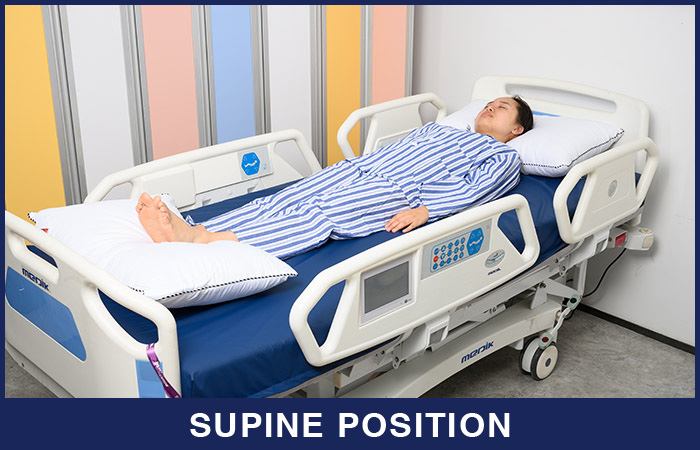
The supine position is commonly used for resting, medical examination, and post-surgical recovery.
Key techniques:
- Keep the head supported with a pillow to maintain neutral neck alignment
- Place a small pillow under the knees to reduce lower back pressure
- Ensure heels are elevated slightly to prevent pressure sores
- Keep arms supported to avoid shoulder strain
This position should not be maintained for long periods without repositioning.
2. Lateral Position (Side-Lying Position)

The lateral position helps relieve pressure from the back and sacral area.
Key techniques:
- Turn the patient gently to a 30° side-lying angle
- Place a pillow behind the back for stability
- Insert a pillow between the knees to prevent friction
- Support the upper arm with a cushion
Reposition every two hours to reduce the risk of pressure injuries.
3. Fowler’s Position (Head Elevated Position)
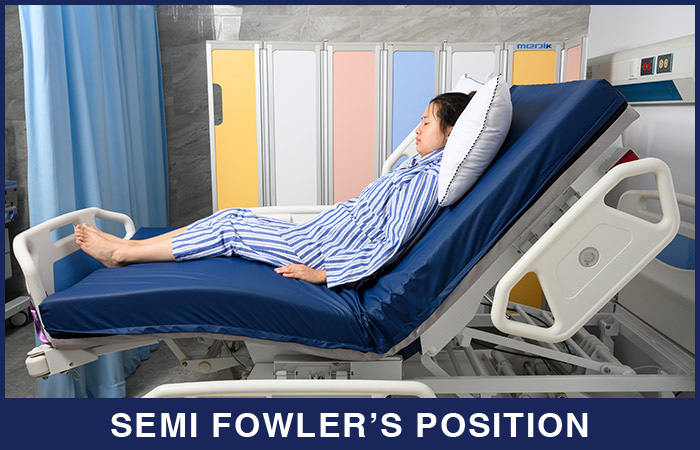
Fowler’s position improves breathing, digestion, and patient comfort.
Types include:
- Low Fowler’s (15–30° elevation)
- Semi-Fowler’s (30–45° elevation)
- High Fowler’s (60–90° elevation)
Adjustable hospital beds make it easier to control backrest elevation safely and efficiently.
4. Prone Position (Face Down – Used with Caution)
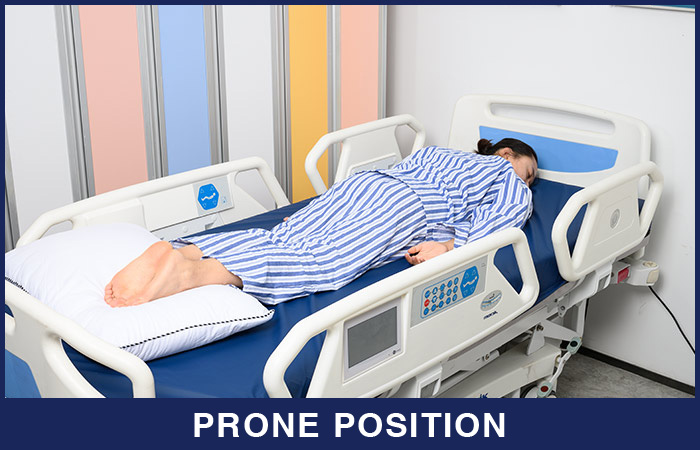
The prone position is typically used in specialized respiratory care settings.
Key considerations:
- Requires professional supervision
- Proper airway monitoring is essential
- Pressure points must be carefully protected
This technique is more common in intensive care environments.
Most clinical guidelines recommend repositioning bedridden patients at least every two hours.
عن جيه كير
Jcare is a China-based medical bed manufacturer specializing in hospital beds, home care beds, rehabilitation products, and medical furniture.
With a 3,000 square meter production facility, Jcare offers:
- التسعير المباشر من المصنع
- Stable production capacity
- Short delivery time
- Ample stock availability
- Strict quality control
As a wholesale-only supplier, Jcare supports hospitals, clinics, distributors, and medical equipment importers worldwide through Alibaba, Google Ads, Made-in-China, and international trade exhibitions.
الخاتمة
Correct positioning techniques for bedridden patients are essential to prevent complications, improve comfort, and promote recovery. Proper training combined with reliable, adjustable hospital beds creates a safer and more efficient healthcare environment.
For medical institutions and distributors, investing in high-quality hospital beds that facilitate scientific patient positioning is not just a purchase decision — it is a commitment to better patient care.