
Many medical equipment buyers want to purchase hospital beds but are unsure which functions, materials, sizes, and supplier terms matter most. If these questions are ignored, buyers may face delayed delivery, unsuitable products, higher after-sales costs, and customer complaints. This article answers key purchasing questions so hospitals, clinics, distributors, and home care buyers can make safer wholesale decisions.
Before purchasing hospital beds, buyers should ask about bed type, adjustment functions, load capacity, safety features, materials, accessories, MOQ, delivery time, warranty, packaging, and supplier reliability. For wholesale buyers, the best choice is a factory-direct supplier that offers stable quality, practical customization, ample stock, competitive prices, and export experience for international B2B orders.
The following questions help buyers compare products more clearly. They also reduce procurement risk before placing a bulk order.
What Type of Hospital Bed Should Buyers Choose?
The first question buyers usually ask is which hospital bed type fits their target market. Different care environments need different product configurations. A general hospital ward may need durable manual or electric hospital beds. A private clinic may prefer practical beds with simple operation and easy cleaning. A home care market may require quieter operation, softer design, and better comfort.
Manual hospital beds are often selected for cost-sensitive projects. They use crank systems to adjust patient positions and are suitable for general care needs. Their advantages include lower purchase cost, simple maintenance, and stable use. However, they require caregivers to adjust the bed manually, so they may not be ideal for high-frequency nursing environments.
Electric hospital beds are controlled by motors and hand controllers. They are easier for caregivers and patients to operate. These beds are suitable for hospitals, nursing homes, rehabilitation centers, and home care users who need frequent position adjustment. Buyers should pay attention to motor quality, controller design, safety performance, and after-sales support.
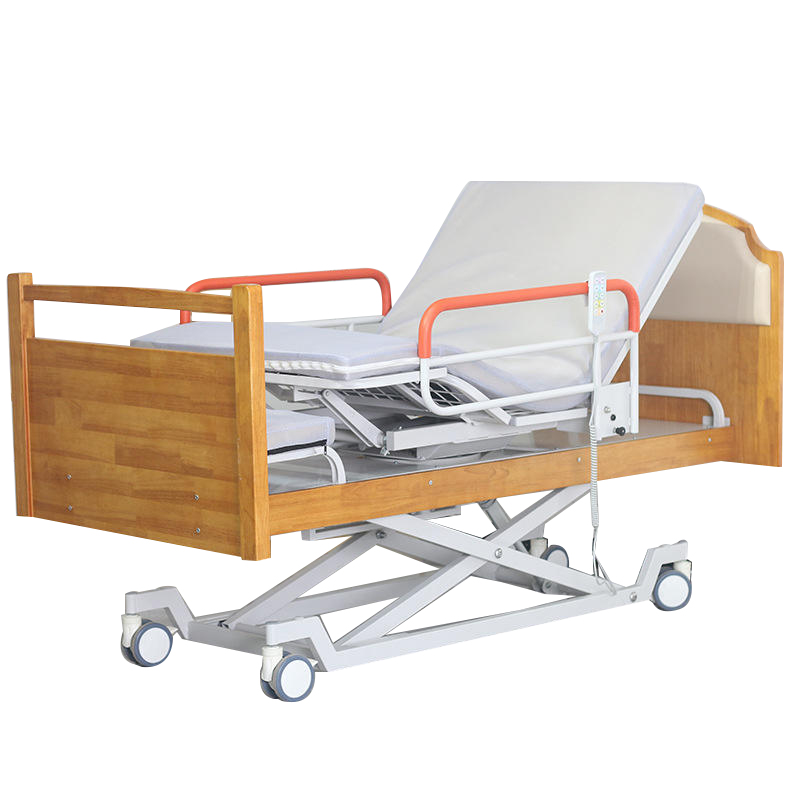
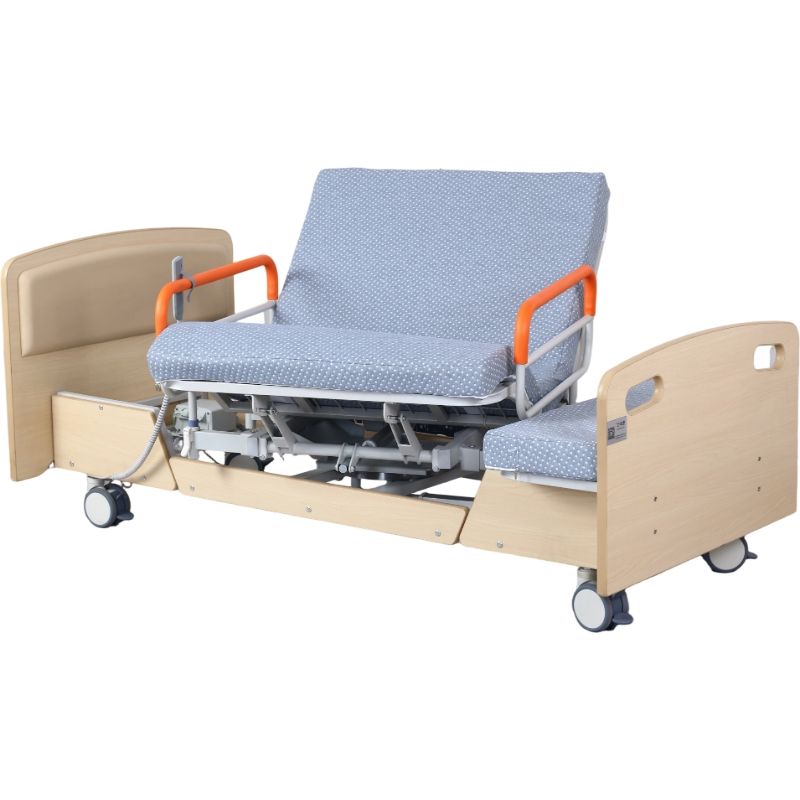
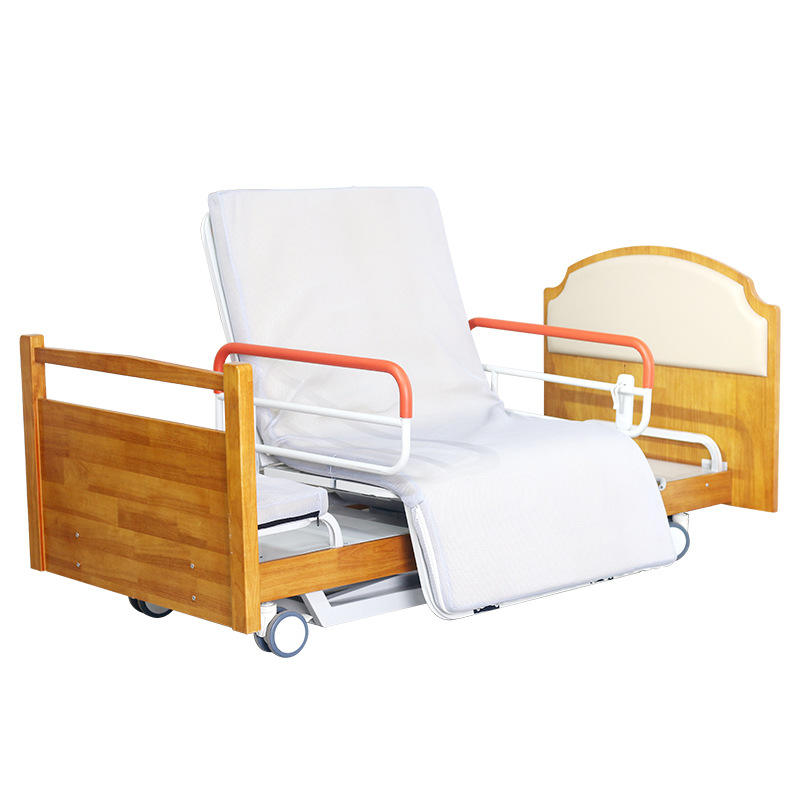
Home care beds are another important category. Buyers serving elderly care or family care markets should consider comfort, appearance, quiet movement, and user-friendly operation. Wooden-style panels, smooth lifting, and easy cleaning can make home care beds more attractive to end users.
Which Hospital Bed Functions Are Most Important?
Many buyers ask whether they should choose two-function, three-function, or five-function hospital beds. The answer depends on the application. More functions do not always mean a better purchasing decision. A buyer should choose functions based on patient needs, caregiver workflow, and market budget.
Backrest adjustment is one of the most common functions. It helps patients sit up for eating, reading, breathing, communication, or daily care. This function is useful in hospitals, clinics, nursing homes, and home care settings.
Leg rest adjustment improves lower limb comfort and supports basic patient positioning. It is especially useful for patients who stay in bed for longer periods. Buyers should check whether the leg section moves smoothly and remains stable after repeated use.
Height adjustment is important for caregiver convenience and patient transfer. A height-adjustable bed can reduce caregiver strain and improve daily nursing efficiency. For elderly patients, a lower bed height may also make getting in and out of bed easier.
Advanced functions, such as Trendelenburg and reverse Trendelenburg positions, may be required in more professional care environments. However, buyers should not add these features unless their customers truly need them. A clear product match can help control cost and improve sales efficiency.
What Size and Load Capacity Should Buyers Confirm?
Hospital bed size affects patient comfort, room layout, mattress compatibility, and logistics cost. Before ordering, buyers should confirm the bed length, bed width, height range, mattress platform size, and packaging dimensions.
For hospitals and clinics, standard bed sizes are often preferred because they are easier to match with mattresses, side rails, and accessories. For home care markets, buyers may need beds that fit smaller rooms while still providing comfort and safety.
Load capacity is equally important. Buyers should not only look at the number shown in the product description. They should also consider the frame structure, caster quality, lifting system, welding strength, and long-term use conditions. A bed may support a certain weight in theory, but daily movement, patient turning, and repeated adjustment also test the structure.
For medical equipment distributors, selecting the right load capacity reduces safety risks and after-sales problems. If the target market includes bariatric care or heavy-duty use, buyers should ask the supplier for suitable reinforced models.
What Materials Should Buyers Check Before Ordering?
Material quality directly affects product durability, appearance, cleaning, and long-term value. Buyers should carefully check the frame, bed board, side rails, headboard, footboard, casters, and surface treatment.
The frame is the foundation of the bed. A strong steel frame can improve stability and extend service life. Buyers should ask about steel thickness, welding quality, coating process, and inspection standards. For bulk orders, consistent frame quality is very important because one weak batch can create many customer complaints.
The bed board also matters. It should support the mattress evenly and remain stable during adjustment. Depending on the model, the bed board may use steel, ABS, or other durable materials. Buyers should consider ventilation, cleaning convenience, and structural strength.
Side rails protect patients and support daily nursing. Buyers should check whether they are easy to lift, lower, lock, and clean. ABS side rails and aluminum alloy side rails are common options. The best choice depends on budget, target market, and customer expectations.
Headboards and footboards affect both function and appearance. Hospitals often prefer durable, easy-to-clean designs. Home care buyers may prefer warmer colors or wooden-style panels. A supplier with customization options can help buyers match different market demands.
What Safety Features Should Hospital Bed Buyers Consider?
Safety is one of the most important purchasing concerns. A hospital bed is not only furniture. It is a care product used by patients, nurses, caregivers, and family members. Therefore, buyers must pay close attention to safety details.
Caster brakes are essential. Hospital beds often need to move between rooms, wards, or treatment areas. High-quality casters make movement smoother, while reliable brakes keep the bed stable when stopped. Buyers should check caster size, braking method, noise level, and floor protection.
Side rail locking is another key point. A side rail that is loose, difficult to operate, or unstable may create safety concerns. Buyers should ask for videos, samples, or detailed specifications to confirm how the side rails work.
Smooth adjustment is also important. Whether the bed is manual or electric, position changes should be stable and controlled. Sudden movement, shaking, or difficult operation can reduce patient comfort and damage buyer confidence.
For electric hospital beds, buyers should also ask about power supply, motor protection, emergency lowering options, and controller quality. A reliable electrical system can reduce maintenance pressure and improve user experience.
What Accessories Are Commonly Purchased With Hospital Beds?
Many buyers do not purchase hospital beds alone. They often need accessories and related medical furniture to create complete solutions. This is especially common for hospitals, clinics, nursing homes, and distributors.
Common accessories include mattresses, IV poles, side rails, casters, bedside cabinets, over bed tables, lifting poles, headboards, footboards, and other medical bed accessories. For project buyers, purchasing these products from one supplier can simplify communication, packaging, shipment, and after-sales service.
Mattress selection should match bed size and patient care needs. Buyers should confirm thickness, material, waterproof cover, cleaning method, and comfort level. For hospitals, durability and hygiene are often the main concerns. For home care, comfort may be more important.
Bedside cabinets and over bed tables can increase order value and improve the buyer’s product portfolio. Distributors can sell complete ward solutions instead of single beds, which may improve competitiveness in local markets.
How Should Buyers Compare Hospital Bed Prices?
Price is always a major question, especially for wholesale buyers. However, the lowest price is not always the best choice. Buyers should compare price together with material quality, functions, accessories, packaging, warranty, delivery time, and supplier reliability.
A very low price may hide problems such as weak frames, unstable motors, poor coating, thin packaging, or limited after-sales support. These problems may increase total cost after delivery. For distributors, poor quality can also damage brand reputation and reduce repeat orders.
Buyers should calculate total purchasing cost, not only unit price. Total cost includes the bed price, accessories, packaging, shipping, import costs, replacement parts, maintenance, and customer service. A slightly better product may save more money in the long term.
For bulk orders, buyers should ask about price tiers. Larger quantities may receive better pricing. At the same time, buyers should confirm whether the supplier has enough stock and production capacity to meet the delivery schedule.
Jcare focuses on B2B wholesale supply, offering factory prices, ample stock, and short delivery time. This can help medical equipment buyers control costs while maintaining stable supply.
What MOQ, Delivery Time, and Packaging Details Should Buyers Ask About?
MOQ and delivery time are practical questions before any wholesale order. Buyers should ask whether the supplier supports trial orders, mixed product orders, container orders, or customized configurations. This helps buyers plan purchasing according to market demand and budget.
Delivery time is especially important for hospital projects, distributor restocking, and urgent care facility needs. Delayed delivery can affect local sales, installation plans, and customer relationships. Buyers should confirm stock availability, production lead time, packing time, and shipping schedule before payment.
Packaging should also be checked carefully. Hospital beds are large products, and poor packaging may cause scratches, dents, broken parts, or missing accessories during transportation. Buyers should ask about carton strength, foam protection, wooden case options, accessory packing, labels, and container loading methods.
Good packaging protects the product and helps buyers manage inventory after arrival. For distributors, clear labels and complete accessory packing can also reduce warehouse errors.
How Can Buyers Judge Supplier Reliability?
Supplier reliability is one of the biggest concerns for international buyers. A good supplier should provide more than product photos and low prices. Buyers should evaluate factory capability, product range, quality control, export experience, communication speed, and after-sales response.
Factory capability shows whether the supplier can support stable production and long-term cooperation. Jcare owns a 3000 square meter bearing processing plant, which supports stronger control over related components and production coordination.
Product range is also important. Buyers may need hospital beds, home care beds, rehabilitation products, medical furniture, and accessories from one supplier. A wider product range can save time and reduce sourcing complexity.
Export experience helps reduce international trade problems. Jcare exports to India, the Middle East, Southeast Asia, Europe, the USA, Japan, and South Korea. This experience helps support buyers from different markets with product selection, packaging, and order communication.
Communication quality should not be ignored. A reliable supplier should answer questions clearly, provide product specifications, support customization, and respond quickly when problems occur.
What Is the Most Important Question Before Buying Hospital Beds?
The most important question is whether the bed matches the real care environment. Buyers should confirm if the bed will be used in hospitals, clinics, nursing homes, rehabilitation centers, or home care. After that, they can choose the right functions, size, load capacity, materials, and accessories.
Are Manual Hospital Beds or Electric Hospital Beds Better?
Manual hospital beds are better for buyers who need lower cost, simple use, and easy maintenance. Electric hospital beds are better for buyers who need easier operation, more comfort, and frequent adjustment. The right choice depends on budget, patient needs, and target market.
Should Buyers Request Samples Before Bulk Orders?
For new suppliers or customized products, requesting samples is often a smart choice. Samples allow buyers to check structure, materials, functions, side rails, casters, packaging, and overall workmanship before confirming a larger order.
How Can Buyers Reduce Risk When Importing Hospital Beds?
Buyers can reduce risk by checking supplier background, confirming specifications, reviewing product videos, testing samples, clarifying packaging, asking about warranty, confirming delivery time, and choosing a supplier with export experience.
Conclusion
Before purchasing hospital beds, buyers should ask clear questions about product type, functions, size, load capacity, materials, safety, accessories, price, MOQ, delivery time, packaging, and supplier reliability. These questions help buyers avoid unsuitable products, unexpected costs, delayed projects, and after-sales problems.
For hospitals, private clinics, medical equipment distributors, and home care bed purchasers, choosing a factory-direct wholesale supplier can make procurement more efficient. Jcare provides hospital beds, home care beds, rehabilitation products, other medical furniture, and medical bed accessories with factory prices, ample stock, short delivery time, and export support.
If this guide helps your purchasing plan, you can share it with your team or leave your questions for further discussion.