
IV stands are essential equipment in hospitals, clinics, and care facilities, yet selecting the right one is often overlooked. Poor-quality IV stands can become unstable, difficult to move, or unable to support multiple infusion bottles safely. Choosing the correct IV stand improves patient safety and helps caregivers work more efficiently. This guide explains the key factors healthcare buyers should consider when selecting an IV stand.
The right IV stand should be stable, height-adjustable, easy to move, and made from durable materials such as stainless steel or aluminum. Features like multi-hook design, smooth caster wheels, and strong base support ensure safe infusion therapy in hospitals, clinics, and home care environments.
Understanding the key features of IV stands helps healthcare facilities select reliable and practical equipment.

Stability and Base Design
One of the most important factors when choosing an IV stand is stability. During infusion therapy, the stand must securely support IV bags or bottles without tipping over.
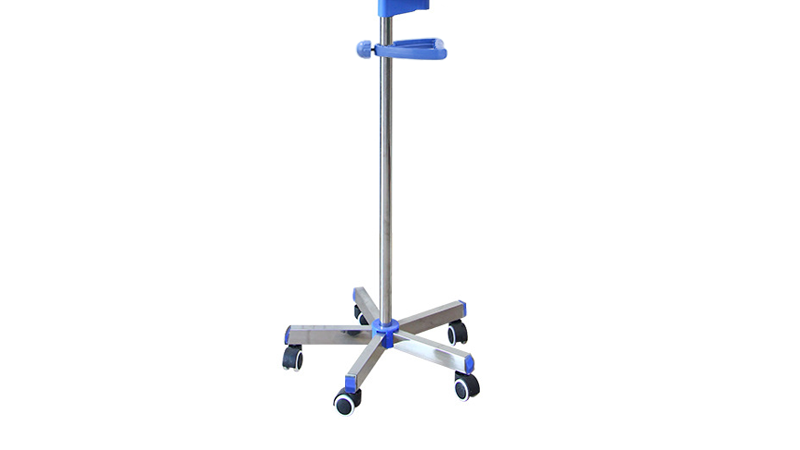
Most medical IV stands use a five-leg base design, which distributes weight evenly and improves balance. This structure is particularly important when multiple infusion bags are attached.
A stable base also prevents accidental movement when the stand is placed beside a hospital bed or patient chair. Facilities should choose stands with a strong metal base to ensure long-term durability and safety.
Adjustable Height for Different Clinical Needs
Height adjustability is another key feature of a good IV stand. Patients may receive infusions while lying in a hospital bed, sitting in a chair, or during patient transport.
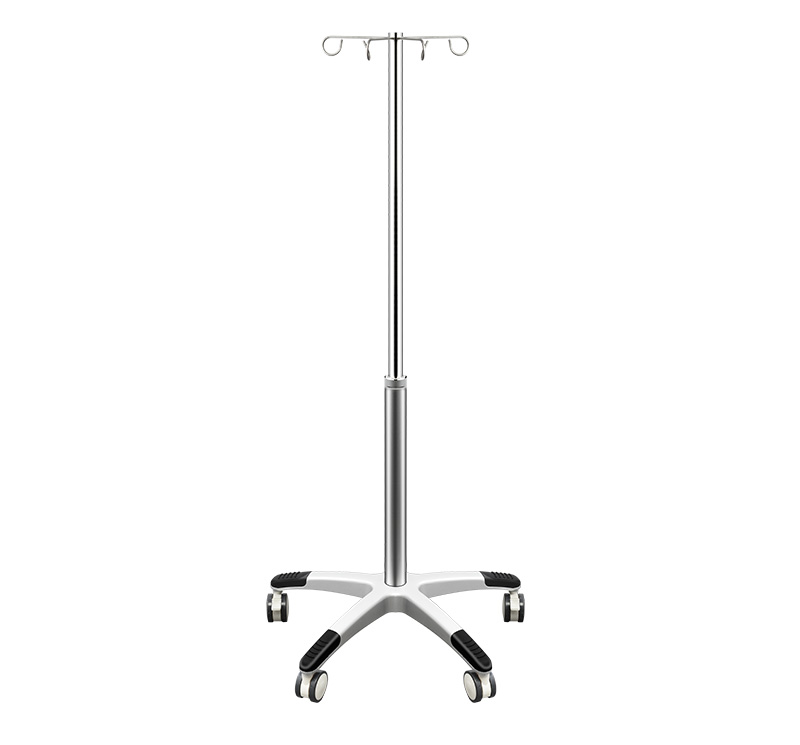
An adjustable pole allows caregivers to set the correct height so that gravity-based infusion can flow properly. Most clinical IV stands allow height adjustment through a simple locking knob or telescopic pole design.
This flexibility ensures the stand can be used in different treatment situations, including wards, outpatient clinics, and emergency rooms.
Material and Durability
IV stands are used frequently and must withstand regular cleaning and long-term use. The material used in the stand directly affects its durability and resistance to corrosion.
Stainless steel IV stands are widely preferred in hospitals because they are strong, rust-resistant, and easy to disinfect. Aluminum stands are lighter and easier to move but still offer sufficient strength for daily use.
High-quality materials ensure that the stand maintains structural stability even after years of use.
Mobility and Caster Wheels
In clinical environments, IV stands are often moved together with the patient. Smooth mobility is therefore an important design feature.
Medical IV stands typically include caster wheels that allow caregivers to move the stand easily between rooms or alongside hospital beds.
High-quality medical casters should rotate smoothly and include a braking system when necessary. This allows the stand to remain stable when positioned beside the patient.
Caster materials such as TPR or polyurethane also help reduce noise and protect hospital floors.
Multi-Hook Design for Infusion Bottles
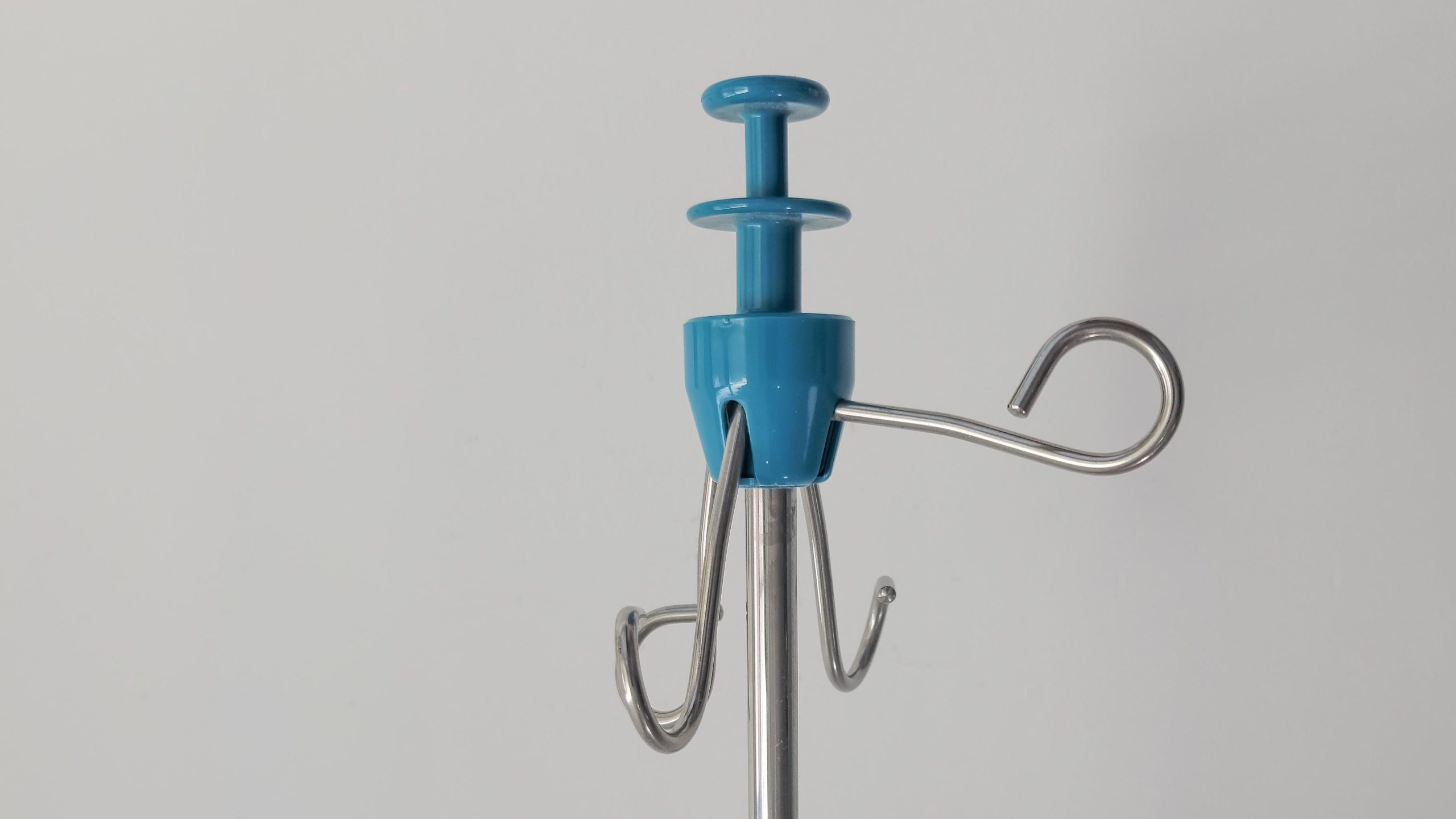
A standard clinical IV stand usually includes multiple hooks at the top of the pole. These hooks allow several infusion bags or bottles to be hung simultaneously.
Four-hook designs are the most common because they allow flexible infusion setups without compromising balance.
Hooks should be strong, smooth, and securely welded to prevent bending or damage during long-term use.
Conclusion
Selecting the right IV stand is important for safe and efficient infusion therapy. Healthcare facilities should prioritize stability, adjustable height, durable materials, smooth mobility, and reliable multi-hook design.
A well-designed IV stand improves patient care, supports caregiver efficiency, and ensures long-term reliability in hospitals, clinics, and nursing homes.